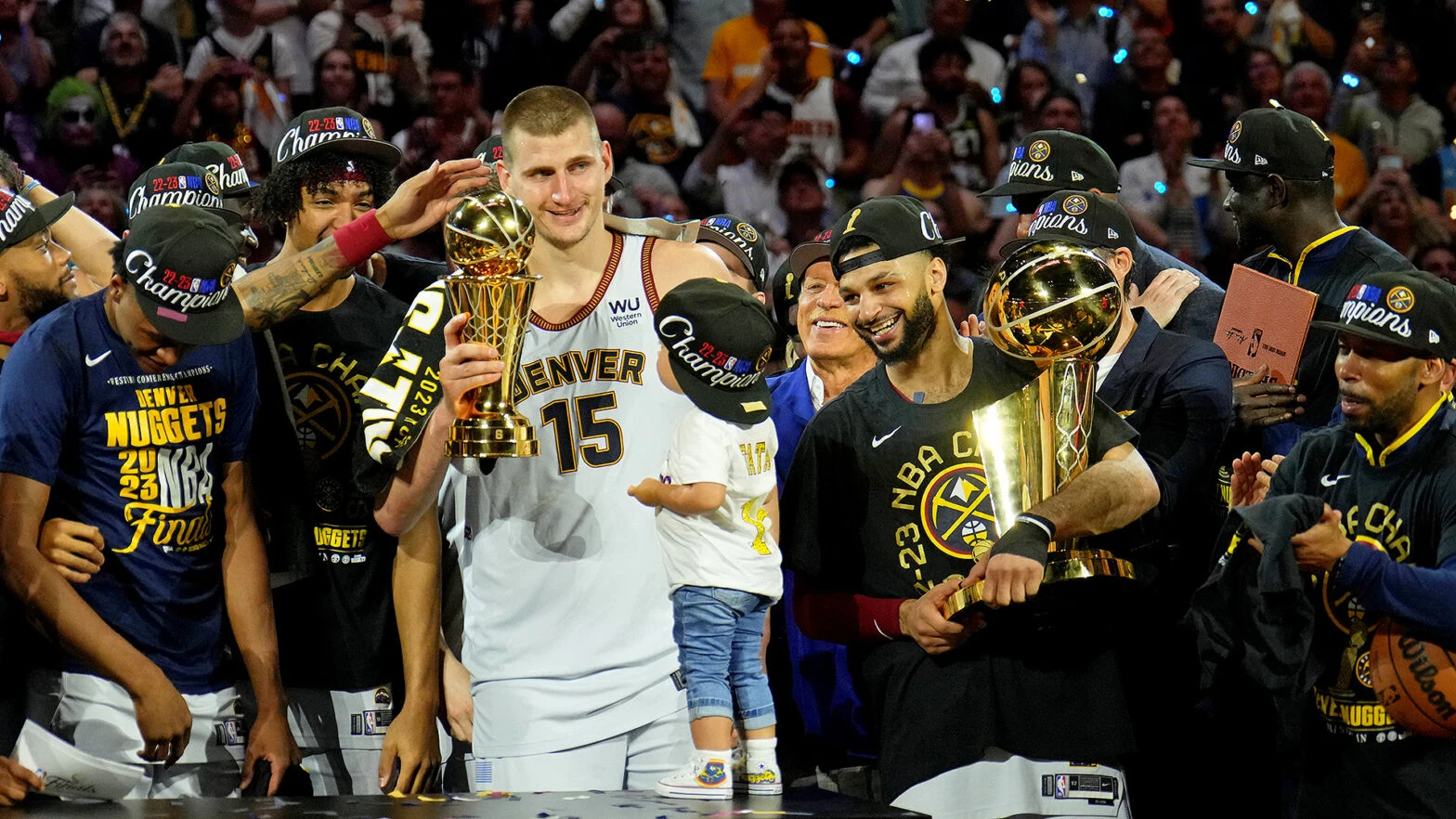
Milwaukee finished the 2022–23 NBA regular season with the league's best record, 58–24. Denver led the West at 53–29 and won the championship. Golden State finished sixth in the West at 44–38, while Miami's seventh-place regular-season finish became an eighth-seeded run to the Finals.
Those distinctions make 2023 an unusually useful season to revisit. This archive provides all 30 final records, the actual conference order and the Play-In transitions. It covers the season ending in June 2023; current match information belongs on NBA games today.
All 30 final 2022–23 NBA records
The regular season ended with 82 games per team. The tables preserve the conference order at that point, before the Play-In selected the last two playoff seeds. Direct means a top-six first-round berth, Play-In means a seventh-through-tenth starting place, and Out means the team finished below the qualification line.
The source for records and tied-team order is the official Cavaliers 2023 playoff guide, PDF page 90. The NBA's historical season selector is another archive entry point. Do not read the final playoff bracket backward into these regular-season positions.
Eastern Conference regular-season order
| Rank | Team | W | L | Route |
|---|---|---|---|---|
| 1 | Milwaukee Bucks | 58 | 24 | Direct |
| 2 | Boston Celtics | 57 | 25 | Direct |
| 3 | Philadelphia 76ers | 54 | 28 | Direct |
| 4 | Cleveland Cavaliers | 51 | 31 | Direct |
| 5 | New York Knicks | 47 | 35 | Direct |
| 6 | Brooklyn Nets | 45 | 37 | Direct |
| 7 | Miami Heat | 44 | 38 | Play-In |
| 8 | Atlanta Hawks | 41 | 41 | Play-In |
| 9 | Toronto Raptors | 41 | 41 | Play-In |
| 10 | Chicago Bulls | 40 | 42 | Play-In |
| 11 | Indiana Pacers | 35 | 47 | Out |
| 12 | Washington Wizards | 35 | 47 | Out |
| 13 | Orlando Magic | 34 | 48 | Out |
| 14 | Charlotte Hornets | 27 | 55 | Out |
| 15 | Detroit Pistons | 17 | 65 | Out |
Miami belongs seventh here despite appearing as the eighth seed in the playoff bracket. Atlanta and Toronto shared a 41–41 record, but the official order placed Atlanta eighth and Toronto ninth. Chicago's later Play-In win did not promote it above Toronto in the completed regular-season standings.
Western Conference regular-season order
| Rank | Team | W | L | Route |
|---|---|---|---|---|
| 1 | Denver Nuggets | 53 | 29 | Direct |
| 2 | Memphis Grizzlies | 51 | 31 | Direct |
| 3 | Sacramento Kings | 48 | 34 | Direct |
| 4 | Phoenix Suns | 45 | 37 | Direct |
| 5 | LA Clippers | 44 | 38 | Direct |
| 6 | Golden State Warriors | 44 | 38 | Direct |
| 7 | Los Angeles Lakers | 43 | 39 | Play-In |
| 8 | Minnesota Timberwolves | 42 | 40 | Play-In |
| 9 | New Orleans Pelicans | 42 | 40 | Play-In |
| 10 | Oklahoma City Thunder | 40 | 42 | Play-In |
| 11 | Dallas Mavericks | 38 | 44 | Out |
| 12 | Utah Jazz | 37 | 45 | Out |
| 13 | Portland Trail Blazers | 33 | 49 | Out |
| 14 | Houston Rockets | 22 | 60 | Out |
| 15 | San Antonio Spurs | 22 | 60 | Out |
The Clippers and Warriors shared 44 wins, while Minnesota and New Orleans shared 42. Their different positions were meaningful: fifth and sixth entered directly, eighth had the seven-versus-eight route, and ninth began in an elimination game. Oklahoma City's Play-In victory over New Orleans did not change its original tenth-place finish.
Why Golden State's sixth place needs more than one number
Golden State's 44–38 finish secured the final direct playoff position in the West. It also concealed a strikingly uneven season. The Warriors were close to the Clippers in the table and only one win above the Lakers, but their home and road results tell a more specific story than sixth place alone.
A 33–8 home record and an 11–30 road record
The Warriors' official media guide records 33–8 at home and 11–30 away. Each split covers 41 games. Calculated from those figures, Golden State won about 80.5% of its home games and 26.8% on the road; three quarters of its 44 victories came at home.
That calculation is descriptive, not a diagnosis. It establishes where the wins occurred, without identifying how much was caused by player availability, opponents, defensive execution or other factors. To answer those questions, a researcher would need lineup and possession evidence for the relevant games. The split gives a useful starting point and a reason to look deeper.
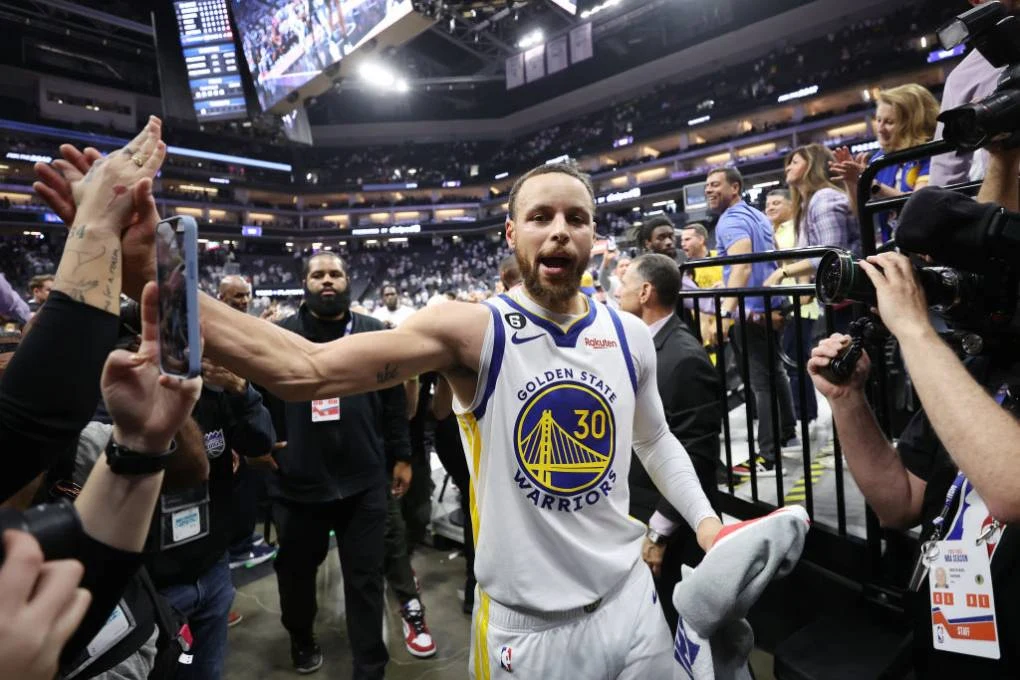
It also creates a useful distinction between a long-run pattern and a single playoff task. The Warriors later won Game 7 at Sacramento, 120–100, with Stephen Curry scoring 50. That road victory did not rewrite their 11–30 regular-season road record. Equally, the poor road record did not make an individual away victory impossible.
For a fan revisiting the Kings series, save both pieces of information. Sacramento earned the higher regular-season position; Golden State won the seven-game matchup. The archive should allow those facts to sit together. Replacing Sacramento's third place with a lower rank after elimination would confuse a completed schedule with the outcome of one series.
Golden State is therefore a helpful example of why a final standings row should be an entry point rather than the whole analysis. Start with the overall record, add a relevant split, then identify the limits of what that split proves. This produces a more informative season comparison than assuming every 44-win team reached its total in the same way.
The East won more games at the top, but Denver led the West
The three highest win totals belonged to Eastern Conference teams: Milwaukee, Boston and Philadelphia. Denver's 53 wins were enough to lead the West. The Nuggets did not need to have the league's best record to earn the top position in their own conference, because the playoff qualification structure maintained separate East and West orders.
This creates several useful comparisons within the completed table. Cleveland's 51 wins placed it fourth in the East, while the same total placed Memphis second in the West. Brooklyn and Phoenix both won 45, yet finished sixth and fourth respectively. The number of wins and the resulting conference position describe related but distinct parts of each team's season.
Those comparisons should not become a claim that moving a team across conferences would produce the same record and a particular new seed. A different conference assignment would change the schedule and potentially the results. The defensible observation is about the actual table: identical win totals occupied different positions in the two existing races.
Sacramento's 48–34 third-place finish had a separate historical significance. The Kings returned to the playoffs for the first time since 2006. Their regular-season position represented a concrete achievement before the first-round series began. A later elimination cannot remove the qualification or the place they earned.
The direct-entry thresholds were closer than the conference-leading totals: 45 wins for sixth in the East, 44 for sixth in the West. This shows why one broad statement about a conference can miss important detail. A comparison at the top is not automatically a comparison of the middle, the last qualifying positions or every head-to-head matchup.
For season research, choose the part of the distribution that matches the question. If studying title contenders, compare the leaders and their underlying performance. If studying the Play-In boundary, compare sixth through tenth and the records on either side. Averages over all fifteen positions can conceal the practical race a particular fan remembers.
The 2023 table therefore supports a precise description: the East contained the top three regular-season win totals, Denver led its own conference, and the direct-qualification lines were only one win apart. Explaining why those patterns occurred would require evidence beyond the standings. Keeping that limit visible makes the numerical comparison stronger.
Miami's seventh-place finish became an eighth-seeded Finals run
Miami's two positions are easy to mix up: seventh after the regular season, eighth when the playoff bracket was finalized. The change happened in the Play-In, before the Heat began their run through the East. Keeping the preliminary stage visible explains the apparent discrepancy.
Atlanta moved into seventh while Miami needed a second chance
Atlanta defeated Miami 116–105 on April 11 and claimed seventh. Chicago then eliminated Toronto 109–105. Miami beat Chicago 102–91 in the final East Play-In game to claim eighth. The NBA's Play-In history archive preserves the results.
The 41-win Hawks therefore occupied the higher playoff seed than the 44-win Heat. That was a consequence of the qualification games, not an error in the regular-season standings. Miami had earned a second opportunity by finishing in the seven-eight group; it used that opportunity after losing the initial game.
Chicago's first victory is another useful distinction. It moved the Bulls into the game for eighth without awarding a playoff berth. Toronto's regular-season ninth place and Chicago's tenth remained fixed even though Chicago won their elimination matchup. The records and the tournament results describe successive stages rather than a single continuously reordered league table.
The Lakers and Timberwolves completed the West's field
The Lakers beat Minnesota 108–102 in overtime to retain seventh. Oklahoma City defeated New Orleans 123–118, then lost 120–95 to Minnesota in the game for eighth. The 2023 tournament archive shows the West's final pair: Lakers seventh, Timberwolves eighth.
Unlike the East, the West's seven-eight order survived the preliminary games. Minnesota's second chance mattered, but it did not produce a higher or lower final seed than its original regular-season position. Oklahoma City's opening win extended its season without putting it into a first-round series.
A concise historical note should therefore use two explicit fields. For Miami: regular-season rank seven, playoff seed eight. For Atlanta: regular-season rank eight, playoff seed seven. For the Lakers and Minnesota, the two numbers match. For Toronto, Chicago, New Orleans and Oklahoma City, record the regular-season position and state that they were eliminated in the Play-In.
This is more useful than applying playoff to every game played after the regular season. The preliminary contests had their own qualification purpose. Their wins did not increase the 82-game totals, and their defeated teams did not all lose a best-of-seven series. A season archive should retain those differences.
What the 2023 playoffs changed about the standings story
Denver won its first NBA championship, defeating Miami 4–1. The Nuggets completed the playoffs 16–4. Their final outcome aligned with their position at the top of the West, even though three Eastern teams had won more regular-season games.
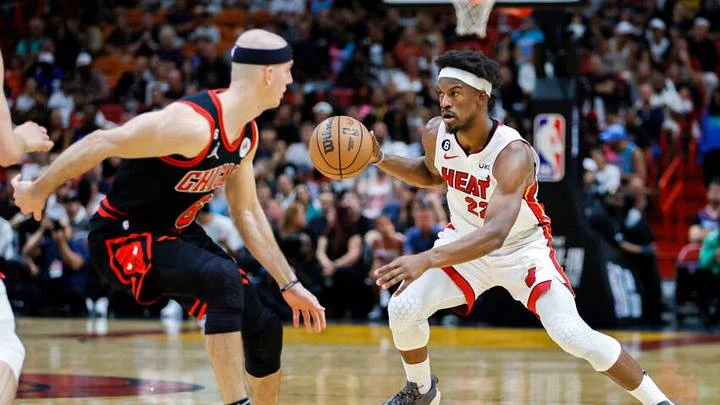
Miami supplied the opposite kind of example. The Heat reached the Finals from eighth after eliminating Milwaukee, New York and Boston. The conference-clinching Game 7 record confirms the endpoint. Their run makes the difference between initial position and eventual advancement particularly visible: a low seed described the starting route, not an imposed ceiling on the result.
Milwaukee's league-leading 58 wins did not turn into a first-round series victory. Sacramento's third place did not prevent Golden State from advancing. Golden State's success in that first round did not prevent the Lakers from eliminating it in the next. The completed table and the bracket therefore tell connected stories, but neither can substitute for the other.
There are two mistakes to avoid when interpreting these outcomes. One is treating a better regular-season record as a guarantee of a later series win. The other is treating an early playoff loss as proof that the preceding regular-season record never mattered. The standings established qualification and starting position; the series then required teams to win different, specific matchups.
For a historical comparison, preserve the stage at which each claim applies. Denver was a 53-win regular-season team and the champion. Miami was a 44-win regular-season team and the East's playoff champion. Golden State was sixth in the West and a conference semifinalist. These descriptions are compatible and much more precise than placing every team into one retrospective best-to-worst list.
A deeper explanation of the postseason would need game-level evidence: rotations, availability, shot quality, turnovers and the adjustments between opponents. This article's final-record archive provides the reliable starting framework for that work. It does not infer all of those causes from the order in April or from the identity of the champion in June.
Reading a 2023 archive without mixing seasons or stages
The most common wrong turn is opening a 2022 playoff page when looking for the 2022–23 season. Golden State's championship belongs to 2021–22 and the 2022 Finals. Its 44–38 sixth-place finish belongs to the following campaign, which ended with Denver's 2023 championship. Both can appear in searches containing Warriors and 2023 without describing the same season.
The calendar year alone is not enough. October 2023 games opened the 2023–24 campaign, while April through June 2023 completed 2022–23. Use the full season label when saving records, and check the event date when viewing a photograph or highlight. A November article discussing last season may be relevant evidence, but only after identifying which season its author meant.
Check the date, conference order and meaning of seed
For this particular archive, three quick comparisons reveal many mixed-stage tables. Miami should sit above Atlanta in the regular-season order. Toronto should sit above Chicago. New Orleans should sit above Oklahoma City. A page that reverses those pairs while retaining their original 82-game records may be presenting a postseason arrangement rather than the original conference table.
Next, inspect tied records without sorting alphabetically. The official order places the Clippers above the Warriors at 44–38 and Minnesota above New Orleans at 42–40. Indiana precedes Washington at 35–47, and Houston precedes San Antonio at 22–60. A general-purpose spreadsheet sort can silently discard those positions even when every win and loss is correct.
Retain the source's actual conference-position field and label any later playoff seed separately. If independently auditing the data, thirty teams, fifteen per conference and 82 games per team are useful consistency checks. Total wins and losses should balance. Passing those checks does not prove each row correct, but failing them identifies a problem before more complicated analysis begins.
Finally, keep historical team context attached to the correct year. Players on current rosters can differ substantially from the 2023 teams, and a modern schedule does not explain an old playoff route. The official season archive helps locate contemporary results, while the weekly NBA schedule serves present-day planning.
With those checks in place, the memorable facts line up cleanly: Milwaukee led the regular season, Denver led the West and won the title, Golden State qualified sixth, and Miami reached the Finals from eighth after finishing seventh. Each statement belongs to an explicitly identified stage of the same 2022–23 season.
Sign in with Google to join the discussion.