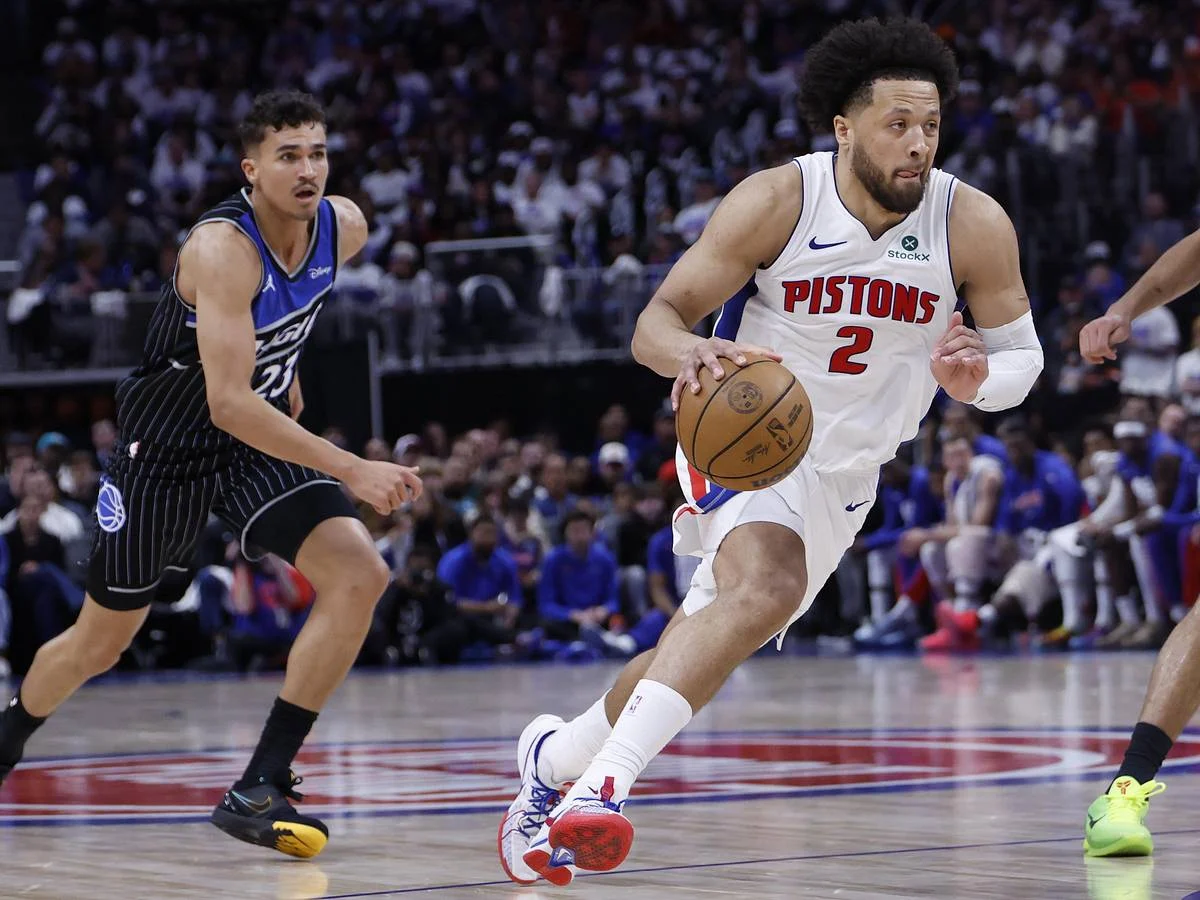
Oklahoma City finished the 2025–26 NBA regular season with the best record, 64–18. Detroit led the Eastern Conference at 60–22. New York, the East's third-place team, subsequently won the 2026 championship. These are three different achievements, and a useful standings archive keeps them distinct.
As of November 12, 2026, 2025–26 is the last completed NBA season. The tables below preserve all 30 final regular-season records and conference positions, followed by the actual Play-In changes. For games being played now, use NBA games today; this page is a fixed historical reference.
Complete 2025–26 NBA regular-season standings
These tables show conference position after the 82-game regular season. They do not add Play-In victories or playoff games to a team's win total. Positions one through six qualified directly for the first round, seven through ten entered the Play-In, and eleven through fifteen finished outside the postseason field. The columns describe that starting position, before the Play-In decided the final bracket seeds.
The records and tied-team order follow the official Cavaliers postseason guide's final NBA conference table on printed page 88. The NBA also provides a 2025–26 season selector. Identical records remain identical records even when the seeding procedure places one club above another.
Eastern Conference final table
| Rank | Team | W | L | Route |
|---|---|---|---|---|
| 1 | Detroit Pistons | 60 | 22 | Direct |
| 2 | Boston Celtics | 56 | 26 | Direct |
| 3 | New York Knicks | 53 | 29 | Direct |
| 4 | Cleveland Cavaliers | 52 | 30 | Direct |
| 5 | Toronto Raptors | 46 | 36 | Direct |
| 6 | Atlanta Hawks | 46 | 36 | Direct |
| 7 | Philadelphia 76ers | 45 | 37 | Play-In |
| 8 | Orlando Magic | 45 | 37 | Play-In |
| 9 | Charlotte Hornets | 44 | 38 | Play-In |
| 10 | Miami Heat | 43 | 39 | Play-In |
| 11 | Milwaukee Bucks | 32 | 50 | Out |
| 12 | Chicago Bulls | 31 | 51 | Out |
| 13 | Brooklyn Nets | 20 | 62 | Out |
| 14 | Indiana Pacers | 19 | 63 | Out |
| 15 | Washington Wizards | 17 | 65 | Out |
Read downward to find the regular-season qualification bands, then across to compare the size of the gaps. The ranking is a conference ranking, not a single league-wide list. The East's sixth-place team and the West's sixth-place team therefore shared the same qualification route even though their win totals differed.
Western Conference final table
| Rank | Team | W | L | Route |
|---|---|---|---|---|
| 1 | Oklahoma City Thunder | 64 | 18 | Direct |
| 2 | San Antonio Spurs | 62 | 20 | Direct |
| 3 | Denver Nuggets | 54 | 28 | Direct |
| 4 | Los Angeles Lakers | 53 | 29 | Direct |
| 5 | Houston Rockets | 52 | 30 | Direct |
| 6 | Minnesota Timberwolves | 49 | 33 | Direct |
| 7 | Phoenix Suns | 45 | 37 | Play-In |
| 8 | Portland Trail Blazers | 42 | 40 | Play-In |
| 9 | LA Clippers | 42 | 40 | Play-In |
| 10 | Golden State Warriors | 37 | 45 | Play-In |
| 11 | New Orleans Pelicans | 26 | 56 | Out |
| 12 | Dallas Mavericks | 26 | 56 | Out |
| 13 | Memphis Grizzlies | 25 | 57 | Out |
| 14 | Sacramento Kings | 22 | 60 | Out |
| 15 | Utah Jazz | 22 | 60 | Out |
Portland's regular-season eighth place is especially important to preserve here: the Trail Blazers became the seventh playoff seed after winning their first Play-In game. Changing this table to match the eventual bracket would erase what happened during the regular season. The separate seed discussion below supplies the missing transition without rewriting the original results.
The Eastern Conference race had two very different boundaries
The clearest way to interpret the East is to separate the race for a direct playoff place from the race to remain in the postseason at all. Those boundaries looked very different. The table shows a one-win gap between sixth and seventh, but an eleven-win gap between tenth and eleventh. A compressed middle coexisted with a pronounced separation below it.
That distinction changes how to describe a team's finish. A club can be comfortably inside the top ten while still facing uncertainty over whether it must enter the Play-In. Calling every postseason team a playoff qualifier too early collapses those two questions. Direct qualification removes the risk of elimination in the preliminary stage; a top-ten place merely keeps that route open.
At the top, Detroit's four-win margin over Boston meant the conference leader did not need a final-table tie to be resolved in its favor. Below Boston, New York and Cleveland were separated by only one win. Reading both the rank and the numerical gap avoids treating every adjacent pair as equally close. The size of a lead is information that the position number alone cannot convey.
Toronto and Atlanta cleared a crowded Play-In group
The NBA's final clinching update confirms Toronto fifth and Atlanta sixth. Both finished on 46 wins, immediately above two 45-win clubs. That was the operational dividing line: fifth and sixth proceeded to best-of-seven series, while seventh and eighth still needed to secure a bracket place.
The next four positions occupied a narrow range of records. For an archival comparison, this is more informative than saying the teams finished seventh through tenth and stopping there. Their proximity helps explain why the final regular-season order mattered so much to their starting opportunities in the Play-In, even though it could not determine the results of those games.
Do not turn that observation into a claim that every team was one result from a particular alternative seed. A single changed game can alter head-to-head records and introduce a different tie. Proper counterfactual seeding requires applying the full procedure to the altered results. This archive reports the actual final order and uses the gaps to describe the race, without inventing an alternate bracket.
Oklahoma City and San Antonio separated from the West
The West's first two teams were close to each other and considerably farther from the next group. Oklahoma City's 64 wins and San Antonio's 62 left an eight-win gap from second to third. The NBA's subsequent Thunder preview confirms the league-leading record. The standings therefore contain both a competitive race at the top and a clear break beneath it.
Compare that with Denver, the Lakers and Houston, whose totals ran from 54 to 52. Three successive positions were covered by a two-win range. Calling the third-place team much better simply because it sat two spots above fifth would overstate what the records alone establish. The table measures accumulated results; explaining how those teams played requires additional possession data, availability information and matchup evidence.
Minnesota's sixth place is another useful reference point. Its 49 wins secured the last direct berth, four ahead of Phoenix. Portland and the Clippers both reached 42, while Golden State's 37 still qualified for tenth. The same place in the qualification system can require different numbers of wins in different conferences or years. A universal rule that a certain total always earns a direct berth would be misleading.
Portland's position above the Clippers also shows why preserving the published tie order matters. Their identical totals did not give them identical starting routes. Eighth entered the seven-versus-eight game with two possible opportunities to advance; ninth began in an elimination game. The immediate consequence was procedural, before either team scored a Play-In point.
At the bottom of the qualifying group, the eleven-win gap from tenth to eleventh was substantial. That does not make every game within the lower group meaningless, nor does it explain any organization's decisions. It simply describes the separation in the completed record. An archive is strongest when it states that measurable fact and leaves unverified motivation out.
For comparisons with later seasons, retain both boundaries: sixth versus seventh for direct entry, and tenth versus eleventh for postseason survival. The final rank by itself cannot show whether a team narrowly missed, comfortably cleared or sat well below a threshold. Recording the adjacent win totals makes a future comparison much more precise.

How the 2026 Play-In changed the playoff field
The Play-In did not change a single regular-season record. It selected the seventh and eighth playoff seeds from the teams that finished seventh through tenth. Distinguishing those two stages explains why an April bracket can appear inconsistent with a final standings table while both are correct.
Philadelphia and Orlando kept the East's final two places
Philadelphia beat Orlando 109–97 on April 15 to secure seventh. Orlando then defeated Charlotte 121–90 on April 17 for eighth. Charlotte had eliminated Miami 127–126 in overtime in the earlier nine-versus-ten game.
Thus the East's last two bracket places matched the regular-season order, but the route still matters. Philadelphia qualified with its first opportunity. Orlando needed the second game after losing the first. Charlotte's opening victory extended its season without yet earning a first-round berth. Miami's preliminary loss ended its route immediately.
For fans preserving a season record, the correct entries remain Philadelphia 45–37 and Orlando 45–37. Do not turn those into 46-win regular seasons by adding their Play-In victories. Similarly, describing Charlotte as a playoff team solely because it won one postseason preliminary game would confuse advancement within the Play-In with qualification for the first round.
Portland moved above Phoenix in the playoff bracket
Portland beat Phoenix 114–110 on April 14 and took the seventh seed. Golden State eliminated the Clippers 126–121, then lost to Phoenix 111–96 in the final West Play-In game. Phoenix took eighth.
This is the season's key rank-to-seed exchange: Portland was eighth in the regular season and seventh in the playoffs; Phoenix was seventh in the regular season and eighth in the playoffs. That sent Portland into the bracket position opposite San Antonio and Phoenix into the one opposite Oklahoma City. Their original 42–40 and 45–37 records remained unchanged.
The two conferences illustrate different possible outcomes of the same qualification process. The East retained its seven-eight order; the West reversed it. Neither example justifies automatically copying regular-season positions into the last two playoff slots in a historical table. Preserve the actual preliminary results and record the final seeds explicitly.
For a compact season note, save four fields: conference, regular-season rank, regular-season record and playoff seed. Use an empty playoff-seed field for an eliminated Play-In team. That small distinction prevents later confusion when comparing a bracket screenshot, an archived standings table and a team's complete game log.
The champion was not either conference's No. 1 team
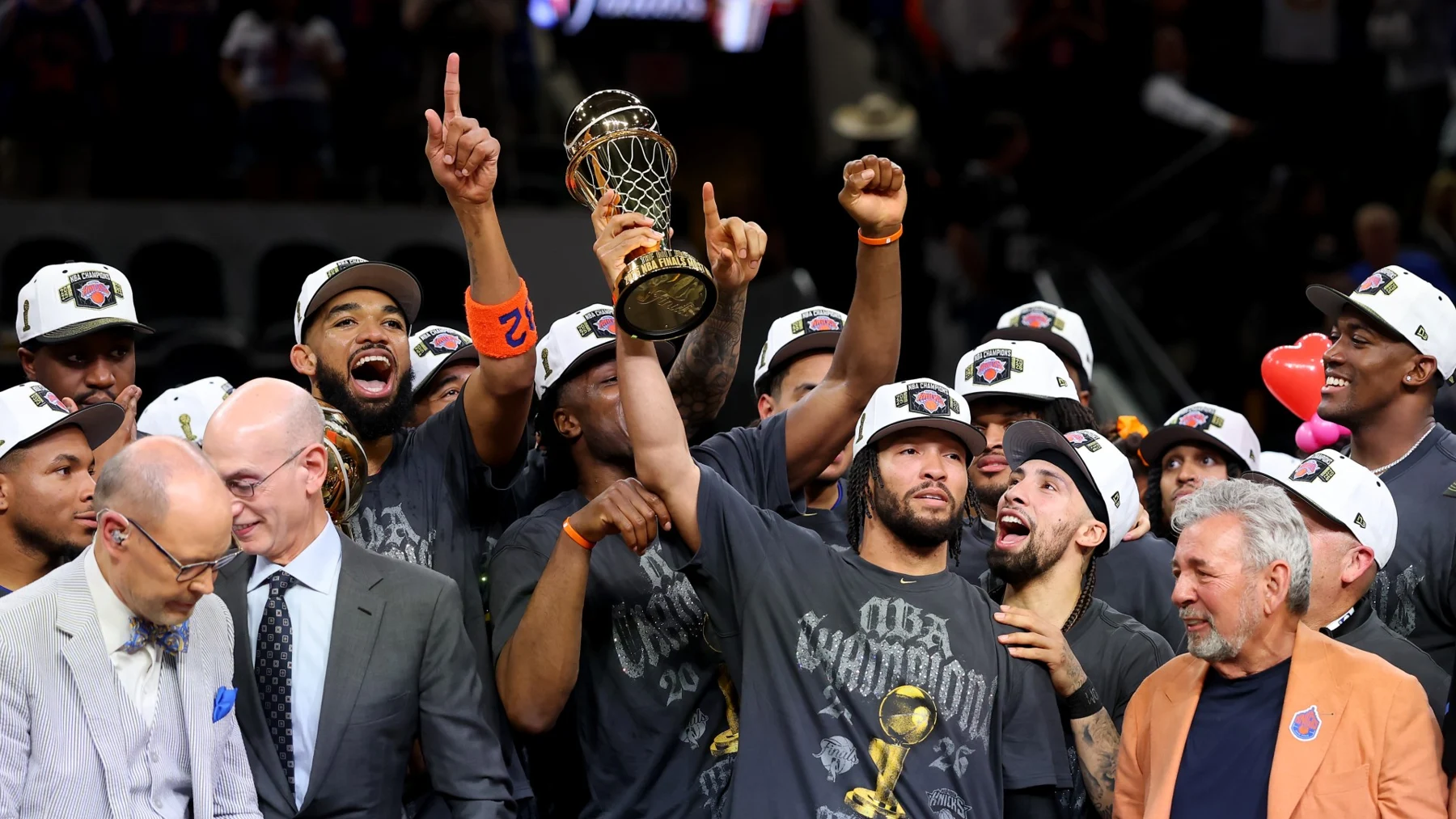
New York defeated San Antonio 4–1 in the 2026 NBA Finals. The champion entered as the East's third seed; the runner-up entered as the West's second. A final standings archive should preserve those starting positions instead of moving the eventual winner to the top of the regular-season list.
Detroit's run ended against Cleveland in the conference semifinals. Oklahoma City's ended against San Antonio in the Western Conference finals. Those outcomes do not invalidate their regular-season achievements. They answer a later question under a different competitive format: which team won the required series against the opponents it encountered?
The regular season combines results across a broad schedule. A playoff series repeatedly tests one pairing, with advancement depending on winning that particular sequence. A better overall record can establish a starting advantage without resolving the matchup in advance. The two measures are related, but they are not interchangeable descriptions of the season.
This is also why a season summary should avoid a single ambiguous label such as best team. Specify the measure: most regular-season wins, highest conference position, conference champion or NBA champion. Each describes something observable. Using the term without the measure invites arguments that the table cannot settle and makes historical comparisons less useful.
For New York, retain the 53–29 regular-season record alongside the championship outcome. For San Antonio, retain 62–20 alongside the Finals appearance. For the two conference leaders, retain their records alongside the round in which they were eliminated. This compact structure respects the full season rather than letting either April's table or June's result erase the other.
The official Finals game notes provide the later-stage record when a detailed postseason check is needed. For this article's purpose, the central observation is narrower: seeding described the route into the bracket, while the championship was earned through the games that followed. The complete regular-season table remains fixed after those results arrive.
How to use the 2025–26 standings archive
A complete archive is useful for more than finding who finished first. It lets you check a remembered playoff seed, compare qualification thresholds and distinguish an organization's regular-season performance from its later tournament result. Begin with a specific question, then select the field that actually answers it.
For example, a question about direct qualification needs the sixth-place record and the first team below it. A question about the last surviving team needs the Play-In results. A question about the champion needs the Finals outcome. Mixing those records creates apparent contradictions that disappear when the stage is labeled correctly.
Keep records, seeds and season labels together
Use the full season label, 2025–26, when saving a table or citing a team's record. A page called 2026 standings can refer to the season ending in 2026, games played during the calendar year or an early table from the next season. The NBA season recap archive is a useful way to locate the intended campaign before opening a current team or standings page.
Last season is a relative phrase. It points to 2025–26 at this article's November 2026 check date, but its meaning changes as later seasons finish. A season-specific archive should retain its title and records while a current overview updates its links. If you bookmark this page, the numbers should still describe the same completed campaign years later.
When comparing another year, check the schedule length before comparing raw wins. Also keep conference rank separate from league-wide ranking and preserve actual tied-team order. Equal totals do not mean the teams shared a seed, while unequal totals across conferences do not create one combined playoff ladder. These distinctions become especially useful when reviewing several seasons side by side.
Use historical roster and game information for historical explanations. The players listed on today's NBA rosters may have moved since this season, and today's broadcast arrangements do not establish where an old game aired. For current planning, the weekly schedule answers a different, time-sensitive question.
Finally, treat the table as evidence of results, not a complete explanation of team strength. It cannot by itself establish the effect of an injury, a trade or a coaching adjustment. Start with the verified final record, add the relevant game or lineup evidence, and state any interpretation as an interpretation. That approach keeps the archive practical without asking it to prove more than it contains.
Sign in with Google to join the discussion.