The 2026-27 NBA schedule is out—here is what became official
The full 2026-27 NBA schedule arrived on Thursday, August 13, 2026, after the league used a familiar two-step rollout: selected opening-week and showcase games first, then the league-wide slate. That distinction matters. The teaser phase tells fans which matchups the NBA wants to frame as events; the full release gives every front office, broadcast partner and ticket buyer the working map of the season.
For a fan trying to answer a simple question—when does my team play, where is the game, and which network has it—the best starting point is a live schedule rather than a release-day article. Our 2026-27 NBA schedule is built for date-by-date checking, while the team schedule directory cuts directly to one franchise. The NBA's own schedule interface likewise now exposes the 2026-27 regular season with team, broadcaster and calendar controls. Those dynamic pages should remain the source of truth for a late time change; this guide is about understanding the shape behind the rows.
Locked into the release
The published opponent, home/away designation and date for the games already assigned.
Still conditional
Two December opponents per team remain tied to Emirates NBA Cup results.
Always re-check
Tip times, local listings and some broadcast details can move as the season approaches.
That is why “full schedule” should not be read as “every line can be printed once and forgotten.” The league has distributed the season's game inventory, but the NBA Cup intentionally leaves two slots unresolved for every club. Even among assigned games, national television and operational changes can alter the viewing plan. A flight booked around a 7:30 p.m. tip or a streaming subscription chosen for one matchup deserves a final check through the NBA TV schedule shortly before game day.
The release is nevertheless the moment the season becomes tangible. Teams can see road clusters and recovery windows; broadcasters can build weekly habits; fans can compare holiday games, rivalry returns and the one visit an out-of-conference star may make to their city. Add the dates you care about through the NBA calendar tools, but keep the live schedule bookmarked. The smart reading of August's release is a firm framework with a small, meaningful pocket of December uncertainty—not a frozen artifact.
Read the 82-game map before chasing marquee matchups
An NBA schedule makes more sense when you stop treating all 82 rows as interchangeable. The traditional construction begins with four games against each division rival, a rotating mix of three or four meetings against the rest of the conference, and one home plus one road game against every team in the other conference. That distribution is why a February game against the team sitting directly above you can carry more practical standings weight than a glamorous interconference matchup receiving twice the promotion.
16
Division games
Four meetings with each of four division opponents.
24
Four-game conference series
Four meetings with six non-division teams in the same conference.
12
Three-game conference series
Three meetings with the remaining four conference teams.
30
Interconference games
A home-and-away pair with all 15 teams from the other conference.
The arithmetic—16 + 24 + 12 + 30—is the useful baseline behind an 82-game, 41-home and 41-road season. It also explains why fans should look beyond headline opponents. Which conference rivals appear four times instead of three? Is the extra home date in a three-game series on your team's side this season? Those repetitions affect head-to-head opportunities and the volume of games played inside the conference, where playoff and Play-In positioning is decided.
There is now an important Cup-era footnote. The schedule released in August gives each club defined opponents and dates for 80 games, with two December slots marked TBD. From December 9-15, teams that reach the Emirates NBA Cup knockout rounds use Quarterfinal and Semifinal games as part of that remaining regular-season inventory. The 22 teams that miss the knockout bracket are assigned two regular-season games on off nights during the same window. The Cup Championship is the exception: it does not count toward the 82-game standings record.
That mechanism preserves the season total while allowing tournament results to shape the final pairings. It can also disturb the clean opponent-frequency chart above; a knockout matchup may become an additional meeting that was not part of the original rotation. So use the numbers as a map of how the league builds its calendar, not as a guarantee that every final 2026-27 pairing will fit a perfectly symmetrical box. On a team schedule, the most revealing August questions are not only “When do we play the champions?” but “Where are the repeated conference games, and what remains unresolved in December?”
Opening week and national TV windows reveal the league’s priorities
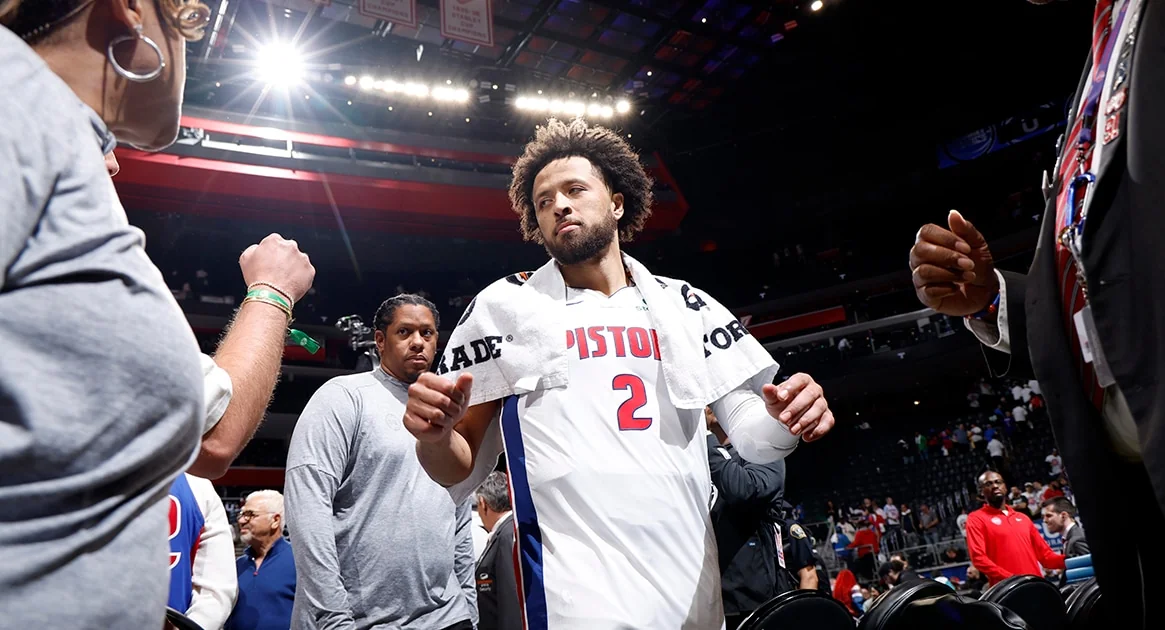
The NBA did not ease into 2026-27. The regular season opens on October 20 with a tripleheader, beginning with Boston visiting Detroit at Little Caesars Arena. That afternoon placement puts a revived Eastern rivalry in the first window of the entire season. Later, Philadelphia visits the defending champion Knicks at Madison Square Garden, pairing the banner-night stage with an opponent carrying its own postseason history and roster intrigue. This is schedule-making as editorial judgment: the league is selecting stories, not merely arranging opponents.
Opening-night placement is valuable, but it is not a neutral ranking of the league's best teams. Market reach, star availability, recent playoff results, rivalries and broadcaster needs all influence the card. A young team with 11 national games is not automatically projected to be worse than an older team with 25; one may be easier to place in flexible local windows, while the other offers years of reliable audience behavior. Treat national-TV totals as a measure of preseason confidence and commercial storytelling—not as an alternative to basketball analysis.
The larger viewing map is easier to learn as a weekly rhythm. Under the long-term media cycle introduced in 2025-26, Peacock generally owns Monday inventory, NBC and Peacock establish Tuesday as a showcase night, ESPN anchors Wednesday, and Prime Video is central on Friday. ABC, ESPN, NBC, Peacock and Prime add weekend windows as the season develops. There are exceptions, extra dates and midseason additions, so this is a habit guide rather than a rigid programming law.
The useful fan takeaway
Learn the platform rhythm, then verify the specific matchup. Use the NBA TV schedule for network assignments and the games-today page for the final daily slate. National games are available through the corresponding partner's streaming product, while local and out-of-market access still depends on territory and League Pass rules.
That fragmentation is part of what the release communicates. The old reflex—check one cable channel on a familiar weeknight—is no longer enough. The NBA is building appointment viewing across several partners, and opening week teaches the pattern before the schedule settles into its long middle. Circle the glamour games, but also note the network day attached to them; the platform is now part of the matchup's identity.
The NBA Cup is the schedule’s built-in moving part
The two TBD lines in December are not missing data; they are the mechanism that lets the Emirates NBA Cup function inside an 82-game season. Group Play runs from October 30 through November 27. Every club plays four Cup games—two home and two road—against the other teams in its five-team group. Six group winners advance, joined by the best second-place team in each conference, producing an eight-team knockout bracket.
Group Play
Oct. 30-Nov. 27
Quarterfinals
Dec. 4-5
Semifinals
Dec. 8 and/or 9
Championship
Dec. 11
All Group Play, Quarterfinal and Semifinal games count in the regular-season standings. The Championship at Hinkle Fieldhouse does not. That single exception is essential: the two finalists play an 83rd competitive game, but only 82 go into the standings. Everyone else reaches 82 through either knockout games or the league's December assignments for teams outside the bracket.
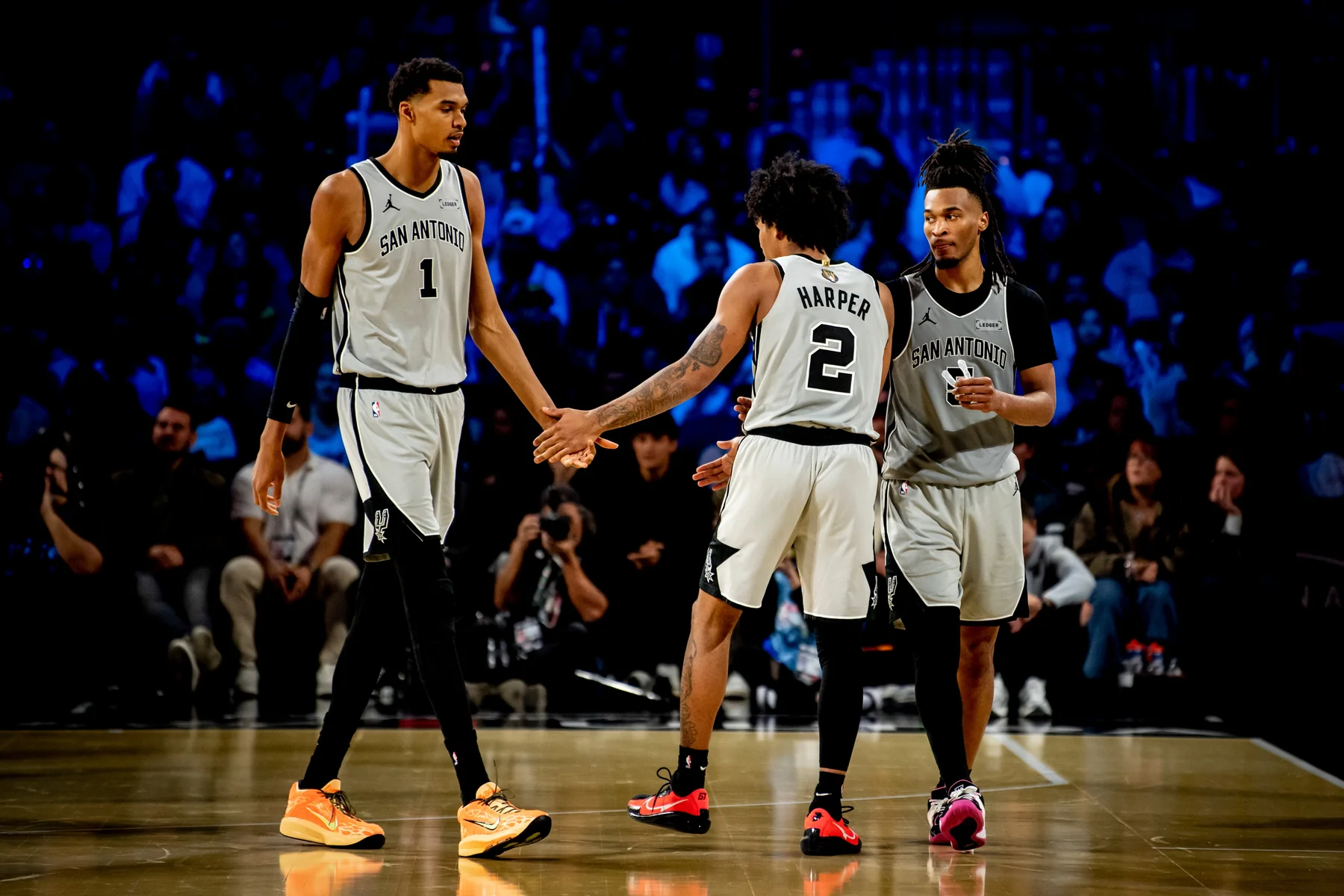
There is a meaningful format change in 2026-27. The higher seed in each conference will host the Semifinal, leaving the Championship as the tournament's only neutral-site game. That turns Group Play performance into something more concrete than bracket cosmetics. Record and point differential can help determine whether a contender sleeps in its own bed before a single-elimination game or travels on short notice during an already compressed part of the calendar.
For fans, December therefore needs a second planning pass. A placeholder on the 2026-27 schedule is not a promise that a favorite team will be home, away or facing a specific opponent. Avoid buying nonrefundable travel around the TBD window until the bracket and consolation assignments are official. Once Group Play ends, update calendar entries and verify the host arena—especially because advancing teams may earn a home Semifinal that did not exist on the August slate.
The Cup's scheduling achievement is that its games feel distinct without creating a separate parallel season. The tradeoff is controlled uncertainty. Fans who understand that design will not mistake an August placeholder for an error, and they will recognize why a late-November point-differential possession can influence both tournament survival and the logistics of the next two weeks.
International dates add more than postcard value
The 2026-27 calendar uses “Global Games” for events that do not all carry the same competitive weight. Dallas and Houston meet in Macao on October 9 and 11, but both China Games are preseason contests. They matter for rotation experiments, conditioning and a high-profile Texas matchup in Asia; they do not enter the standings. That is different from Denver against Indiana in Mexico City on November 7, which is a full regular-season game at Arena CDMX.
The distinction sounds obvious until a schedule feed labels every event simply as neutral site. For fantasy decisions, win totals and playoff races, the competition type is more important than the location tag. A preseason result in Macao can shape a coach's evaluation without changing a record. Nuggets-Pacers in Mexico City changes both teams' records exactly as a game in Denver or Indianapolis would, even though neither club receives its normal home environment.
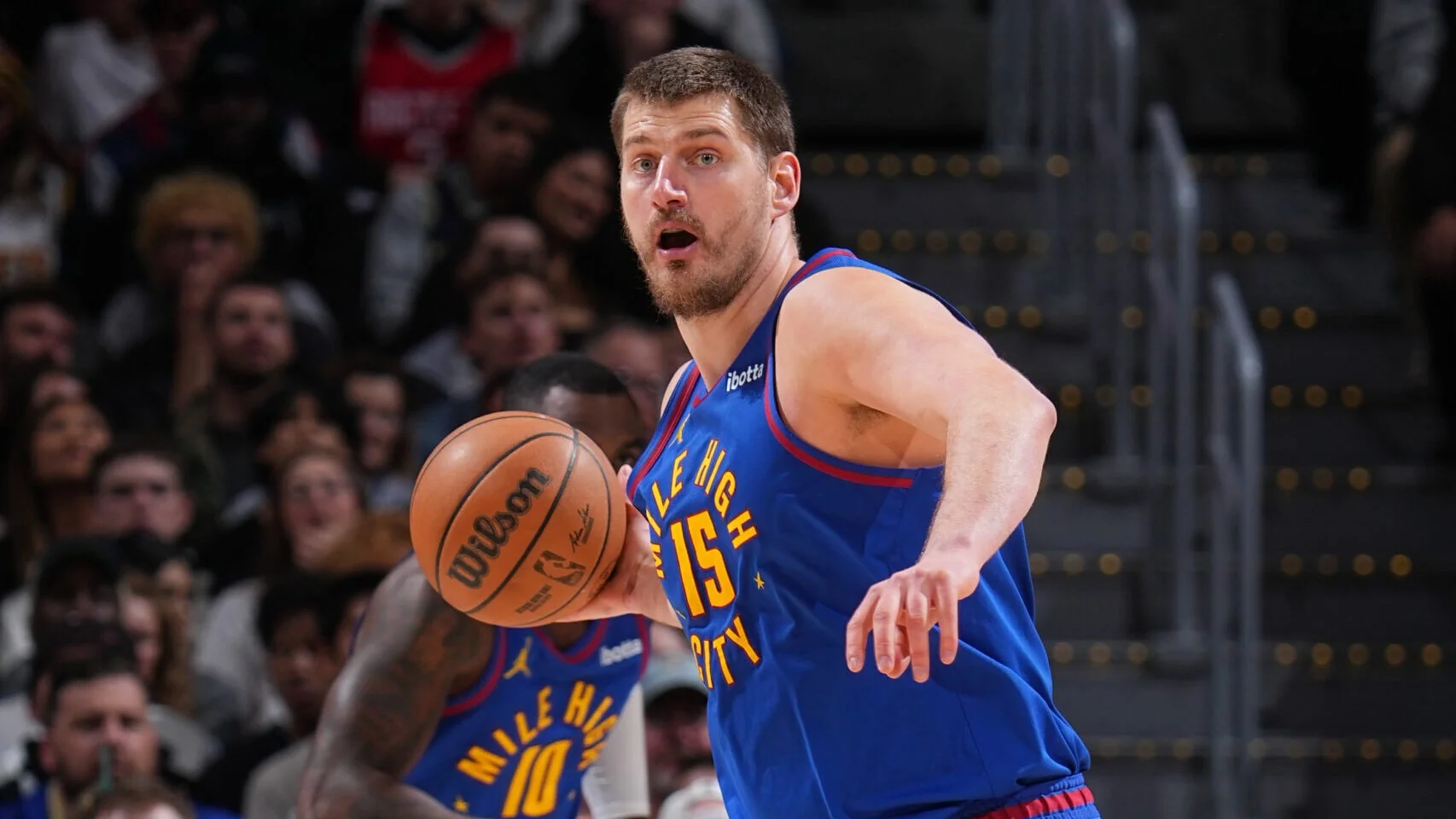
The most unusual regular-season sequence belongs to San Antonio and New Orleans. They play at Accor Arena in Paris on January 14, 2027, then meet again at Co-op Live in Manchester on January 17. Paris will host its sixth NBA regular-season game; Manchester will stage its first. Putting the same opponents together twice turns the trip into a short European mini-series and avoids sending each club across the Atlantic for two separate one-game visits.
That does not make the basketball effects predictable. Teams may build extra travel and acclimation time into the trip, and the league controls surrounding logistics that the public schedule does not show. It would be lazy to look at a time-zone change and declare an automatic fatigue loss. The sharper question is what sits immediately before and after the overseas block: how many recovery days are available, whether either team returns to a road game, and how the coaching staff manages practice without its normal facilities.
Check the event type before planning.
On the full season schedule, confirm preseason versus regular season, neutral-site venue, local tip time and ticket terms. International listings are more likely to involve packages, registration windows or venue-specific rules than an ordinary home date.
For the league, these games extend the NBA's live footprint. For schedule analysis, they are also stress tests in routine: different buildings, longer travel and unusually concentrated media obligations. The right reading is neither “just an exhibition” nor “travel decides the result.” First identify which games count; then evaluate the recovery context around them.
The schedule-strength story lives in rest and travel, not opponent names alone
Preseason “strength of schedule” lists usually begin with projected opponent win totals. That is useful, but incomplete. A home game against a contender after two days off is a different assignment from facing the same contender on the second night of a road back-to-back. The opponent name has not changed; the recovery equation has.
Historical NBA data show why the distinction deserves attention. In an NBA.com analysis covering three seasons before 2023-24, teams with a rest advantage went 542-403, a .574 winning percentage. That is an association, not a betting system. The rested team may also be better, healthier or at home. Still, it is enough evidence to reject schedule analysis that counts only how many strong opponents appear in a month.
Audit a difficult stretch in five passes
- 1. Sequence: home/home, road/road or home/road back-to-back?
- 2. Movement: same city, short hop or time-zone crossing?
- 3. Relative rest: is the opponent also playing on consecutive nights?
- 4. Trip position: opener, middle game or last stop before home?
- 5. Stakes: conference rival, Cup game or late seeding matchup?
Peer-reviewed studies of NBA travel support treating those variables together. Analyses of back-to-backs and thousands of team-games have found associations among travel distance, circadian disruption and performance, while also producing results that change with direction, home/away sequence and assumptions about when teams traveled. That complexity is the point: “westbound trip” or “four games in six nights” cannot automatically be converted into a scheduled loss.
The league has increasingly used same-city sets and geographically paired stops to reduce travel between consecutive games. Fans evaluating the team-by-team schedules should do the same work the headline rankings skip: trace the route, compare both teams' rest, then revisit the stretch when injuries and rotations are real. In August, schedule difficulty is a risk profile—not a result.
Build a fan workflow that survives schedule changes
A schedule-release screenshot is useful for the group chat and poor as a season-long operating system. Cup assignments, broadcaster updates and occasional operational changes can all make the August image stale. Use a small stack of tools, with each one doing a different job.
- 1. Start broad. Scan the full 2026-27 schedule for road trips, holiday dates and Cup placeholders.
- 2. Narrow to one club. Use the team directory instead of repeatedly filtering a league-wide grid.
- 3. Add, do not copy. Subscribe through the NBA calendar so an update has a chance to reach your device. Keep the printable schedule for planning, not final verification.
- 4. Check the viewing layer. Use the TV schedule to confirm network and streaming platform. League Pass and local products remain subject to territory and national-exclusivity rules.
- 5. Verify on game day. Recheck local tip time, arena and provider on the games-today page. The NBA's location-aware Tap to Watch button can route you to the relevant service, but it does not replace a required subscription.
Time zones deserve their own check. League releases commonly display Eastern Time, team pages favor the club's local zone, and an international event may be listed in venue time. A calendar entry is convenient only if the device converted it correctly, so compare the displayed local date as well as the hour.
For ordinary viewing, a game-day check is enough. For flights, hotels or nonrefundable tickets, verify again with the team, arena and official ticket listing 24-48 hours before departure. The release gives you the architecture of the season; a reliable workflow keeps the details accurate after August.
Sign in with Google to join the discussion.