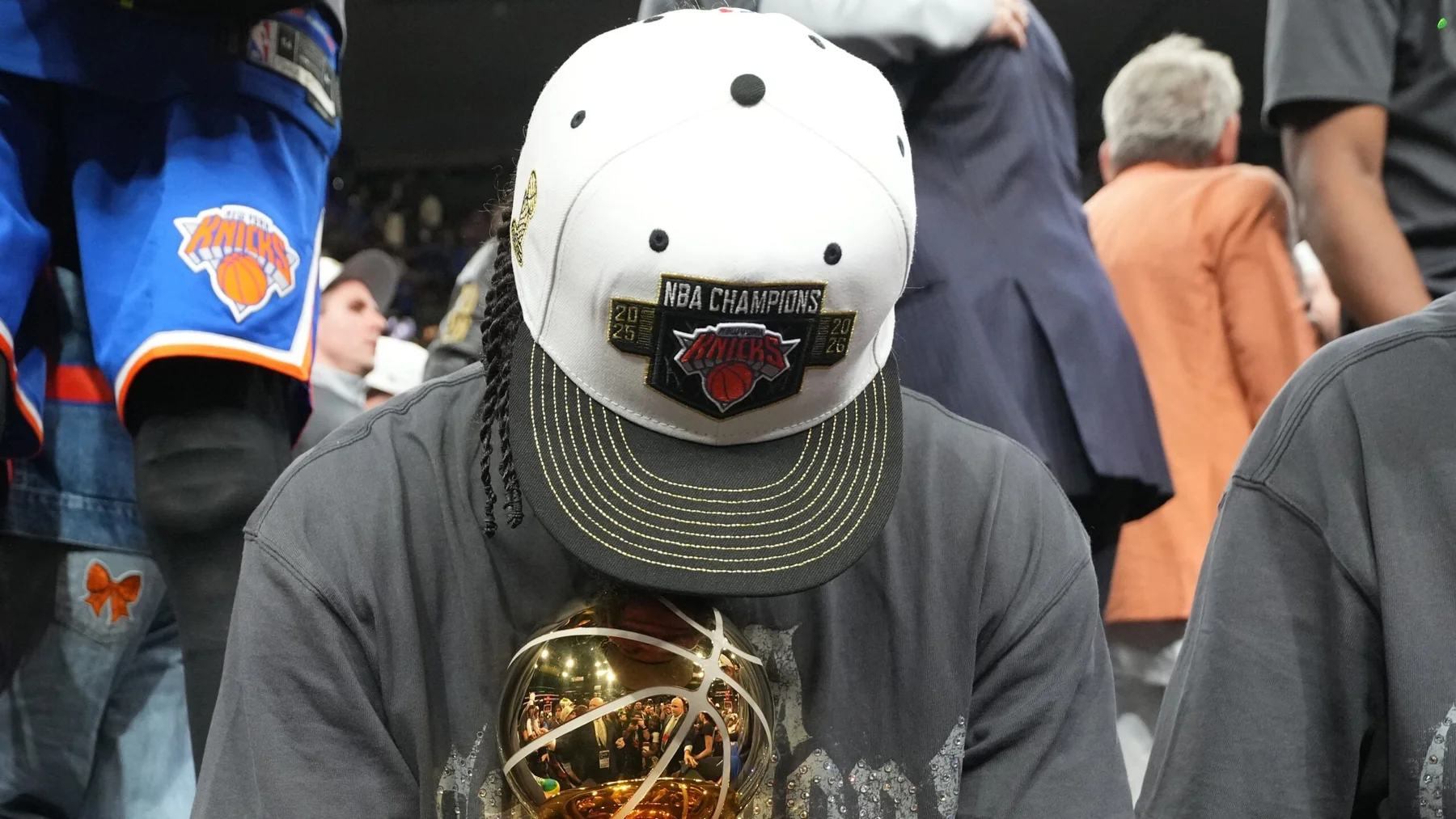
The 2026 NBA playoffs ended with the New York Knicks beating the San Antonio Spurs 4-1 in the Finals. New York, the East's No. 3 seed, went 16-3 across four series and won its first championship since 1973. San Antonio reached the Finals from the West's No. 2 seed after surviving a seven-game conference final against defending champion Oklahoma City.
Below is the completed bracket—not a prediction or live snapshot—with every series score, the Play-In path that produced the No. 7 and No. 8 seeds, and the turning points that shaped each conference. Game-level dates and scores remain available through the site's NBA games hub; this page preserves the finished postseason story.
2026 NBA playoffs bracket at a glance
Sixteen teams entered the first round on April 18. Fifteen best-of-seven series later, New York held the Larry O'Brien Trophy. The table follows the bracket from the first round to the Finals. Seeds are shown in parentheses and belong to each team's conference; Detroit and Oklahoma City were their respective No. 1 seeds, not co-No. 1 teams in a league-wide table.
Every series result by round
| Round | Matchup | Winner | Series |
|---|---|---|---|
| East first round | (1) Detroit vs. (8) Orlando | Detroit | 4-3 |
| East first round | (2) Boston vs. (7) Philadelphia | Philadelphia | 4-3 |
| East first round | (3) New York vs. (6) Atlanta | New York | 4-2 |
| East first round | (4) Cleveland vs. (5) Toronto | Cleveland | 4-3 |
| West first round | (1) Oklahoma City vs. (8) Phoenix | Oklahoma City | 4-0 |
| West first round | (2) San Antonio vs. (7) Portland | San Antonio | 4-1 |
| West first round | (3) Denver vs. (6) Minnesota | Minnesota | 4-2 |
| West first round | (4) Los Angeles Lakers vs. (5) Houston | Los Angeles | 4-2 |
| East semifinals | (1) Detroit vs. (4) Cleveland | Cleveland | 4-3 |
| East semifinals | (3) New York vs. (7) Philadelphia | New York | 4-0 |
| West semifinals | (1) Oklahoma City vs. (4) Los Angeles Lakers | Oklahoma City | 4-0 |
| West semifinals | (2) San Antonio vs. (6) Minnesota | San Antonio | 4-2 |
| East finals | (3) New York vs. (4) Cleveland | New York | 4-0 |
| West finals | (1) Oklahoma City vs. (2) San Antonio | San Antonio | 4-3 |
| NBA Finals | (E3) New York vs. (W2) San Antonio | New York | 4-1 |
The bracket produced three first-round Game 7s in the East: Detroit–Orlando, Boston–Philadelphia, and Cleveland–Toronto. Philadelphia was the only No. 7 seed to win a series, eliminating No. 2 Boston before New York swept the 76ers. Minnesota supplied the West's first-round upset as a No. 6 seed over Denver. San Antonio later delivered the biggest bracket turn by eliminating top-seeded Oklahoma City in seven.
How to read the seeds and bracket path
The NBA uses a fixed conference bracket. First-round pairings are 1–8, 2–7, 3–6, and 4–5. The 1–8 winner meets the 4–5 winner; the 2–7 winner meets the 3–6 winner. The league does not reseed after an upset. That is why seventh-seeded Philadelphia moved into New York's half of the East rather than automatically facing Detroit, the highest remaining seed.
The Play-In determines seeds seven and eight but is technically separate from the playoffs. Its games do not appear among the 15 best-of-seven series above and do not count toward a team's playoff record. Once the Play-In winners enter the bracket, however, they receive the same fixed path as every other seed. “4-3” means four series wins to three; it does not show margins, overtime, injuries, or which team led earlier in the round.
How the 2026 Play-In set the final field
The Play-In ran April 14–17 and filled the final two playoff places in each conference. Teams that finished seventh and eighth had two chances to qualify: the 7–8 winner became the No. 7 seed, while the loser hosted one more game. Teams that finished ninth and 10th started in an elimination game and needed two wins to reach the bracket.
Eastern Conference Play-In
The result placed Philadelphia opposite second-seeded Boston and Orlando opposite top-seeded Detroit. Both lower seeds pushed the first round to seven games, and Philadelphia completed the upset. That outcome is a reminder that Play-In status describes the route into the field, not a guarantee that the qualifier will be an easy opponent.
Western Conference Play-In
Portland then faced San Antonio and Phoenix drew Oklahoma City. Neither won a series, although Portland took one game from the Spurs. The Play-In's asymmetric design matters: a seventh- or eighth-place team can lose once and survive, while ninth and 10th must be perfect over two games. For historical bookkeeping, those six contests are postseason games in the everyday sense but are not added to the NBA playoff series record.
Eastern Conference bracket: New York's road through Atlanta, Philadelphia and Cleveland
New York's East run changed character after three games. The third-seeded Knicks trailed Atlanta 2-1 following consecutive one-point losses, then won 11 straight games to reach the Finals. That streak was not padded with byes: it included three closeout wins on the road, a sweep of the team that had eliminated Boston, and a sweep of Cleveland after the Cavaliers knocked out No. 1 Detroit.
First round and conference semifinals
The Hawks made the opening round a genuine test. New York won Game 1, lost Games 2 and 3 by 107-106 and 109-108, and faced the possibility that its regular-season body of work had not solved a surging No. 6 seed. The response was emphatic. The Knicks won Games 4, 5, and 6 by 16, 29, and 51 points—a combined plus-96. The 140-89 finale included an NBA playoff-record 47-point halftime lead.
Philadelphia arrived in the second round with momentum and a valuable warning label. The seventh-seeded 76ers had taken Games 5 through 7 against Boston to overturn their series. New York never allowed another comeback arc. The Knicks scored 137, 108, 108, and 144 points in a four-game sweep, while Philadelphia topped 102 only once. On the official NBA series page, New York averaged 124.3 points and 29.3 assists; those numbers capture both shot-making and the passing that kept the attack from becoming a one-player exercise.
Eastern Conference finals
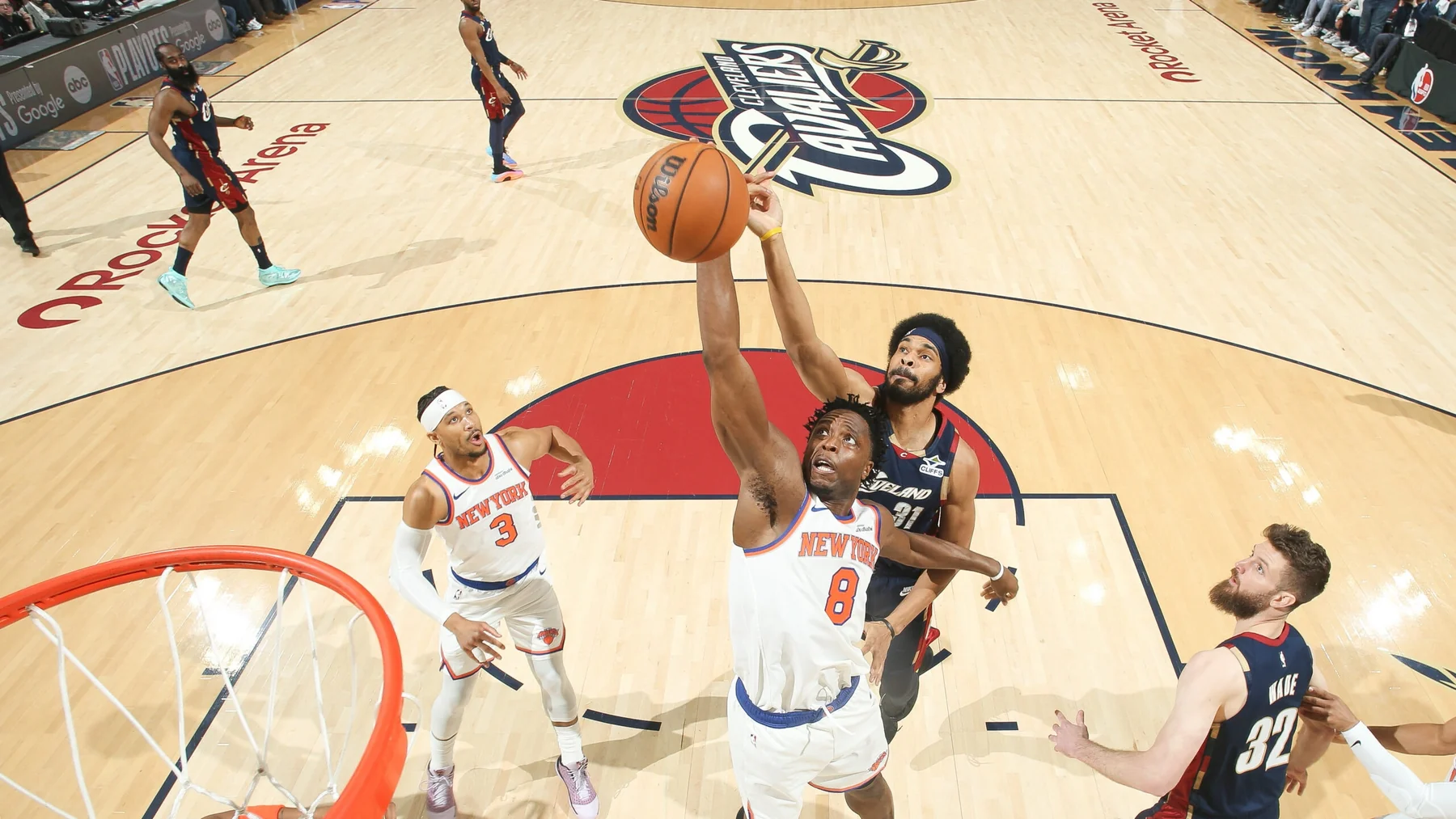
Cleveland's path looked battle-tested. The Cavaliers had gone seven against Toronto, then recovered from 0-2 against Detroit to win a second consecutive seven-game series. Yet the conference final produced no reset for New York. The Knicks won Game 1 in overtime, then took the next three by 16, 13, and 37. The 130-93 clincher sent the franchise to its first Finals since 1999.
Jalen Brunson won the Larry Bird Trophy unanimously after averaging 25.5 points and 7.8 assists on 48.7% shooting in the sweep. The most important bracket point is broader than the award: New York did not need identical scripts. It escaped a tight overtime opener, controlled the middle games, and closed with six double-figure scorers in a rout. A 4-0 label can hide variation; here it also accurately reflects that Cleveland never found a result-changing counter.
East path: Atlanta 4-2 → Philadelphia 4-0 → Cleveland 4-0. New York reached the Finals at 12-2, with an 11-game winning streak after falling behind the Hawks.
Western Conference bracket: San Antonio survived the long route
San Antonio's route was less linear. The Spurs handled Portland in five, traded punches with Minnesota for six, then reached the brink of elimination against Oklahoma City. They played 18 games before the Finals—four more than New York—and needed a road Game 7 against the defending champions. The bracket's No. 2 seed delivered home court in the first two rounds, but not in the matchup that decided the West.
First two rounds
Portland stole Game 2 in San Antonio, 106-103, after the Spurs won the opener. San Antonio then took three straight by 12, 21, and 19 points to close the series 4-1. That was the cleanest portion of its run. Minnesota opened the next round with a 104-102 road win, and the series was tied 2-2 after Victor Wembanyama's Game 4 Flagrant 2 ejection during a 114-109 Timberwolves victory.
Wembanyama answered in Game 5 with 27 points, 17 rebounds, and three blocks as San Antonio won 126-97. The Spurs followed with a 139-109 road clincher. Their final two wins by a combined 59 points make 4-2 look comfortable in hindsight, but the pivot came only after Minnesota had erased the Spurs' advantage twice and turned the matchup into a best-of-three.
Seven games against Oklahoma City
The West finals never settled. San Antonio won Game 1 in double overtime. Oklahoma City answered twice and led 2-1. The Spurs tied it with a 103-82 defensive rout, then lost Game 5 by 13 and faced elimination. Game 6 became their largest response: a 118-91 win built around a 20-0 third-quarter run, with Wembanyama producing 28 points, 10 rebounds, and three blocks.
In Game 7, San Antonio won 111-103 in Oklahoma City. Wembanyama led seven Spurs in double figures with 22 points and added seven rebounds. That distribution matters because winner-take-all games can shrink into star isolation. San Antonio still received scoring from across the rotation while holding off multiple Thunder charges. It won the series 4-3 without ever leading by more than one game.
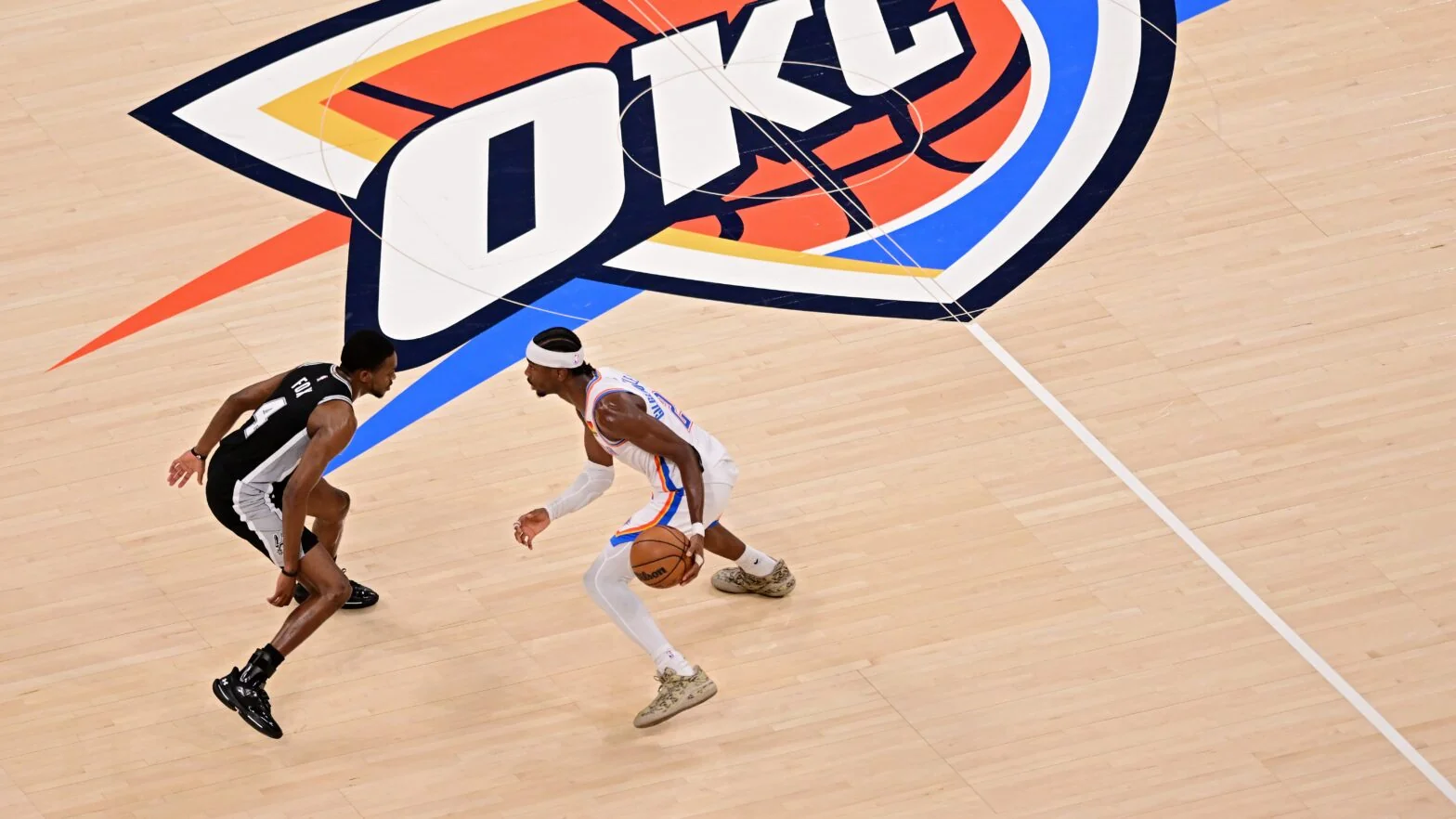
The complete West path was Portland 4-1, Minnesota 4-2, Oklahoma City 4-3. That progression demanded different forms of recovery: responding to an early home loss, regaining control after a tied semifinal, and surviving elimination pressure. It also left just four days between the May 30 conference clincher and the June 3 Finals opener.
NBA Finals: Knicks beat Spurs 4-1 to complete the bracket
New York had the longer rest and the shorter road, but the Finals were not a five-game procession. The Knicks won four times, yet three of the last four games were decided by four points or fewer. San Antonio's only victory came in Game 3, and the Spurs repeatedly built leads that forced New York to execute under pressure. The 4-1 result is definitive; “easy” would be an inaccurate summary.
Five-game scoreline and the close-game reality
NYK 105-95
NYK 105-104
SAS 115-111
NYK 107-106
NYK 94-90
Game 1 supplied the only double-digit final margin. Game 2 swung to New York by one, San Antonio cut the series to 2-1 with a four-point Game 3 win, and the Knicks answered by one in Game 4. That sequence meant the difference between a commanding New York lead and a tied series was two possessions spread across two nights. Close endings do not invalidate a 4-1 score; they explain the quality required to produce it.
Game 5 delivered the defining individual line. Jalen Brunson scored 45 points, including 13 consecutive New York points in the fourth quarter, as the Knicks recovered from a 16-point deficit to win 94-90. He set a franchise Finals scoring record and completed his Finals MVP case. The team context still matters: New York's defense held San Antonio below 100 for a second time, and a championship possession is built from screening, spacing, rebounding, and stops as well as the shot-maker.
What the completed 2026 bracket tells us
The Knicks finished 16-3, an .842 winning percentage. NBA Communications noted that they became the 10th team to post at least an .840 winning percentage in a single postseason. Their loss distribution is striking: two one-point defeats to Atlanta, then one four-point Finals defeat. After trailing the Hawks 2-1, they won 14 of their last 15 games.
Seed predicts path and home court, not outcome. The champion was No. 3; the East No. 1 and No. 2 did not reach the conference finals.
A sweep can contain an overtime opener, while a 4-1 Finals can contain three one-possession-or-near-one-possession endings.
Use final series scores for the tree, then game scores and context to understand how the tree was completed.
For future planning, keep this finished bracket separate from the next season's dates. The NBA calendar answers what comes next; this archive answers what happened. New York beat Atlanta, Philadelphia, Cleveland, and San Antonio. San Antonio beat Portland, Minnesota, and Oklahoma City. That is the complete 2026 Finals path.
Final bracket verdict
New York won the 2026 championship 4-1 over San Antonio and finished 16-3. The compact table preserves every series result; the conference paths explain why the Knicks' dominant record and the Spurs' seven-game West escape can both be true.
Sign in with Google to join the discussion.