Who owns the Golden State Warriors today?
Joe Lacob is the controlling figure in the Golden State Warriors ownership group. The team's official profile calls him its co-executive chairman and CEO as well as the group's managing member. That last phrase is the clearest answer to the practical question behind “Who owns the Warriors?” Lacob represents the group in league governance, sets the broad direction of the organization and sits above the basketball and business executives who run daily operations.
Managing member
Joe Lacob
Co-executive chairman
Peter Guber
Ownership vehicle
Private investor group
Joe Lacob is the managing member
Lacob has held the leadership role since the group completed its purchase in 2010. The Warriors say he serves on the NBA Board of Governors, where every franchise has a representative for league-level matters. His CEO title also places him at the top of the Warriors' operating structure. These are stronger indicators of control than the loose labels “co-owner” or “majority owner” that appear in headlines.
None of those titles means Lacob owns every share. NBA franchises are often held through private entities with several investors. One person can manage the entity and exercise the team's principal vote while other partners retain meaningful economic interests. For fans, the useful distinction is that Lacob is the person accountable for the ownership group's direction even though the Warriors are not a one-shareholder company.
Peter Guber shares the chairman title
Peter Guber is the other name that belongs in the short answer. The Warriors list him as co-executive chairman, and the NBA's 2010 approval announcement called Lacob and Guber the majority owners of the incoming group. Guber's title reflects a senior governance role, especially around the franchise's business, entertainment and venue ambitions.
The wording matters: Lacob is identified as CEO and managing member; Guber is identified as co-executive chairman. They lead the same ownership era, but their published jobs are not identical. A current fan guide should therefore say the Warriors are owned by a private group led and managed by Joe Lacob, with Peter Guber serving as co-executive chairman. That answer is both more accurate and more useful than naming either man as the sole owner.
How the 2010 ownership change happened
The Lacob-Guber era began with a private sale, followed by the approval required for control of an NBA franchise. A group led by the two men signed an agreement in July 2010 to acquire the Warriors from Chris Cohan. The NBA Board of Governors unanimously approved the sale that November, completing the transfer.
The $450 million purchase
The official Warriors media guide records a $450 million purchase price. At the time, that was widely treated as a striking number for an NBA club. It should be read as the price paid by the investor group for the franchise transaction, not as a check written by Lacob alone. The group structure is central to understanding both the purchase and the ownership today.
Transaction timeline
- July 15, 2010: The investor group signs the purchase agreement.
- November 12, 2010: NBA governors approve the sale unanimously.
- 2010-11 onward: Lacob acts as managing member and league governor.
League approval is more than ceremonial. NBA ownership transfers are subject to vetting and a vote by the other team governors. Commissioner David Stern's announcement welcomed Lacob and Guber as the Warriors' majority owners while also referring to their broader ownership group. That contemporary wording supports the modern description: two lead figures backed by multiple investors.
What changed from the Chris Cohan era
Cohan had controlled the franchise from 1995 until the 2010 sale. Golden State reached the playoffs only once during that span, the memorable 2007 “We Believe” run. The incoming group did not inherit a finished dynasty, although it did inherit Stephen Curry, selected seventh in the 2009 draft. Its early work involved rebuilding the basketball hierarchy, adding experienced advisers and creating a longer-term business plan.
The distinction prevents two opposite myths. Ownership did not manufacture Curry's talent, and the 2010 buyers did not arrive after every championship piece was already in place. Klay Thompson and Draymond Green were drafted after the sale; Steve Kerr was hired in 2014; the first title of the era arrived in 2015. Those developments make the ownership transition consequential without turning it into a one-cause explanation for four championships.
For a fan tracing the “owners list,” the clean handoff is therefore Chris Cohan to the Lacob-Guber-led group in 2010. Later changes in minority investments do not alter the public record that Lacob has remained the group's managing member throughout the modern era.
Joe Lacob's path to controlling the Warriors
Lacob did not enter NBA ownership as a celebrity buyer with no league experience. His official biography describes a long career in venture capital and a prior minority investment in another NBA franchise. Those two strands help explain why he became the managing member of a larger investor group rather than merely a passive financial partner.
Venture capital and a Celtics minority stake
Before the Warriors transaction, Lacob spent 24 years with Kleiner Perkins, working principally with life-sciences and technology companies. Venture investing involves evaluating management teams, allocating capital across uncertain projects and recruiting specialist leaders. It does not automatically translate into basketball expertise, but it does explain the organizational language that has followed his tenure: executive boards, long planning horizons and willingness to invest in infrastructure.
Lacob also held a minority stake in the Boston Celtics for roughly five years. He had to sell that interest when his group acquired Golden State because one person cannot retain competing NBA team interests. His Celtics role was useful exposure to league governance and a successful basketball operation, yet it was still a minority position. Saying he “owned the Celtics” without that qualifier would exaggerate his former authority.
| Role | Economic interest | Operating control |
|---|---|---|
| Passive or minority investor | Owns part of an entity | May have limited voting rights |
| Managing member | Usually owns an interest | Acts for the ownership entity under its agreements |
| CEO | Does not itself prove a percentage | Leads the operating organization |
Control is a governance role, not a synonym for 100% ownership
In Golden State, Lacob combines the managing-member and CEO roles. That makes him the central ownership voice in basketball-facing announcements and the franchise representative on the NBA Board of Governors. It still does not disclose how every dollar of equity or every voting right is divided among investors.
This is why percentage lists copied around the web can mislead. A percentage may describe an economic stake at one point in time, while the governing documents can grant a particular member management power. Stakes can also change through private secondary sales without producing a public, itemized cap table. The most durable fact is the one the organization itself publishes: Lacob manages the ownership group.
That framing also makes accountability clearer. Basketball executives evaluate talent and negotiate transactions; coaches choose schemes and rotations; Lacob and the ownership group hire senior leaders, approve major resource commitments and define the organization's appetite for risk. Ownership influence is real, but it travels through governance and staffing rather than a principal owner drawing up every play or personally making every roster call.
Who else is in the Warriors ownership structure?
The Warriors publish more leadership information than a two-name answer suggests. Their executive-board page identifies eight people, while team histories describe a larger investor group. Those sources tell readers who participates in top-level governance. They do not provide a current ledger of every investor and percentage.
Peter Guber's sports and entertainment role
Guber brought a different résumé to the 2010 partnership. The Warriors' media guide describes a career leading entertainment companies and owning interests in other sports properties. With Golden State, he is an owner and co-executive chairman. His public role has been closely associated with the fan experience, entertainment strategy and Chase Center development.
That complements Lacob's managing-member and CEO responsibilities. Shared chairmanship allows both men to shape major direction while the published management structure still makes Lacob the principal operator. Treating Guber as a decorative minority investor understates his official role; treating him as an interchangeable co-CEO overstates it.
The executive board is public
As of the September 8, 2026 freshness check for this guide, the official directory lists Lacob and Guber alongside Lou Giraudo, Brigette Lau, Bruce Karsh, John Burbank, Mark Stevens and Jeff Miller. This is the most dependable compact “Warriors owners list” available from the organization itself, provided it is labeled correctly as the executive board.
What the list proves
It proves who the organization currently presents as executive-board members. It does not, by itself, prove equal ownership, a specific voting allocation or that no other passive investors exist.
The complete cap table is private
The Warriors are not a publicly traded company required to issue a shareholder table with quarterly filings. Private transactions can add or reduce minority positions, and financial publications may report estimates based on sources familiar with a deal. That reporting can be useful when carefully dated, but it should not be blended with the team's official role directory.
For the same reason, “ownership group” is not evasive language. It is the accurate description of a private consortium in which the managing member, co-chair and board are visible while the complete economics remain confidential. Readers should be skeptical of pages that assign precise percentages to every recognizable name without linking to a transaction document or a well-sourced financial report.
The safest current formulation is simple: Lacob leads and manages the group; Guber is co-executive chairman; the Warriors publish a wider executive board; the full cap table is not public. That explains real authority without manufacturing precision.
What ownership changed on the basketball side
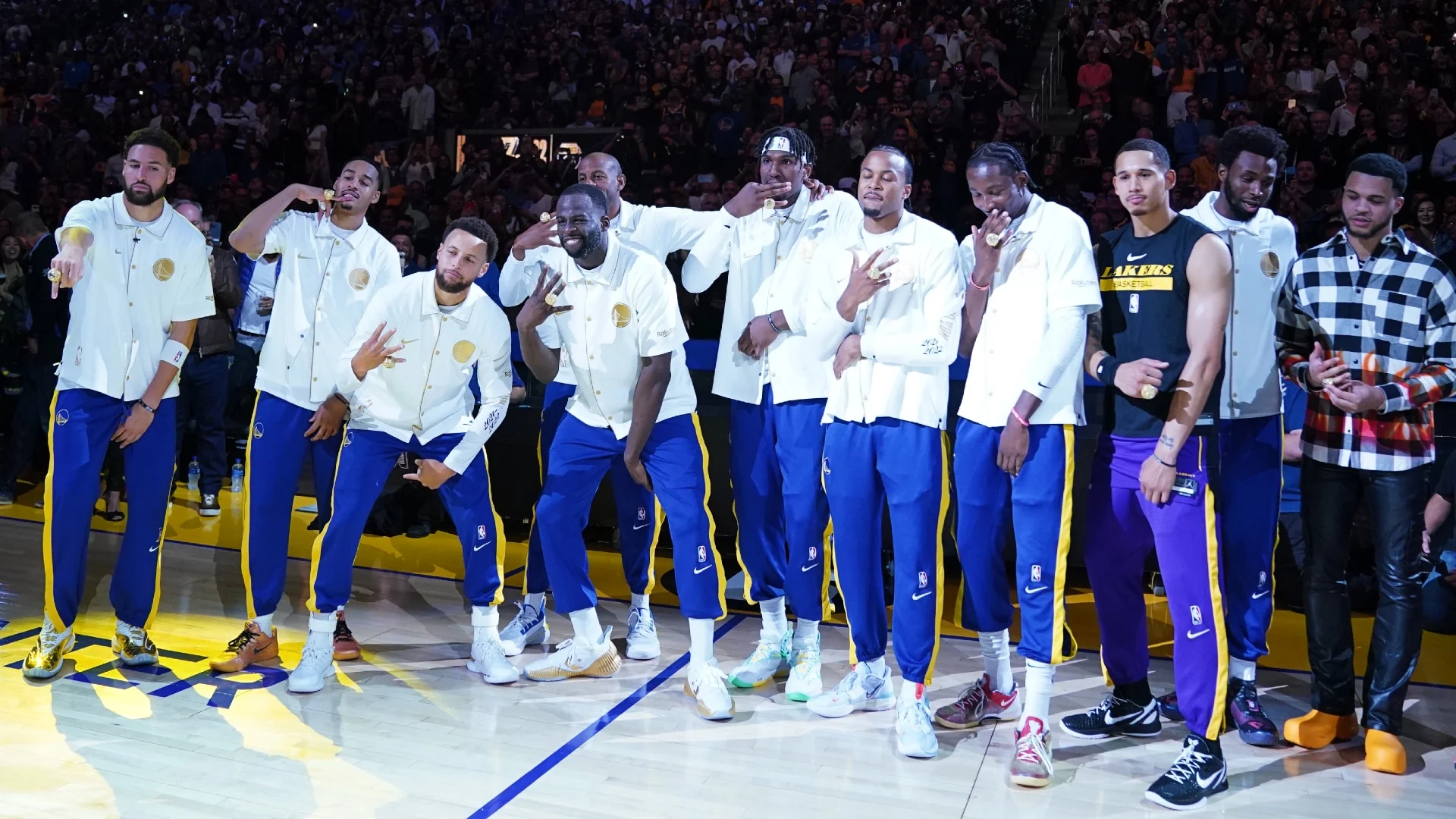
Owners are best judged by the organization they build and the decisions they authorize over time. In Golden State, the most visible results are four championships in 2015, 2017, 2018 and 2022, six Finals appearances, and the NBA-record 73-win regular season in 2015-16. Those accomplishments occurred under the Lacob-Guber group, but the causal story is broader than an owner's résumé.
Leadership decisions around a championship core
The group inherited Curry, then presided over a sequence of high-impact choices. Golden State drafted Thompson in 2011 and Green in 2012, elevated Bob Myers to general manager, brought Jerry West into an advisory role and hired Kerr in 2014. Players developed, coaches built a movement-heavy system, and the front office found complementary talent. Ownership's contribution was choosing leaders, funding the operation and tolerating decisions that could look uncomfortable in the moment.
The structure has continued to evolve. When Myers stepped away in 2023, the Warriors promoted Mike Dunleavy Jr. to lead basketball operations. The official announcement came from Lacob, showing where ownership authority intersects with roster building: the owner selects and evaluates the executive, while the executive leads scouting, contracts and trades.
Spending power still has basketball limits
Golden State became known for carrying expensive rosters during its contention years. Willingness to pay salaries and tax bills can preserve a title window, but money does not remove the salary cap, trade rules, draft constraints or the newer apron penalties. It also cannot guarantee health, player development or playoff shooting.
That makes simple “owner spent, team won” analysis incomplete. A large payroll can retain established players, yet poorly chosen contracts can reduce flexibility. A cost-cutting move may protect future options, yet it can also weaken the present roster. The ownership test is whether resources and decision rights are placed behind a coherent basketball plan.
Golden State's record under the group is strong enough to state plainly. The franchise ended a 40-year championship drought in 2015 and built one of the league's defining runs. Credit should still be distributed among Curry and his teammates, Kerr and his staff, successive front offices and ownership. That division of responsibility produces a more serious assessment than either portraying Lacob as the architect of every win or treating the owners as incidental. Fans can track the results of the current plan through the NBA team schedule directory.
Chase Center and the wider Golden State organization
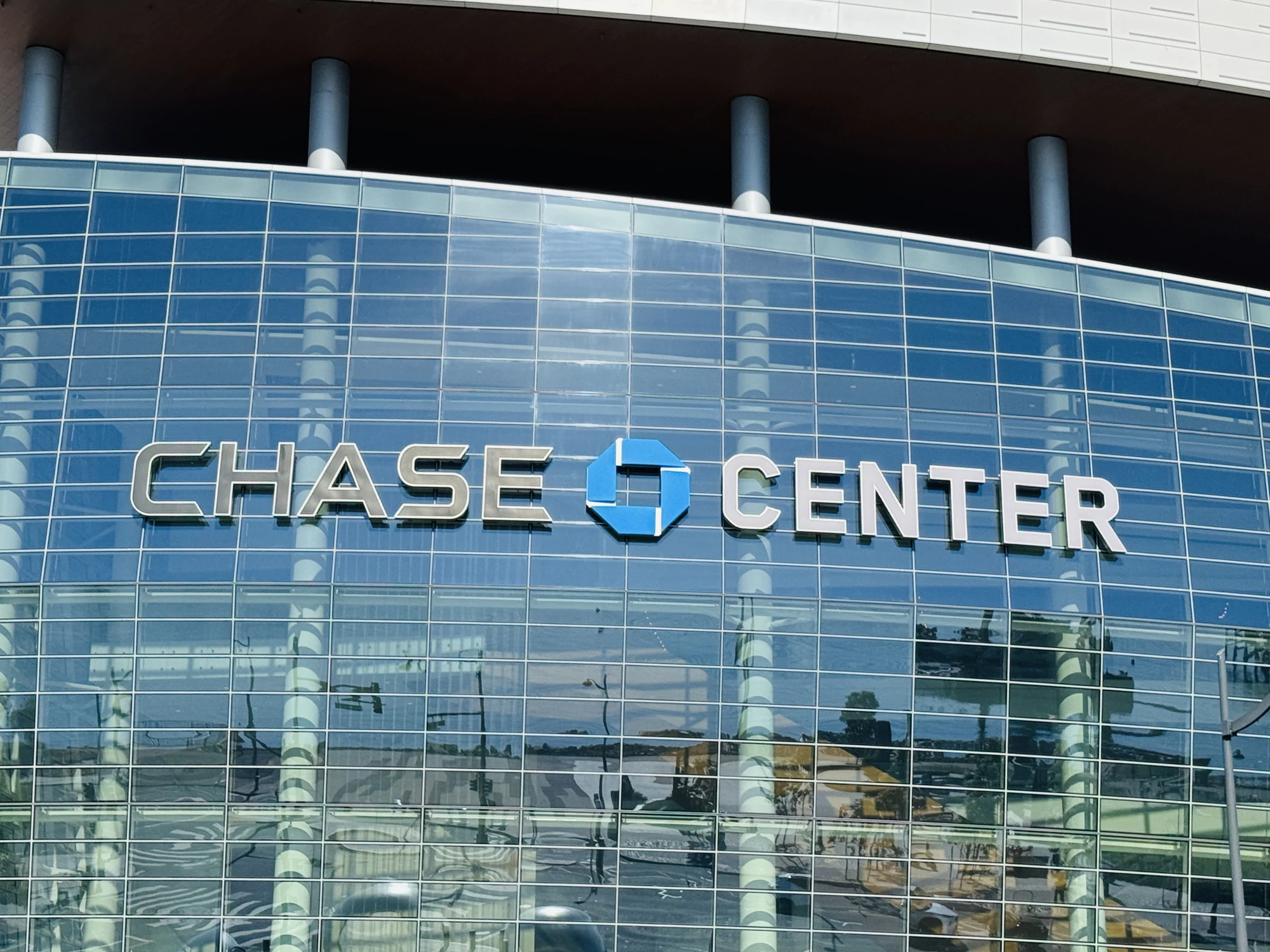
The ownership group's biggest physical project sits outside the roster: Chase Center. Moving from Oakland's publicly owned arena to a new home in San Francisco changed the franchise's revenue base, event calendar and control over the fan experience. It also shows why the modern organization is larger than the NBA team listed in the standings.
A privately financed arena changed the business model
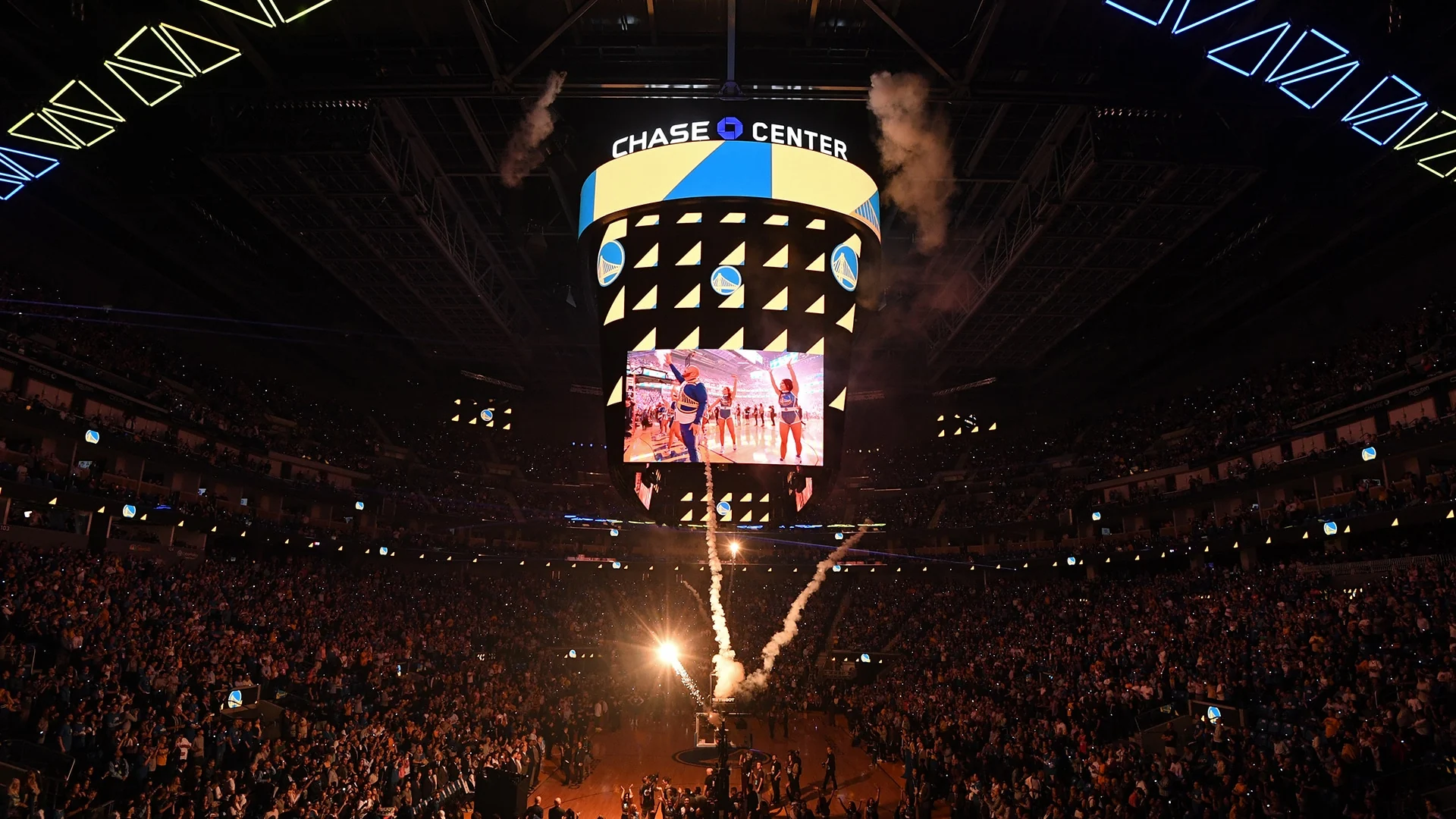
The Warriors say they bought 12 acres in San Francisco's Mission Bay in 2015, broke ground in January 2017 and opened Chase Center in September 2019. The organization describes the arena as 100% privately financed. That is a major ownership decision because it places construction risk and financing obligations with the private project while giving the business a purpose-built venue and surrounding commercial district.
Chase Center hosts Warriors games, but its economics extend to concerts, premium seating, sponsorships, food and other events. Thrive City adds public gathering space, retail and programming around the building. Revenue from those activities can strengthen the organization independent of the exact number of home games, although operating an arena also creates expenses and exposure when events are disrupted.
“Privately financed” is a useful, specific claim about the project funding. It should not be stretched into a claim that a major urban venue has no relationship with public transportation, permitting, policing or city infrastructure. The ownership achievement is that the arena construction itself did not follow the conventional model of a direct public arena subsidy.
The organization now extends beyond one NBA team
In 2025, the company announced “Golden State” as the umbrella identity for a portfolio that includes the Warriors, the WNBA's Golden State Valkyries, the G League's Santa Cruz Warriors, Chase Center, Thrive City and Golden State Entertainment. The rebrand made an existing business evolution easier to see.
This does not merge the teams competitively. Each league has its own rosters, rules and basketball staff. It means the ownership platform can share facilities, commercial relationships, audience development and executive services across several properties. The Valkyries' arrival also added a top-level women's basketball franchise playing at Chase Center and practicing from an Oakland base.
For readers asking what Lacob and the group own, the answer therefore has two layers. They control the Warriors through the private ownership entity, and they lead a broader sports-and-entertainment organization built around the franchise. Chase Center is the asset that connects those layers most visibly. For game dates at the building, the live 2026-27 NBA schedule is more useful than an ownership article.
What can be verified about wealth, family and Dana White?
Ownership searches often branch into exact percentages, personal wealth and relatives. These questions require a higher evidence bar because the Warriors are privately held and family connections are easy to confuse with legal ownership. The strongest answer separates an official fact, a reported estimate and an unsupported association.
Net worth and ownership percentages are estimates
Forbes' Joe Lacob profile, updated in March 2026, estimated that he held a 25% Warriors stake. The same profile publishes a real-time net-worth figure that changes with Forbes' assessment of his assets and liabilities. Neither number appears on the Warriors' executive-board page, and neither should be presented as an audited disclosure from the team.
A valuation estimate also is not cash in a bank account. Much of an owner's calculated wealth can reflect an illiquid stake in a private franchise. If the estimated franchise value rises, a wealth estimate may rise without any shares being sold. Debt, discounts applied to minority interests and other private investments can change the calculation. That is why a dated attribution is more honest than a timeless sentence declaring an exact net worth.
Official
Lacob is managing member and CEO.
Estimated
Forbes estimated a 25% stake in 2026.
Not disclosed
The complete current investor cap table.
Family members should not be confused with controlling owners
Two of Lacob's sons have held roles in the basketball organization. NBA.com reported in 2019 that Kirk Lacob became executive vice president of basketball operations and Kent Lacob became director of team development. The official media guide later continued to list Kirk in a senior basketball role. Those are verifiable employment facts.
They do not establish that either son owns a particular percentage, controls the franchise or will automatically succeed his father. The same caution applies to searches about an owner's wife or daughter: a family relationship is not an ownership filing. Unless the team or a reliable transaction report identifies a person's equity or governance role, the responsible description stops at the confirmed relationship or job.
There is no reliable Warriors ownership link to Dana White
No Warriors or NBA ownership source reviewed for this article identifies UFC executive Dana White as an investor, board member or executive in the franchise. The official executive-board directory does not list him, and the NBA's sale announcement does not connect him to the buying group. Searches can pair prominent sports executives simply because users ask about both names; that association is not evidence.
The practical check is repeatable. Start with the Warriors' current staff and executive-board pages, use NBA transaction announcements for changes, and treat financial-publication percentages as dated reporting. Avoid celebrity-net-worth aggregators and unsourced “owners lists.” As of September 8, 2026, the reliable answer remains that Joe Lacob manages the private group, Peter Guber is co-executive chairman, and no verified Warriors ownership role for Dana White has been established.
Sign in with Google to join the discussion.