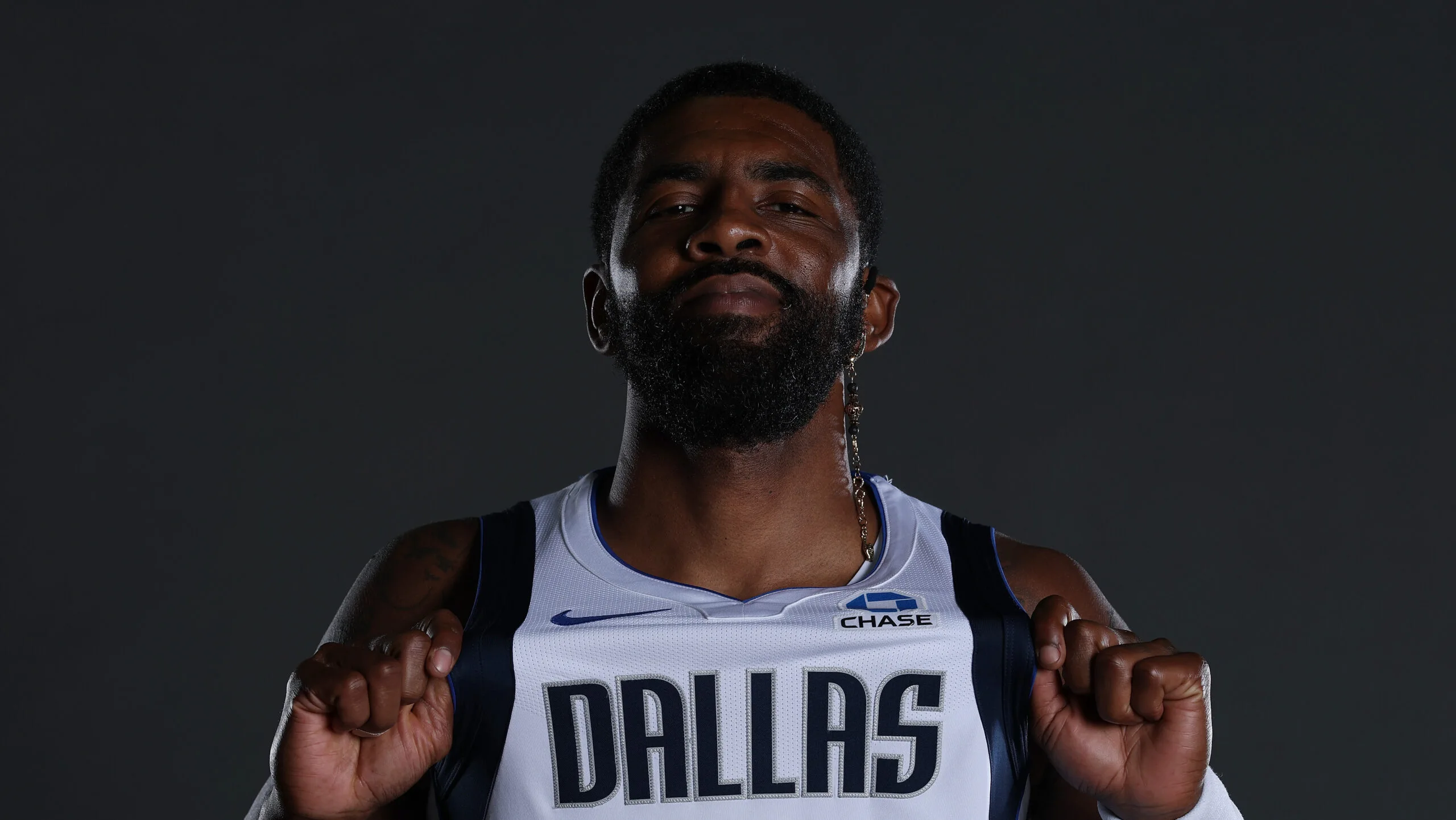
Dallas enters the 2026–27 season with two very different injury questions. Kyrie Irving says the left knee that kept him out after an ACL tear is no longer limiting him physically. Dereck Lively II, recovering from right-foot surgery, was set for a limited start to training camp. Neither statement, by itself, tells fans exactly what either player will do on opening night. Here is what the Mavericks have actually said, what still needs to be seen on the court, and why the October schedule matters.
The two injuries are at different stages
The most useful way to read the Mavericks' injury news is to keep the two cases separate. At Dallas's September 25 media day, Irving said he had no health restrictions as he prepared for the new season. Team president Masai Ujiri offered a crucial qualification: Irving had yet to play competitive NBA basketball since returning from his injury. A player can feel ready, and still need real games to establish his conditioning, timing and workload.
Lively is further back in the process. The Mavericks said he would begin camp in a limited capacity while recovering from foot surgery. At media day, Ujiri described a patient approach and said Lively had not yet started running on a court at that point. That was a dated snapshot of his recovery, not a forecast that he would miss a particular regular-season game.
| Player | What is established | What remains open |
|---|---|---|
| Kyrie Irving | He reports no physical restrictions after his ACL recovery. | How his knee, rhythm and minutes respond to competitive play. |
| Dereck Lively II | Dallas planned a limited camp start as he worked back from foot surgery. | When he clears the next on-court steps and what workload follows. |
This distinction changes how to interpret every upcoming headline. A practice video is encouraging, but it is not a game-day medical designation. A player saying he feels good is relevant, but it is not proof that he will play his normal minutes immediately. As of the late-September reports, Dallas had not issued an opening-night status for either player. The credible answer is therefore more precise than a blanket “healthy” or “out”: Irving is expressing confidence while still needing a competitive test; Lively's foot is on a more cautious ramp-up with no public return date.
Kyrie Irving's ACL return: ready to play, still to be tested
Irving's return is the most encouraging part of Dallas's September update. The nine-time All-Star has been out of NBA action since tearing the ACL in his left knee on March 3, 2025. Now 34, he is speaking as someone eager to compete again, not as a player waiting for permission to start basic basketball work. That is a substantial change in the Mavericks' outlook, but the first games will answer questions that workouts cannot.
What he and the Mavericks said at media day
In an Associated Press account of media day, Irving said he had no physical restrictions from the knee injury. He also spoke about the long absence as a chance to reflect on his leadership and his approach to teammates. Those are his assessments of his own body and mindset; they do not constitute a Mavericks game-status report for October.
Ujiri sounded positive too, saying Irving was close in terms of health, while emphasizing the next step: actually playing games again. NBA.com's media-day coverage reported that teammates thought he looked like himself during summer runs. For fans who have watched the recovery stretch across an entire season, that is a credible reason for optimism. It is still different from seeing how Irving handles NBA defenders, travel, back-to-backs and the daily demands of a full season.
There is no announced Irving minutes ceiling in these reports. Even if Dallas limits an early preseason appearance, that would not automatically mean a setback; teams use exhibition games to manage many returning players. Conversely, an energetic first appearance would not settle the question of sustained availability. Watch the sequence of full practices and game participation before treating any one clip as a verdict.
Why the Cooper Flagg pairing changes the offense
The other reason Irving's return matters is the player waiting beside him. Cooper Flagg won the 2025–26 Rookie of the Year award, but the two have yet to share the floor in an official NBA game. Flagg told the AP that summer work helped them build a connection. Irving said he was looking forward to growing alongside him. The partnership is exciting precisely because it remains untested against regular-season opponents.
From a basketball standpoint, Irving can give a young creator a release valve when a defense loads up on him. His handle, pull-up threat and late-clock decision-making can bend a possession without requiring Flagg to start every action. Flagg's size and ability to move the ball could, in turn, allow Irving to receive it after the defense has already shifted. That is a tactical possibility, not a promise of a particular scoring jump. New coach Dusty May is still shaping a roster after a 26–56 Dallas season, and chemistry depends on shared minutes.
A sensible early benchmark is not whether the pair produces a highlight on its first night. It is whether Dallas can create clean shots with both on the court, keep Flagg involved when Irving initiates and maintain defensive balance behind them. Those are basketball questions that only the preseason and the opening stretch can answer.
Dereck Lively II's foot recovery remains open
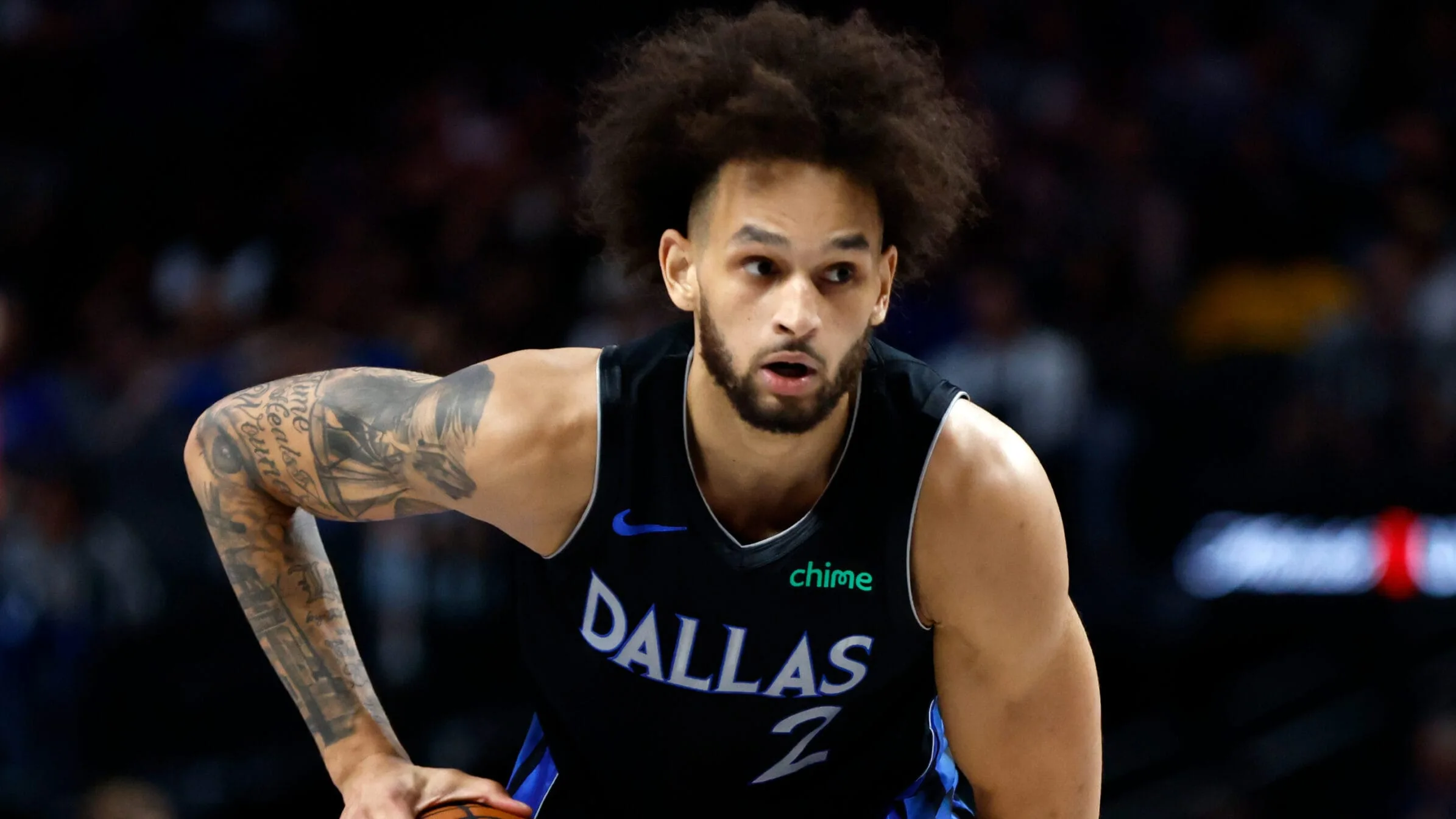
Lively's case needs a longer timeline. The Mavericks announced right-foot surgery in December 2025 after he had played only seven games that season. At the time, the team expected him to be available when the next camp began. The September 2026 update is more cautious: he was recovering well, according to Dallas, but would start camp with limitations. An old expectation should not be presented as a current clearance.
Not cleared for camp does not mean a new setback
ESPN's September report said Lively had not been cleared for full camp participation, that his status for the start of the regular season was undetermined, and that he had not suffered a new setback. The distinctions matter. “Not cleared” describes the point he had reached in a recovery plan; it is not itself evidence of a fresh injury. “No setback” is the reporter's sourced account, not an independently published medical examination.
At the September 25 media day, Lively described cycling, treadmill running, swimming and some on-court skill work. Ujiri said he had not yet started running on the court and that the club was pleased with his progress. Those statements can both be true: treadmill conditioning and light shooting do not require the same movements as repeated court sprints. The comment is a September 25 snapshot. A later video of jogging would be another observation, not an official change to his game status.
Why the ramp-up matters for a 7-foot-1 center
Ujiri specifically mentioned Lively's 7-foot-1 frame when explaining why the Mavericks would be patient. A center's game involves more than running a straight line. He must screen, turn, jump, land, rebound through contact and change direction while protecting the rim. As a basketball inference, those actions make a gradual return especially important for a player whose foot has kept him out of almost an entire season. They do not justify guessing at a diagnosis or recovery date.
When healthy, Lively changes the shape of a possession. A guard can throw a lob above help defenders; a missed shot can become a second chance; a wing can press up knowing there is a mobile shot blocker behind him. That is why Dallas has a real basketball stake in the quality of his return, not just its timing. If he is held to a small initial role, coach May may gain continuity from other centers while Lively rebuilds game rhythm.
The next meaningful update should say what he is cleared to do in team settings: running, non-contact drills, full practices and eventually games. Each stage provides more evidence than a social-media clip alone. Until Dallas reports those steps, opening-night predictions are speculation.
Dallas has alternatives in the middle
Lively's uncertain timetable does not leave the Mavericks without centers. NBA.com's Dallas season preview describes a frontcourt with Daniel Gafford, newly arrived Santi Aldama, rookie Morez Johnson Jr., P.J. Washington and Lively. The team also signed veteran Dwight Powell on September 25, bringing its camp roster to 19. That is depth, although camp roster size is not a promise about anyone's opening-night role.
Gafford, Powell, and frontcourt combinations
Gafford is the clearest conventional center option if Lively is still limited. He can finish above the rim, screen and protect the paint, letting Dallas keep much of its familiar vertical offense. Powell offers experience with the club's systems and another big body for practices and shorter stints. Johnson is a younger option whose role the staff can test during preseason. None is automatically a one-for-one copy of Lively's combination of size, mobility and developing chemistry with Dallas guards.
Aldama gives coach May a different lever: a taller forward-center who can space the floor and move the ball. The team's own early depth-chart column placed him in the center mix, but explicitly framed the ordering as an early projection. He also said at media day that his training-camp status remained to be determined after knee surgery, so treating him as a guaranteed plug-in for Lively would be careless. Washington can help in smaller combinations when matchup and rebounding conditions allow it.
There is a tactical tradeoff. A lineup with a traditional rim runner can put pressure on the basket and cover mistakes behind the perimeter defense; a more spread floor can open driving space for Flagg and Irving. The optimal choice may differ by opponent and by how many minutes each big is ready to play. May told media day he was searching for three-man units that fit, a more realistic early goal than locking in one permanent center hierarchy before camp has produced evidence.
This depth makes a cautious Lively ramp-up possible. It does not make his recovery irrelevant. If he returns well, Dallas gains an extra interior dimension; if he needs longer, the coaching staff has choices but will have to test which combinations defend, rebound and space the floor together.
The China Games and October schedule set the checkpoints
The Mavericks' next useful evidence will arrive on a real calendar. The NBA has scheduled Dallas and Houston for two preseason games in Macao on October 9 and 11. Dallas then has two home exhibitions before opening the regular season in Houston. The dates give fans a series of questions to ask, but they are not return deadlines for either player.
| Date | Dallas game | What to watch |
|---|---|---|
| Oct. 9 and 11 | Rockets, preseason in Macao | Travel, practice participation and any managed game minutes. |
| Oct. 14 and 16 | Pelicans and Hawks, home preseason | Whether each player progresses to team play after the trip. |
| Oct. 21 | At Rockets, regular-season opener | Official availability and any announced workload. |
| Oct. 23 and 24 | At Pacers; home vs. Spurs | How the rotation holds up on consecutive dates. |
Those dates come from the NBA's Mavericks schedule; the team's schedule release confirms the first three regular-season opponents. The October 21 opener is scheduled for 7:30 p.m. Central Time in Houston, and the October 24 home opener against San Antonio is scheduled for 7 p.m. Central. Times and broadcasts are worth checking again close to tip-off.
The Macao trip is unusual preparation: long-distance travel and two games against the same division opponent before the normal home exhibition window. If Irving plays, the value lies in seeing him move and make decisions against NBA competition. If Lively does not play, that alone would tell us less, because a patient rehab plan could prioritize practices at home. Conversely, an exhibition appearance should not be read as a promise of unrestricted regular-season minutes.
The consecutive October 23 and 24 games are an early workload test for the whole roster. Irving said at media day there had been conversations about back-to-backs, but Dallas did not announce a binding plan. The best approach is to watch each official game-day report separately rather than projecting one decision from the opener across the next week.
What Mavericks fans are really worried about
The anxiety around these updates is understandable after a 26–56 season shaped by injuries. In reaction to the September Lively report, some fans focused less on the next practice than on whether repeated foot trouble could limit a promising career. In a Mavericks lineup discussion, others remembered the energy of having Lively and Gafford as lob threats and wanted that version of the frontcourt back. These are individual comments, not a poll of the fan base, but they show why a dry “limited camp” label draws such a strong response.
There is a second worry: whether Cooper Flagg will have a stable group around him while he takes the next step. The NBA's season preview frames the new roster and Irving's return around Flagg's development. Fans reasonably want to see the veteran guard and the young wing actually share meaningful possessions, rather than another season of theoretical lineup diagrams. One offseason discussion balanced excitement about Irving with concern over his age and Lively's foot. Optimistic and pessimistic interpretations both appeared in the same thread.
The complaint with the strongest factual basis is about uncertainty, not proof of a failed recovery. Dallas can be encouraged by Lively's progress and still decline to put a date on his return. Irving can feel physically free and still need competitive minutes. A fan who wants a clear yes-or-no answer before buying tickets or planning opening week will not get one from those September statements. That frustration should not be converted into an unsupported accusation that the team is hiding a setback.
For Dallas, the bigger issue is continuity. A healthy Irving could change the team's late-clock offense; a healthy Lively could lift its rim defense and screening. If both are available only in stages, May must develop Flagg's partnership with the rest of the roster at the same time. The opening month should be judged by those functioning combinations as much as by two names on an availability graphic.
How to read the next injury updates
A good injury update answers a narrower question than “Is he back?” It tells you what the player actually did, when he did it, and whether the club has changed his participation status. For Irving and Lively, use the September 25 media-day account as the baseline, then look for new team statements that move beyond it. That method keeps an encouraging video from becoming a false opening-night certainty.
Practice and preseason participation
For Irving, the strongest next signal is regular participation in full team work, followed by how he looks in game-speed possessions. His confidence and teammates' summer impressions are already public. A few consecutive practices, travel with the team and purposeful preseason minutes would provide more evidence of basketball readiness. None of those alone determines how many regular-season minutes May will use.
For Lively, the stages are more basic. Dallas said he would start camp in a limited way. A club announcement that he has progressed to running and full practice would mean more than footage of light jogging or spot shooting. Contact drills, repeated practice days and an exhibition appearance would provide different pieces of the picture. Fans should also notice whether the team describes the work as unrestricted or carefully managed; both can be positive, but they are not identical.
Opening-night status and minutes
The first official game-status decision that matters for the standings is the October 21 opener at Houston. A listed absence would answer that night only; it would not automatically define the season. A listed availability would allow a player to play, but actual minutes and the way he responds to them provide the better evidence of his early role. Dallas then plays at Indiana on October 23 and hosts San Antonio on October 24, so the first week will also show how the staff handles consecutive game dates.
Irving acknowledged that back-to-backs had been discussed. There is no public, binding plan in the September comments. If he sits one end of a future pair, that decision needs its own explanation before it is labeled a setback. Lively's status may evolve on a different schedule entirely. It would be a mistake to use Irving's progress as a proxy for a surgically repaired foot, or Lively's caution as evidence of a problem with Irving's knee.
Current answer, as of late September 2026
Irving says he is physically unrestricted and ready to compete, while Dallas still needs to see him in NBA games. Lively is progressing after right-foot surgery but began camp with limits, and his regular-season start has not been confirmed. Check the Mavericks' team updates and game-day status before treating either player as certain for October 21.
Sign in with Google to join the discussion.