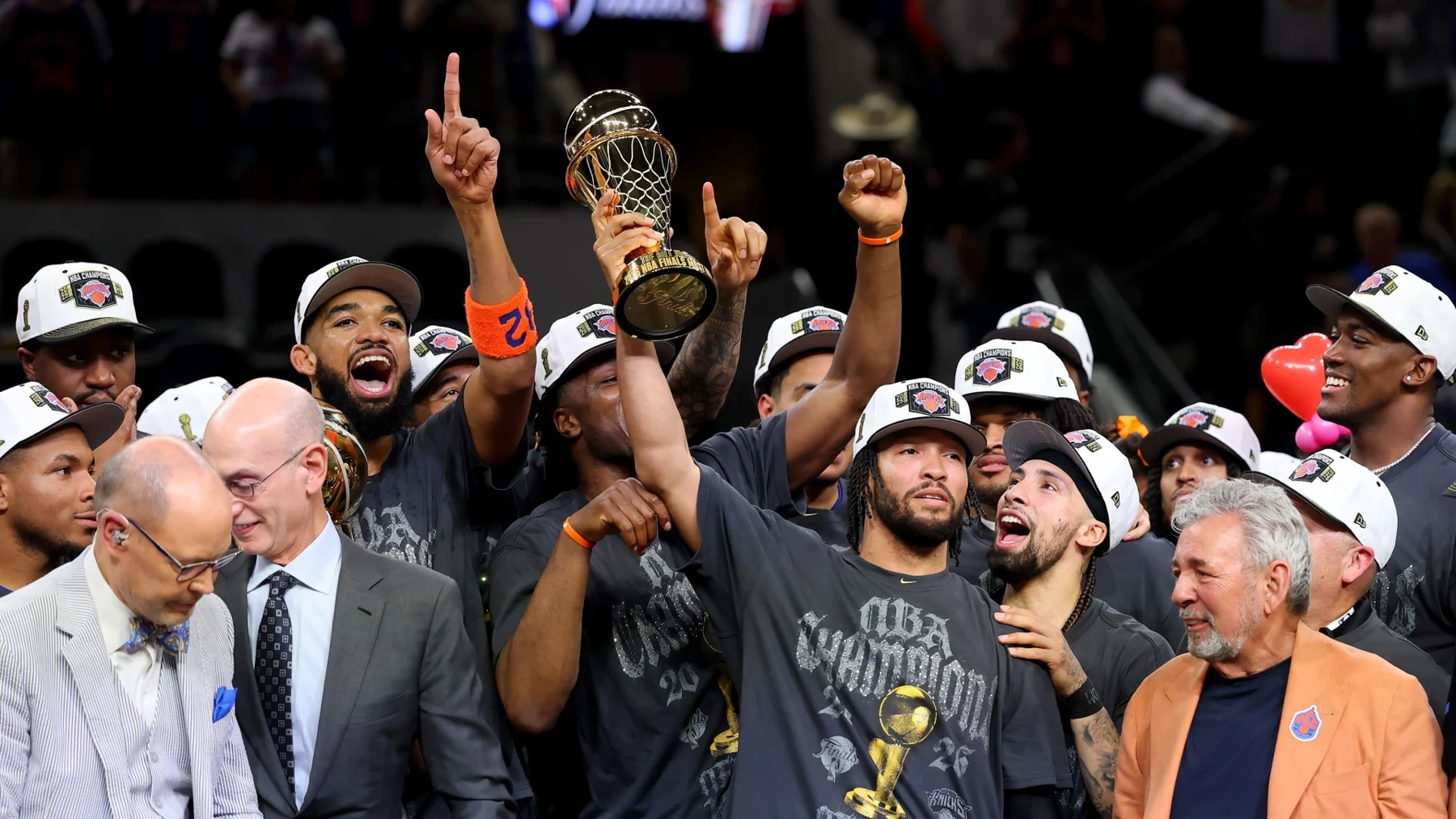
The NBA champions of the last 10 completed Finals are the winners from 2017 through 2026. Golden State won three of those titles; Toronto, the Lakers, Milwaukee, Denver, Boston, Oklahoma City and New York won one each. The latest entry is the 2026 Knicks, who beat San Antonio 4–1 with Jalen Brunson named Finals MVP.
This list was checked on November 12, 2026. The ongoing 2026–27 season has not produced a champion, so the window ends with the completed 2025–26 season. Finals year, season label and series score are shown separately to make historical comparisons easier.
NBA champions from 2017 through 2026
The champion is the winner of the NBA Finals, the best-of-seven championship series. A 4–1 score means four series wins for the champion and one for the runner-up; it does not describe points in a single game. The Finals MVP column identifies the individual award for that championship series. It should not be replaced with the season's regular-season MVP.
| Finals year | Season | NBA champion | Runner-up | Series | Finals MVP |
|---|---|---|---|---|---|
| 2017 | 2016–17 | Golden State Warriors | Cleveland Cavaliers | 4–1 | Kevin Durant |
| 2018 | 2017–18 | Golden State Warriors | Cleveland Cavaliers | 4–0 | Kevin Durant |
| 2019 | 2018–19 | Toronto Raptors | Golden State Warriors | 4–2 | Kawhi Leonard |
| 2020 | 2019–20 | Los Angeles Lakers | Miami Heat | 4–2 | LeBron James |
| 2021 | 2020–21 | Milwaukee Bucks | Phoenix Suns | 4–2 | Giannis Antetokounmpo |
| 2022 | 2021–22 | Golden State Warriors | Boston Celtics | 4–2 | Stephen Curry |
| 2023 | 2022–23 | Denver Nuggets | Miami Heat | 4–1 | Nikola Jokic |
| 2024 | 2023–24 | Boston Celtics | Dallas Mavericks | 4–1 | Jaylen Brown |
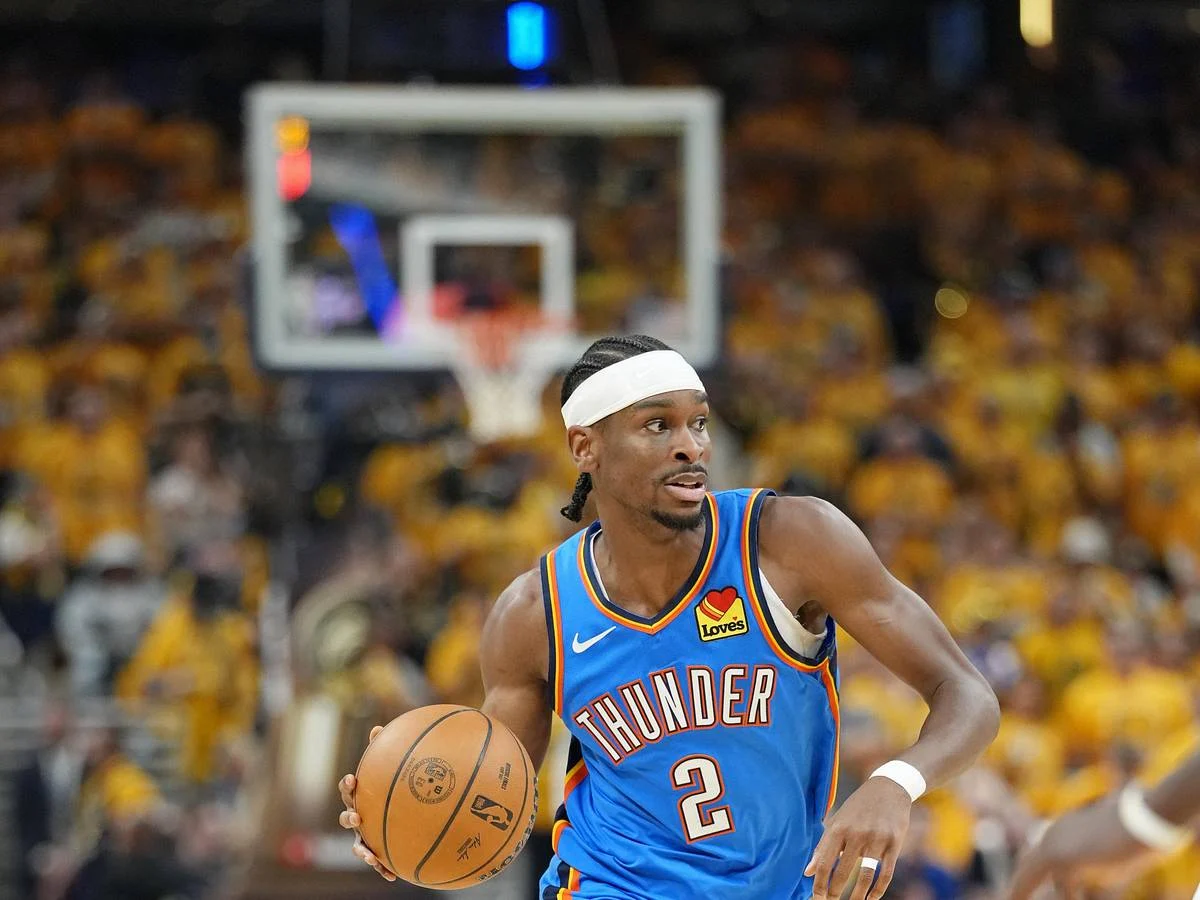
| 2025 | 2024–25 | Oklahoma City Thunder | Indiana Pacers | 4–3 | Shai Gilgeous-Alexander |
| 2026 | 2025–26 | New York Knicks | San Antonio Spurs | 4–1 | Jalen Brunson |
The NBA maintains separate official histories for championship winners and Finals MVP recipients. Reading them together prevents two common errors: assigning an individual award to the wrong champion, and treating a runner-up's appearance as a title. The Knicks' latest result is also recorded in the 2026 Finals archive.
The leftmost year refers to when the Finals concluded. Thus the 2020 champion belongs to the 2019–20 season, and the 2026 champion belongs to 2025–26. A query asking for “2026 NBA champions” should therefore return New York in this completed-season record, even though a new NBA season began later in the same calendar year.
Changing the starting point changes the story. A list beginning in 2016 would include Cleveland's championship, but it would have to end in 2025 to contain only ten Finals. This article uses the most recent ten completed events instead. Keeping the explicit endpoints visible makes the counts below reproducible and prevents a familiar older list from being mistaken for a current one.
Golden State's repeat gives way to eight different champions
Counting the winners produces eight championship franchises in ten Finals. Golden State accounts for three titles, and the other seven winners account for one each. That combination captures the period's two distinct features: a repeat champion at the beginning and a long sequence of different winners afterward. It is more informative than describing the whole decade with one broad label.
The Warriors won three titles in this ten-year window
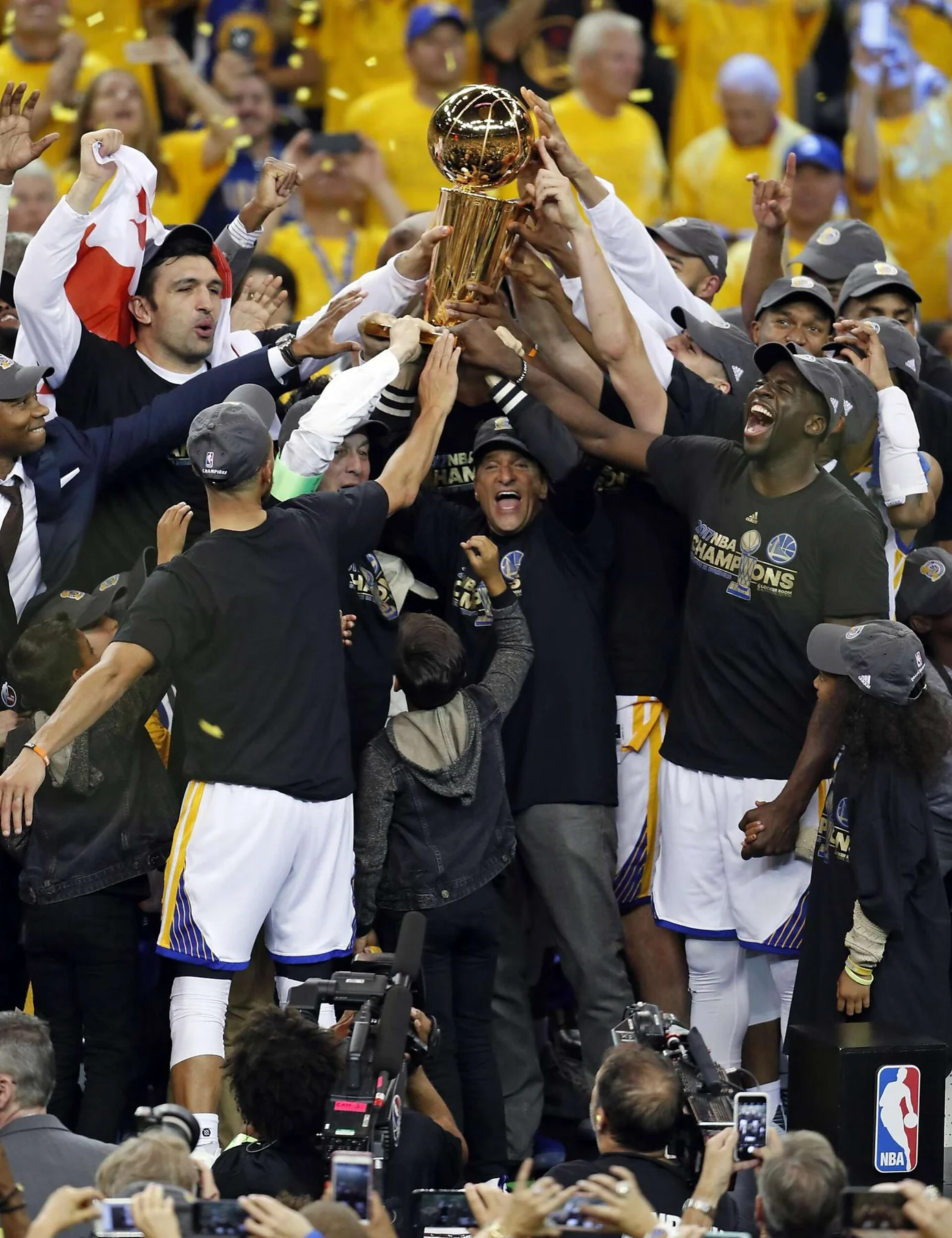
Golden State won in 2017, 2018 and 2022. Its first two entries came against Cleveland; the third came against Boston. The Warriors also reached the 2019 Finals and lost to Toronto, giving them four Finals appearances within this window. That appearance belongs in an account of their sustained contention, while remaining separate from their three championships.
The franchise's official media guide documents those title runs. Kevin Durant received Finals MVP in 2017 and 2018; Stephen Curry received it in 2022. The same franchise therefore returned to the winning column with a different Finals MVP. That is a useful reminder to distinguish franchise continuity from an assumption that every championship roster and responsibility remained identical.
The window also creates a boundary. Golden State's 2015 championship and Cleveland's 2016 championship are outside the ten rows. Excluding them does not diminish those achievements; it keeps the question consistent. When comparing another ten-year period, use the same rule for its first and last completed Finals instead of adding favorite nearby seasons.
A changing champion does not tell the whole parity story
From Toronto in 2019 through New York in 2026, eight successive Finals produced eight different champions. The NBA's official compilation of the eight final calls makes that sequence easy to follow. No champion repeated in the next season within that stretch.
That result does not mean every team entered every season with an equal chance. Counting both winners and runners-up in the full 2017–2026 table produces 14 distinct finalists across 20 available appearances. Golden State appears four times; Cleveland, Miami and Boston appear twice each. The remaining ten finalist franchises appear once. There is turnover at the top, but repeated access to the championship round remains visible.
The conference split is another limited descriptive measure: Western teams won six titles and Eastern teams won four. It says who won these ten Finals, not which conference was stronger at every point in every season. A single outstanding champion can dominate that count without describing the depth below it.
First-time winners add another layer to that turnover. Toronto's 2019 championship was its first and the first for a franchise outside the United States, as the NBA's title-clinching coverage records. That achievement changed the list of franchises that had ever won, whereas Golden State's 2022 victory changed its position within an existing championship history. Both add one title to this window, but their historical meanings differ.
Denver's 2023 breakthrough was also its first NBA championship. For an archive reader, that creates two useful questions: when did the franchise first win, and how often did it win during the selected period? Denver's answer to both involves 2023, while a returning winner can have entirely different answers. A ten-year table alone cannot establish which teams were first-time champions.
Oklahoma City requires a further distinction. Its 2025 win was the first title of the OKC era, while the NBA's franchise achievements ledger includes both 1979 and 2025. The earlier championship belonged to the Seattle SuperSonics. Calling 2025 a first for Oklahoma City and calling it a first in the franchise's entire history therefore make different claims.
These examples explain why counting new names in the recent winners' column is useful but incomplete. A first championship, a first title in a new city and a return to winning after a gap each count once here. For historical comparisons, choose the unit—franchise, city or particular roster—before describing a breakthrough or a drought. That keeps celebratory shorthand from changing the underlying record. Those distinctions remain useful when the ten-year endpoints move forward.
For fans, the sensible conclusion is that both continuity and change matter. A repeat is difficult, returning after a gap is possible and a new winner can emerge without making the previous champion irrelevant. The ten-year ledger establishes those outcomes; explaining their causes requires deeper evidence about each roster, opponent and postseason.
Finals MVPs show different ways to lead a title team
Nine different players received Finals MVP across these ten series. Durant is the only two-time recipient within the window, winning in consecutive years. That count applies only to 2017–2026. It does not mean other players in the table won the award only once in their careers, or that every championship in their careers falls within these dates.
The names span different basketball responsibilities. Durant's scoring, Curry's shooting and movement, Jokic's playmaking from the center position and Antetokounmpo's pressure near the basket offer different ways to organize an offense. A Finals MVP list is useful partly because it resists the idea that only one body type or one offensive role can lead a champion. It does not, by itself, prove a tactical formula for winning the next title.
Curry's first Finals MVP came in 2022. That was a new individual award within an already established championship career. Boston's 2024 recipient was Jaylen Brown, while Brunson received the 2026 award. Familiarity with a team's most prominent names is not a substitute for checking the actual winner.
The Finals award answers a narrower question than season MVP
Regular-season MVP evaluates a different competition from Finals MVP. The latter concerns a particular championship series, with one opponent and a finite set of matchups. A player can be central to his team's entire season without receiving the Finals award. Another can become especially influential against the last opponent because of the defensive assignment or scoring opportunity that series creates.
Keep team achievement in view when discussing the recipient. The award identifies one player; it does not say every other contribution was interchangeable. A screen, defensive rotation or offensive rebound may help create the action credited to the star. Comparing Finals MVPs through scoring alone can miss how teammates and opponents shaped those opportunities.
For a more useful comparison, ask what the team needed the winner to solve. Was the opponent taking away the rim, forcing the ball out of a scorer's hands or demanding a difficult perimeter assignment? Then examine the relevant games. The award column is a starting point for that discussion, while the champion column remains the record of the collective result.
What the series scores reveal about the decade
The ten Finals lasted 55 games in total, an average of 5.5 games per series. Four ended in five games: 2017, 2023, 2024 and 2026. Four ended in six: 2019, 2020, 2021 and 2022. Golden State's 2018 sweep was the only four-game series, and Oklahoma City's 2025 victory was the only seven-game series. These counts come directly from the series results, with four wins required for every champion.
That arithmetic provides a useful correction to memory. A dramatic Game 7 can dominate a fan's picture of a period even when most Finals ended earlier. Conversely, a run of short series does not mean the championship always followed a straightforward path through the entire playoffs. The table records the last round; it does not count the games each finalist needed to reach it.
Series length also differs from scoring margin. Boston won the 2024 Finals 4–1, but Dallas won Game 4 by 122–84. The official Game 4 record shows a decisive Mavericks victory inside a series the Celtics otherwise controlled. A reader cannot reconstruct the closeness of every game merely from the final 4–1 score.
Oklahoma City and Indiana illustrate the opposite structural case. Their 2025 Finals reached a seventh game, with the title still available to either team before the last tipoff. The Thunder won that decider 103–91. The official closing-minutes video preserves the finish, while the seven-game results archive shows how the teams arrived there.
That final game was not the same kind of pressure as a potential series clincher with a lead still available to protect. Both teams faced elimination. This matters when comparing memorable performances: a Game 5 closeout, a Game 6 survival game and a Game 7 decider impose different consequences even before considering an individual player's numbers.
The records still do not assign a difficulty rating. A five-game winner may face several close finishes; a seven-game winner may exchange comfortable victories before the decider. The stronger historical comparison uses the final series score as a framework, then adds game margins, availability and matchup evidence. It avoids turning one convenient number into a complete judgment about the champion.
How to compare these championships without losing context
A useful title comparison starts by fixing the competition, season and question. Counting championships, comparing a particular roster's level and judging an individual Finals performance are different exercises. The table supplies the official outcomes; a more ambitious argument needs more evidence than the trophy count alone.
It also helps to distinguish a franchise from one season's team. Golden State's three titles belong to one franchise, but the 2017 and 2022 rosters should not be treated as interchangeable. Similarly, a familiar player's appearance in a different year does not mean the coaching plan, surrounding personnel or opponent remained the same. Keep the historical season attached to every claim.
Keep the 2020 calendar and the season label straight
The Lakers' 2020 title concluded on October 11, rather than in the customary June window. Their official season history records the 106–93 Game 6 win over Miami. The Heat's historical Finals record identifies the Disney sports complex setting for that series.
The bubble environment and interrupted calendar are relevant context. They affected the setting and rhythm of the competition, so it would be misleading to discuss ordinary Finals travel and home crowds as though they applied unchanged. The championship still belongs to the official 2019–20 season. Context explains the event; it does not remove it from the winners' ledger.
That example also shows why season labels are more reliable than a vague reference to “that year's season.” Basketball crosses calendar years, and an unusual schedule can stretch the gap further. When looking up a team roster, game log or postseason archive, match it to 2019–20 for the Lakers' 2020 title and to 2025–26 for the Knicks' 2026 title.
Separate NBA championships from the NBA Cup
The NBA Cup is a separate in-season competition. Winning its trophy does not add a second NBA Finals championship to a franchise's season record. The NBA's 2025–26 season review describes New York winning both the Cup in December and the NBA championship afterward. Those are two achievements, with one entry in this Finals table.
This distinction matters when searching photographs and short clips. A championship celebration can look convincing without identifying which trophy is present. Check the event date, opponent and trophy description before using a celebration as evidence of an NBA title. The same care applies to an MVP label: Cup MVP, conference finals MVP and Finals MVP do not refer to the same award.
For present fixtures, consult NBA games today or the weekly NBA schedule. For this historical question, retain the explicit 2017–2026 endpoints. That keeps the ten championships, ten runners-up and ten Finals MVP entries aligned, while leaving room to explore how each winning team actually earned its title.
Sign in with Google to join the discussion.