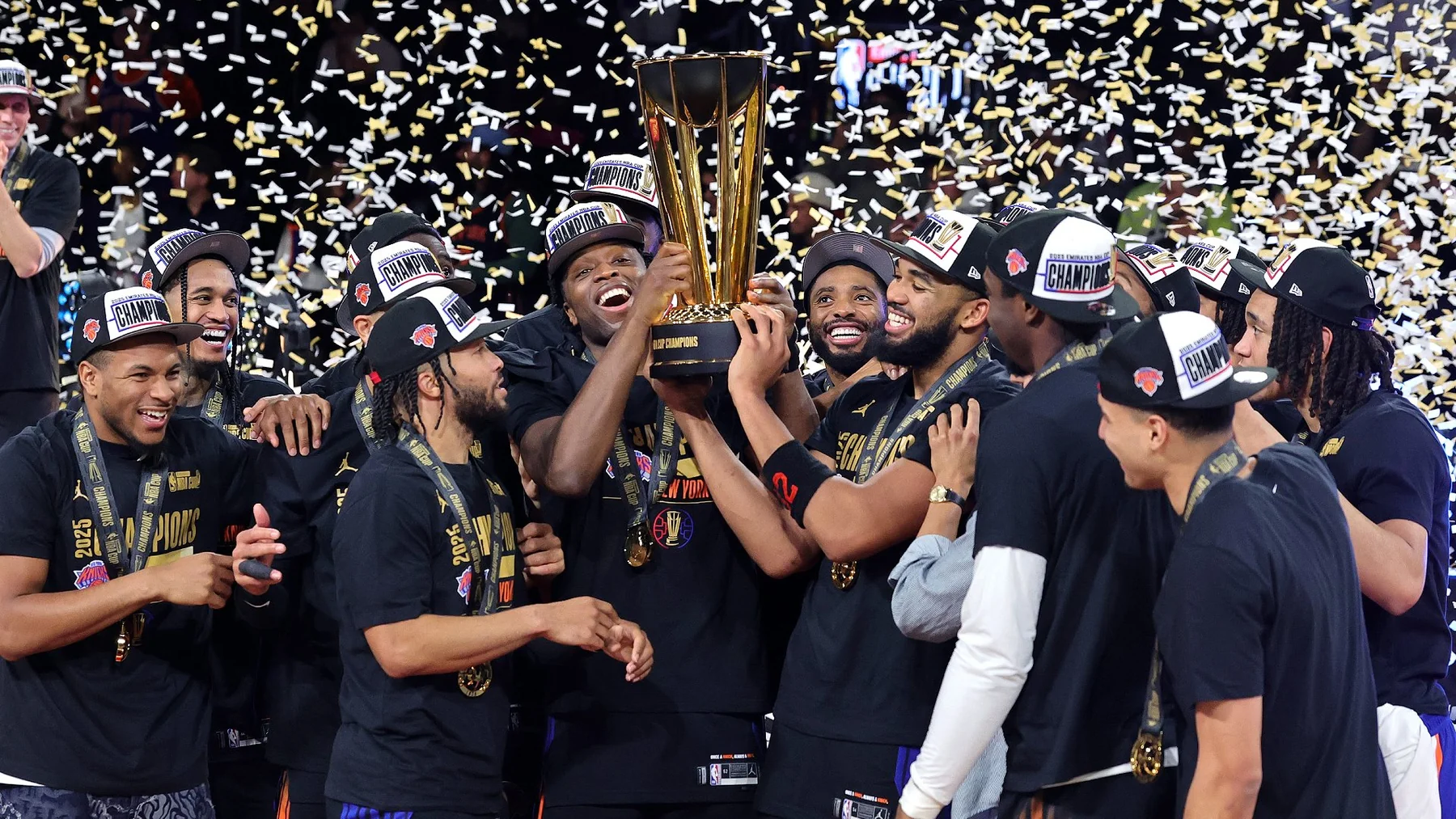
NBA Cup 2026 key dates and what is already official
The 2026 Emirates NBA Cup starts with Group Play on Friday, October 30 and ends with the championship on Friday, December 11. That six-week span is confirmed. So are all 60 Group Play matchups, the six five-team groups and the calendar windows for the three knockout rounds. What is not known as of September 8 is just as important: no team has earned a knockout place, and there is no honest way to attach team names to the bracket before the four-game group stage produces standings.
Group Play
Oct. 30; Nov. 6, 13, 20, 24, 25, 27
Quarterfinals
Dec. 4-5
Semifinals
Dec. 8 and/or Dec. 9
Championship
Dec. 11, Hinkle Fieldhouse
Every team enters the tournament, and every club plays one game against each of the other four teams in its group. Those games sit inside the normal 2026-27 NBA schedule. The quarterfinals and semifinals also count toward the regular-season record. Only the championship is an additional game outside the 82-game record and official regular-season statistics.
The calendar therefore has two kinds of certainty. Dates are fixed: the quarterfinals occupy December 4-5, the semifinals December 8 and/or 9, and the winner-take-all game lands at Hinkle Fieldhouse on December 11. Participants are conditional: group winners and wild cards must be established first, and the NBA can then assign the knockout pairings, home teams and detailed tip times. Until that happens, a bracket marked “TBD” is the correct bracket.
Complete Group Play schedule by Cup Night
The group stage contains 60 games across seven designated Cup Nights. Times below are Eastern and were announced by the NBA on August 12. A listing of League Pass means the game is outside the national windows identified in the release; local-market restrictions and international distribution still apply. Check the NBA TV schedule close to tipoff if an outlet changes.
Prime Video's five Friday doubleheaders
Prime carries a doubleheader on every Friday from October 30 through November 27. The first four Fridays also contain the bulk of the group slate, with games stacked from the East Coast into the late Western window. The matchups below include the announced national outlet in parentheses; all unmarked games were listed for League Pass in the NBA's U.S. schedule release.
Friday, Oct. 30
- Hornets at Wizards — 7 p.m.
- Bulls at Celtics — 7:30 p.m.
- Pistons at Nets — 7:30 p.m.
- Knicks at 76ers — 7:30 p.m. (Prime)
- Magic at Raptors — 7:30 p.m.
- Pacers at Heat — 8 p.m.
- Rockets at Mavericks — 8 p.m.
- Clippers at Timberwolves — 8 p.m.
- Lakers at Warriors — 10 p.m. (Prime)
- Nuggets at Suns — 10 p.m.
Friday, Nov. 6
- Wizards at Hawks — 7 p.m.
- Celtics at Hornets — 7 p.m.
- 76ers at Cavaliers — 7:30 p.m. (Prime)
- Jazz at Mavericks — 8 p.m.
- Thunder at Grizzlies — 8 p.m.
- Raptors at Bucks — 8 p.m.
- Timberwolves at Pelicans — 8 p.m.
- Trail Blazers at Lakers — 10 p.m. (Prime)
- Spurs at Kings — 10 p.m.
Friday, Nov. 13
- Knicks at Pacers — 7 p.m. (Prime)
- Bucks at Magic — 7 p.m.
- Cavaliers at Heat — 8 p.m.
- Hawks at Bulls — 8 p.m.
- Grizzlies at Pelicans — 8 p.m.
- Jazz at Rockets — 8:30 p.m.
- Warriors at Spurs — 9:30 p.m. (Prime)
- Trail Blazers at Kings — 10 p.m.
- Thunder at Clippers — 10:30 p.m.
Friday, Nov. 20
- Hornets at Hawks — 7 p.m.
- Magic at Nets — 7:30 p.m.
- Pacers at Cavaliers — 7:30 p.m.
- Raptors at Pistons — 7:30 p.m. (Prime)
- Wizards at Bulls — 8 p.m.
- Pelicans at Thunder — 8 p.m.
- Suns at Jazz — 9:30 p.m.
- Rockets at Nuggets — 10 p.m. (Prime)
- Kings at Lakers — 10 p.m.
The prime-time pairings are entry points, not a separate competition. A League Pass game can decide the same group or wild-card race as the televised doubleheader. On the final Friday, several groups may be decided simultaneously, which makes the live standings more useful than following only one featured game.
Thanksgiving week and the Black Friday finish
Group Play compresses its decisive phase into three dates during Thanksgiving week. NBC and Peacock carry the Tuesday doubleheader after the Orlando opener; ESPN has a Wednesday tripleheader; Prime closes Group Play with Miami-New York and Lakers-San Antonio on Friday. The remaining games share those nights and can be just as consequential.
Tuesday, Nov. 24
Pistons at Magic — 7 p.m.; Celtics at Wizards — 8 p.m. (NBC/Peacock); Mavericks at Nuggets — 10 p.m. (NBC/Peacock).
Wednesday, Nov. 25
Heat at 76ers — 5 p.m. (ESPN); Bulls at Hornets — 7 p.m.; Cavaliers at Knicks — 7:30 p.m.; Timberwolves at Thunder — 7:30 p.m. (ESPN); Clippers at Grizzlies — 8 p.m.; Nets at Bucks — 8 p.m.; Suns at Rockets — 8:30 p.m.; Kings at Warriors — 10 p.m.; Spurs at Trail Blazers — 10 p.m. (ESPN).
Friday, Nov. 27
Heat at Knicks — 7 p.m. (Prime); Bucks at Pistons — 7:30 p.m.; 76ers at Pacers — 7:30 p.m.; Nets at Raptors — 7:30 p.m.; Hawks at Celtics — 8 p.m.; Grizzlies at Timberwolves — 8:30 p.m.; Mavericks at Suns — 9 p.m.; Lakers at Spurs — 9:30 p.m. (Prime); Nuggets at Jazz — 9:30 p.m.; Pelicans at Clippers — 9:30 p.m.; Warriors at Trail Blazers — 9:30 p.m.
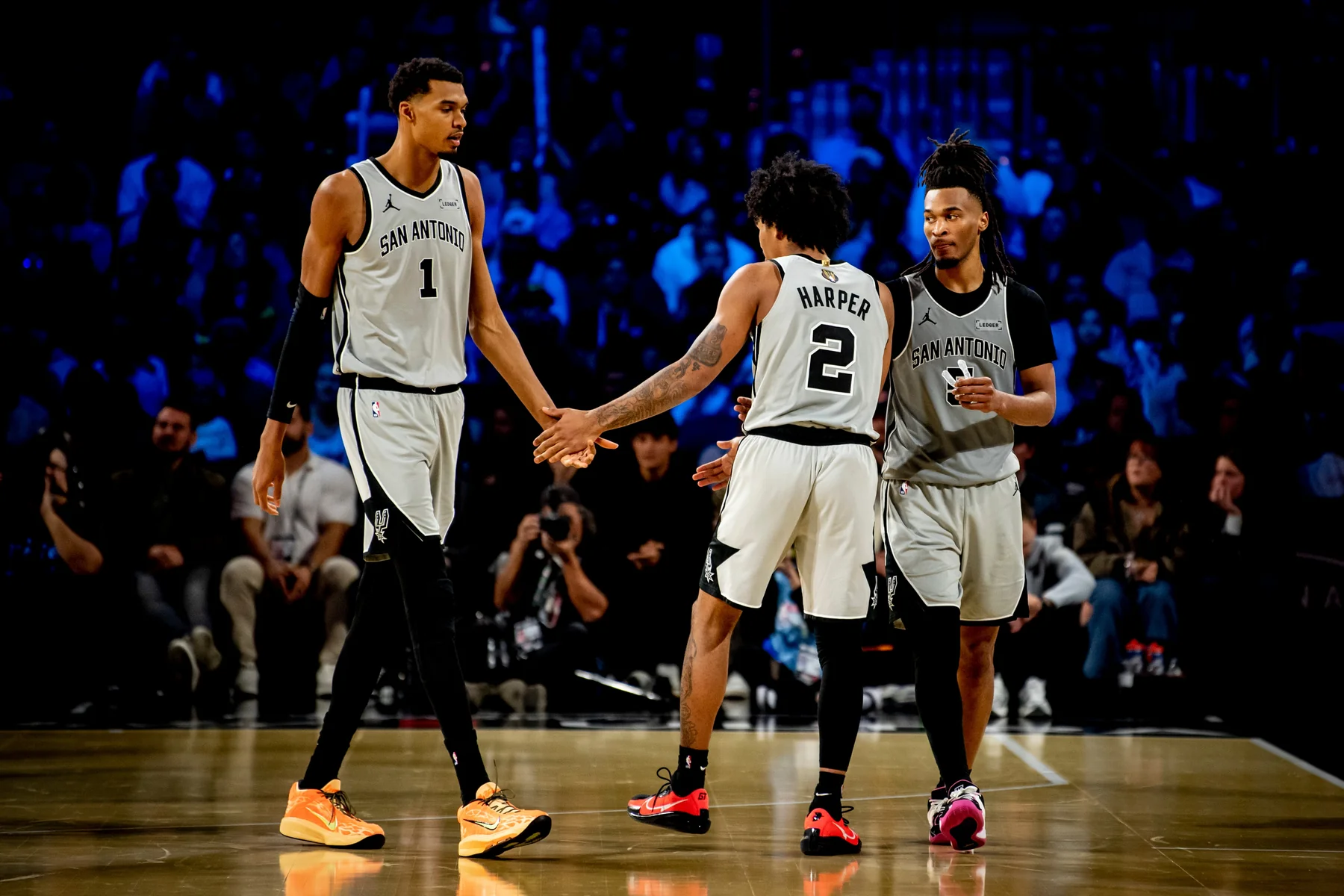
That last evening rewards scoreboard awareness. A team may finish 3-1 and still need the margin in another group's late game to hold a wild card. Results also determine the two unassigned December opponents on every team calendar. For a single club's full slate around these dates, use the team schedule hub rather than treating the Cup schedule as a standalone calendar.
The six groups and the matchups that define the race
The draw is conference-based, but these are not the NBA's permanent divisions. The league sorted each conference into five pots using 2025-26 regular-season records, then drew one team from each pot into every group. That method prevents all three teams from one prior-season tier landing together. It does not promise equal groups in November: trades, development, injuries and coaching changes can reshape a roster during the months between the draw and Group Play.
Eastern Conference groups
East Group A
Detroit Pistons
Toronto Raptors
Orlando Magic
Milwaukee Bucks
Brooklyn Nets
East Group B
New York Knicks
Cleveland Cavaliers
Philadelphia 76ers
Miami Heat
Indiana Pacers
East Group C
Boston Celtics
Atlanta Hawks
Charlotte Hornets
Chicago Bulls
Washington Wizards
East B supplies the clearest early measuring stick because reigning Cup and NBA champion New York opens at Philadelphia, later visits Indiana, hosts Cleveland and closes against Miami. Those are four different roster and tactical tests packed into a month. East A brings together Detroit, Toronto and Orlando after all three appeared in the 2026 East playoff bracket, but that history should frame the matchups rather than decide them. In a four-game table, even the strongest résumé has little margin for an unavailable lead creator or a bad shooting night.
Western Conference groups
West Group A
Denver Nuggets
Houston Rockets
Phoenix Suns
Dallas Mavericks
Utah Jazz
West Group B
Oklahoma City Thunder
Minnesota Timberwolves
LA Clippers
New Orleans Pelicans
Memphis Grizzlies
West Group C
San Antonio Spurs
Los Angeles Lakers
Portland Trail Blazers
Golden State Warriors
Sacramento Kings
West B places 2026 Western Conference finalists Oklahoma City in the same group as Minnesota, the Clippers, New Orleans and Memphis. West C gives San Antonio four familiar high-attention opponents and closes with Lakers-Spurs while Golden State plays at Portland. West A has a useful style contrast among Denver's half-court creation, Houston's pressure and Phoenix's scoring, yet any September label such as “group of death” remains an opinion. The schedule, not reputation, decides the leverage: venue, rest and which opponent arrives on the final night can matter as much as the group name.
A practical reading is to identify each club's two home games and two road games, then circle the last matchup. If a team splits its first two, its final pair may require not merely wins but a healthy point margin. That is why the groups should be read alongside the tiebreak rules rather than ranked only by star names.
How NBA Cup standings produce eight knockout teams
An NBA Cup standings table is a four-game tournament table, separate in presentation from the full conference standings even though the wins and losses count in both places. Begin with Cup record. Each club plays the other four teams in its group once, and the best team in each of the six groups advances. The remaining two places are wild cards, one in each conference.
Six group winners plus two conference wild cards
3 + 1
Three group winners and one wild card advance from the East.
3 + 1
Three group winners and one wild card advance from the West.
8
Total teams enter the single-elimination bracket.
Order matters when reading a crowded table. First settle every tie inside each group. That identifies the three group winners and the three second-place teams in a conference. Only then compare those runners-up for the wild card. A 3-1 record can win one group, finish second in another or miss the bracket after tiebreakers; the label beside the record is therefore essential.
Head-to-head has value inside a group because tied teams actually played each other. It is removed from the wild-card comparison because runners-up from different groups usually did not. For the wild card, compare record, point differential, total points, the relevant prior-season record and, only if everything remains tied, a random drawing. Do not use ordinary conference games outside Group Play in the Cup table.
The tiebreakers make every regulation possession matter
- 1. Head-to-head Group Play record for a tie within one group.
- 2. Group Play point differential.
- 3. Total points scored in Group Play.
- 4. 2025-26 regular-season record.
- 5. Random drawing if no earlier step separates the teams.
The unusual detail is overtime. Under the 2026 rules, an overtime Group Play game contributes zero point differential for both teams, and overtime points are removed from the total-points calculation. The win still counts. If a game is tied 110-110 after regulation and ends 120-116, the winner receives the Cup win but neither a plus-four nor a minus-four differential. That rule keeps an overtime period from rewarding a team for scoring through extra minutes that other clubs never received.
Point differential explains why late possessions look different from a routine November finish. In prior Cup play, teams continued running offense with a comfortable lead because one extra basket could become the second tiebreaker weeks later. That can clash with the NBA custom of dribbling out a decided game, but it follows the incentive the rules create. Coaches still balance margin against injury risk and sportsmanship; the standings formula does not compel reckless play.
Once the eight teams are known, each conference's best two Group Play records host quarterfinals, and the top seed hosts its conference wild card. For a refresher on the separate W-L, PCT and games-behind columns that govern the 82-game race, use the guide to how NBA standings work. Cup record answers a narrower question: who advances from these four designated games?
The 2026 bracket runs through home arenas to Hinkle Fieldhouse
The knockout bracket has four teams per conference and no series. One loss ends the Cup run. Seeding comes only from Group Play performance and the Cup tiebreakers, so a team's position in the full Eastern or Western Conference table does not assign its Cup bracket line. As of September 8, every slot remains open.
Quarterfinals and semifinals stay in NBA team markets
East quarterfinals · Dec. 4-5
East No. 1 vs. East wild card — TBD
East No. 2 vs. East No. 3 — TBD
Winners meet Dec. 8 and/or 9 at the higher seed.
West quarterfinals · Dec. 4-5
West No. 1 vs. West wild card — TBD
West No. 2 vs. West No. 3 — TBD
Winners meet Dec. 8 and/or 9 at the higher seed.
The two best Cup records in each conference host quarterfinals. The conference No. 1 hosts the wild card, while No. 2 hosts the remaining group winner seeded No. 3. Tied records are ordered with the Cup procedure already described. This makes point differential more than a way to survive Group Play: it can determine who avoids the top seed and who gets a home game.
The larger 2026 change arrives in the semifinals. Beginning with the 2026-27 season, the higher-seeded surviving team hosts the conference semifinal in its own arena. Earlier editions sent the semifinals to the neutral championship site. The revised setup turns Group Play seeding into a possible second home-court reward and removes an advance neutral-site trip for three of the four semifinalists.
That change has basketball consequences without guaranteeing a result. The home side keeps its normal locker room, court sightlines and crowd, while the visitor adds travel during an already fluid December schedule. Still, single-game variance remains high. A cold three-point night, foul trouble or one late turnover can overwhelm the advantage that seeding earned.
The championship moves to Indianapolis
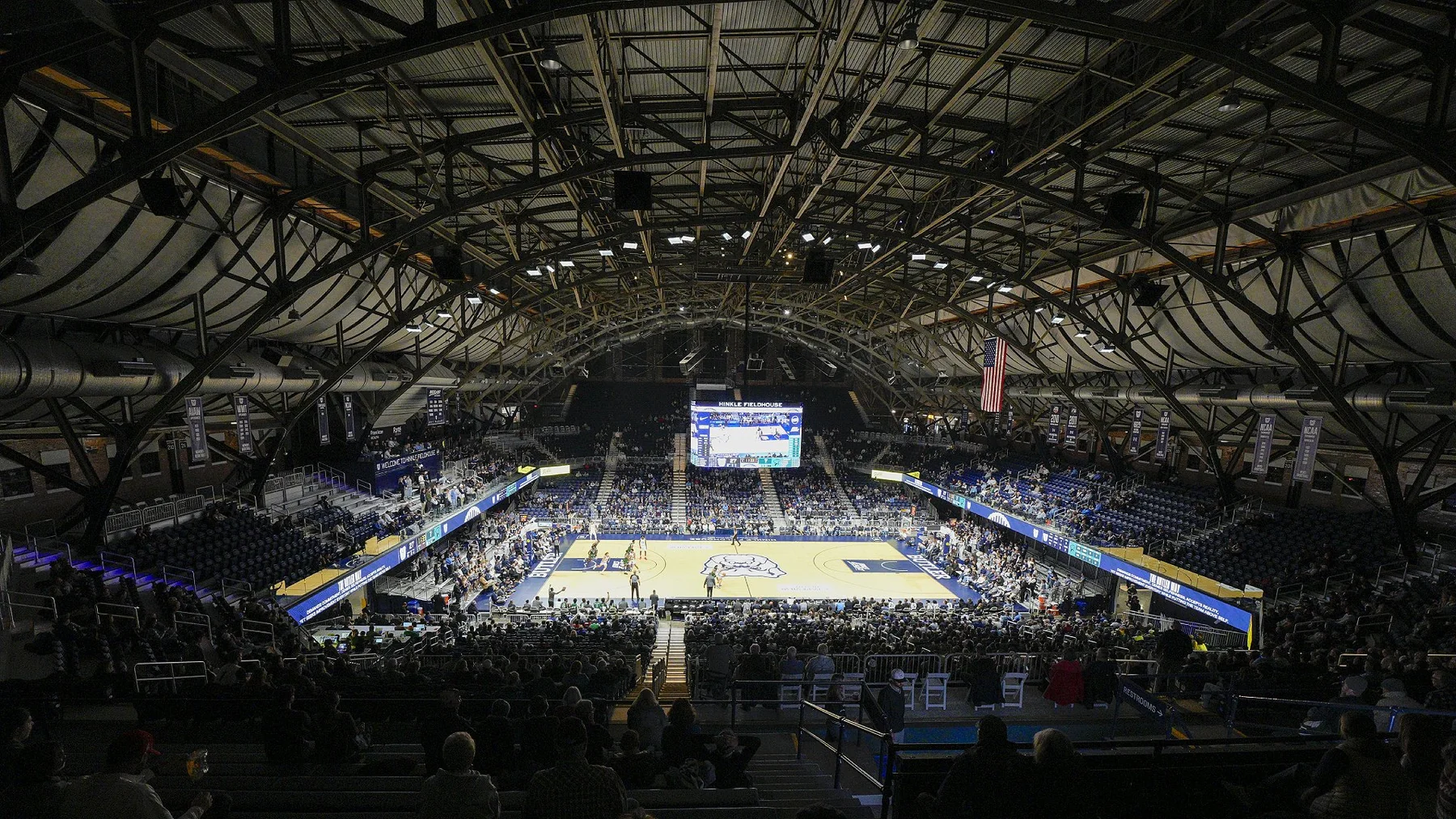
The conference winners meet Friday, December 11 at Hinkle Fieldhouse on Butler University's campus. The NBA lists the building at 9,100 seats and chose it as a distinctive stage with deep basketball history. Hinkle hosted professional teams in the league's early years, the 1954 Indiana high school title game later associated with Hoosiers, and Oscar Robertson's 1955 state championship with Crispus Attucks.
Prime Video has the exclusive stream for the winner-take-all final. Unlike every prior game in the 2026 tournament, the championship does not enter either team's regular-season record, and its player and team statistics do not enter official regular-season totals. Both finalists therefore play an 83rd actual game while remaining at 82 for standings and statistical purposes. The trophy is real; the extra game's accounting is intentionally separate.
What Cup results change in the 82-game season
When the NBA released the 2026-27 schedule, it assigned 80 games to each team and left two games open. This is deliberate schedule architecture, not missing data. Group Play results tell the league which teams enter the quarterfinals, which teams need replacement games and which opponents can be paired without breaking the 82-game framework.
How December opponents are completed
Four semifinalists
Their quarterfinal and semifinal become the two missing regular-season games. The two finalists then play the Dec. 11 championship outside regular-season accounting.
Four quarterfinal losers
The quarterfinal is one missing game. They are paired for another regular-season game on Dec. 7, 9 or 10.
Twenty-two non-qualifiers
They each receive two regular-season games on Dec. 6-7 and Dec. 9-10, when Cup games are not scheduled.
For the 22 teams outside the quarterfinals, the NBA uses Group Play finish to build the added slate from conference positions five through 15. The detailed 2026 rules call for 20 games within the same conference, using opponents otherwise scheduled to meet three times when possible. Because each conference has 11 non-qualifiers, the numbers cannot pair evenly inside both conferences. Two games are therefore cross-conference, matching lower Group Play finishers subject to travel constraints, and no club receives more than one of those cross-conference additions.
This mechanism protects several competing goals at once. Every club reaches 82 regular-season games; teams that advance do not receive extra standings opportunities; the league can avoid many unwanted fifth meetings; and the December calendar retains open dates for whichever bracket materializes. It also means a team eliminated from Cup contention should not assume its December week becomes a break. Its two opponents simply arrive later.
The distinction between schedule and workload matters most for the finalists. A semifinalist who loses completes two official games in the knockout rounds. A finalist also completes those two official games, then plays the championship as an 83rd on-court contest. That adds travel, preparation and injury exposure even though the result and box-score production sit outside regular-season totals. Teams may value the trophy enough to accept that cost; analysts should still recognize the extra load when reading the surrounding schedule.
Fans using the NBA calendar should keep December 4-10 flexible until the league completes these assignments. Add a named opponent only after the official update. A placeholder is more useful than a guessed matchup because hotel, ticket and broadcast plans can all change with one Group Play result.
How to follow the schedule and bracket without guessing
The tournament changes state three times: a pre-event schedule becomes live group standings, those standings become a seeded bracket, and the bracket creates added December games. A reliable tracker changes with it. Before October 30, verify dates, venues and broadcast assignments. During Group Play, record only the four designated games for each team. After November 27, wait for the NBA to confirm seeds and the extra regular-season pairings.
- 1
Check Cup record first. A team's overall record can explain season form, but qualification begins with its four Group Play results.
- 2
Resolve the group before the wild card. Identify each group winner and runner-up, then compare only the three second-place teams in that conference.
- 3
Record differential at the end of regulation. Do not accidentally include overtime margin or overtime points in the special Cup tiebreak columns.
- 4
Confirm seed and host. Group victory alone does not guarantee a home quarterfinal; the top two Cup seeds in each conference host, and the higher surviving seed hosts the semifinal.
- 5
Refresh the December calendar. Quarterfinal outcomes and non-qualifier pairings complete each club's two initially open regular-season games.
For day-of-game use, the NBA games today page is the quickest check for a changed tip time, while the TV schedule separates national windows from other access. The NBA's Tap to Watch system can route a fan to the available national, local or League Pass telecast for that location, but a subscription may still be required.
Most mistakes come from updating one field and leaving another behind. A clinched group winner still needs a conference seed. A named quarterfinal still needs a host and time. A non-qualifier still needs two December opponents. Keep the official tournament hub as the source of record for those changes, and treat any projected team placement as analysis until the league posts the matchup.
The confirmed 2026 framework
Sixty Group Play games run from October 30 through November 27. Six group winners and two wild cards enter a single-elimination bracket. Quarterfinals are December 4-5, semifinals are December 8 and/or 9 in team markets, and the championship is December 11 at Hinkle Fieldhouse. Team names in the bracket remain TBD until results earn them.
Sign in with Google to join the discussion.