NBA Cup rules at a glance
The NBA Cup is the league's annual tournament inside the regular season. It debuted in 2023 as the NBA In-Season Tournament, but the essential idea is unchanged: every team enters, selected regular-season games also count in a separate Cup table, and eight teams advance to a single-elimination finish. The NBA still awards its championship in June. The Cup creates another title race in the fall without asking the league to pause its normal schedule.
Entrants
30 teams
Every NBA team begins in Group Play.
Group games
4 per team
Two at home and two on the road.
Knockout field
8 teams
Six group winners plus two wild cards.
Tournament games
67 total
Only the Championship sits outside the standings.
The two-stage format
Stage one is Group Play. The league divides each conference into three groups of five, and each team faces the other four members of its group once. Those results produce six group champions and one wild card from each conference. Stage two is the Knockout Rounds: Quarterfinals, Semifinals and the Championship, all decided in one game. There are no two-leg ties or best-of-seven series to absorb a bad shooting night.
That compression is what gives the event its edge. A team can play well across four group games and still need point differential to survive a tie. Once it advances, one poor defensive quarter can end the run. The format therefore feels closer to an elimination tournament than to the long NBA playoff series, even though nearly every game remains part of the league schedule.
Who plays and when
All 30 teams participate automatically; there is no qualifying round. For the 2026 edition, Group Play runs from October 30 through November 27, followed by the Knockout Rounds and a December 11 Championship. The designated group dates are branded as Cup Nights, and the only NBA games played on those nights are Group Play games. Fans do not need a second ticket or a separate competition subscription merely because a game carries Cup stakes: it is still an NBA matchup on the regular-season calendar, now with another result attached to it.
How Group Play determines the eight-team field
Group Play is a four-game sprint contained within each conference. That distinction matters: an East team cannot take a West wild-card place, and no cross-conference result enters the Cup table before the Championship. The standings first identify a winner in each of the six groups, then compare the eligible runners-up for the final berth in each conference.
How the six groups are built
The groups are redrawn each year rather than copied from the NBA's six permanent divisions. The league ranks the 15 teams in each conference by the previous regular season and separates them into five pots: records 1-3, 4-6, 7-9, 10-12 and 13-15. One club from each pot is randomly assigned to each of that conference's three groups. The result is six groups of five, each containing one team from every prior-season tier.
This is seeded randomness, not a claim that every group will be equally difficult when the games arrive. An offseason trade, an injury return or a young team's leap can make a lower-pot opponent much stronger than its old record suggests. The draw nevertheless prevents all three highest finishers from the previous conference season landing in the same group. It also creates fresh combinations: Boston, Miami and Milwaukee are not locked into their usual divisional opponents.
Group winners and conference wild cards
Every team plays the other four teams in its group once, split into two home games and two road games. The best team in each group advances, producing three East winners and three West winners. The remaining place in each conference goes to the best second-place finisher across its three groups. That makes six group winners plus two wild cards in the Quarterfinal field.
The wild card is not simply the conference's fourth-best Cup record.
A team must first finish second in its own group to be eligible. The league resolves every group tie before comparing runners-up. A 3-1 club that loses its group on a tiebreak can enter the wild-card comparison; a third-place club with the same 3-1 record cannot.
The structure protects the value of winning a group while still giving one strong runner-up from each conference a path forward. It also means the last Cup Night can turn on results in several arenas. A team may clinch its own win and still wait for point margins elsewhere before knowing whether its second-place record is enough.
NBA Cup tiebreakers, in order
A four-game group schedule does not create much separation. Multiple teams can finish 3-1 or 2-2, so tiebreakers are part of the competition rather than obscure fine print. The order matters because the league stops as soon as one step separates the tied teams.
Ties inside a five-team group
| Order | Tiebreaker | What it measures |
|---|---|---|
| 1 | Head-to-head record | Results among the tied teams in Group Play |
| 2 | Point differential | Points scored minus points allowed across Group Play |
| 3 | Total points scored | Regulation points accumulated across Group Play |
| 4 | Prior-season record | For 2026, the team's 2025-26 regular-season record |
| 5 | Random drawing | The last resort if every earlier test remains tied |
Head-to-head comes first because every pair in a group plays once. In a simple two-team tie, the winner of that meeting advances before margin enters the calculation. A three-team tie can leave the tied clubs level against one another, which is when differential becomes decisive. The league resolves the group completely before it considers any runner-up for a wild card.
Wild-card and knockout-seeding ties
For a wild-card tie, head-to-head is removed from the sequence. The runners-up come from different groups and normally have no Cup meeting to compare, so the league starts with Group Play point differential, then total points, prior-season record and, if still necessary, a random drawing. This is why a second-place team's margin matters conference-wide, not only against its four group opponents.
The same published tiebreak protocol also orders qualifying teams for Knockout Round seeding. A group title guarantees entry, but it does not guarantee the most favorable venue or matchup. A stronger four-game record and, when necessary, a better differential can turn into home court.
Why overtime changes the math
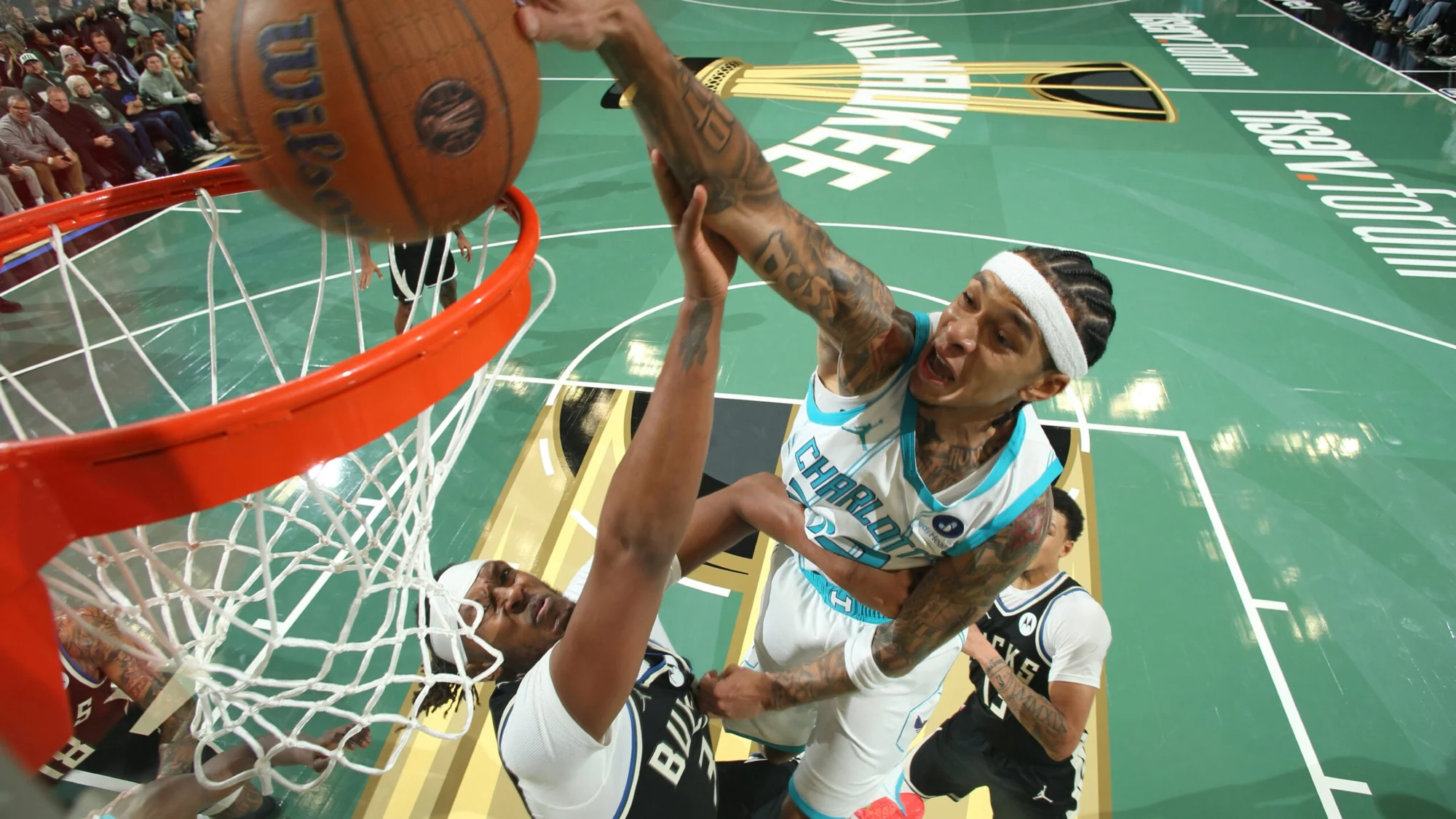
The NBA applies a special rule to any Group Play game that reaches overtime: each team's point differential for that game is recorded as zero, and points scored in overtime are removed from the total-points tiebreak. A 118-115 overtime winner still gets the win in the Cup standings, but neither side banks plus-three or minus-three. If the score was 105-105 after regulation, each side adds 105 rather than its overtime final to the total-points calculation.
The carve-out closes an incentive problem. Without it, teams tied late could benefit from reaching overtime and creating five more minutes in which to build differential or total points. Regulation margins remain live, however. That explains the unusual sight of a leading team attacking in the final seconds instead of dribbling out the clock: in 2025, Milwaukee hit a late three while already up double digits, and Minnesota coach Chris Finch openly described a 40-point margin as points “in the bank.” Within these rules, continuing to score can be tournament management rather than poor game etiquette.
How the Knockout Rounds work
Once the Cup field falls from 30 teams to eight, there is no reseeding after each game and no series to recover from a loss. The bracket moves through four Quarterfinals, two Semifinals and one Championship. East teams stay on the East side and West teams stay on the West side until the two conference survivors meet for the trophy.
Quarterfinals
8 teams → 4
Two games in each conference, hosted by higher Group Play seeds.
Semifinals
4 teams → 2
One conference final on each side of the bracket.
Championship
East vs. West
One neutral-site game decides the NBA Cup champion.
Quarterfinal and Semifinal home court
Group Play seeding controls the Quarterfinal pairings within each conference. The conference's best Group Play team hosts its wild card. The other two group winners meet, with the better seed hosting. For the 2026 Cup, the higher seed also hosts the Semifinal. A tiebreak edge built in November can therefore deliver two elimination games in a familiar arena instead of a road trip.
Home court is a real competitive reward even if it is not a guarantee. The host keeps its normal locker room and routines, avoids immediate travel and plays before its own crowd. Yet the round is still one game: foul trouble, a cold three-point night or one late turnover can erase every advantage. That volatility separates the Cup from a playoff series, where scouting adjustments and depth reveal themselves across several games.
The Championship is the one extra game
The two finalists meet at a neutral site for the trophy. This is the only Cup game that does not count in the regular-season standings, and its player and team production is excluded from regular-season statistics. In practical terms, each finalist plays an 83rd game, but still finishes with an 82-game regular-season record.
That exception keeps the June playoff race balanced: the finalists do not receive an extra win or loss that the other 28 clubs had no chance to record. It also matters when reading a player's season line. A 35-point Championship performance belongs to his Cup résumé and can influence Cup MVP voting, but it will not add 35 points to his official regular-season total.
How NBA Cup games fit into the 82-game season
The Cup works because the league does not bolt a full second schedule onto the NBA calendar. Group Play games are ordinary conference matchups chosen from the regular-season slate. The schedule then preserves two openings per team in December so the opponents can be assigned after the tournament field is known.
The two TBD games on every schedule
When the 2026-27 schedule was released, each team had confirmed dates and opponents for 80 of its 82 regular-season games. The other two games, scheduled within the December 4-10 window, depend on the Group Play standings. For the eight qualifiers, Cup knockout games help fill those openings. For everybody else, the NBA creates regular-season matchups during the off nights around the Quarterfinals and Semifinals.
The 22 teams that miss the Quarterfinals receive two assigned games. The league uses their conference Group Play positions to shape those matchups, generally keeping games within the conference and favoring pairs that otherwise meet only three times. Because each conference has an odd number of non-qualifiers, two of the 22 games cross conference, subject to travel constraints. Quarterfinal losers have already used one opening in the Quarterfinal and receive one more regular-season game; Semifinalists fill both openings by playing two knockout games.
Planning takeaway
An August schedule is complete in structure, but those two December opponents remain conditional. Recheck the 2026-27 NBA schedule and your saved NBA calendar after Group Play ends before booking travel around that week.
What counts in standings and statistics
Every Group Play game, Quarterfinal and Semifinal counts exactly like any other regular-season game. The win or loss enters the conference standings; minutes, points, rebounds and other player and team statistics enter the regular-season record; and the result can ultimately affect playoff seeding. “Cup game” describes an added competitive layer, not a different statistical category that replaces the league result.
The Championship alone is excluded. Its winner earns the Cup, its players can earn the largest tournament payout, and performances can decide Cup honors, but neither finalist adds a regular-season win or loss. This accounting also explains the headline total of 67 tournament games: 60 in Group Play, four Quarterfinals, two Semifinals and one Championship. The first 66 belong to the regular season; game 67 belongs only to the Cup.
NBA Cup prize money and player eligibility
The prize pool begins with the eight Quarterfinal teams and rises at each step. It is a per-player benefit set through the NBA-NBPA collective bargaining agreement, not a single purse that a team captain divides. That distinction explains both the clean payout ladder and the less obvious adjustments for players who join a roster during the knockout stage.
The payout ladder
The CBA established base amounts of $50,000 for a Quarterfinal loser, $100,000 for a Semifinal loser, $200,000 for the Championship runner-up and $500,000 for the champion in 2023-24. For later salary-cap years, those bases are multiplied by a Basketball Related Income growth factor. The figures can therefore rise rather than remain frozen at the inaugural level.
| 2025 result | Reported amount per full-share player |
|---|---|
| Lost in Quarterfinal | $53,093 |
| Lost in Semifinal | $106,187 |
| Lost in Championship | $212,373 |
| Won Championship | $530,933 |
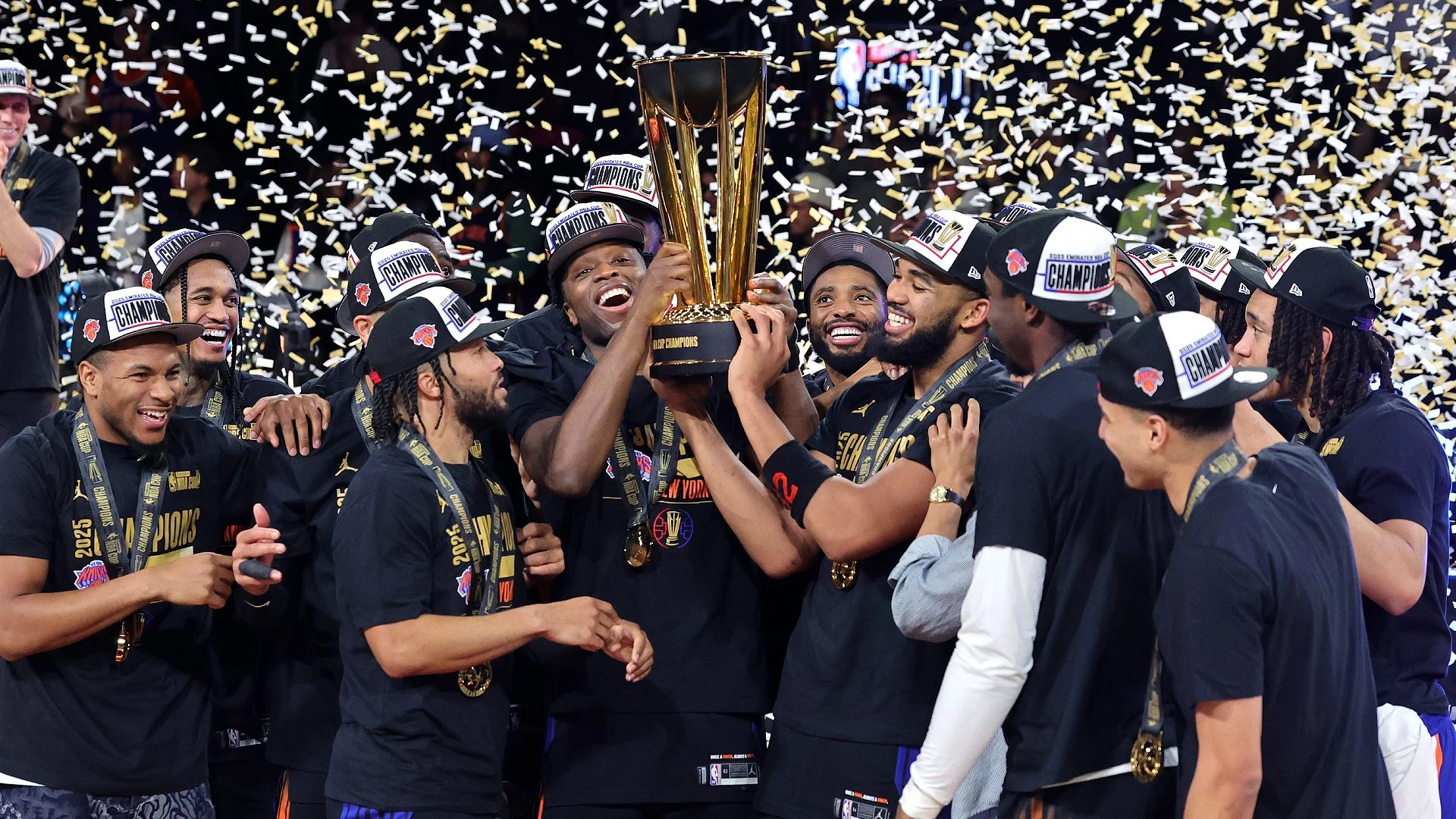
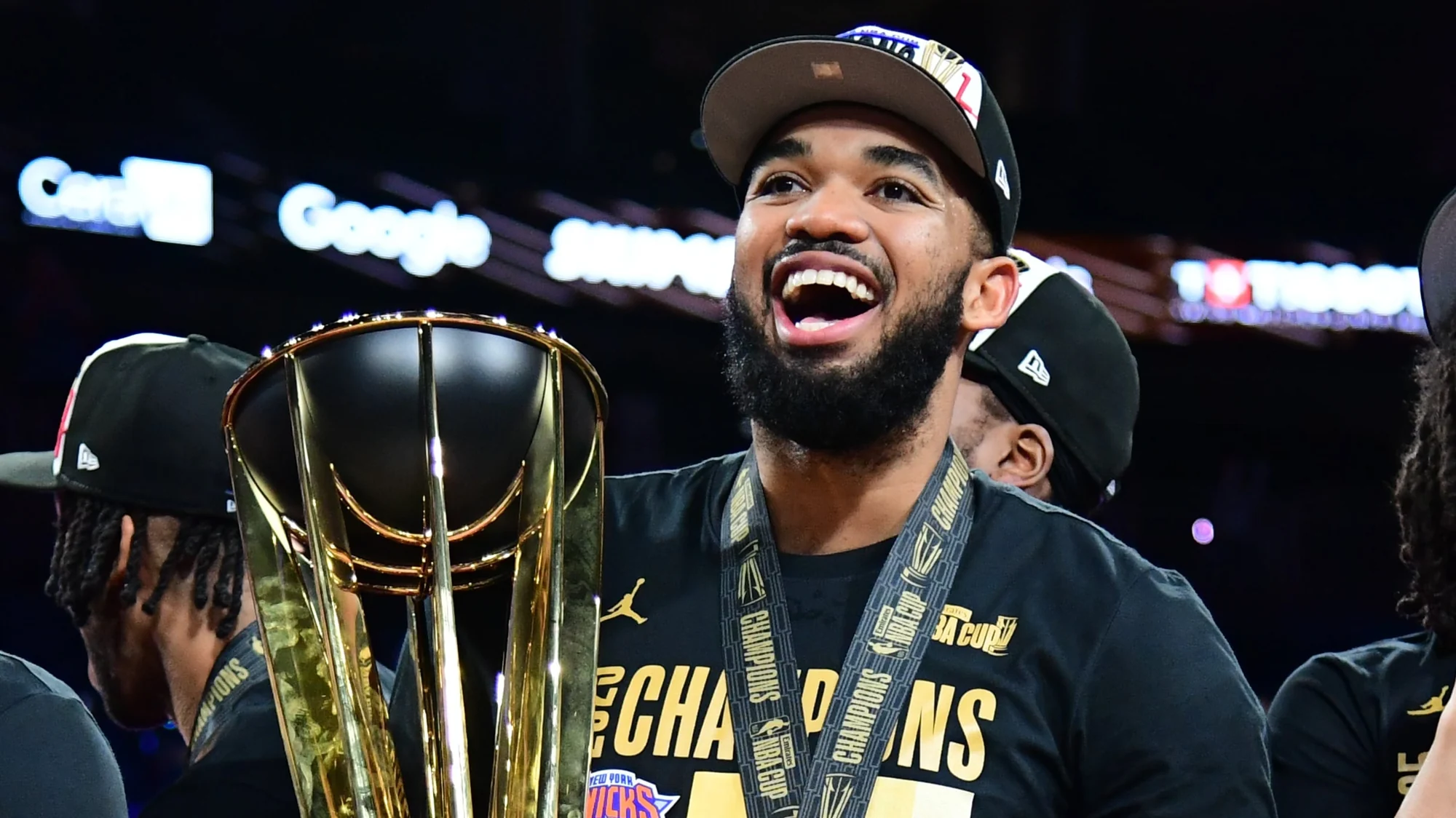
Those are the published 2025 payouts, illustrated by New York's $530,933 champion share and San Antonio's $212,373 runner-up share. They should not be mislabeled as the 2026 ladder. As of September 8, 2026, the league's current Cup materials confirm the progressive prize pool but do not state the 2026 dollar amounts.
Why the bonus lands differently across a roster
Under the CBA, an eligible Cup player is someone on the team's Active or Inactive List for at least one knockout game. A standard-contract player's share is prorated by the number of that team's knockout games for which he was listed. A player added after the Quarterfinal, for example, would not automatically receive the same fraction as a teammate listed throughout the run.
Games spent on the list under a Two-Way or 10-Day contract count as half a game in that fraction. The mechanism is more precise than the shorthand that every name on a roster gets the headline number. It also makes the incentive uneven in human terms. For a max-salary star, the champion's award may resemble an additional game check. For a Two-Way player or a lower-paid rotation player, even a partial share can represent a much larger portion of annual earnings. Money is not the only reason players compete—the trophy, national stage and a first test of a young lineup carry their own value—but the same check plainly does not feel the same in every locker.
What the rules change strategically
The Cup does not change the dimensions of the court or the playing rules, but it changes the value of certain decisions. A possession that would be ceremonial in February can matter to a November tiebreak. A coach also has less room to treat one poor matchup as noise because four Group Play results form the entire qualifying sample.
Point differential reshapes late-game decisions
In a normal blowout, the leader usually removes core players, slows the final possessions and accepts a smaller winning margin. In Group Play, differential can decide a group or wild card before total points is considered. Boston supplied the clearest early example in 2023. Needing to beat Chicago by 23 to advance, the Celtics intentionally fouled Andre Drummond while leading by 29 and continued to pursue margin. Bulls coach Billy Donovan challenged the tactic during the game, then acknowledged that Boston was trying to reach the knockout stage.
The tension is real. Leaving starters on court can protect a tiebreak position, yet every extra high-intensity possession carries fatigue and injury exposure. The sound decision depends on the live table, the remaining groups, player workload and the size of the cushion. “Run it up” is therefore too simple. The rule asks coaches to treat score margin as a resource while still deciding how much health risk is sensible.
Late-game decision sequence
Secure the win first. Then compare the live differential target with the benefit of more margin, the opponent's ability to close quickly, and the cost of keeping high-minute players on the floor.
A short tournament magnifies schedule and rotation choices
Four games amplify variance. One opponent can catch fire from three, one star can miss a Friday with a minor injury, or a difficult road pairing can tilt the entire table. The two-home, two-road split creates formal balance, but it cannot make every group equally strong after offseason roster changes. Cup standings are meaningful because the stakes are real; they are not a large enough sample to prove that every 4-0 team is a championship contender.
For coaching staffs, the event is still useful evidence. A single-elimination game tests half-court execution, timeout plays, matchup hunting and whether a young rotation can handle possessions that feel closer to April than November. The best reading combines the result with process: opponent quality, lineup availability, shot profile and how the team responded when the game tightened. Winning the Cup can reveal resilience. It cannot erase what the next four months of the regular season may expose.
What changed for the 2026 NBA Cup
The basic two-stage format remains intact in 2026, but the geography of the finish changes. The NBA moved the Semifinals out of the neutral-site final-four model and selected a new neutral venue for the Championship. Those choices make Group Play seeding more valuable while giving the title game a distinct setting.
Semifinals moved to team markets
Through the 2025 Cup, both Semifinals and the Championship were staged in Las Vegas. Beginning with the Cup in the 2026-27 season, the higher-seeded team in each conference hosts its Semifinal. Quarterfinal home court already rewarded strong Group Play performance; now the reward can extend through the conference side of the bracket.
The change carries practical consequences. Two fan bases get an elimination game in their home arena, the higher seed avoids another trip, and the atmosphere should feel tied to the teams rather than to a traveling final four. The lower seed also loses the neutral-floor reset that previously arrived after the Quarterfinal. Seeding can now shape both opponent and venue across two knockout rounds.
Indianapolis hosts the Championship
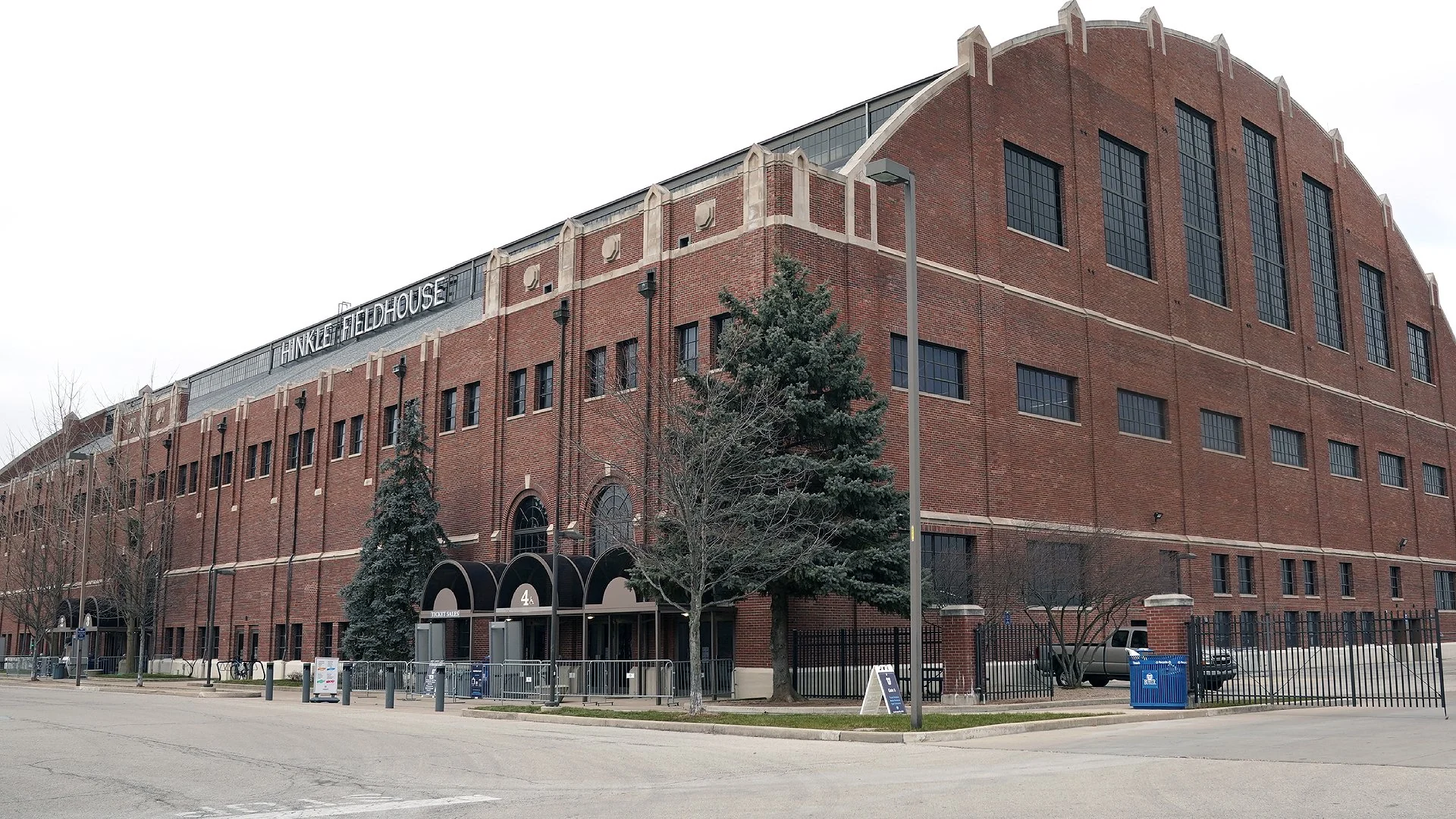
The East and West winners meet on December 11, 2026, at Hinkle Fieldhouse on Butler University's campus in Indianapolis. Hinkle is not the Indiana Pacers' home arena—that is Gainbridge Fieldhouse—and its renovated capacity is about 9,100. The smaller room is a deliberate historical choice. Butler has played there since 1928, the building hosted Oscar Robertson's Crispus Attucks state-title teams, and it became a U.S. National Historic Landmark in 1987.
Choosing Hinkle gives the neutral-site final an identity beyond a generic event floor. It also separates the Cup's last game from the rest of the tournament: every earlier 2026 game belongs to an NBA team market, while the Championship moves to a compact venue associated with Indiana basketball history. The rulebook outcome is unchanged—one East team, one West team, one game—but the path now rewards home-court seeding for longer and saves the neutral stage for the trophy decision.
The cleanest way to follow the Cup
Track Group Play record first, point differential second, and the conference wild-card race alongside your team's group. After the final Cup Night, refresh the December schedule: advancement determines both knockout opponents and the two previously unassigned regular-season games.
Sign in with Google to join the discussion.