NBA draft order starts with team records, but the published board can look nothing like the standings. Lottery movement, tied records, traded picks, protections, swaps and forfeitures all affect the final list.
There is an added transition to understand in 2026: the familiar 14-team combination lottery produced the 2026 order, while an approved 16-team “3-2-1 Lottery” begins with the 2027 draft. This guide labels the two systems separately.
NBA Draft Order at a Glance
The easiest way to understand the order is to separate where a pick lands from which team owns it. Records and lottery rules create the slots. Trades, protections and swaps determine which front office exercises each selection.
The record-to-pick pipeline
- Finish the regular season and postseason qualification process. That identifies the teams in the applicable lottery field and the teams outside it.
- Resolve identical records. The NBA conducts random drawings rather than using head-to-head or playoff-seeding tiebreakers for draft priority.
- Run the lottery. The 2026 format drew the first four picks among 14 teams; the approved 2027 system draws the first 16 positions among 16 participants.
- Place the remaining teams. Under the 2026 system, lottery teams not drawn filled picks 5-14 in reverse record order, then playoff teams filled 15-30 in reverse record order.
- Apply ownership terms. A traded pick may convey, remain protected, or be swapped only after its slot is known.
Reverse order means the worse regular-season record selects earlier, subject to the lottery and ties. Playoff performance did not reorder picks 15-30 under the completed 2026 framework; regular-season record did. A Finals team could therefore select before another playoff team if it had the worse regular-season record, unless the pick had been traded.
Order is attached to picks, not team logos
A standings table tells you the origin of a pick, not necessarily its owner. If Team A traded its first-rounder to Team B without protection, Team A's record still determines the slot and the lottery still moves that slot. Team B receives the result. The official draft board may display “via” language because the selecting team differs from the team whose season created the position.
The 2026 board offered clear examples: several teams held two first-round selections, while some original owners did not pick in their own positions. That does not mean the receiving team's record generated both slots. One came from its own season and another traveled through a previous transaction.
This distinction also prevents a common lottery mistake. A traded selection can win No. 1 for its current holder. The original team does not recover it unless a protection or other transaction term says so. Conversely, a protected pick that lands inside its protected range may remain with the original team even when public mock drafts had listed the other club as a possible owner.
Working rule
First determine the slot from league rules. Then determine the owner from the trade terms. Never infer ownership from the logo beside the standings record.
How the 2026 Lottery Worked
The 2026 draft used the weighted combination system that had operated since 2019. It is important because many explainers still describe it as “the NBA lottery,” but it is now the completed old format: the league approved a different system for drafts beginning in 2027.
Four drawn picks and 1,000 combinations
Fourteen teams that missed the 2026 playoffs entered the lottery. The three worst records each had a 14% chance at No. 1; odds then declined by seed. The worst-record team could fall no lower than fifth because only four teams could jump into the first four positions.
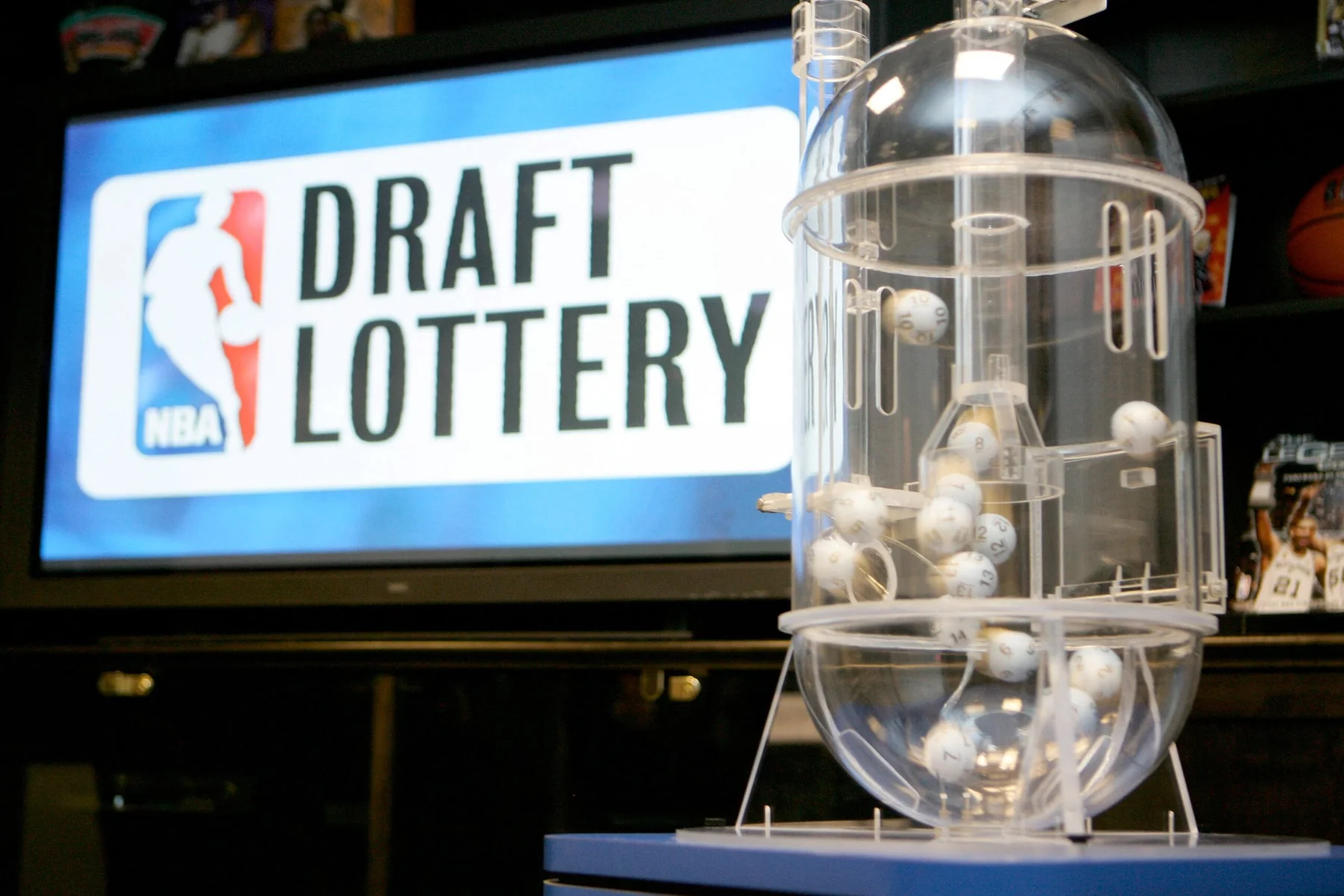
The machine held 14 balls numbered 1 through 14. Drawing four balls without regard to order creates 1,001 possible combinations. The NBA assigned 1,000 combinations among the participating teams and left one unassigned. Balls were mixed for 20 seconds before the first draw and 10 seconds before each later draw. The four-number combination identified the owner of pick No. 1.
The balls went back into the machine and the procedure repeated for picks 2, 3 and 4. If a combination assigned to an already selected team appeared again—or the unassigned combination appeared—the result was discarded and another combination was drawn. The televised envelope reveal was a presentation of results already produced in a separate observed room.
What happened to picks five through 30
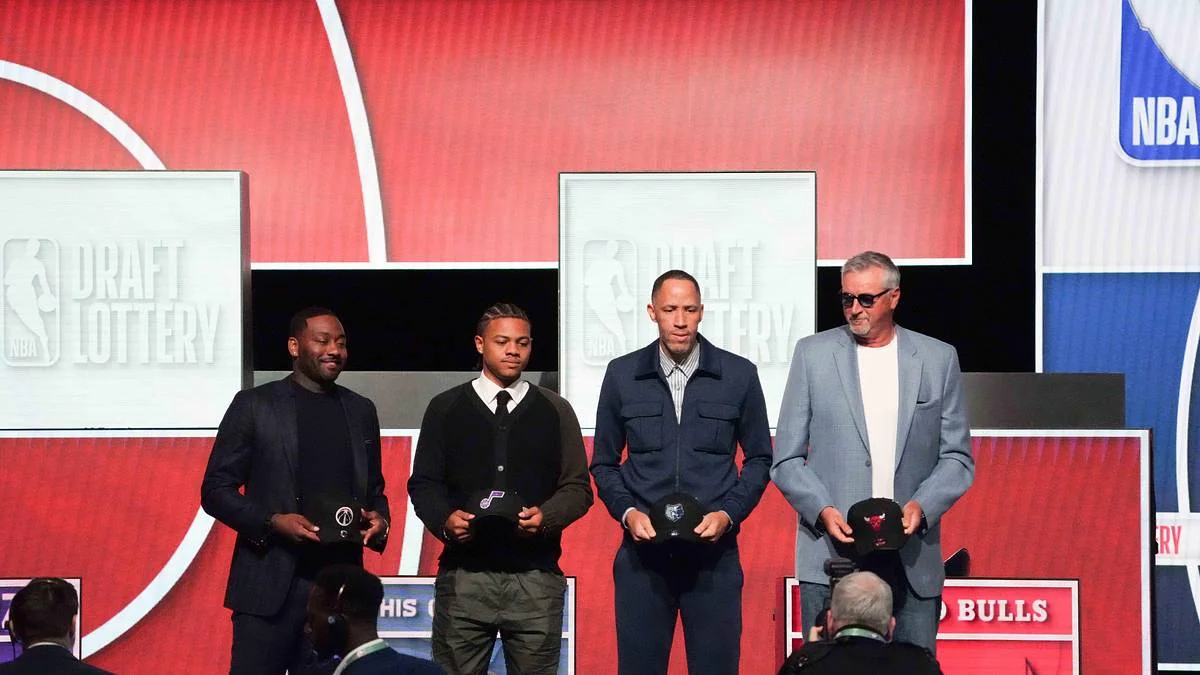
After the first four teams were drawn, the remaining ten lottery teams filled picks 5-14 in reverse order of regular-season record. A team could move down when one or more clubs behind it jumped into the top four, but the established order among undrawn teams was retained.
Picks 15-30 belonged to teams that reached the playoffs and were ordered by reverse regular-season record, subject to random drawings between identical records. A deeper playoff run did not automatically push a club later. This differs from leagues whose draft order changes by postseason finish, so importing an NFL rule creates errors.
The second round also used reverse regular-season record, but it was not simply a copy of the first. Tiebreaker effects, traded ownership and forfeitures could make the displayed sequence look different. The official final board was therefore the authoritative answer after the lottery and transaction conditions resolved.
In 2026, Washington entered with a 14% chance and won No. 1. That result illustrates probability correctly: 14% was tied for the best chance, not a guarantee. Losing more games improved odds under that system but never promised the first pick.
The New 3-2-1 Lottery Beginning in 2027
On May 28, 2026, the NBA Board of Governors approved a fundamentally different lottery for the 2027, 2028 and 2029 drafts. It is not a small odds adjustment. The field expands, the drawing orders every lottery position and the worst records receive fewer—not more—balls than several teams above them.
Sixteen teams and three levels of lottery balls
The field expands from 14 to 16. Teams that qualify for neither the playoffs nor the Play-In receive three lottery balls each, except the three worst records are “draft relegated” to two balls. The No. 9 and No. 10 Play-In seeds in each conference receive two balls. The losers of the No. 7-versus-No. 8 Play-In games receive one ball each.
That creates three, two and one-ball groups—the 3-2-1 name. The league's history explainer says the three worst teams will each have a 5.4% chance at No. 1, while teams with the fourth- through 10th-worst records will each have an 8.1% chance. In other words, finishing absolute last now produces worse No. 1 odds than finishing fourth through 10th from the bottom.
All allocated balls are drawn to determine the order of the first 16 picks. That is another major break from 2026, when only the top four were drawn and the remaining lottery teams fell into reverse-record order. Under 3-2-1, the entire lottery board is a drawing result.
| 2027 participant group | Balls | Purpose |
|---|---|---|
| Non-playoff/non-Play-In, except worst three | 3 | Flattest high-odds group |
| Three worst records | 2 | Draft relegation discourages bottoming out |
| No. 9/10 Play-In seeds | 2 | Lottery remains available after Play-In loss |
| Losers of No. 7 vs. No. 8 games | 1 | Includes teams that later fail to make playoffs |
Pick floors, repeat-pick limits and protection rules
The three draft-relegated teams cannot fall lower than No. 12. Every other lottery team can fall as low as No. 16. This creates wider movement than the old worst-record floor of fifth, even while the special No. 12 floor limits the harshest result for the bottom three.
The system also restricts repeated premium outcomes. A team's own pick cannot be No. 1 in consecutive drafts or land in the top five three drafts in a row. The restriction follows the pick's original team even if that pick was traded and is held by someone else. That detail prevents a receiving club from escaping the restriction simply because the logo changed.
Newly traded picks cannot carry top-12, top-13, top-14 or top-15 protections. The league also gained broader power to reduce lottery odds, alter draft positions and impose fines for tanking conduct. These provisions apply alongside the drawing rules and will affect how future trades are written.
The approved 3-2-1 framework runs through 2029. The selection-order rules beginning in 2030 require another Board of Governors vote, so no guide should claim the 2027 system is permanent beyond its announced term.
How Draft Tiebreakers Work
Two teams can finish with identical records and still need an exact draft priority. The NBA does not run through the head-to-head, division and conference criteria used to seed the playoffs. It conducts random drawings for draft order.
Random drawings for identical records
For the 2026 draft, six ties were broken at the NBA office in Secaucus. The league's President of League Operations conducted the drawings, and an Ernst & Young partner oversaw the process. Utah won its drawing against Sacramento; New Orleans won against Dallas; Phoenix finished first in a three-team drawing with Philadelphia and Orlando. Those results established the relevant pre-lottery or non-lottery priority.
A “winner” receives the earlier first-round position before other events apply. For lottery teams under the 2026 format, their combinations could be averaged across tied seed positions, with the drawing assigning priority and any indivisible remainder. The actual lottery could then move one or more tied teams into the top four, so the final visible order might no longer sit side by side.
This is why a standings page cannot settle a tied draft slot. The correct source is the NBA Communications tiebreaker release, followed by the official lottery result and final draft board.
Why first- and second-round order can differ
Under the completed 2026 procedure, teams tied in the regular season selected in inverse order in the second round. If Team A received priority over Team B in round one, Team B received priority over Team A in round two. With three tied teams, the sequence reversed across the group.
For tied lottery teams, the league could not finalize that second-round relationship until after the lottery. Suppose A, B and C were tied, then B jumped to a drawn top-four pick. Their actual first-round positions—not merely the April pre-lottery ordering—were needed to determine the inverse round-two sequence.
Traded ownership can make the reversal nearly invisible. The pick labeled with Team A's original slot might be controlled by Team D, while Team A's second-rounder belongs to Team E. The origin still determines the order; transaction history determines who selects.
Because the 3-2-1 lottery changes how the first 16 positions are drawn, fans should check the official tiebreaker and final-order release for the applicable draft rather than carrying a 2026 example forward blindly. The enduring lesson is source order: record, drawing, lottery, ownership.
Traded Picks, Protections and Pick Swaps
Draft order answers where the asset lands. The trade agreement answers whether it moves. Three phrases—unprotected pick, protected pick and pick swap—describe different rights, and mixing them up is the fastest way to misread a draft board.
Conveyance and protected-pick outcomes
An unprotected pick conveys to the receiving team wherever it lands. If the original team wins the lottery, the recipient gets the premium result. The original team's bad season creates the slot, but ownership belongs to the trade partner.
A protected pick moves only if it lands outside a specified protected range. A top-10-protected first, for example, stays with the original team if it lands 1-10 and conveys if it lands 11 or later. What happens after it is retained depends on the actual agreement: it may roll to a later year with the same or different protection, convert into second-round picks, or follow another negotiated outcome.
That last sentence cannot be guessed. “Top-10 protected” describes the current trigger, not the fallback. The official trade release, team announcement or a reliable transaction database must supply subsequent-year terms. The 2026 official tracker includes real labels such as a top-20-protected first and a protected second, showing why the precise wording matters.
Beginning with the new lottery framework, teams cannot attach top-12 through top-15 protections to newly traded picks. That rule does not make all protection illegal; it removes those particular shallow protection bands from new transactions. Existing obligations and other permitted structures must be read under their governing terms.
Swaps change ownership, not the underlying slot
A pick swap is an option to exchange positions, usually only if doing so improves the holder's pick. Suppose Team A owns pick 8 and has the right to swap with Team B at pick 22. Team A exercises and selects at 8; Team B moves to 22. If Team A already owns pick 8 and Team B lands 22 under the reverse arrangement, there is no reason to swap.
The swap does not create an extra first-round pick. It changes which team uses each existing slot. That is why official order notes commonly assume the right is exercised only when favorable. Complex “best of” or multi-team structures can route one slot through several clubs, but the underlying positions still originate from team seasons and the lottery.
Draft-night trades add another visual complication. A team may make a selection for another club because the trade cannot be completed or announced until league timing requirements are satisfied. The player may briefly appear under the original selector on broadcast graphics. The official transaction and completed draft tracker should replace the live-screen snapshot.
The Second Round, Forfeited Picks and a Verification Checklist
The NBA begins with two selections per team in principle, but the event does not always contain 60 actual picks. Trades change owners; penalties can remove selections entirely. The final board—not a generic “31 through 60” template—is the reliable count.
Why a draft may have fewer than 60 selections
A forfeited pick is removed as a league penalty. No other team receives a bonus selection in its place, so the draft proceeds with fewer selections. NBA notes before the 2026 draft said each of the previous four drafts contained fewer than 60 picks because of forfeitures. That is why official FAQ language in some years refers to a second round ending at 58 or 59.
Forfeiture is different from a trade. A traded second-rounder still exists and appears under another owner. A forfeited pick does not appear as an exercisable selection. It is also different from “passing” on a pick: the league's official numbered board records what actually happened.
Second-round ownership can become especially complex because teams aggregate choices, trade conditional “best of” rights and reroute selections through multiple transactions. An official order may say a pick moved “via” several teams. That chain explains legal ownership; it does not mean multiple picks occupy the same number.
How to read the final order correctly
- Identify the draft year and rule system. Use the 2026 combination rules only for 2026; use the 3-2-1 framework from 2027 through 2029.
- Start with the official tiebreaker release. This resolves identical records before or around the lottery process.
- Open the official lottery results. Do not use pre-lottery odds as if they were final slots.
- Read the complete draft board. Separate the original team attached to the slot from the current owner shown by “via” notes.
- Apply protections and swaps from the actual trade terms. Confirm whether the pick conveyed and whether a favorable swap was exercised.
- Check the official trade tracker after draft night. It resolves selections made on behalf of another team and multi-team transactions.
- Count the numbered selections. If the board ends before 60 or skips a would-be asset, look for an official forfeiture notice rather than assuming an error.
A mock draft is useful for prospect opinions, not asset ownership. A standings page is useful for records, not lottery results. A broadcast graphic is useful in the moment, not for transactions awaiting completion. Each source answers a different layer of the order.
The entire process can be compressed into one sentence: records create initial priority, league drawings create lottery order, and transaction terms determine the owner. Tiebreakers, second-round inversion and forfeitures then explain the exceptions visible on the final board.
Remember the 2027 change
The 14-team, top-four combination lottery explains 2026. Beginning in 2027, the 16-team 3-2-1 drawing orders all 16 lottery picks under newly approved anti-tanking rules.
Sign in with Google to join the discussion.