
NBA fantasy basketball starts with a league, a scoring system and a roster of real players whose performances become your results. ESPN and Yahoo both let you assemble that roster and compete across the season. The useful comparison begins with what your particular league counts, how often you want to manage it and who will play with you.
This guide covers season-long leagues, draft preparation and the rules to check before making a move. Platform options were reviewed on November 12, 2026. Your league's saved settings control the competition, especially when a private commissioner has changed the defaults.
Choose the league your group will actually manage
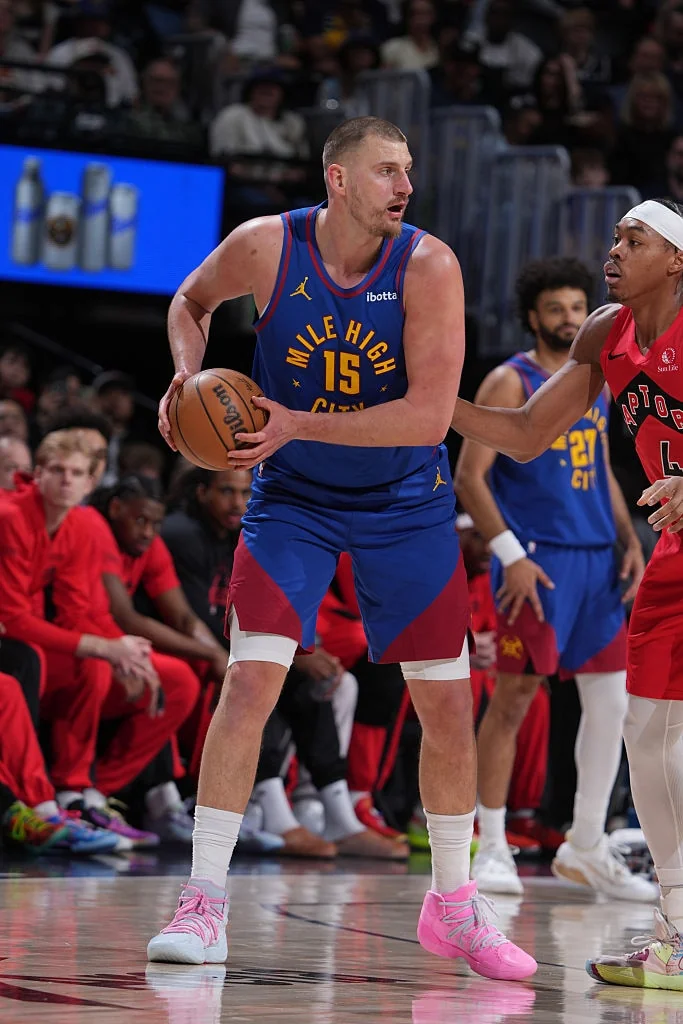
A fantasy team can pair a Denver center with an Oklahoma City guard and a Boston wing. Their real teams never combine; their individual statistics feed the fantasy contest you joined. That makes following roles, minutes and availability useful even when you have little interest in a player's franchise. Your fantasy championship is decided by your league rules, rather than the NBA champion or the actual conference standings.
Start with the people. A group of friends who already use Yahoo may gain more from keeping its shared history than switching for a different draft-room appearance. A first-time manager without a group can join a public league. A commissioner organizing a workplace competition needs a private league, enough committed managers and a draft time everyone understands. These decisions have a much larger effect on enjoyment than a colorful player-ranking badge.
ESPN's public-league instructions describe standardized rules and a joining process that includes draft and scoring preferences. ESPN also says managers cannot leave a public league after it drafts. Read the selections carefully before accepting a place. For a private competition, its League Manager rules give the organizer control over settings such as scoring, roster slots and the schedule.
Then agree on the expected routine. Someone who wants one relaxed weekly check-in may struggle in a group that reacts to every late injury report. Conversely, experienced managers may enjoy daily roster decisions. Put that expectation in the invitation. A league can be technically available on a phone while still demanding more attention than its members want to give it.
Choose season-long redraft for a clean annual start. If your group wants to retain players across seasons, settle keeper eligibility and the cost of keeping someone before the initial draft. Otherwise a seemingly harmless first-year rule can create an argument the following summer. Record decisions where every manager can find them; a remembered conversation is a poor substitute for a visible league policy.
Understand what your fantasy score rewards
Write the scoring format at the top of your draft notes. ESPN's basketball creation form lists points, category and rotisserie choices. Yahoo offers traditional points leagues alongside its newer High Score format. Check the actual league format before joining; a familiar platform name does not tell you enough.
Head-to-head points turn a box score into one total
In a points league, statistics receive numerical weights and become a fantasy total. Your team's total is compared with an opponent's over the scoring period. Check whether missed shots, turnovers, defensive statistics or bonuses are part of that calculation. Two managers can both play “points” and value the same NBA performance differently because their coefficient tables differ.
For an illustrative scoring system, give a point for each real point, 1.2 for a rebound, 1.5 for an assist, three for a steal and minus one for a turnover. A line of 20 points, 10 rebounds, five assists, one steal and three turnovers produces 39.5 fantasy points. That is an arithmetic example, not a promise about your league's settings. Add blocks, shooting attempts or bonuses only if your rules count them.
Categories and rotisserie reward a balanced roster
Category competition asks which statistics you win. A team might win rebounds and blocks while losing assists and free-throw percentage. In a nine-category illustration, winning five categories and losing four can produce a 5–4 category result; a most-categories format instead awards the overall weekly matchup. Read that distinction before interpreting the standings. A dominant scoring performance cannot automatically repair every category deficit.
Rotisserie compares your accumulated category performance with the whole league across the season. Its category ranking points create the overall standings. That longer horizon changes the meaning of a short losing stretch: a weak week does not necessarily represent a separate head-to-head defeat.
Percentages deserve special care. A player making one of two free throws and another making nine of ten combine for 10 of 12, or 83.3%. Averaging their individual 50% and 90% would incorrectly give 70%. Volume matters, so pairing efficient low-volume players with a high-volume poor shooter can create a different outcome from the individual percentages on a ranking page.
Yahoo High Score counts a starter's best game
Yahoo's High Score rules describe a separate format: draft 10 players, start six, and count each starter's highest-scoring game of the week. Its listed scoring awards one per point and rebound, two per assist, and three per steal or block. Benching a player removes that player's accumulated contribution; reinserting him makes only subsequent games eligible.
Consequently, a 60-point fantasy performance followed by two 25-point games supplies a different weekly contribution from a format that adds all three games. This is a structural difference to learn before using a standard cumulative-points draft sheet. Confirm the exact format in the league itself, especially when following an invitation or renewing an older competition.
Join or create the right ESPN or Yahoo league
Use the official ESPN Fantasy or Yahoo Fantasy destination and sign in with the account you intend to keep. An invitation belongs to a particular league and season. Before accepting, confirm its name, commissioner, scoring format, draft date and whether it is a free or prize competition. A familiar team name from a previous year does not prove you have opened the renewed league.
ESPN's creation instructions direct organizers to choose details including league size, scoring and draft preferences. Yahoo's private-league guide describes starting from scratch or copying existing settings. Copying a previous league can save work, but inspect the result; last season's playoff dates or scoring choices may be unsuitable for this season's group.
Set the commissioner rules before invitations go out
A useful invitation contains a short rules sheet. Include the number of managers, scoring format, roster size, starting positions, injured-player slots, draft method, transaction rules and playoff arrangement. State the draft time with a time zone. “Sunday at eight” is ambiguous when members live in different countries or when clocks change during the season.
For example, a proposed 10-team league with 13-player rosters selects 130 players. Expanding to 14 teams with the same roster size selects 182. That arithmetic explains why the second league has a thinner free-agent pool even if the app looks identical. Make that depth decision deliberately; beginners may otherwise discover that the backup they expected to add is already rostered.
Agree how mistakes and disputes will be handled. A commissioner should distinguish a genuine accidental move from a request to undo an unsuccessful decision. Decide how trades are reviewed and disclose any discretionary intervention. Yahoo's commissioner guidance makes clear that private-league management carries responsibility for league disputes.
Finally, check lineup locking. A weekly lock and an individual-game lock create different obligations when a player is ruled out. Do not assume changing a bench slot on your phone will count immediately. Read the saved rule and inspect the lineup date before saving. Clear expectations at this stage prevent a normal platform restriction from becoming an argument about unfair treatment.
Prepare for the draft with your league settings open
Prepare a small group of acceptable choices for each stage rather than a rigid sequence of names. A ranking answers an assumed scoring question; your league may ask a different one. Keep the scoring table, roster slots and draft room visible together. Label any outside ranking by its season, platform and format so an old category list does not silently become your current points plan.
Snake drafts and salary-cap drafts ask different questions
In a snake draft, the selection order reverses each round. In a 10-team example, the manager picking first waits until pick 20 for a second selection, while the manager at the turn picks 10th and 11th. Consider what may disappear before your next turn. Reaching slightly within a similar tier can be reasonable when the next chance is far away; chasing one position at every turn can leave obvious value elsewhere.
A salary-cap draft gives managers a fictional budget for offers on players. That budget belongs to the fantasy draft, not the NBA salary-cap system. If a league uses a hypothetical 200-unit budget and you spend 150 on three players, only 50 remain for the rest of the roster. Track both money and open slots. Winning the bid for the most famous player can still leave a difficult team to complete.
ESPN's draft-method guide and Yahoo's draft overview explain the available approaches. Try a mock to learn the controls and pace. Pre-rank players and prepare a queue even if you expect to attend; a dropped connection should not leave your priorities completely undefined.
Build around roles and eligible positions
Separate a player's basketball role from his fantasy label. A forward can initiate an offense without qualifying for your point-guard slot. Conversely, multiple-position eligibility can help you fit productive players into the active lineup. Check the label in your actual draft room. A television graphic, a real-team depth chart or another platform's designation does not determine your league's legal lineup.
Evaluate opportunity alongside talent. A bench scorer may have strong per-minute production but limited chances behind established starters. A low-usage starter may play many minutes without supplying enough assists or shots for your scoring system. A new role can be valuable, but treat the anticipated workload as a forecast until games establish it.
Think in roster combinations. If your first selections provide plentiful assists but weak rebounds, another similar guard may deepen an existing strength while making the center slots harder to fill. Category managers should also examine percentages and turnovers. Points managers should run the same candidate through their own weights rather than assuming category balance is always the objective. Keep a short explanation for each selection; it is easier to revise a reasoned plan than an attachment to a name.
Manage waivers, trades and injured players
A free agent and a player on waivers may require different actions. A free agent can be available for an immediate addition under the league's rules; a waiver player is subject to a claim process. Yahoo's waiver overview includes rolling-priority and free-agent-budget systems. Identify yours before assuming the first manager to notice a breakout automatically gets him.
With priority, your place in the claim order matters. With a free-agent budget, the offer and the tiebreak rules matter. The waiver budget is separate from a salary-cap draft budget unless your league explicitly says otherwise. Keep a reserve for later decisions, but judge offers against your actual roster need rather than treating unused fictional money as an achievement.
Review the complete transaction before confirming it: player added, player dropped, date effective and any acquisition limit. A good pickup can become a poor move if it accidentally releases a valuable injured player. After processing, inspect the roster rather than assuming a submitted claim succeeded. Competing claims, roster limits and eligibility changes can affect the outcome.
Injury slots require particular attention. A report that a player is questionable is basketball information; the platform's eligible designation determines whether the slot accepts him. ESPN explains that a changing injury designation can affect subsequent waiver or free-agent moves in its IR/IL guidance. Check current Yahoo basketball rules as well, rather than relying on an older guide to IL or IL+ behavior.
For trades, evaluate the lineup after the deal. Receiving two players for one can require a drop; swapping a center for a guard can leave a starting position difficult to fill. Review processing time and the fantasy trade deadline before accepting. Those deadlines belong to your fantasy competition and need not match the NBA's real trade deadline. A fair trade should make sense for both managers' teams without requiring the commissioner to predict which player will perform better.
Read your results and solve access problems
A fantasy scoreboard combines three things: the underlying NBA statistics, your league's scoring formula and the players who were eligible to contribute. Work through those layers in that order when a result looks wrong. Comparing only the final fantasy number with a television points total skips most of the calculation.
Match fantasy totals to active players and corrections
Open the relevant NBA box score and your player's fantasy breakdown. Check the date, whether he occupied an active slot and which statistics the formula includes. A bench performance does not automatically contribute. A newly added player's earlier games also do not become yours retrospectively. In High Score, check the best eligible game and any lineup changes before adding several performances together.
Live totals can change. ESPN's stat-correction guidance explains that NBA adjustments can affect fantasy scoring, and warns commissioners against manually granting a correction that the system later applies again. Yahoo's scoring overview describes weekly correction handling. Consult the correction screen and your league's finalization rules before treating a narrow margin as settled.
Save the game date, player, disputed statistic and league scoring setting when contacting support. “My score is wrong” gives much less useful evidence than identifying one assist that appears in the official box score but not in the fantasy calculation. Commissioners should document any authorized manual adjustment visibly so everyone can understand the final result.
Separate free leagues, optional tools and account access
ESPN advertises free fantasy basketball participation. Yahoo's joining page distinguishes free leagues from public prize leagues. Optional research products, league entry terms and subscriptions are separate purchasing decisions. Read the actual checkout and eligibility terms; a general fantasy guide cannot establish your current price, regional availability or renewal conditions.
If a team disappears after changing devices, first confirm the account and season. ESPN maintains a find-your-team guide and official account-recovery support. Ask the commissioner to confirm the league still lists your team. Avoid creating a second account or joining another league merely to replace a missing view; that can complicate identifying the original membership.
Use fantasy notifications to follow your roster, then use the NBA games today page or weekly NBA schedule for the real fixtures. Watching games, purchasing a viewing subscription and managing a fantasy team involve separate access rules. The best starting setup is the one whose format you understand, whose members will stay involved and whose saved rules answer the next decision clearly.
Sign in with Google to join the discussion.