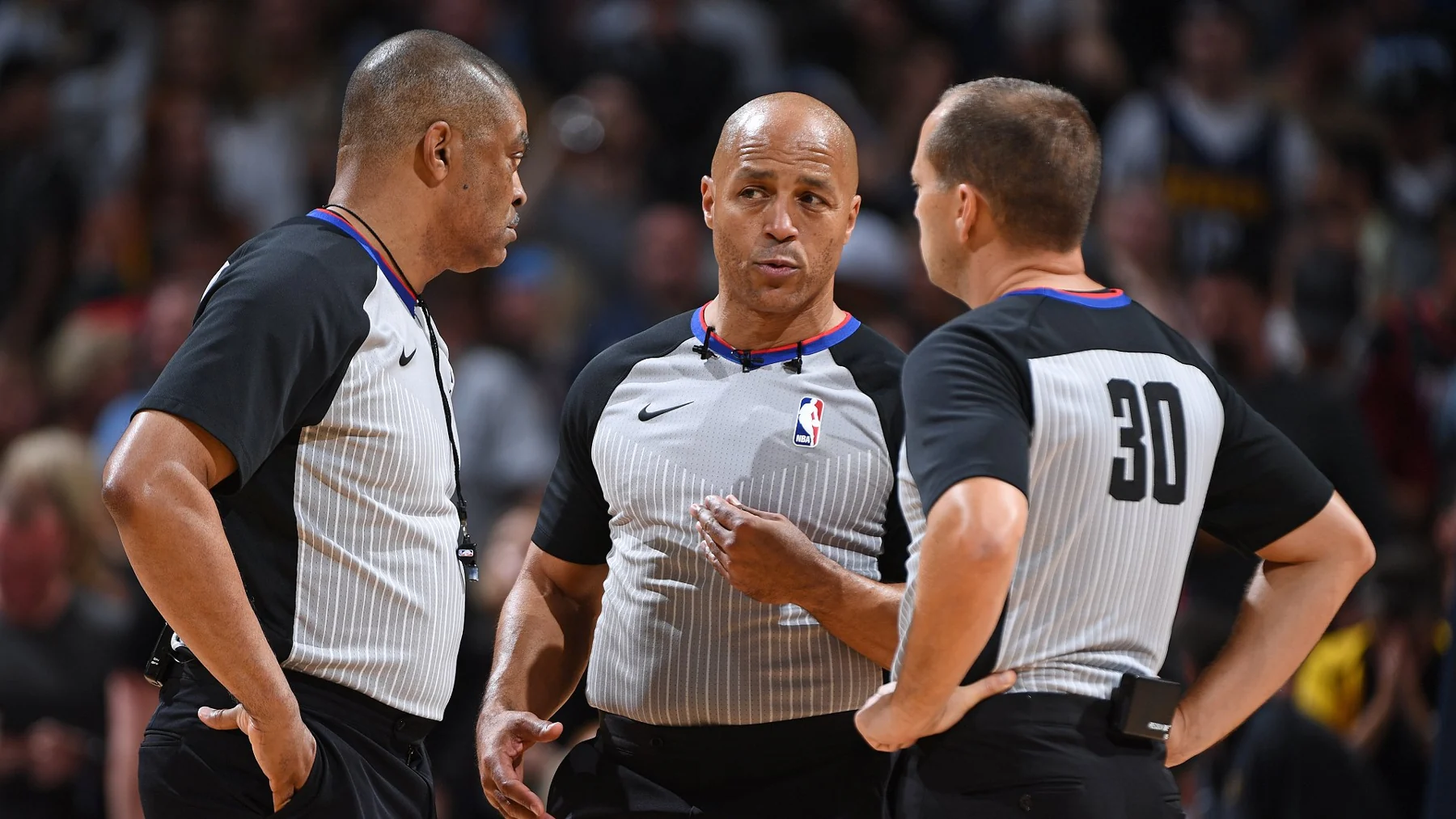
NBA officiating complaints are rarely about one whistle. They are usually arguments about what kind of basketball fans believe they are watching: a contest decided by players, a rules system that rewards engineered contact, or a television product interrupted by explanations that arrive too late. The frustration is real, but diagnosing it requires separating errors from incentives and transparency from entertainment.
Why NBA officiating complaints feel louder now
A disputed call once survived mainly as a memory and a next-day newspaper paragraph. In 2026, a viewer can freeze the broadcast, compare several angles, read an official report, and share a five-second clip before the next timeout ends. More evidence can improve accountability. It also creates the impression that an official had the same evidence, at the same speed, before making the original decision.
Every close play is reviewed by the audience
The on-court crew sees one live action involving ten moving players, often while screening contact, hand fighting, and a drive happen together. The audience then sees the decisive collision at quarter speed from a low baseline camera. Those are different decision environments. The NBA's own Last Two Minute reports acknowledge that some events are observable only with zoom, a stopwatch, or other technical support. That does not excuse a clear miss. It explains why a clip that looks obvious after four replays may have been genuinely difficult in real time.
Social video adds another distortion: it isolates the whistle from the game's calling pattern. A fan sees one defender absorb contact but may not see the earlier possessions that established how the crew was judging similar contact. Conversely, a crew can be consistent for most of a night and still miss the possession that changes win probability most. Visibility makes both truths easier to see.
Four complaints get bundled into one argument
Accuracy
Was the call or material non-call correct under the written rule?
Consistency
Was similar contact judged the same way across teams, quarters, and games?
Incentives
Do the rules reward players for creating or exaggerating contact?
Trust
Can fans understand the decision and see meaningful accountability?
Calling all four “bad refs” feels satisfying but hides the remedy. Better training can reduce misses. A rule interpretation can change incentives. Faster replay can correct objective facts. Clearer explanations can improve trust. No single technology or punishment solves all four, which is why the debate keeps returning even after an individual call is corrected.
What the rulebook asks referees to judge in real time
The phrase “call the contact” sounds objective, but the NBA rulebook does not treat basketball as a no-contact sport. Officials must decide who established a legal position, who initiated or redirected the collision, and whether contact changed an opponent's speed, quickness, balance, or rhythm. The disagreement often begins before anyone asks whether a whistle was correct: fans may be applying a simpler rule than the official is.
Legal guarding position makes block-charge calls difficult
A dribbler may not charge into a defender who has established a legal position in the dribbler's path. If the offensive player gets head and shoulders ahead, however, responsibility for illegal contact shifts toward the defender. Secondary defenders near the restricted area add another layer. A crew must identify the relevant defender, establish timing, locate feet, and judge the torso contact in a fraction of a second.
This is why one freeze-frame rarely settles a block-charge debate. A frame can show a defender apparently stationary after the offensive player has already gathered and changed direction. Another angle can show lateral movement without revealing whether that movement remained within a legal path. The useful question is not simply “Was he moving?” It is whether he established and maintained a legal guarding position before the illegal contact.
Contact is not automatically a foul
The official comments on the rules say incidental contact during normal offensive or defensive movement should be ignored. Rule 12 gives a practical effect test: hand contact that does not affect speed, quickness, balance, or rhythm is incidental. That standard preserves physical basketball. It also produces judgment calls in which two observers agree that contact occurred but disagree about whether it created a disadvantage.
A better way to evaluate a replay
Identify the legal position, the player responsible for the contact, and the effect on the opponent. Contact visible in slow motion is evidence; it is not by itself the rule's final test.
Freedom of movement creates a consistency test
Off-ball holding, grabs around screens, and body checks can destroy an action before the pass arrives. Calling them protects cutters and ballhandlers. Ignoring them permits more physical defense. The fan complaint becomes strongest when the permitted level seems to change during a game or series: a hold ignored in the second quarter becomes free throws in the fourth.
Crews receive points of emphasis and teams study how those interpretations are applied. Yet no memo can make every angle identical. Meaningful consistency is a stable threshold for material disadvantage, communicated across officials and applied to both teams. Raw foul counts cannot measure that alone, because opponents attack different areas and defend with different techniques. Film of comparable actions is the stronger test.
Why foul baiting frustrates fans even when the whistle is defensible
“Foul baiting” is useful fan shorthand and a poor rules category. It can mean beating a defender to a spot, sweeping through an exposed arm, stopping suddenly in front of a trailing defender, jumping unnaturally sideways, or exaggerating minimal contact. Those plays do not deserve one automatic ruling. The conflict is that fans judge the attack's spirit while officials must classify its mechanics.
Offensive players hunt the rule's decision point
An elite scorer reads a defender's hands and feet as carefully as the rim. If a defender reaches into the ballhandler's space, arrives late on a closeout, or loses a legal path, the attacker can convert that mistake into contact. The resulting free throws may be entirely defensible under the rules even when the possession was designed primarily to draw them.
That incentive changes how basketball looks. A player who could continue toward a shot may instead sweep the ball through an arm. A driver may decelerate so a trailing defender runs into him. Defenders respond by showing their hands, conceding a lane, or avoiding a contest. The whistle therefore affects possessions it never stops: fear of foul trouble shapes defensive aggression, rotations, and late-game matchups.
Flopping penalties address deception, not every engineered foul
The NBA defines a flop as a physical act that reasonably appears intended to cause officials to call a foul on another player. An in-game call produces one free throw for the opponent and does not count as an unsportsmanlike technical toward ejection. Officials may wait for a neutral opportunity rather than killing an opponent's immediate scoring chance. A foul and a flop can even be called on the same play.
That last possibility is crucial. A defender may make illegal contact while the offensive player exaggerates its effect. Penalizing only deception does not erase the original foul, and declining to call a flop does not certify that the attack was aesthetically honest. Likewise, the rulebook directs an offensive foul when a player initiates contact through a non-basketball action such as an unnatural extended knee. Between those endpoints lies a large area of skilled, unattractive optimization.
The durable reform question is therefore about reward. If a marginal tactic reliably creates free throws, players will use it. Officials can improve recognition, but the competition committee must decide which movements should lose continuation, become offensive fouls, or produce no call. Asking referees alone to fix an incentive written into interpretations guarantees more frustration.
Replay fixes some errors and creates a different viewing problem
Replay promises a clean bargain: stop briefly and get the call right. In practice, the NBA must decide which events can trigger a review, which facts can be considered once it begins, who makes the final ruling, and how much interruption the product can tolerate. A fan's anger often comes from discovering that video clarity and review authority are separate things.
What a coach can challenge
A head coach can challenge a called personal foul against the team, a called out-of-bounds violation, or a called goaltending or basket-interference violation. The coach must signal promptly and use a timeout to initiate the process. If the first challenge is successful, the team receives a second challenge and normally retains the timeout tied to the first. A successful second challenge does not create a third.
This design makes challenge management part of coaching. Using one early can protect a starter from a damaging foul or reverse a possession, but preserving it can matter more in a one-possession finish. Fans naturally ask why the league makes accuracy depend on a coach's remaining resources. The counterargument is that a scarce challenge filters reviews and protects game flow.
Why replay cannot review everything
Rule 13 contains defined triggers, each with permitted questions. A review opened for one issue is not a license to audit every action in the possession. The structure prevents an endless search for an unrelated hold, travel, or screen that happened seconds earlier. It can also produce the maddening result in which everyone sees an error that the officials are not authorized to correct through that review.
Trigger
A call, challenge, clock event, or other rule-defined situation opens review.
Scope
The rule specifies the primary and limited related matters the video may decide.
Ruling
The Replay Center or on-court officials issue the result assigned by that trigger.
Accuracy, delay, and the loss of live-game clarity
Slow reviews drain tension, especially when the broadcast cannot explain what is being examined. Yet a rushed review that misses the best angle defeats its purpose. The best expansion target is objective geometry: boundary lines, foot position, shot-clock timing, and whether a ball met the physical conditions for goaltending. The NBA has already used arena cameras and automated tracking to assist some of these decisions.
Technology is less suited to deciding whether contact materially altered rhythm or whether force was unnecessary. Those remain human judgments even with perfect coordinates. A sensible system sends objective facts to officials quickly, shows viewers the decisive evidence, and leaves basketball judgment with a trained crew. That can shorten confusion without pretending every whistle is a line-call problem.
What Last Two Minute Reports prove—and what they cannot prove
An NBA Last Two Minute Report audits calls and material non-calls in the final two minutes of the fourth quarter and overtime for a qualifying game. Since the 2017-18 season, the trigger has been a margin of three points or fewer at any point in that window. The league applies a clear-and-conclusive video standard and publishes correct and incorrect decisions.
That makes an L2M valuable evidence about a specific event. If the report marks a missed foul as an incorrect non-call, “the contact was legal” is no longer a fair description of the league's own ruling. If it marks a whistle correct, a free-throw disparity does not overturn that play-level assessment. The archive also prevents debate from focusing only on errors by listing correctly officiated events.
What it can establish
The league's reviewed judgment on listed calls and material non-calls during the defined close-game window.
What it cannot establish
A complete grade for the first 46 minutes, which team played better, or how every earlier whistle affected strategy.
The denominator matters when fans cite accuracy. The FAQ says officials are correct roughly 90 percent of the time, while an older league memo reported 96 percent on called plays and 91 percent across all graded events for its named period. Those figures answer different questions and are not a fresh 2025-26 season calculation. High overall accuracy can also coexist with a damaging high-leverage miss because routine correct events vastly outnumber decisive edge cases.
L2Ms improve accountability but cannot repair a result. Their best use is precise: learn the rule interpretation, identify what the league says was missed, and compare similar plays over time. Using one report as proof of a conspiracy—or using a high aggregate accuracy figure to dismiss a documented miss—asks the document to say more than it does.
The 2026 Finals showed why free-throw totals need context
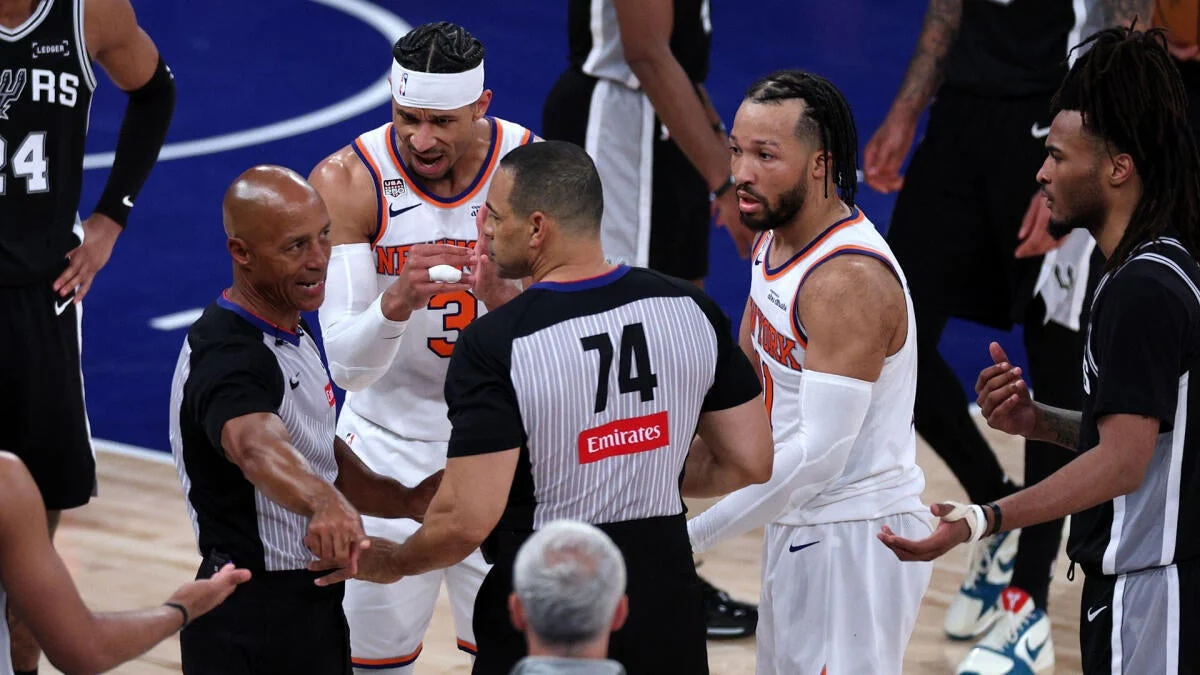
Knicks-Spurs Game 3 on June 8 became the cleanest recent example of an officiating argument containing both legitimate evidence and overreach. San Antonio won 115-111. The Spurs attempted 32 free throws to New York's 22, with a 24-8 edge in the second half. Knicks coach Mike Brown argued that similar physicality was not producing similar calls.
The Game 3 dispute
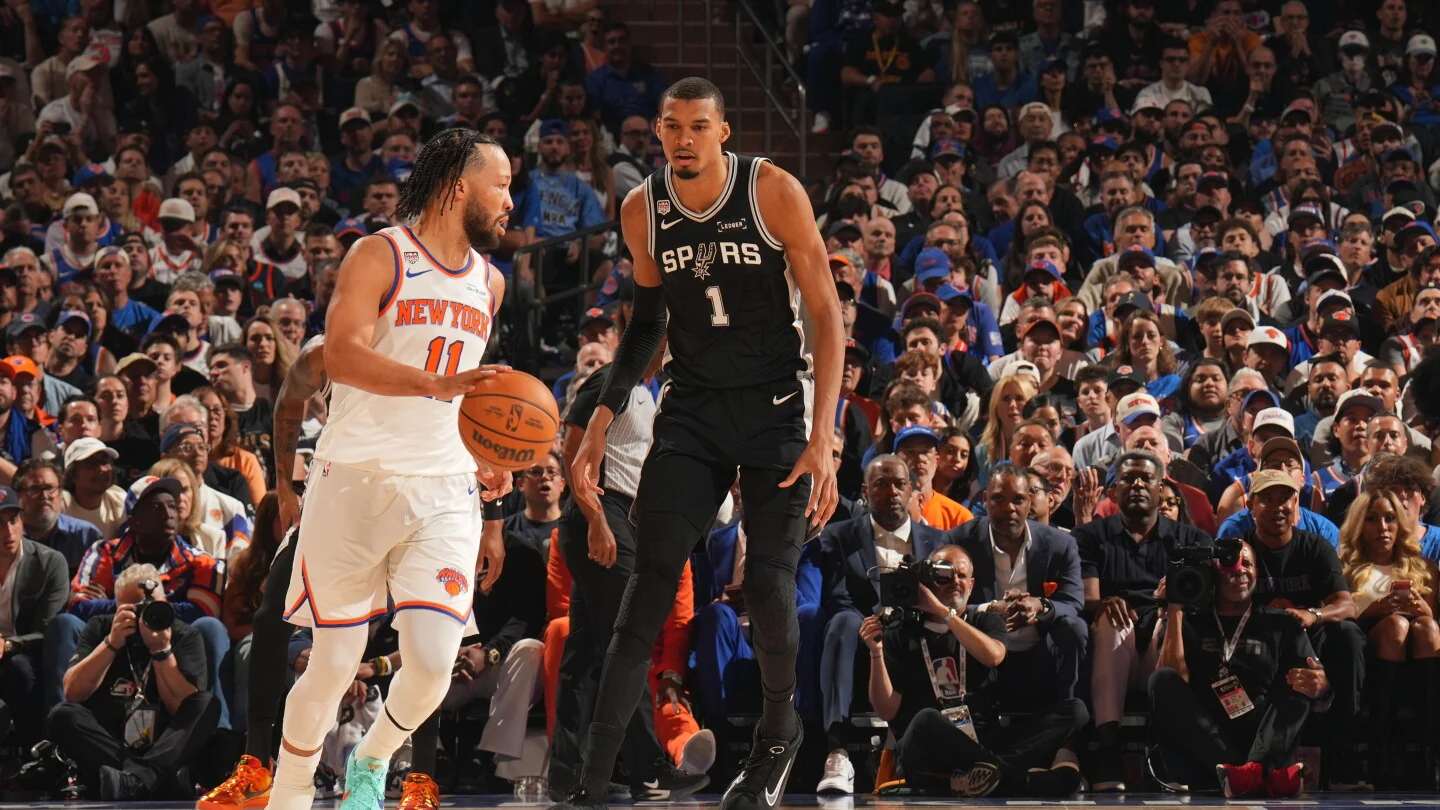
Brown pointed to apparent contact on Karl-Anthony Towns around consecutive late attempts. Separate attention focused on Victor Wembanyama pushing Jalen Brunson in the first quarter without a whistle. NBA officiating executive Monty McCutchen later acknowledged that the Wembanyama play should have been called a common foul; the league did not upgrade it to a flagrant.
Those facts validate scrutiny. They do not require pretending New York played a clean game. Brown said the Knicks could have played better and credited San Antonio. Towns said officiating did not cost them the game. That distinction is useful: a team can own turnovers, missed shots, and defensive mistakes while still identifying calls that deserve review.
A missed call can be real without proving a rigged game
Free-throw totals are outcomes, not an officiating quota. Teams differ in rim pressure, post play, transition frequency, defensive positioning, and intentional-foul strategy. CBS noted that San Antonio had averaged 3.6 more attempts than opponents during the regular season, while New York averaged 1.4 fewer. A Spurs advantage was therefore plausible before the series began. Whether the size of the Game 3 split was justified requires play-by-play film, not a demand that totals match.
The same restraint applies in the other direction. An expected stylistic edge does not make every whistle correct. The acknowledged Wembanyama miss remains a miss. The productive conclusion is specific: the crew failed to call that common foul, other disputed possessions deserve comparable rule-based review, and the box score alone cannot establish intent. Claims of fixing require evidence beyond an unpopular pattern.
Finals crews are selected using league grades, play-calling accuracy, rankings, and team ratings, then evaluated after each round. That is real accountability, though mostly invisible to the public. Game 3 shows the communication gap: selection credentials do little to calm fans when the clearest postgame explanation arrives through interviews rather than during the broadcast.
Which officiating reforms would most improve the fan experience
The goal should be fewer preventable errors and a clearer game, not a promise of mechanical perfection. Basketball depends on advantage-disadvantage judgment. The league can still remove objective work from the crew, change incentives that create ugly possessions, and explain consequential decisions while the audience is paying attention.
Explain objective corrections faster
Boundary, clock, foot-position, and goaltending questions are the best technology targets. Arena tracking can measure objects and body parts in space, while headsets let officials communicate with one another and the Replay Center without a long walk to a monitor. The NBA introduced phased headset communication during 2025-26 and said the first phase improved accuracy and flow before expanding the test.
The viewer needs the same decisive information. A brief arena and broadcast announcement—what triggered review, which fact changed, and where play resumes—would reduce the vacuum that commentators fill with guesses. A visible time target could create urgency, with an exception when angles genuinely conflict.
Make foul-baiting incentives less profitable
Officials can call a flop, but enforcement alone will always trail tactical invention. The competition committee should keep reviewing non-basketball movements and continuation standards with video examples. When an attacker moves away from a plausible shot solely to manufacture contact, a no-call or offensive consequence changes expected value more effectively than a small postgame fine.
Any change needs careful examples before opening night. Players and defenders must know whether a sweep, abrupt stop, sideways jump, or arm hook is legal, non-shooting, an offensive foul, or a flop. Surprise interpretation changes between the regular season and playoffs would recreate the consistency complaint in a new form.
Publish clearer accountability without promising perfection
The NBA grades officials, uses accuracy and team ratings in playoff advancement, issues L2Ms, releases pool reports, and receives player feedback through the union's referee survey. Fans see fragments of that system. A season dashboard could publish aggregate accuracy by call family, challenge overturn rates, and examples of changed teaching points without turning every personnel review into public punishment.
The practical priority order
- Automate objective facts where the technology is proven.
- State review reasons and results in plain language.
- Clarify non-basketball contact examples before the season.
- Publish aggregate grading trends and correction points.
Fans following the NBA games today should expect occasional judgment errors. They should also expect a league with high-speed video and centralized review to correct objective mistakes quickly and explain major decisions. Trust grows when the rule, evidence, and remedy line up—not when criticism is dismissed or every disputed whistle is treated as proof of corruption.
Sign in with Google to join the discussion.