Official NBA season ticket prices by team: what is public
NBA season ticket prices depend on the team, seating area, number of games and membership terms. There is no useful single league-wide price that answers what your seats will cost. For a 2026-27 purchase, begin with a current team quote and compare the total commitment, rather than multiplying a resale listing by the number of home games.
The table below is a starting point from seven official team pages checked on October 13, 2026. Some clubs publish useful price examples; others direct buyers to a representative or seat-selection process. A request for a quote is not evidence that a team is more expensive. It means the public page does not establish a comparable price for the seats and plan you need.
| Team and official page | Public price information | Next step |
|---|---|---|
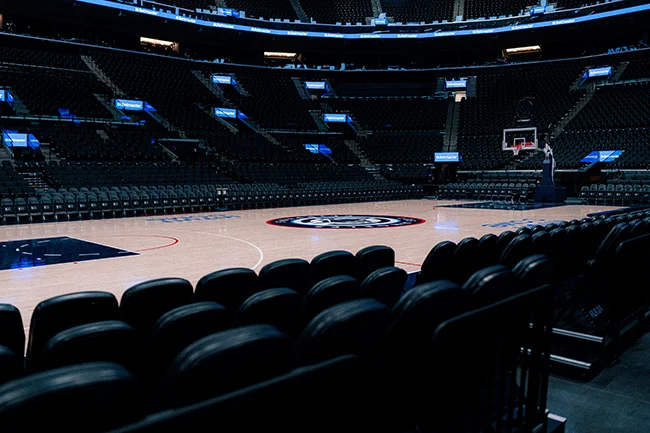
| LA Clippers | From $26 per game, Wall/Terrace; $79 Main; $192 Club | 2026-27: request the complete seat quote |
| Orlando Magic | Request a confirmed 2026-27 quote | Public comparison page does not clearly label its season |
| Indiana Pacers | Seat-specific quote needed | Ask for your preferred plan and section |
| New Orleans Pelicans | 2026-27 pricing through inquiry | Request the total for your seat quantity |
| Detroit Pistons | 2026-27 membership inquiry | Compare a membership with smaller plans |
| Sacramento Kings | 2026-27 membership inquiry | Request a current seat quote |
| Washington Wizards | 2026-27 membership inquiry | Ask for available seats and payment terms |
These entries are different kinds of evidence, so they should not be sorted into a cheapest-team ranking. A per-game starting rate and an individual quote do not establish the same thing. The Magic comparison page needs a season check before any displayed price can be used for a 2026-27 purchase.
When you contact a team, describe a realistic target: two adjacent seats, an upper sideline section, a stated budget and the games you can attend. Asking only for “the cheapest season tickets” can return a product with standing access, different benefits or a schedule that does not suit you. The useful reply includes the actual seat location and total payable.
For another franchise, use the NBA's official season-ticket directory to find the team route. Keep the date of each quote beside it. Availability changes, and a price remembered from a renewal email or another fan's account may not apply to a new buyer choosing seats today.
Compare full, half and smaller ticket plans
The number of games matters more than the plan name
Ask for the actual list of included dates. “Full season” and “half season” are useful labels, but they do not prove every club packages the same number of events. Indiana advertises 42 games in its full plan and 21 in its half plan for 2026-27. Minnesota's half membership specifies 20 regular-season home games. Read the team's offer rather than forcing both into the same assumed denominator.
Confirm whether preseason is included, how any unassigned schedule dates are handled and whether a game outside the usual home arena belongs to your plan. These are questions for your quote, not universal exclusions. For a partial package, highlight the opponents and weekdays before looking at the discount. Ten attractive games on nights you cannot attend are less useful than a smaller selection that fits your life.
The NBA ticket directory distinguishes full, half, quarter and subscription-style options. Those categories help you start the conversation, but the team's own package controls the details. Ask whether a partial plan is fixed by the club or lets you select games, and whether your preferred marquee matchups require a different package or an additional purchase.
Assigned seats and flexible passes
A reserved-seat membership and a flexible admission product can solve different problems. If you attend with children or a regular group, certainty about sitting together may be worth more than a lower advertised entry price. If you go alone and enjoy trying different views, flexible assignment may be perfectly acceptable. Establish what is guaranteed before comparing the amounts.
Ask when seats are assigned, whether you receive a seat or standing access, and how adjacent tickets are handled. Also ask whether accepting a game is required by a deadline and whether missed reservations reduce future access. A flexible plan is only flexible in ways its rules allow; the name alone should not replace reading those rules.
Finally, compare like with like. Put two full plans beside one another, or two partial plans with similar game quality and seating. Comparing a premium club membership with upper-level admission can be useful for choosing your experience, but it cannot establish which franchise charges more for an equivalent ticket.
Calculate the cost of the games you will attend
Denver's published 2026-27 Upper End Balcony totals are $1,302 full season, $714 half season and $350 quarter season. Those amounts come from the Nuggets' membership table. They illustrate why a team-published package total is a better starting point than a resale ticket average. Confirm the actual available seats, included dates and final payable amount with the seller before choosing.
Next, separate three numbers: the price per seat for the whole plan, the amount charged at each installment and the cost per game you personally expect to attend. An installment can make a larger commitment look small if you read only the first payment. It changes when you pay; it does not by itself reduce the obligation.
For a pair of seats, begin with the combined account total. Add unavoidable charges shown in the quote, then estimate transport and the extras you normally buy. Ask which parking or food benefits are included for that seating level. Do not deduct the advertised value of a benefit you would not otherwise purchase.
A worked example with travel and unused tickets
Suppose a hypothetical package costs $2,000 for the tickets you are comparing. You expect to attend 20 games, spend a total of $400 travelling to them and recover $150 after selling some unused tickets and paying any seller fees. Your practical cost would be $2,250, or $112.50 per attended game. These are illustrative planning numbers, not a quote for a particular NBA team.
| Hypothetical item | Amount |
|---|---|
| Ticket package | $2,000 |
| Travel for planned visits | $400 |
| Net recovery from unused tickets | Minus $150 |
| Practical total | $2,250 |
| Twenty attended games | $112.50 each |
Run the calculation again with zero resale recovery. In this example, the cost becomes $120 per attended game. If the plan only fits your budget when every unused ticket sells at a favorable price, the purchase relies on an outcome you do not control. Treat any eventual recovery as a separate result rather than money already available.
Compare that attendance-based total with a smaller plan and selective single-game purchases in similar seats. Full-season membership may still be worth more to you because it provides continuity and benefits, but make that choice explicitly. The goal is to buy the experience you want without confusing the number of tickets delivered with the number of evenings you can enjoy.
Which membership benefits are worth paying for?
Put membership benefits into three groups: money you would otherwise spend, access you value and extras you probably will not use. Only the first group belongs directly in a cost comparison. A merchandise discount has little monetary value if you do not expect to buy merchandise; an event invitation may be enjoyable without justifying a larger ticket bill.
Ticket flexibility can be especially useful across a long NBA season. Work travel, holidays and family commitments will rarely align perfectly with every home date. Ask how far ahead you must return or exchange a ticket, which replacement games qualify and whether comparable seats must be available. An exchange feature is more valuable when its rules match the kind of dates you are likely to miss.
Orlando advertises exchanges for Magic Money. Treat that as a credit benefit, not a cash refund, and confirm the current redemption conditions. More generally, ask whether credit expires, whether it applies to another ticket or other purchases, and whether you must use it within the same season. A credit you cannot realistically spend should not be valued as cash saved.
Playoff language needs equally careful reading. Minnesota explicitly describes playoff tickets as an additional cost above membership dues. When another club advertises priority, ask whether that means your exact seats, a presale window or another purchasing opportunity. Also ask when payment is due and how to decline an optional postseason package. Do not add free playoff admission to your comparison unless the written offer actually includes it.
For premium seating, ask what the hospitality benefit covers. Food, beverages, parking and lounge access may sound like one bundle while applying to different seat levels or ticket quantities. If four seats are needed to receive one parking pass, that matters to a buyer considering only two. Confirm the arrangement rather than generalizing from a photograph of a lounge.
There is also a non-cash value in returning to familiar seats and seeing a team develop across the season. You may enjoy noticing rotation changes or watching a young player gain responsibility over several months. That is a legitimate reason to buy a membership. It simply belongs in your personal enjoyment decision, alongside a clear understanding of the financial commitment.
What to ask before placing a deposit
Get the seat and payment terms in writing
A deposit is not the season-ticket price. Indiana advertises a refundable $100 per-seat deposit for 2026-27. That is an initial step toward a plan, not a promise that a full season costs $100 or that every requested seat is available. Other teams and products can have different deposit conditions, so read the offer you are actually accepting.
Before paying, request the season, section, row, number of seats, included game count and full account balance. Ask whether the deposit is credited toward that balance and what happens if the available seats exceed your budget. If the payment places you on a waiting list rather than reserving named seats, make sure that distinction is clear in the confirmation.
For installments, record every due date and the total of all payments. Ask which charges are included in the quote and which are optional additions. Keep the team representative's written response with your receipt. This is particularly useful when a package has several components, such as seats, parking and a hospitality option that can be selected separately.
Check transfer, resale and renewal rules
Find the official account-management route before buying tickets with the expectation that you can give away or resell unused dates. Ask which transfers are permitted, which resale marketplace the team supports and whether any account-level limits apply. The ability to send one game ticket to a friend should not be confused with transferring ownership of the entire membership.
If you plan to split seats with another person, agree how you will allocate the high-demand games, payments and late changes. Decide who controls the account and who handles a ticket that does not sell. These are practical arrangements between the people sharing the plan; they still need to fit the club's current rules.
Renewal deserves its own calendar reminder. The Bulls' 2026-27 terms include automatic renewal for specified existing full-season accounts. That example is a reason to check your own club's instructions, not to assume every franchise uses the same deadline or process. Ask when the next season's price arrives and how to decline renewal if your plans change.
Keep the final confirmation, including any opt-out or renewal acknowledgment, somewhere you can find it without searching an entire email inbox. Once the season gets busy, it is easy to focus on the next game and miss an account notice. Understanding the commitment before purchase protects the enjoyment of the plan throughout the year.
Choose a plan that fits your NBA calendar
Before choosing seats, open the team schedule directory and mark the home dates you can confidently attend. Give each one a simple rating: likely, uncertain or unavailable. Count the likely dates first. A full-season plan is easier to enjoy when you can attend ordinary weeknight games as well as the biggest matchups.
Include the complete evening in that exercise. A 7 p.m. tipoff may require leaving work early, and the return trip can run later than expected. For a family, the weekday finish may matter more than the opponent. For someone travelling from another city, a weekend package may be more useful than a nominally cheaper full plan that creates repeated transport and hotel costs.
Use the NBA calendar tools to organize the dates you are considering, then confirm them against the team's ticket account and official updates. The Hornets' membership terms specifically note that game dates and times can change. A calendar entry is a planning aid, not a substitute for the current event details attached to your ticket.
Keep a small amount of flexibility in your expectations about who will play. Buying access to a game does not establish a guarantee that a particular star will be available that night. If your entire reason for a large package is seeing one opposing player once, compare that goal with a smaller purchase and the team's stated ticket conditions.
Shortlist two options before speaking to sales: the plan you would ideally like and the smaller commitment you can comfortably use. Request both quotes for reasonably comparable seats. This makes the conversation concrete and helps you see whether the extra games and benefits justify the larger total. You can also ask to inspect the view in person or through the official seating map.
When the quote arrives, check the season, seats, included dates, total balance and renewal terms one final time. If any of those remain unclear, resolve them before sending the deposit. There is no need to turn a membership decision into a prediction about resale profits or the team's playoff finish.
The right plan leaves you looking forward to the games that are actually on your calendar. A smaller package that you use fully can be a better purchase than a longer one bought for an attractive per-game headline. Pay for a seat, schedule and experience you understand, with the full cost visible from the beginning.
Sign in with Google to join the discussion.