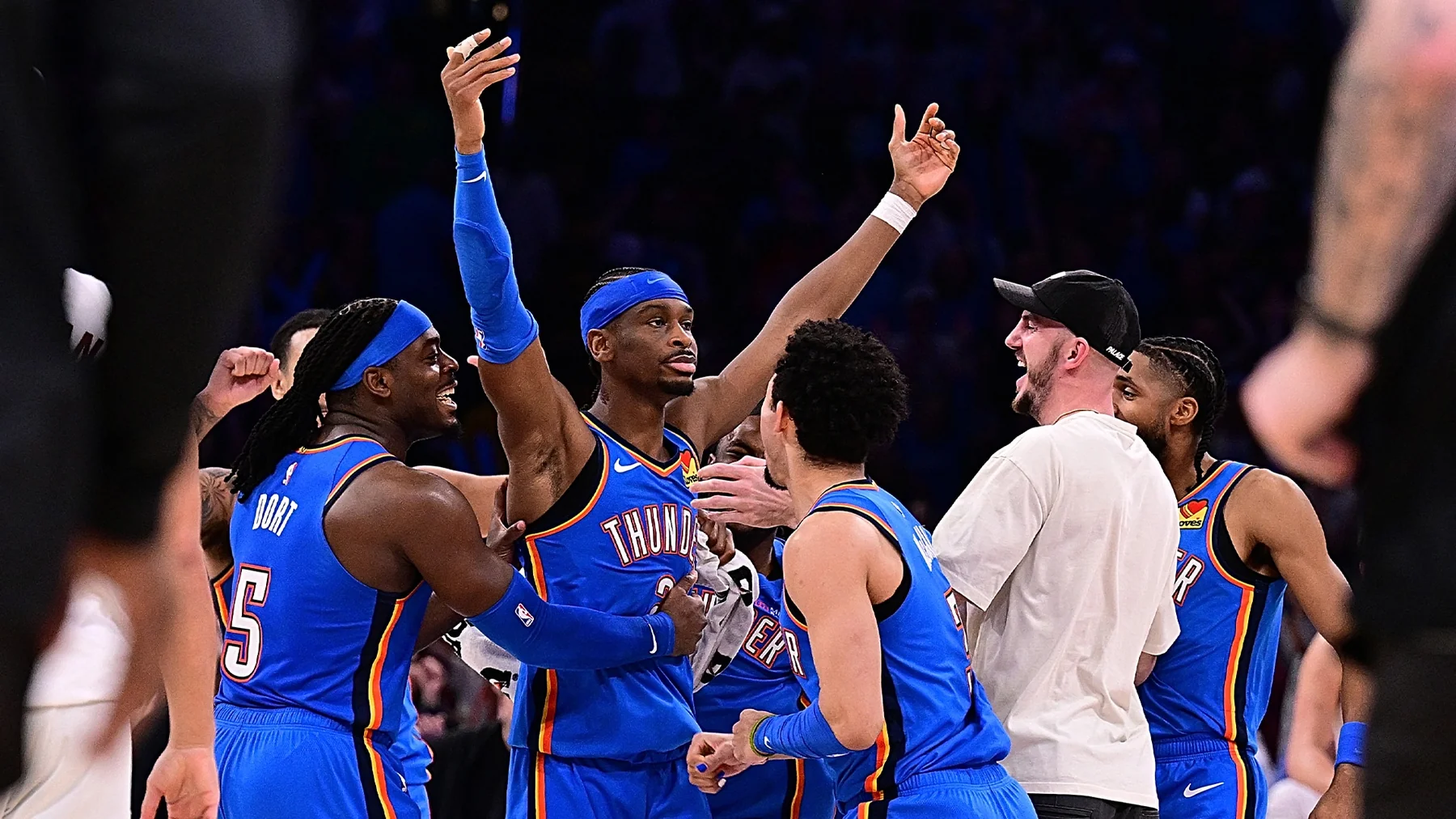
The best NBA player entering 2026-27 is not automatically the reigning MVP, Finals MVP, scoring leader or highest-rated video-game character. This top 25 asks a narrower basketball question: who would provide the most reliable high-level value over the coming season and playoffs, given current skill, role, health and two-way impact?
The result is a tiered ranking dated August 19, 2026. Official awards and 2025-26 results provide the factual base; the ordering is editorial judgment. A one-place difference is a close call, while a tier break signals a more meaningful change in confidence or championship responsibility.
How the 2026-27 player rankings were built
This is a “best for the coming season” list. It is not a reward ballot for 2025-26, although last season is the strongest evidence available. It is not career greatness, where longevity and accumulated championships dominate. It is not trade value, which would heavily favor age and contract control. And it is not fantasy value, which can reward volume without accounting for defense or playoff matchup resistance.
Five evaluation pillars and the health adjustment
- Primary offense: Can the player create efficient shots for himself and teammates when an opponent knows what is coming?
- Scalability: Can he screen, cut, shoot, defend or make quick decisions when another star controls the ball?
- Defense: Does he protect the rim, contain the point of attack, execute team coverage or create exploitable weaknesses?
- Postseason translation: Does his game survive slower pace, repeated opponents, switching and targeted scouting?
- Projected availability: How confident should a team be that it will receive enough regular-season and playoff games?
The health adjustment is meaningful but not absolute. Stephen Curry, Giannis Antetokounmpo and LeBron James missed the games-played threshold for 2025-26 All-NBA voting, yet excluding them from a best-player list would confuse eligibility with ability. Conversely, ranking a frequently unavailable star entirely on his best 20-game sample would ignore the cost of missing the nights that determine seed and playoff survival.
Team achievement is evidence of role execution, not ownership of every result. Jalen Brunson's Finals MVP raises confidence in his postseason offense; it does not mean every Knicks win belongs to him. Shai Gilgeous-Alexander's back-to-back MVPs support an exceptionally high floor; they do not erase Nikola Jokić's singular creation or Victor Wembanyama's two-way ceiling. The ranking asks what skills are portable and repeatable after accounting for context.
Complete top 25 at a glance
| Rank | Player | Team at cutoff | Tier |
|---|---|---|---|
| 1 | Nikola Jokić | Denver Nuggets | Tier 1 |
| 2 | Shai Gilgeous-Alexander | Oklahoma City Thunder | Tier 1 |
| 3 | Victor Wembanyama | San Antonio Spurs | Tier 1 |
| 4 | Luka Dončić | Los Angeles Lakers | Tier 1 |
| 5 | Giannis Antetokounmpo | Miami Heat | Tier 1 |
| 6 | Jalen Brunson | New York Knicks | Tier 2 |
| 7 | Anthony Edwards | Minnesota Timberwolves | Tier 2 |
| 8 | Cade Cunningham | Detroit Pistons | Tier 2 |
| 9 | Stephen Curry | Golden State Warriors | Tier 2 |
| 10 | Jaylen Brown | Philadelphia 76ers | Tier 2 |
| 11 | Donovan Mitchell | Cleveland Cavaliers | Tier 3 |
| 12 | Jayson Tatum | Boston Celtics | Tier 3 |
| 13 | Chet Holmgren | Oklahoma City Thunder | Tier 3 |
| 14 | Tyrese Maxey | Philadelphia 76ers | Tier 3 |
| 15 | Jamal Murray | Denver Nuggets | Tier 3 |
| 16 | Kevin Durant | Houston Rockets | Tier 3 |
| 17 | Jalen Johnson | Atlanta Hawks | Tier 3 |
| 18 | Kawhi Leonard | LA Clippers | Tier 4 |
| 19 | Anthony Davis | Dallas Mavericks | Tier 4 |
| 20 | Devin Booker | Phoenix Suns | Tier 4 |
| 21 | Karl-Anthony Towns | New York Knicks | Tier 4 |
| 22 | Evan Mobley | Cleveland Cavaliers | Tier 4 |
| 23 | Amen Thompson | Houston Rockets | Tier 4 |
| 24 | Jalen Duren | Detroit Pistons | Tier 4 |
| 25 | LeBron James | Philadelphia 76ers | Tier 4 |
The table intentionally gives Leonard's team as the Clippers because the proposed Toronto transaction was still labeled on hold at the evaluation cutoff. The ranking itself would change less than his team context. For everyone, rank describes expected basketball impact, not salary, popularity, jersey sales or likelihood of winning a media award.
Tier 1: The five players who can define a championship
Tier 1 contains players for whom a title can reasonably begin with “build around this.” Each bends coverage before the possession develops. The ordering reflects expected 2026-27 value, but all five can be the best player in a playoff series. Jokić's offensive certainty separates him narrowly; Wembanyama has the tier's steepest upward curve.
Ranks 1-3: Jokić, Gilgeous-Alexander and Wembanyama
1. Nikola Jokić — Denver Nuggets
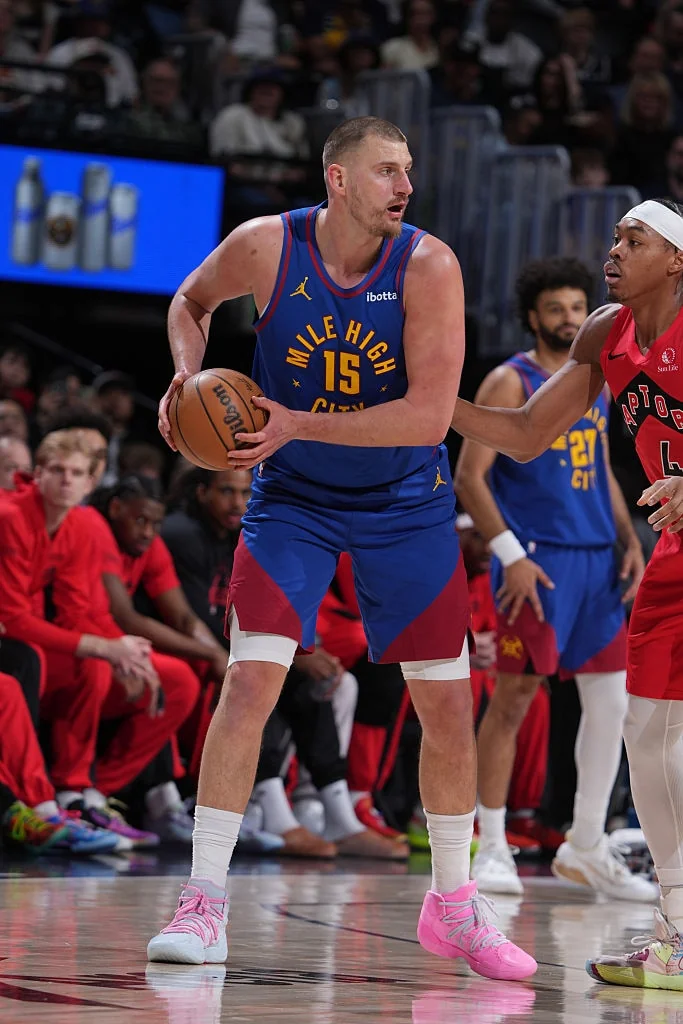
Jokić remains the league's most complete offensive system. He averaged 27.7 points while leading the NBA in rebounds (12.9) and assists (10.7), a combination that captures only part of the problem he creates. Defend him one-on-one and he scores with touch and strength; send help and he identifies the opening before the rotation arrives. He can initiate from the elbow, post, trail position or defensive rebound, making conventional “take away the first option” planning unusually difficult.
Why not simply follow the MVP vote and rank SGA first? Because this list weights playoff possession-solving and teammate amplification heavily. Jokić can turn limited shooting windows into layups and can punish switching without needing a specific guard matchup. His defense is not Tier 1 by itself, but his hands, rebounding and positioning prevent it from canceling the unmatched offense.
2. Shai Gilgeous-Alexander — Oklahoma City Thunder
Back-to-back MVPs establish the strongest recent regular-season case. Gilgeous-Alexander combines elite isolation scoring with low-panic decision-making, foul pressure, positional length and disruptive defense. His change of pace creates separation without requiring a screen, while Oklahoma City's spacing and cutting let him move from scorer to simple-read passer. Winning 2025-26 Clutch Player of the Year further supports the reliability of that possession profile.
The difference from Jokić is not a flaw so much as a role distinction. SGA is a devastating guard engine; Jokić manipulates all five defenders as a scorer, screener and passer from more locations. Gilgeous-Alexander can take No. 1 in any future update if his playoff creation becomes as inevitable as his regular-season floor.
3. Victor Wembanyama — San Antonio Spurs
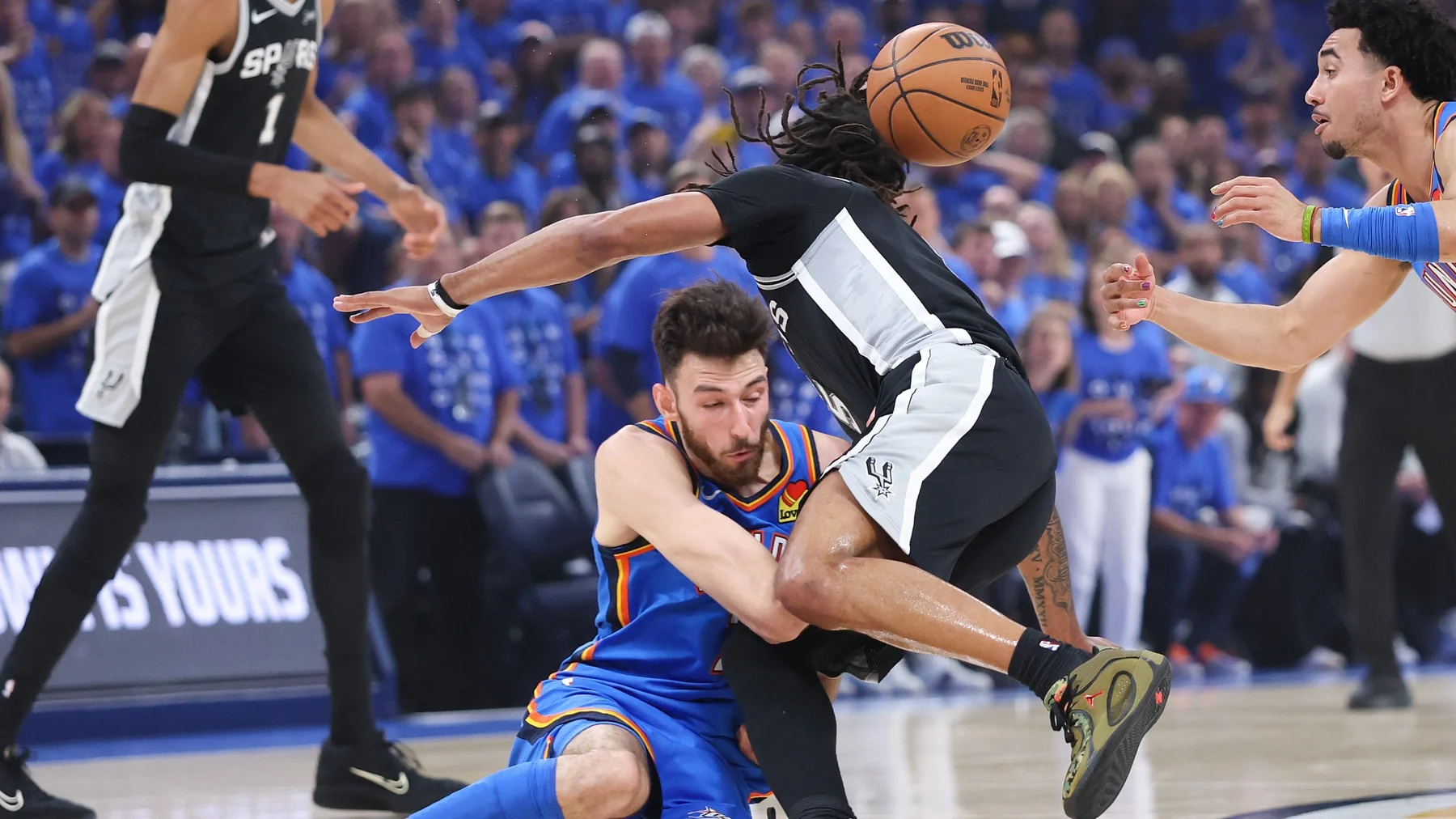
Wembanyama already supplies a championship-level defense nearly by himself. He became the first unanimous Defensive Player of the Year, led the league in blocks for a third consecutive season and helped San Antonio allow 10.1 fewer points per 100 possessions with him on court. Opponents alter drives and releases before he records a block; that deterrence is the true value.
The Finals run removed the easy “no playoff proof” objection. He won Western Conference finals MVP and then averaged 26 points, 11.2 rebounds and 3.6 blocks in the Finals loss. His offensive handle and shooting still produce uneven possessions, which keeps him third rather than first. Yet no other top-five player offers the same chance to become the league's best defender and an elite volume scorer simultaneously.
Ranks 4-5: Dončić and Antetokounmpo
4. Luka Dončić — Los Angeles Lakers
Dončić won his second scoring title at 33.5 points per game and earned a sixth First-Team All-NBA selection by age 27. His size protects the dribble, his deceleration controls switches, and his passing punishes the extra defender. In a seven-game series, he can repeatedly find the weakest defender and force an opponent to choose between a favorable isolation and an open corner.
The limitation is balance. Defensive attention, transition effort and off-ball activity can fluctuate, and those possessions matter when another creator handles the ball. Dončić is fourth because his best offense rivals anyone's, not because every phase is equally strong.
5. Giannis Antetokounmpo — Miami Heat
Antetokounmpo remains the league's most overwhelming downhill force and an elite help defender. Miami can use him as a transition handler, screener, short-roll passer and weak-side rim protector. That variety matters: his value is larger than the possessions where he attacks from the top against a set wall.
He enters 2026-27 after an injury-shortened 27.6-point season and joins a frontcourt with Bam Adebayo, creating a real spacing question. Erik Spoelstra can stagger them and emphasize cutting, but defenses will test the shooting geometry. Health and half-court fit place Giannis fifth; his two-way peak still makes any lower tier indefensible.
Tier 1 is deliberately small. The common trait is not a ring count or one award; it is the ability to force a championship opponent to rebuild its coverage while still contributing when the first action fails. The next tier contains MVP-level players, but with a slightly larger question about scale, availability, defense or sustained postseason control.
Tier 2: MVP-level engines and postseason centerpieces
Tier 2 players can lead elite teams and produce MVP-caliber stretches. The separation from Tier 1 is confidence across every matchup and phase, not a lack of star power. Brunson owns the strongest fresh postseason evidence; Edwards and Cunningham have the runway to rise; Curry and Brown combine proven championship skills with different 2026-27 context questions.
Ranks 6-8: Brunson, Edwards and Cunningham
6. Jalen Brunson — New York Knicks
Brunson's 2026 postseason converted a close ranking argument into a top-six case. He won Eastern Conference finals MVP, averaged 32.6 points in the Finals and scored a franchise Finals-record 45 in the road clincher. More important than the trophies is how he solved size: strong pivots, footwork, pace changes and pull-up range let a 6-foot-1 guard manufacture clean-enough attempts when switches removed the first action.
He sits below Tier 1 because opponents can still attack his size and because he does not create the same defensive value or global passing pressure as the five above him. Yet “can this offense survive playoff targeting?” has been answered. Brunson proved it against four rounds of prepared coverage.
7. Anthony Edwards — Minnesota Timberwolves
Edwards combines one of the league's hardest first steps with pull-up shooting strength and the physical tools to defend top perimeter scorers. His 10 games with 40-plus points were second only to Dončić, and his All-Star MVP offered another reminder that few players can seize a game as abruptly. Ball's arrival should provide more creation relief and more chances for Edwards to attack a shifted defense.
The next step is possession-to-possession orchestration. When a defense loads early, the read after the first pass must be as consistent as the initial attack. Edwards ranks above Cunningham on playoff scoring pressure and defensive ceiling, but below Brunson because his series management remains less dependable.
8. Cade Cunningham — Detroit Pistons
Cunningham's First-Team All-NBA season was not empty volume: 23.9 points, 9.9 assists and 38 double-doubles powered Detroit past 60 wins. At his size, he sees over the first defender, keeps smaller guards on his hip and creates passes that are unavailable to a typical point guard. Improved team defense also reduced the need for every possession to become a rescue operation.
A seven-game second-round loss does not erase that leap, but it leaves the next proof point clear. Cunningham must turn regular-season command into multiple playoff-series wins against switching and pressure. He is eighth because the engine is already elite; the postseason sample is shorter than those directly above him.
Ranks 9-10: Curry and Brown
9. Stephen Curry — Golden State Warriors
Curry's gravity remains a tactical superpower. He stretches defenders beyond ordinary pick-and-roll range, converts off-ball movement into teammate openings and can still dismantle conservative coverage with quick-release volume. Unlike most aging stars, his off-ball value lets him scale alongside another handler without giving up the quality that makes him special.
He was ineligible for All-NBA because he did not reach 65 games, and expected availability matters more at this stage of his career. The ranking therefore discounts season-long volume without pretending his skill disappeared. In a healthy playoff game, Curry can outperform No. 9; over a full 2026-27 projection, the risk keeps him outside the top eight.
10. Jaylen Brown — Philadelphia 76ers
Brown finished sixth in MVP voting, made All-NBA Second Team and received 44 First-Team votes—the most of anyone outside the official first five. He provided Boston with primary scoring while Tatum recovered, defended across positions and continued to punish mismatches with strength. That is a top-10 current résumé, not merely credit from his 2024 Finals MVP.
Philadelphia changes his usage. James, Maxey and the existing frontcourt create more mouths and more opportunities to attack tilted floors. Brown's quick decisions and defense should scale; his handle in crowded traffic remains the question when he must be the late-clock organizer. He narrowly closes Tier 2 because his two-way reliability outweighs the adjustment risk.
The tier can reorder quickly. Cunningham has the age and passing platform for another jump. Edwards can enter Tier 1 if his playmaking becomes automatic. Curry could still look like a top-five player in a healthy playoff month. Brunson's challenge is maintaining championship-level output after opponents spend an offseason studying the solutions that beat them.
Tier 3: All-NBA anchors with one important question
Every Tier 3 player can be the best player on a strong night and a major part of a contender. Each also carries one question large enough to separate him from the top 10: playoff offensive control, recovery, role scale, age, or the ability to turn regular-season versatility into a late-round half-court solution.
Ranks 11-14: Mitchell, Tatum, Holmgren and Maxey
11. Donovan Mitchell — Cleveland Cavaliers
Mitchell delivered 27.9 points across 70 games and earned Second-Team All-NBA. His pull-up range stretches drop coverage, his burst collapses the lane and his strength helps him finish through contact. Cleveland can pair him with another handler without losing off-ball shooting value.
The question is late-round offensive size. Bigger switching defenders can shrink driving windows and ask him to finish possessions as a passer over length. He is the first player outside the top 10 because the scoring base is secure; a deeper playoff run would close the remaining gap.
12. Jayson Tatum — Boston Celtics
A fully healthy Tatum would rank higher. He can initiate, shoot off movement, defend four positions, rebound and absorb heavy minutes without requiring one matchup. The 2026-27 projection, however, follows an Achilles rupture, a return after 298 days and a knee injury that ended his 2026 playoffs. Recovery is not a footnote when ranking expected value.
No evidence here declares permanent decline. The discount represents uncertainty about workload and burst after consecutive lower-body events. If September and October show his old movement, Tatum can jump several places immediately.
13. Chet Holmgren — Oklahoma City Thunder
Holmgren made both Third-Team All-NBA and First-Team All-Defense. He averaged 17.1 points, 8.9 rebounds and 1.9 blocks while shooting 55.7%, providing the rare combination of rim protection and floor spacing. He can defend a pick-and-roll at the level, recover to the rim and then pull the opposing center away on the next possession.
His question is self-created offense against physical playoff coverage. Oklahoma City does not need him to become a high-usage post scorer, but a more dependable counter when teams crowd SGA would turn an elite complementary star into something even larger.
14. Tyrese Maxey — Philadelphia 76ers
Maxey's speed changes the floor before a defense sets, and his pull-up shooting makes retreating dangerous. Third-Team All-NBA recognition reflects a guard who can carry scoring volume rather than merely benefit from established stars. His low center of gravity and improving playmaking help him survive pressure.
Philadelphia now has Brown and James, so fewer touches are likely. That can improve efficiency and defensive energy, but it also makes 2026-27 a test of off-ball impact. Maxey ranks 14 because the skill scales; the exact hierarchy and closing role still need to be seen.
Ranks 15-17: Murray, Durant and Johnson
15. Jamal Murray — Denver Nuggets
Murray's first All-NBA selection followed a 25.4-point season with 43.5% three-point shooting, and he finished second in Clutch Player voting. His partnership with Jokić remains one of basketball's most adaptable two-man actions: either can screen or handle, and both punish the wrong help decision. Murray can also create late-clock pull-ups when structure breaks.
He ranks below Maxey and Holmgren because his defensive impact is narrower and Jokić improves every offensive environment around him. The playoff shot-making is real; the question is how much top-tier value Murray creates independently.
16. Kevin Durant — Houston Rockets
Durant made Second-Team All-NBA at 26 points per game while shooting 52% overall and 41.3% from three. Few scorers fit more easily beside other talent: he can attack a closeout, shoot over switches or space above the break without monopolizing setup. Houston's defensive athletes can absorb assignments that preserve his energy.
Age drives the placement. The ranking projects a full season and playoffs, not one perfect isolation. Durant can still be the best scorer in a series, but recovery, lateral defense and cumulative workload are less bankable than they were at his peak.
17. Jalen Johnson — Atlanta Hawks
Johnson's first All-NBA season validated the large playmaking-forward template. He rebounds and pushes, attacks slower bigs, passes over smaller wings and can function as a screener or handler. Atlanta's addition of defensive guards should create more transition possessions and reduce his hardest perimeter assignments.
The unanswered question is half-court playoff creation. When space disappears, can his jumper and handle consistently force the second defender? The versatility earns No. 17; the lack of late-round proof keeps him out of the tiers above.
Tier 3 rewards players whose strengths fit multiple roster constructions. Holmgren and Durant can scale down in usage without losing their defining value. Mitchell, Maxey and Murray can carry offense for stretches. Tatum has the broadest complete-game history, while Johnson has the most room to grow. Their order is less about a hard talent line than the size of the one question each brings into October.
Tier 4: Stars, two-way risers and health bets rounding out the top 25
Tier 4 is where ranking purpose matters most. A one-game draft would push Leonard, Davis and James higher. An 82-game projection must account for availability and recovery. Mobley and Thompson may not carry a half-court offense, but their defense can raise a contender's floor every night. The final eight balance peak against dependable role value.
Ranks 18-21: Leonard, Davis, Booker and Towns
18. Kawhi Leonard — LA Clippers
Leonard made Second-Team All-NBA, proof that his methodical midrange creation and powerful wing defense can still sustain an elite season. He attacks switches without rushing, reaches preferred spots against contact and can close possessions on either end. His healthy-game level belongs closer to the top 10.
Availability and transaction uncertainty drive No. 18. The reported Toronto deal remained on hold at the cutoff, so he is listed with the Clippers. More importantly, a forward-looking ranking cannot assume every high-leverage game. If his body holds and the team situation resolves, this will look conservative.
19. Anthony Davis — Dallas Mavericks
Davis at full strength is a defensive scheme: drop anchor, switch option, recovery blocker and elite defensive rebounder. Offensively, he can screen, roll, punish smalls and finish without requiring a high dribble count. Those skills translate cleanly to playoff basketball and let another creator own the perimeter.
The discount is the same category as Leonard's. Dallas must be able to plan around his availability, not merely his best matchup. His jumper also no longer provides automatic five-out spacing. The healthy ceiling is top 10; expected season value lands 19th.
20. Devin Booker — Phoenix Suns
Booker remains a polished three-level scorer and a better passer than his old “pure shooting guard” label suggests. He averaged 26.1 points, can work on or off the ball, and has enough size to punish guard switches. That scalability is valuable after Phoenix changed several pieces around him.
He played 64 games and missed All-NBA, while his defense and rim pressure do not separate him from the more complete players above. Booker can rise by pairing efficient scoring with steadier availability and a clear playmaking hierarchy.
21. Karl-Anthony Towns — New York Knicks
Towns supplied 20.1 points, 11.9 rebounds and center shooting to a champion. His spacing pulls rim protectors away from Brunson, and his size can punish switches that opponents use to disrupt New York's guards. He also showed willingness to scale his attempts within a deep lineup.
Certain playoff matchups can challenge his defensive positioning and foul discipline, which makes him more scheme-dependent than Holmgren or Davis. The championship validates the role; it does not erase that matchup sensitivity. No. 21 reflects high offensive fit with a narrower defensive margin.
Ranks 22-25: Mobley, Thompson, Duren and James
22. Evan Mobley — Cleveland Cavaliers
Mobley already owns Defensive Player of the Year hardware from 2024-25 and continued to produce across scoring, rebounding and rim protection. He can switch onto wings, recover as a helper and finish as a roller, giving Cleveland lineup flexibility that traditional centers cannot match.
The rank turns on offensive independence. A more forceful post game, pull-up or short-roll passing package would move him toward the top 15. Until then, his elite defense and efficient complementary offense are enough for No. 22.
23. Amen Thompson — Houston Rockets
Thompson averaged 18.3 points, 7.8 rebounds and 5.3 assists across 79 games, combining unusual guard speed with forward size and top-tier defensive range. He creates transition possessions, attacks the glass and can erase a perimeter matchup. Few players outside the top 20 affect as many physical dimensions.
Shooting remains the gate. He made only 21.6% of his threes, allowing playoff defenses to alter spacing. Houston can use him as a cutter and screener, but the jumper determines whether he becomes a universal star or a lineup-specific one.
24. Jalen Duren — Detroit Pistons
Duren's first All-NBA selection followed 19.5 points, 10.5 rebounds and 65% shooting in 70 games. He is an explosive screen-and-roll finisher, creates second possessions and increasingly handles short-roll decisions. His chemistry with Cunningham gives Detroit a repeatable regular-season engine.
To climb, Duren must become harder to scheme against defensively and broaden his offense when the lob is removed. Third-Team All-NBA is meaningful current evidence, but the ranking asks whether the same production survives every playoff coverage.
25. LeBron James — Philadelphia 76ers
James still sees the entire floor, creates high-value passes against playoff rotations and can overpower a favorable matchup. Philadelphia can reduce his night-to-night creation load by using Brown and Maxey, preserving James for the possessions where his processing matters most.
He enters a 24th season after missing the All-NBA games threshold and strongly considering retirement before signing with Philadelphia. Rank 25 is an availability-and-volume projection, not a denial of his peak. In one healthy elimination game, he can outperform many names above; over the season, the burden of proof is different.
Hardest omissions and how the list can change
Joel Embiid is the most talented omission. His healthy two-way scoring peak is comfortably top 10, but the availability forecast is too uncertain for this one-season list. Cooper Flagg won Rookie of the Year and can enter quickly with a second-year creation leap. Bam Adebayo, Scottie Barnes and OG Anunoby have strong All-Defensive or two-way cases; each loses a close decision on primary offensive scale.
Trae Young, Alperen Şengün, Ja Morant and De'Aaron Fox can create top-25 offense. Their edge cases turn on defense, shooting, availability or how efficiently their style scales beside other stars. Ausar Thompson nearly made the list on defense, while LaMelo Ball's move to Minnesota creates a chance to rebuild his case in a more competitive environment.
How the list will move: Tatum's health, Thompson's jumper, Wembanyama's offensive development, Philadelphia's touch hierarchy and the availability of Leonard, Davis, Embiid, Curry and James are the highest-leverage variables. A ranking update should change when the evidence changes, not merely because one player has a loud opening night.
The practical way to use the list is by tier. Debate Jokić versus SGA or Mitchell versus Tatum, but recognize the shared responsibility within each group. Tier 1 can define a title plan. Tier 2 can carry one. Tier 3 anchors high-level structures. Tier 4 blends star peaks with elite role value and explicit risk. That framework will remain more useful than treating No. 17 as permanently and precisely better than No. 18.
The 2026-27 ranking verdict
Nikola Jokić starts at No. 1 because no player offers a more complete and repeatable offensive solution, while Shai Gilgeous-Alexander and Victor Wembanyama have the clearest routes to taking the spot. The more useful takeaway is the tier structure: separate championship engines from title-level stars, dependable All-NBA anchors and higher-risk stars whose value changes with health or role. This ranking is dated August 19, 2026. It should move when new availability, team-role and on-court evidence arrives.
Sign in with Google to join the discussion.