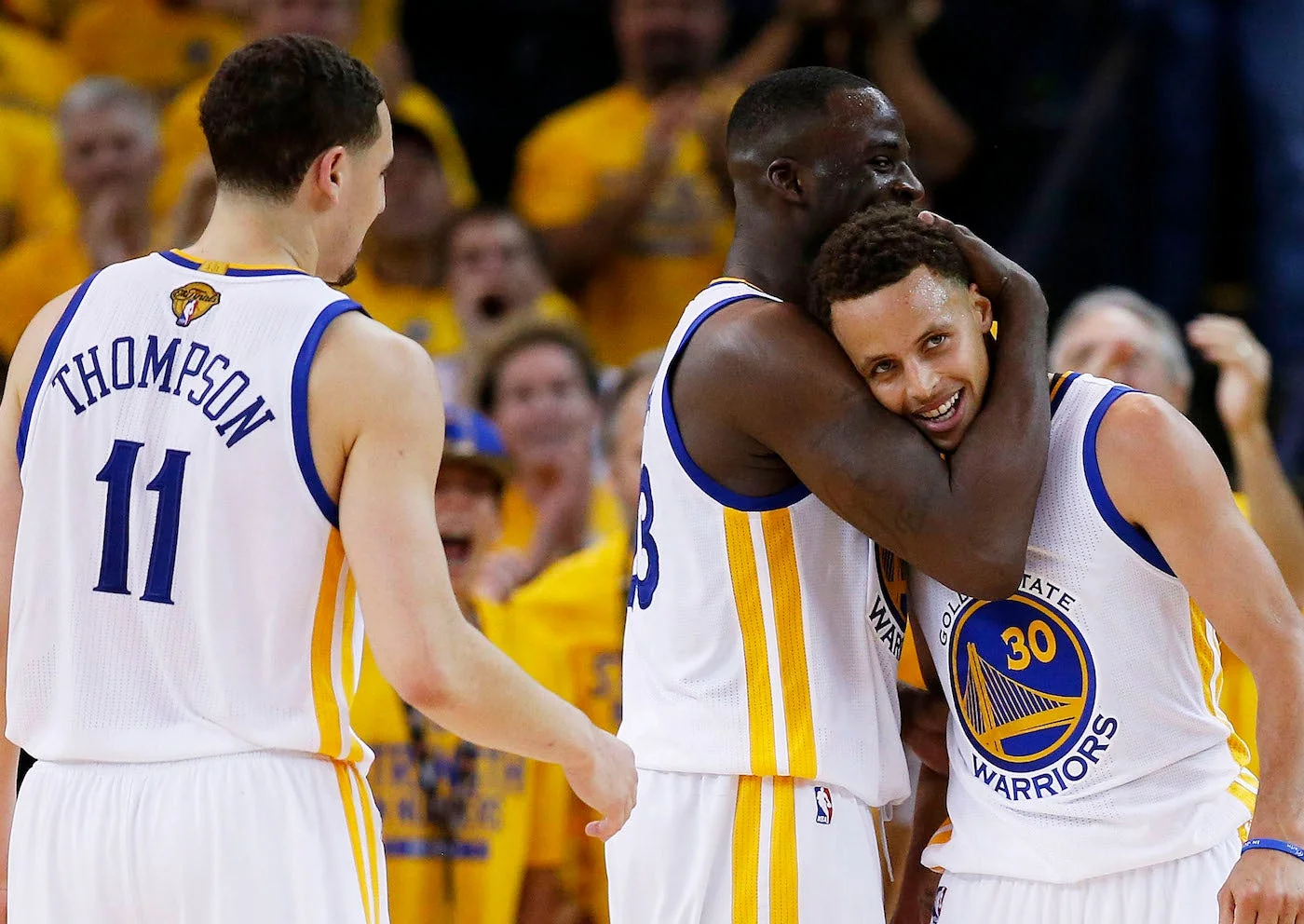
The 2015-16 Golden State Warriors did something no NBA team had done: they won 73 of 82 regular-season games. Yet the number is inseparable from what followed, because the same season ended one possession short of a championship.
This is the complete story—every regular-season loss, the tactical ideas that made Golden State historic, and the playoff turn from Stephen Curry's knee injury to Cleveland's unprecedented Finals comeback.
What Made 73-9 an NBA Record That Still Feels Impossible
A 73-9 record is an .890 winning percentage: translated into a normal 82-game schedule, Golden State was allowed one loss about every nine games. The Warriors did not merely edge the 1995-96 Chicago Bulls' 72-10 standard. They chased it while carrying the nightly attention reserved for defending champions, turning routine November and March dates into national tests.
The 24-0 launch and the chase beyond 72
The season began with 24 straight wins, an NBA record for the best start. Golden State scored at least 100 in each of those games, won in every kind of setting, and extended a streak that reached 28 regular-season victories when the final four wins of 2014-15 are included. Milwaukee finally stopped the opening run, 108-95, on December 12 after the Warriors had finished a seven-game road trip. That context matters, but so does the larger point: the first loss arrived nearly seven weeks into the season.
Luke Walton guided the team while Steve Kerr recovered from complications following back surgery. When Kerr returned to the bench, Golden State was 39-4. The pursuit then changed character. It was no longer a surprising start; every remaining loss threatened the record, every resting decision became a public debate, and San Antonio was close enough to make home-court advantage a live competitive goal.
The Warriors finished 39-2 at Oracle Arena and 34-7 away. Those road numbers are the quieter marvel. Great teams can create a fortress at home, but 34 road wins require surviving travel, hostile crowds and schedule compression. Golden State won its last four games, including a victory at San Antonio that tied Chicago at 72 and a 125-104 finale over Memphis that secured No. 73.
Curry's unanimous-MVP engine
Stephen Curry was not simply the leading scorer on the record team. He changed the expected value of possessions. His 30.1 points per game led the league, and he made 402 three-pointers—116 more than his own previous NBA record. He shot 50.4% overall, 45.4% from three and 90.8% at the line, becoming the seventh member at the time of the 50-40-90 club even while taking an unprecedented volume of difficult threes.
That combination explains why the season felt unstable for opponents. A conventional defense could execute its rules and still concede a shot Curry treated as efficient. Step higher and he could turn the corner; send a second defender and Draymond Green received the ball with a four-on-three behind the trap. Curry also led the league in steals, a reminder that his impact was not confined to shooting.
All 131 MVP voters placed Curry first, making him the first unanimous winner in league history. The vote captured what the record alone cannot: 73 wins were produced by a connected roster, but the system's most disruptive premise was that its point guard could bend a defense before crossing the three-point line. Golden State made the extraordinary repeatable, night after night, until nine losses looked like a long list.
Every Regular-Season Loss, in Order
Nine defeats across six months can invite mythology: every opponent supposedly discovered the same secret, or every loss supposedly came with a missing star. The actual ledger is messier. Seven happened on the road, two at home; some were close, some were decisive; and Golden State lost to contenders and lottery teams alike.
The complete nine-loss ledger
| Date | Opponent/site | Score | What stood out |
|---|---|---|---|
| Dec. 12, 2015 | at Milwaukee | 95-108 | The 24-0 start ended on the last stop of a seven-game trip. |
| Dec. 30, 2015 | at Dallas | 91-114 | Curry sat with a lower-leg injury; Dallas controlled the night. |
| Jan. 13, 2016 | at Denver | 110-112 | A late Curry rally fell short at altitude. |
| Jan. 16, 2016 | at Detroit | 95-113 | The Pistons won the paint and built a 25-point lead. |
| Feb. 19, 2016 | at Portland | 105-137 | Damian Lillard's 51 powered the largest defeat. |
| March 6, 2016 | at L.A. Lakers | 95-112 | Golden State shot 4-for-30 from three in a major upset. |
| March 19, 2016 | at San Antonio | 79-87 | A slow, physical game produced the Warriors' season-low score. |
| April 1, 2016 | vs. Boston | 106-109 | Boston snapped Golden State's 54-game home winning streak. |
| April 5, 2016 | vs. Minnesota | 117-124 (OT) | The Warriors surrendered a 17-point lead and lost in overtime. |
What the losses shared—and what they did not
The simplest pattern is location: seven defeats came away from Oracle Arena. Travel mattered at Milwaukee, altitude framed Denver, and San Antonio forced a half-court contest on its home floor. Availability mattered in Dallas, where Curry did not play. Yet neither factor explains Detroit, Portland or Los Angeles, where Golden State had its central creators and still lost decisively.
The shooting variance was dramatic. The Warriors' spacing usually punished opponents, but the same high-value shot profile could produce a 4-for-30 night from three against the Lakers. Portland attacked the other end, spreading Golden State and letting Lillard repeatedly create pull-ups and drives. San Antonio reduced possessions and challenged every cut, demonstrating a different route: keep the score low enough that a short cold spell becomes decisive.
The two Oracle losses are especially instructive. Boston defended with mobile wings, moved the ball and survived Golden State's late pressure; Minnesota recovered from 17 down and won in overtime. Neither result became a blueprint that the league could simply photocopy. Both required execution, shot-making and composure for a full night.
That is the honest lesson of the ledger. Golden State was not invulnerable, but there was no universal antidote. Opponents won by creating different combinations of pace control, physicality, transition pressure, shooting luck and availability advantages. The fact that nine losses resist one tidy explanation is evidence of the Warriors' versatility, not a gap in the record.
How Golden State Changed the Geometry of NBA Offense
The Warriors are often summarized as the team that normalized the three-pointer. That is true but incomplete. Their advantage came from connecting shooting range, rapid decisions, off-ball movement and positional flexibility. The three was not an isolated weapon; it stretched the floor until every other action had more room.
Range, pace and the Curry-Green decision tree
Golden State averaged 114.9 points and 28.9 assists, both league-leading figures, while shooting 48.7% from the field and 41.6% from three. The team made 1,077 threes, the first NBA club to cross 1,000 in a season. Its 56.3% effective field-goal percentage—which properly gives extra value to threes—was an NBA record at the time.
The tactical pressure began with Curry's range. A defender accustomed to meeting a ball handler near the arc had to engage several feet earlier. A big defending a Curry-Green screen then faced three bad choices. Drop and Curry could shoot. Switch and Curry could attack a slower defender while Green took a smaller player toward the paint. Trap and Green caught the release pass with a four-on-three advantage.
Green made that last option dangerous because he was a playmaker rather than a stationary screener. He averaged 7.4 assists and could drive, find a corner shooter, throw a lob or hit a cutter. Andre Iguodala and Harrison Barnes could occupy several roles, while Klay Thompson's constant movement punished any defender who stared at the ball. The possession did not end when the first action was covered; the defense had to communicate through exchanges, re-screens and back cuts.
Pace amplified the dilemma. Golden State did not need a formal fast break to attack early. Curry could pull up before the defense set, Green could advance after a rebound, and wings could flow directly into screening actions. An opponent that protected the rim in transition might concede a trail three. One that sprinted to shooters could open a cut behind its head.
The defense that made the offense sustainable
The elegant offense was supported by a defense capable of changing assignments without changing personnel. Thompson could take the strongest perimeter scorer. Iguodala and Barnes absorbed wing matchups. Green could guard centers in small lineups, call switches and recover as a help defender. Andrew Bogut supplied size, screening and rim protection when the matchup called for a traditional center.
Golden State averaged 8.4 steals and 6.1 blocks. Those events were valuable not only because they ended an opponent's possession, but because they launched the offense before matchups were organized. Even a contested miss could become an advantage if Green secured the rebound and pushed immediately.
The so-called “Death Lineup” of Curry, Thompson, Iguodala, Barnes and Green distilled the idea. Every player could pass or continue an advantage; enough players could switch defensively; and the nominal center could handle the ball. Opponents were forced to choose which mismatch they preferred rather than whether a mismatch existed.
That is Golden State's larger influence. Teams did not merely copy the number of threes. They sought shooting at more positions, valued decision-making in bigs, switched more actions and treated transition as a phase that begins with lineup construction. The 73 wins were the most visible result of a system that changed what an NBA lineup was expected to do.
The Playoff Run From Curry's Injury to a 3-1 Finals Lead
Golden State entered the postseason as the favorite, but the regular-season machine did not simply continue untouched. Curry's right ankle interrupted the Houston series, a wet spot led to a right-knee sprain, Portland tested his return, and Oklahoma City's length pushed the Warriors one defeat from elimination.
Houston, the MCL sprain and the Portland return
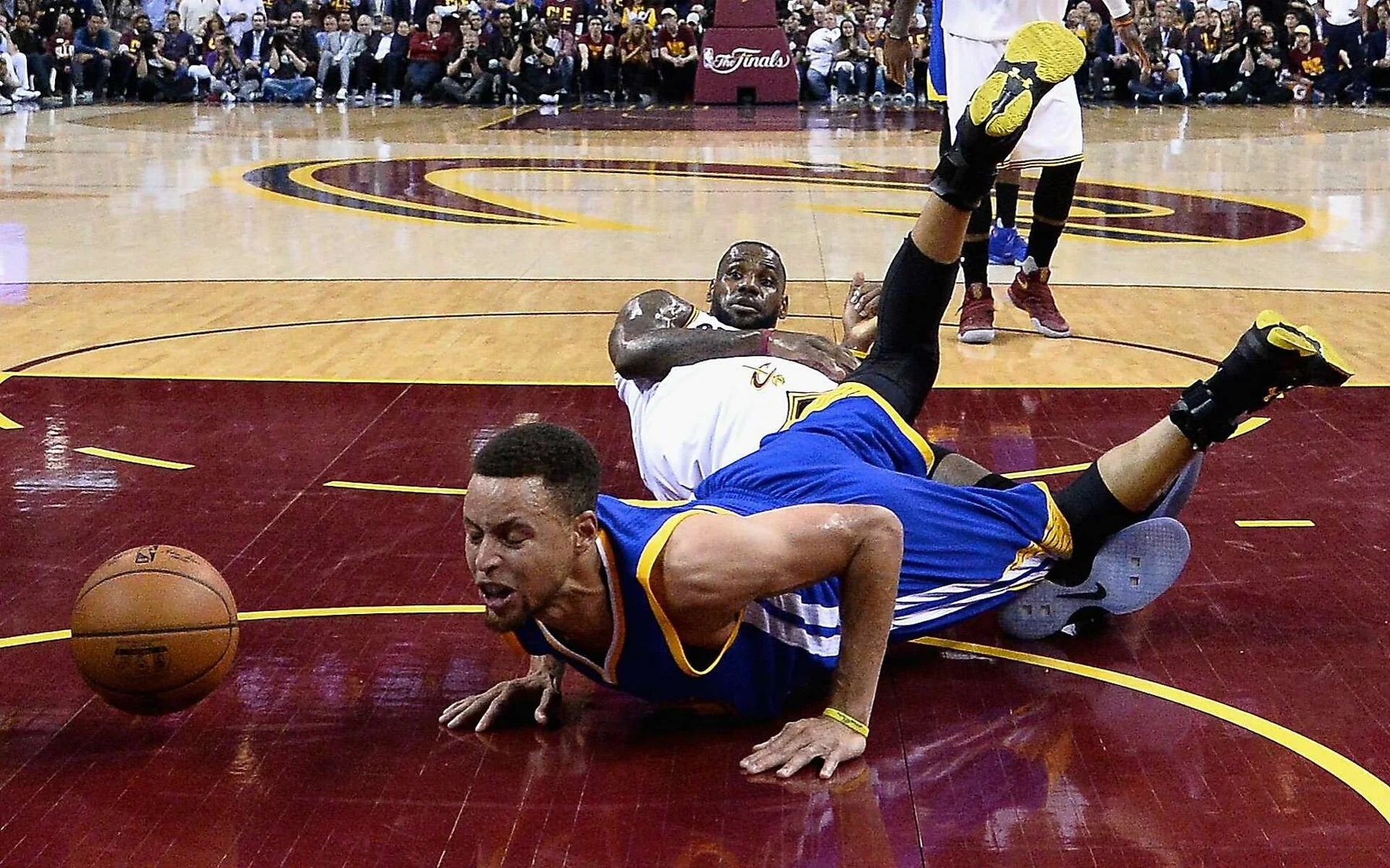
Curry scored 24 points in 20 minutes of the first-round opener against Houston, then aggravated his ankle and missed Games 2 and 3. He returned for Game 4, only to slip near midcourt before halftime and sprain the MCL in his right knee. Golden State won the series in five, but its best player had appeared in only two games and finished neither healthy.
The Warriors opened the second round without him and split the first two games against Portland before taking Game 3. Curry returned off the bench in Game 4 on May 9 after missing four games with the knee injury. His first four quarters were uneven by his standards. Then he scored an NBA-record 17 points in overtime, finishing with 40 points, nine rebounds and eight assists in a 132-125 win. Golden State closed the series in five.
The performance looked like a complete restoration because the ending was so explosive. The more careful interpretation is that Curry was available and capable of decisive bursts after a disrupted month. Rhythm, conditioning and movement against increasingly physical defenses remained part of the playoff story.
Escaping Oklahoma City and controlling four Finals games
Oklahoma City presented the hardest physical matchup. Kevin Durant and Russell Westbrook created pressure at the point of attack, while Steven Adams, Serge Ibaka and long wings crowded passing lanes and attacked the glass. The Thunder won Game 1 in Oakland, then overwhelmed Golden State in Games 3 and 4 to take a 3-1 lead.
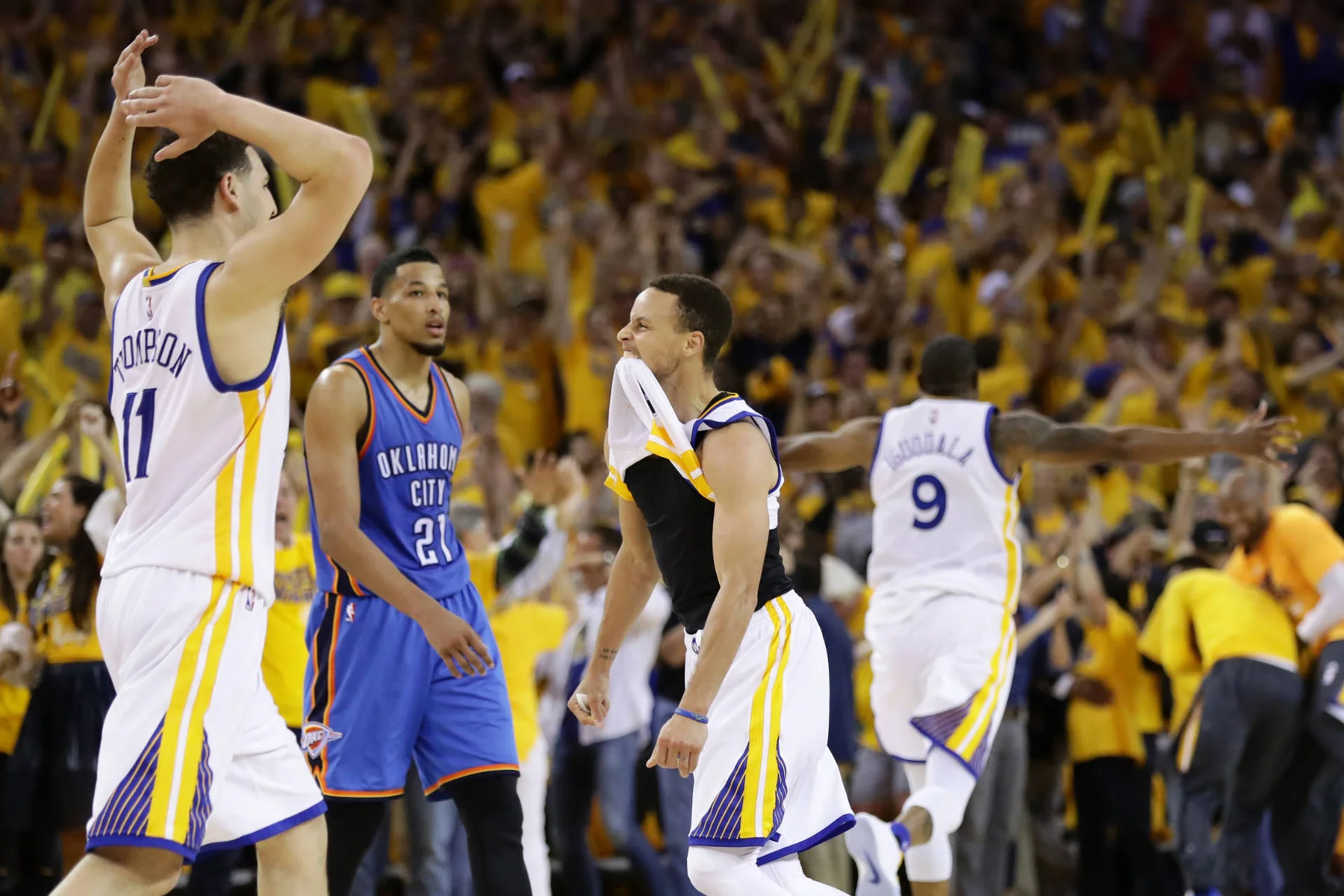
The Warriors survived Game 5 at home and traveled to Oklahoma City still facing elimination. Game 6 became Klay Thompson's masterpiece: 41 points and a then-playoff-record 11 threes. Golden State closed on a 19-5 run, while the Thunder committed six fourth-quarter turnovers. Shot-making did not erase the matchup problems; it bought the Warriors another chance to solve them.
In Game 7, Oklahoma City led by 13 in the first half. Golden State answered with a 29-12 third quarter and made 17 threes in a 96-88 victory. Curry scored 36, Thompson added 21, and the Warriors became only the tenth team at that point to win a best-of-seven series after trailing 3-1.
The Finals initially appeared to confirm that the escape had restored the hierarchy. Golden State's bench carried Game 1, Green scored 28 in a Game 2 rout, and the Warriors responded to a heavy Game 3 defeat by winning Game 4 in Cleveland, 108-97, behind Curry's 38. Through four games, their three victories came by an average of 19.6 points. They were one win from pairing the greatest regular-season record with a second straight title.
Yet the route to that 3-1 lead had consumed margin. Curry had navigated ankle and knee problems, the Warriors had played seven demanding games against Oklahoma City, and Green carried three flagrant-foul points. None guaranteed collapse. Together, they meant the last win would have to be earned without the buffer suggested by 73-9.
Why the Finals Slipped Away—and How 73-9 Should Be Remembered
There is no honest one-line explanation for the final three losses. The sequence included a suspension, an injury, cold shooting and outstanding Cleveland play. Reducing it to any single factor overlooks how the Cavaliers repeatedly converted opportunity into pressure.
Suspension, health and Cleveland's adjustments
After Game 4, the league assessed Green a Flagrant Foul 1 for retaliatory contact with LeBron James. The act did not receive a standalone one-game ban; it raised Green to four cumulative flagrant points, which automatically triggered a Game 5 suspension. Without its defensive organizer and short-roll playmaker, Golden State lost 112-97 as James and Kyrie Irving became the first teammates to score at least 40 each in a Finals game.
Andrew Bogut injured his left knee in Game 5 and did not return in the series. His minutes had been limited by small-lineup matchups, but losing a true rim protector narrowed Steve Kerr's choices. Cleveland attacked the paint, rebounded and ran. Across Games 5-7, the Cavaliers outscored the Warriors 138-88 in the paint and 65-26 on fast breaks.
Tyronn Lue also trusted mobility and matchup pressure. Cleveland switched more actions, made Curry work on both ends and hunted favorable matchups involving him. Curry averaged 22.6 points in the series, nearly eight below his regular-season mark, and scored under 20 in four games. Harrison Barnes' open looks stopped falling: he shot 5-for-32 over the final three.
None of those numbers means Golden State had no chances. Green returned with 32 points, 15 rebounds and nine assists in Game 7. The Warriors led by seven at halftime, and the score was tied at 89 with less than a minute remaining. A series that had swung dramatically came down to a handful of possessions.
A regular-season record beside a championship standard
Game 7's closing sequence belongs to Cleveland history. James chased down Iguodala and blocked a layup that could have broken the tie. Irving then made the go-ahead three over Curry with 53 seconds left. Kevin Love switched onto Curry and contested a potential tying attempt. Golden State did not score over the final 4:39, and the Cavaliers won 93-89.
The championship standard is unforgiving: the Warriors had a 3-1 lead and did not finish. Cleveland became the first team to erase that deficit in the NBA Finals, and any account of 2015-16 that stops at 73 wins is incomplete. The postseason outcome affects how the team ranks among champions because this team was not one.
But it does not convert the regular season into a failure. An 82-game record measures sustained excellence across travel, injuries, matchups and ordinary variance. Golden State set the highest win total the league has seen, produced the first unanimous MVP and accelerated a tactical shift that reshaped roster building. Those facts remain true beside—not instead of—the Finals result.
The balanced verdict
The 2015-16 Warriors authored the greatest regular-season record in NBA history and then lost a historically great Finals. The two statements create the season's meaning together.
That tension is why 73-9 still matters. It is a record, a tactical landmark and a warning against assuming dominance guarantees closure. The number captures six months of basketball almost nobody could solve; the ending captures the narrow margins that return when two elite teams reach Game 7.
Bottom line
Golden State's 73-9 record survives every qualification: it remains the NBA's highest regular-season win total. The complete season also includes a 15-9 playoff run and a seven-game Finals loss, making 2015-16 both a benchmark for sustained dominance and the clearest reminder that the final four wins are a separate test.
Sign in with Google to join the discussion.