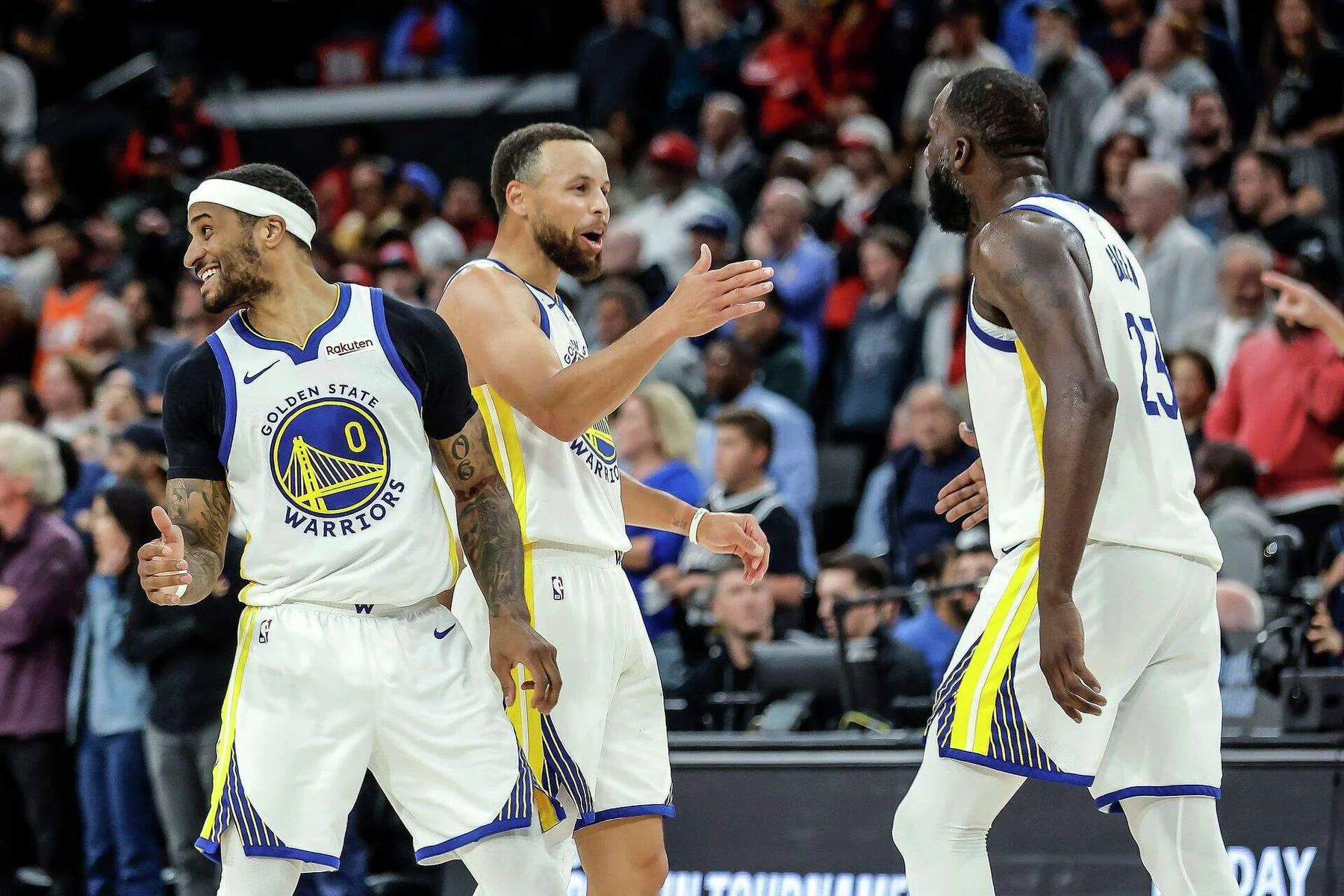
Golden State's 2026-27 roster mixes a championship core, a new stretch center, two rookies and two important knee-rehabilitation cases. The NBA's official page supplies a useful August snapshot, but it does not announce Steve Kerr's opening-night starters.
This guide dates every confirmed fact to August 19, 2026. Official roster and transaction information is labeled as such; lineup combinations are editorial projections, and injured players are never treated as available until the team clears them.
The 2026-27 Warriors Roster and Jersey Numbers
The NBA's official Golden State page displays 18 players for 2026-27. This table preserves that page's names, numbers and broad positions as of August 19, 2026. “Listed” is the precise word: it does not by itself reveal which contracts are standard, two-way or camp arrangements, nor does it promise that every number survives preseason.
Official roster snapshot as of August 19
| No. | Player | Position | Practical roster note |
|---|---|---|---|
| 0 | Gary Payton II | G | Veteran perimeter defender |
| 1 | Yaxel Lendeborg | F | 2026 No. 11 pick |
| 2 | Brandin Podziemski | G | Secondary creator |
| 3 | Will Richard | G | Second-year wing guard |
| 4 | Moses Moody | G | Rehabilitating knee injury |
| 7 | Kristaps Porziņģis | F-C | Stretch center |
| 8 | De'Anthony Melton | G | Two-way backcourt depth |
| 10 | Jimmy Butler III | F | Rehabilitating right ACL |
| 15 | Gui Santos | F | Energy forward |
| 18 | LJ Cryer | G | Development guard |
| 19 | Nate Williams | G | Backcourt depth |
| 20 | Al Horford | C-F | Veteran reserve big |
| 23 | Draymond Green | F | Defensive organizer |
| 25 | Lajae Jones | G-F | 2026 No. 54 pick |
| 28 | Charles Bassey | C-F | Rim-and-glass depth |
| 30 | Stephen Curry | G | Primary offensive engine |
| 31 | Seth Curry | G | Bench shooting |
| 33 | Malevy Leons | F | Development forward |
The page also records how players arrived. Curry, Green and Moody are Golden State draft selections; Porziņģis arrived by trade in February 2026; Lendeborg and Jones joined through the 2026 draft. That acquisition column is more useful than an unofficial depth chart because it is an auditable league record.
Why 18 listed names are not a final active list
The NBA's collective-bargaining explainer permits a maximum of 15 standard contracts plus as many as three two-way players. An 18-name display could therefore represent a completely filled structure, but the display alone does not identify that structure. Camp contracts, unsigned draft rights and conversions can complicate an offseason page. A game-night active list is smaller still.
That distinction changes how fans should read the roster. Being listed is not the same as being guaranteed a rotation role, and appearing in Summer League is not the same as securing an NBA contract. The official transactions page is the safer record for signings, waivers and trades. Recheck it after camp, then confirm the team roster and opening-night injury report before treating any August list as final.
The Veteran Core and the Biggest Availability Question
Golden State's identity still begins with Stephen Curry and Draymond Green, but the frontcourt now has a different geometry. Kristaps Porziņģis can pull a center away from the rim, post a smaller switch and finish above traffic. That creates wider driving and cutting lanes than a non-shooting center would, although the lineup still needs perimeter defense and another player who can create against pressure.
Curry, Green and Porziņģis define the structure
Curry remains the offensive engine because his value starts before he touches the ball. Defenders chase him through exchanges, switch early and pull help toward the arc. Green converts those reactions into handoffs, short-roll passes and early offense. Their shared timing lets Golden State create an advantage without reducing every possession to a high pick-and-roll.
Porziņģis changes the final decision for the defense. Dropping the opposing center invites a pick-and-pop three; switching can leave a guard beneath a 7-foot-2 target; trapping Curry frees a release pass to Green with Porziņģis spacing or diving. The NBA reported that Porziņģis averaged 16.1 points in 15 Warriors games after his February trade and then agreed to remain on a two-year deal. His modest 31.1% three-point mark in that short Golden State sample should not erase a 36.4% career rate, but health and workload remain practical concerns.
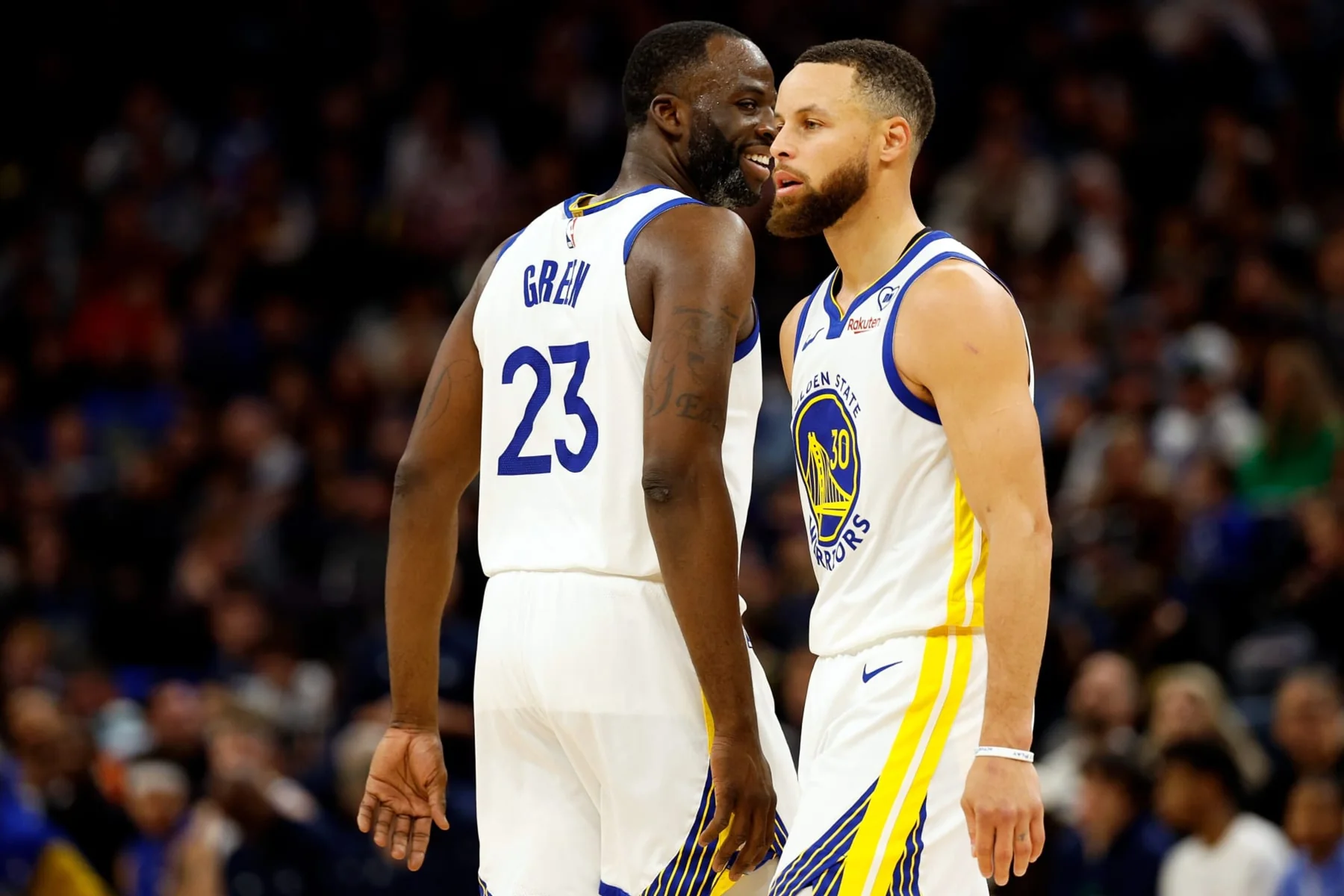
Green's one-year return preserves the defensive language and passing connection around Curry. It also demands lineup discipline. Green plus another reluctant shooter can compress the floor, while Porziņģis plus four small players can expose the glass. Kerr's challenge is not finding five famous names; it is surrounding the Curry-Green partnership with enough size, shooting and point-of-attack resistance on a given night.
Butler's ACL recovery changes every projection
Jimmy Butler is the roster's largest uncertainty, not because his role is hard to imagine but because availability cannot be assumed. An MRI after the January 19 game against Miami revealed a torn right ACL, according to the NBA/AP report. As of this article's cutoff, no official announcement clears him for opening night. A roster listing proves he belongs to Golden State; it does not function as medical clearance.
When healthy, Butler supplies what the other veterans do not consistently provide: a strong downhill creator who can live in the paint, draw fouls, post smaller wings and defend across matchups. He also lets Curry run off the ball late in games. Without him, Podziemski must shoulder more creation, Green handles more four-on-three decisions, and the Warriors may choose defense over shot creation in the fifth starter spot.
The responsible projection is therefore conditional. Build one lineup branch with Butler after clearance and another without him; do not attach a return date to ordinary ACL timelines. Team updates, the official injury report and participation in contact practices are more meaningful than speculation. That approach may feel less decisive, but it is more useful to fans deciding what the opening rotation can actually be.
New Arrivals and Returning Depth
Golden State's offseason did not replace the veteran core. It added two draft picks and preserved much of the supporting cast around a new frontcourt centerpiece. The result is less a wholesale rebuild than a bet that younger legs, more size and familiar role players can keep the Curry era competitive.
What Yaxel Lendeborg and Lajae Jones add
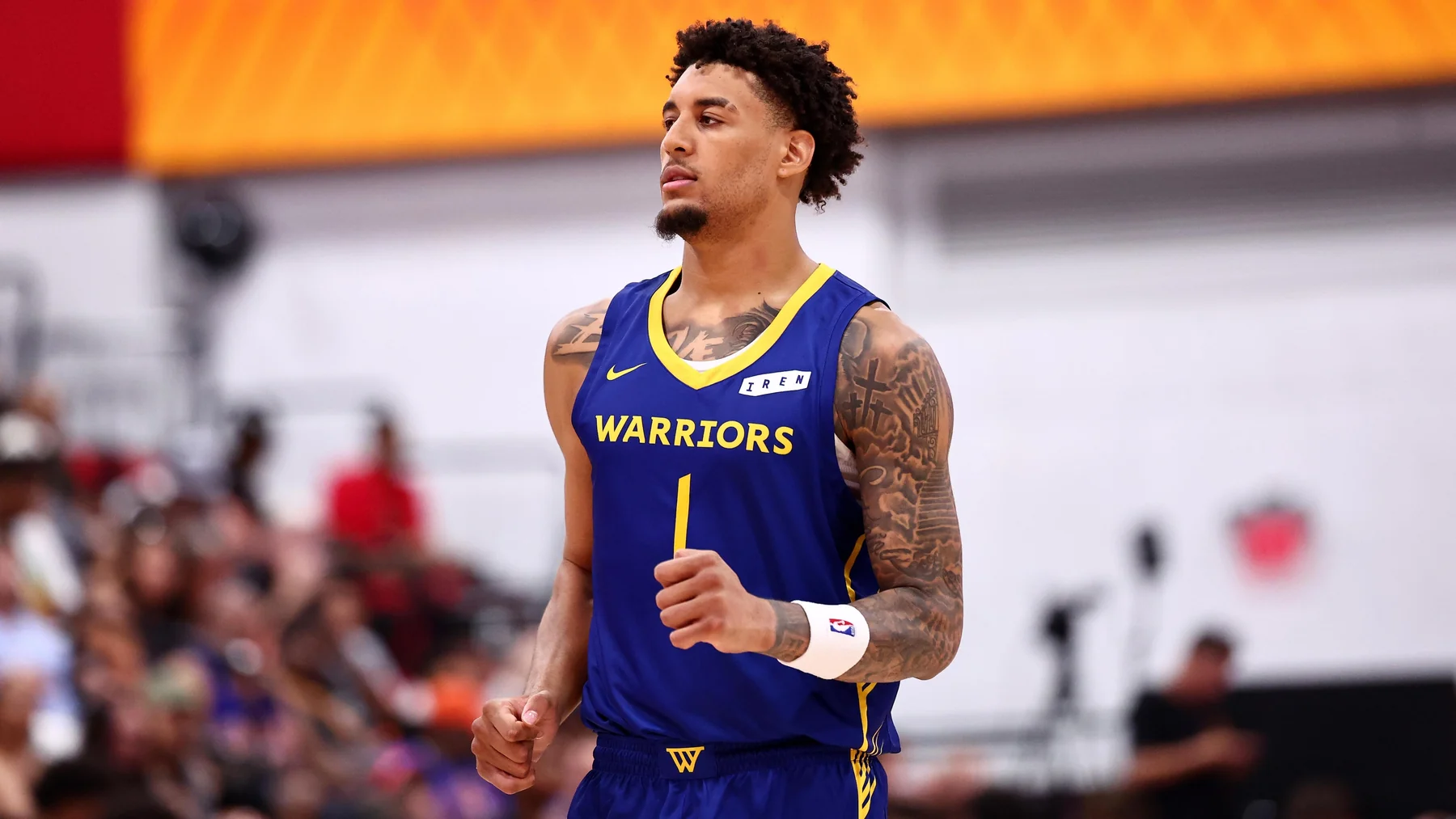
Yaxel Lendeborg, selected No. 11, is the rookie most likely to press for immediate minutes. The NBA's draft profile lists him at 6-foot-9 and highlights switchable defense, connective passing, strong finishing and functional shooting. His college résumé included Big Ten Player of the Year honors after earlier success at UAB. Because he entered the league older than a typical lottery pick, the attraction is readiness: Golden State can ask him to defend, rebound, screen and keep the ball moving before asking him to create.
That profile fits several Warriors needs. Lendeborg can play beside Porziņģis as the more mobile defender, beside Green as the larger rebounder, or in a small group that switches. His shot will determine how painless those combinations are. A respected standstill three opens the back cut; a defender ignoring him shrinks the room Curry and Butler need.
Lajae Jones, the No. 54 pick, is a different type of wager. The official profile lists a 6-foot-7 guard-wing who moved from junior college through St. Bonaventure to Florida State. He averaged 12.7 points and 5.7 rebounds in his final college season, but a 32.5% three-point mark shows why development matters. His pathway is defense, size and improved catch-and-shoot efficiency rather than immediate high-usage offense.
Re-signings that preserve the rotation
The most important “new” Warrior may be Porziņģis returning after a short post-trade sample. Around him, the NBA's free-agency report says Golden State retained Green, Al Horford, De'Anthony Melton and Charles Bassey. Gary Payton II and Seth Curry also appear on the current roster page. That continuity means Kerr begins with recognizable specialists instead of teaching an entirely new bench.
Horford offers positional defense, screening and passing from the frontcourt. Melton and Payton can pressure guards, though their offensive functions differ: Melton is the more conventional two-way guard, while Payton thrives as a cutter and small finisher. Seth Curry supplies shooting that can punish help but requires larger defenders around him. Bassey supplies a traditional center option for rebounding and rim protection when the matchup calls for it.
Quinten Post is the notable departure identified in the NBA's report. His absence shifts more stretch-center responsibility to Porziņģis and Horford. It could also open developmental frontcourt minutes, but those minutes must be earned. Official additions are facts; a rookie's place in the November rotation is still a coaching decision shaped by health, defense and lineup fit.
Projected Starting Five—and the Health-Contingent Alternatives
No official Warriors source has announced an opening-night starting five. Any useful projection must therefore show its assumptions. The first is medical: Butler and Moody cannot be penciled in merely because their names appear on the roster. The second is tactical: Kerr may start a center against size and Green at center against a switching matchup.
The best-case five if Butler is cleared
Lead guard
Stephen Curry
Guard
De'Anthony Melton
Wing
Jimmy Butler III
Forward
Draymond Green
Center
Kristaps Porziņģis
Editorial projection, not an announcement: Curry, Melton, Butler, Green and Porziņģis is the most balanced best-case group. Melton takes the fastest guard, Butler handles stronger wings, and Porziņģis protects the rim while stretching the opposing center. Curry and Butler divide creation; Green connects the actions. The group is large enough at four positions without sacrificing the point-of-attack defender Curry needs beside him.
There are reasonable variations. Moody could replace Melton if fully cleared and his career-best 2025-26 shooting carries over. Lendeborg could replace Melton when size and rebounding matter, moving Butler toward a nominal backcourt assignment. Podziemski could start when the offense needs a second organizer. None is automatically superior: each trades defense, shooting, creation or size.
Opening-night options without Butler or Moody
If neither injured wing is cleared, a defensible opening projection is Curry, Podziemski, Melton, Green and Porziņģis. Podziemski supplies the extra handler; Melton takes the hardest guard assignment; Green and Porziņģis form the passing-and-spacing frontcourt. The obvious weakness is wing size, especially against opponents who start two powerful forwards.
Lendeborg is the size-first alternative. A Curry-Melton-Lendeborg-Green-Porziņģis five asks the rookie to defend an important wing and make open shots, but it restores length. Gui Santos offers a more experienced forward option, while Will Richard has already demonstrated that Kerr can use him with established starters. Past starts are evidence of trust, not a guarantee of this season's hierarchy.
Projection rule
Do not move Butler or Moody into an “expected” opening lineup until an official team update confirms progress and a game-status report clears them. Participation in non-contact work is not the same as unrestricted availability.
Even a confirmed opening five would not be a permanent ranking. Kerr can start a traditional center, close with Green at the five, or use Payton for one defensive possession. The better question is which five solve that night's matchup while keeping at least two reliable creators on the floor.
Building Functional Bench Units
A depth chart lists backups by position; a rotation has to assemble compatible skills. Golden State's bench groups need someone to organize possessions, someone who can beat the first defender, credible shooting, a point-of-attack defender and enough size to finish a defensive possession. Loading five specialists into one unit can leave the lineup without a creator.
Ballhandling, shooting and point-of-attack defense
Podziemski is the cleanest second-unit organizer. He can rebound, push the ball and initiate while Curry works away from it, but a Podziemski-led bench still needs a teammate who pressures the rim. Melton offers a valuable two-way bridge: he can defend the opposing lead guard, make a quick pass and punish an abandoned catch-and-shoot opportunity without demanding every possession.
Payton is the defensive specialist. His best offense often comes as a cutter, screener or transition finisher rather than a conventional point guard. That unusual role works beside Curry because Curry's gravity creates space behind ball-watching defenders. It becomes harder in a bench group without elite shooting, where opponents can protect the lane and dare Payton to create from a standstill.
Seth Curry supplies the inverse skill set. His shooting can open a cramped unit and makes top-locking both Curry brothers exhausting, but small backcourts need substantial wing and rim protection. Richard offers a simpler path to minutes: guard up a position, space to the arc and make fast decisions. Cryer and Williams should be viewed as depth until camp, contract status and game performance establish more.
| Bench need | Leading options | Main tradeoff |
|---|---|---|
| Secondary handling | Podziemski, Melton | Neither replaces Butler's paint pressure |
| Point-of-attack defense | Payton, Melton, Richard | Spacing varies by combination |
| Movement shooting | Seth Curry | Requires size around him |
| Connector forward | Lendeborg, Santos | Half-court shooting must hold |
Frontcourt combinations and workload management
Horford is the veteran organizing big. He can screen, pass from the top, defend positionally and keep the paint open, though a 40-year-old center should not be treated as an every-night workload solution in August. Bassey offers a more traditional interior profile: rebound, occupy the rim, screen hard and contest. His lineups need shooting at the other four spots.
Lendeborg can connect those styles. Beside Porziņģis, he can take the quicker forward and attack the glass. Beside Green, he supplies youthful size. Beside Horford, he can cut around a passing hub. Santos adds pace and physical movement; Leons supplies another long forward option. None should be assigned fixed minutes before camp.
The safest rotation principle is staggering. Keep Curry or, after medical clearance, Butler on the floor with most reserve groups so specialists receive advantages instead of having to manufacture them. Stagger Porziņģis and Horford to retain a passing or shooting big, and limit all-veteran units when speed becomes a problem. A coherent eight-man group often beats a deeper but role-confused ten-man group.
What Can Still Change Before Opening Night
The roster has a recognizable shape, but August is not the endpoint. Contract classifications, camp performance, medical clearance and trades can change the last few names and the first few rotation decisions. The NBA roster page should be treated as a living snapshot rather than a promise frozen on publication day.
Contract classifications and camp competition
NBA rules allow up to 15 players on standard contracts plus as many as three two-way players. That is why an 18-name roster can be mathematically complete without revealing who occupies which type of spot. A two-way player can move between Golden State and Santa Cruz under league eligibility rules; a camp player can be waived or converted; a second-round pick can follow several contract pathways.
Those labels matter. Standard and two-way contracts have different availability and compensation structures, and a player who dominates a preseason quarter is not automatically eligible for the same season-long role as a standard-contract veteran. Unless the Warriors or the NBA transaction log identifies the move, this guide will not infer a classification from a roster-page layout.
Camp competition is also need-dependent. If Butler and Moody are not cleared, a healthy defensive wing becomes more valuable. If Porziņģis or Horford requires workload management, Bassey's traditional center skills matter more. If second units cannot reach the paint, an extra handler can beat out a theoretically more versatile forward. Coaches fill functional gaps, not internet depth-chart columns.
Jersey numbers can change during this period too. Fans ordering a new player's customized jersey should confirm the number on the final team roster rather than relying on a Summer League graphic. The table above records the official August display, not a lifetime assignment.
A reliable update checklist
- Read NBA Transactions first. It provides dated records for signings, waivers, trades and re-signings.
- Confirm the Warriors roster page. Check that the name, number and listed position reflect the transaction.
- Open the club announcement. It can explain the acquisition and quote the team even when financial terms are not disclosed.
- Use the official injury report for game status. A roster listing, practice video or optimistic interview is not “available.”
- Check the active list and starters near tipoff. That is when a projected lineup becomes an actual lineup.
Source timing matters. A transaction may post before the roster page refreshes, and an injury report is tied to a specific game and reporting window. Record the date and resolve discrepancies with the newest direct team or league statement rather than combining old facts into a false current answer.
The stable picture is straightforward: Curry and Green remain the system's anchors, Porziņģis supplies a different kind of center, and Lendeborg is the leading young frontcourt addition. The unsettled picture is equally important: Butler and Moody need medical clearance, rookies must earn trust, and the last roster classifications can still move. Keeping those two pictures separate is the honest way to follow the 2026-27 Warriors.
Bottom line
Golden State has an official 18-name August roster, not an official opening-night rotation. Use the current table for names and numbers, the conditional lineups for planning, and the NBA transaction and injury reports for the final answers.
Sign in with Google to join the discussion.