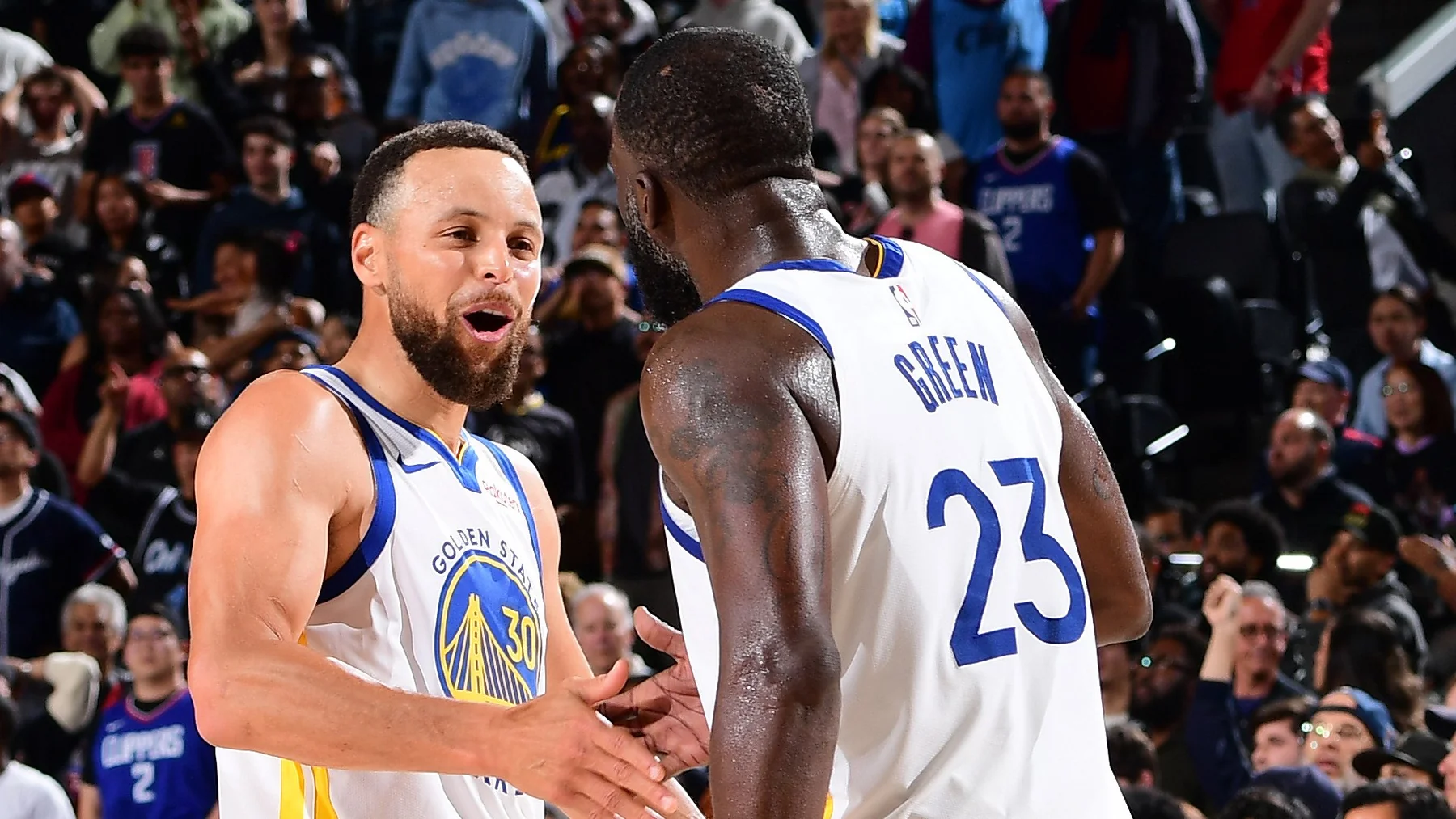
Warriors trade tracker at a glance
As of September 8, 2026, the Golden State Warriors have not completed a trade during the 2026 Draft and summer transaction window. The NBA's official offseason trade tracker contains no Golden State deal, while the league's team-by-team activity page classifies the Warriors' moves as re-signings, free-agent additions and one free-agent departure.
| Tracker lane | Warriors status | How to read it |
|---|---|---|
| Official 2026 offseason trades | None through Sept. 8 | No deal is on the NBA's approved summer list |
| Earlier verified 2026 trades | Two on Feb. 5 | Porziņģis acquisition; Jackson-Davis departure |
| Reported activity | Past pursuit and planning context | Useful only with outlet, reporter and timing attached |
| Active trade rumors | No star target verified | Proposals and aggregation are not negotiations |
The two February deals belong to the 2025-26 transaction season, but both directly shape the 2026-27 team. Golden State acquired Kristaps Porziņģis for Jonathan Kuminga and Buddy Hield, then sent Trayce Jackson-Davis to Toronto for a 2026 second-round pick. They are included here as roster foundations, with their original transaction date kept visible.
The summer activity is real, but it is not trade activity. Re-signing Porziņģis, Draymond Green, Al Horford, De'Anthony Melton, Gary Payton II and Charles Bassey did not send an asset to another club. Georges Niang and Brandon Williams arrived as free agents, and Quinten Post left in free agency. Calling any of those moves a trade would distort both the return and the Warriors' remaining options.
This page uses the Warriors schedule as the practical next checkpoint: training camp roles, early availability and the first weeks of games will produce new evidence about roster needs. They cannot retroactively turn a summer rumor into a completed transaction.
Official trades shaping the 2026-27 roster
Golden State's most recent completed trades both became official on February 5, 2026. They were separate deals, and each should be evaluated by the assets actually exchanged rather than by a later free-agent decision.
Kristaps Porziņģis arrived for Jonathan Kuminga and Buddy Hield
The Warriors received Kristaps Porziņģis from Atlanta. The Hawks received Jonathan Kuminga and Buddy Hield. No draft pick appears on either side of the NBA's official transaction entry. This was a direct bet that a 7-foot-2 shooter and rim protector would provide a more useful frontcourt dimension around Stephen Curry than two outgoing perimeter players.
Porziņģis played only 15 regular-season games for Golden State after the trade, averaging 16.1 points, 5.3 rebounds, 2.3 assists and 1.1 blocks in 23.7 minutes. His 31.1% three-point shooting was below his career level. That sample shows the intended role—a scoring big who can pull a defender away from the lane and protect the basket—but it is too short and too disrupted by availability to prove how the 2026-27 lineups will perform.
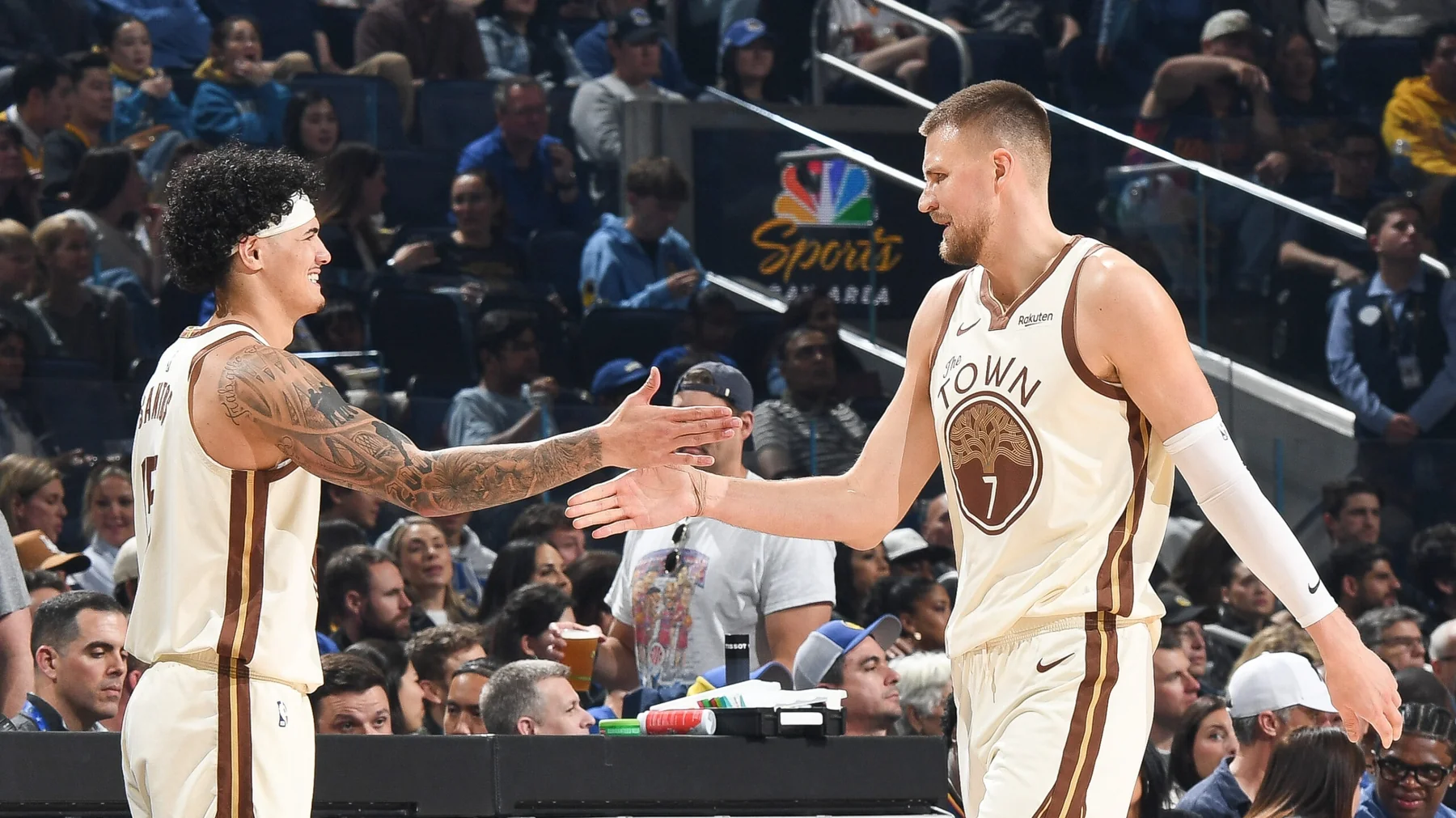
The outgoing cost was meaningful. Kuminga supplied downhill athleticism even though his role had collapsed, and Hield supplied high-volume shooting. Golden State did not replace two rotation slots with the trade itself. Any assessment has to include the roster work that followed, while keeping those later signings out of the trade return.
Trayce Jackson-Davis became a 2026 second-round pick
In the other deadline transaction, Toronto received Trayce Jackson-Davis and Golden State received a 2026 second-round selection originally belonging to the Lakers. The pick landed at No. 54, where the Warriors selected 6-foot-7 Florida State guard-wing Lajae Jones. That completes the asset chain: Jackson-Davis out, the No. 54 selection in, Jones drafted.
The exchange did not bring an established NBA player back to the rotation. It traded a young frontcourt option for a lower-cost development asset and an open roster pathway. Jones' eventual value cannot be known from draft position or Summer League alone. For tracker purposes, the useful fact is that the return has already been exercised, so the Warriors no longer hold an unnamed future second-round pick from this deal.
Summer roster moves that were not trades
Golden State was active enough to reshape the depth chart without exchanging players or picks with another team. Keeping this column separate explains why the roster looks different even though the official summer trade count remains zero.
Golden State retained its veteran frontcourt
Kristaps Porziņģis re-signed for two years after arriving at the deadline. Draymond Green returned on a one-year contract after declining his prior option. Al Horford and Charles Bassey also re-signed. Those four join No. 11 pick Yaxel Lendeborg in a frontcourt with more playable combinations than a simple center depth chart suggests.
Each transaction is a contract. Golden State sent no player or draft asset to another club to retain those players, so none belongs in the completed-trade tally. That distinction also prevents double counting Porziņģis: the February trade explains how he arrived; the June agreement explains why he remained under contract for 2026-27.
Retention creates continuity but not certainty. Green remains the defensive organizer, Porziņģis supplies size and shooting, and Horford can connect possessions from the frontcourt. The overlap may help Steve Kerr survive injuries and manage minutes. It also means a future move would have to consider which combinations work, not merely whether the roster has enough players labeled forward or center.
Additions and departures belong in separate columns
Re-signed
Porziņģis, Green, Horford, Melton, Payton and Bassey returned on new contracts.
Free-agent additions
Georges Niang and Brandon Williams joined on one-year deals.
Free-agent departure
Quinten Post signed with Memphis; Golden State received no trade return.
Williams brings a recent 13.0-point, 3.9-assist season from Dallas and gives the backcourt another on-ball option. Niang is a career 40% three-point shooter, although he missed the entire 2025-26 season. De'Anthony Melton's return also matters after a career-best 12.3 points per game, but he was already a Warrior. These facts shape the needs analysis without changing the trade ledger.
A sign-and-trade would appear in both a free-agency story and the official trade tracker because assets move between clubs. The NBA lists Niang and Williams as ordinary free-agent signings, so attaching their previous teams to a mock exchange is inaccurate. This tracker will preserve that category line as later roster cuts and standard contracts are announced.
What reliable reporting actually says
Credible reporting can reveal calls that never became a transaction, but its verbs and dates matter. “Explored,” “showed interest” and “made an offer” describe different levels of activity. A tracker should preserve the reporter's wording instead of upgrading every conversation into a near-completed deal.
The Jaren Jackson Jr. pursuit was a past attempt
ESPN's Anthony Slater said Golden State had explored Jaren Jackson Jr. around the February 2026 deadline before Memphis traded the former Defensive Player of the Year to Utah. Later stories sometimes publish that item with a September date because the detail was newly discussed. The underlying basketball activity was still months old.
That makes Jackson a useful clue about what the front office valued: a frontcourt defender with range and scoring. It does not make him a current Warriors target. He is under contract with the Jazz, no current negotiation was reported, and Slater's description of the Warriors “sniffing around” did not establish a formal Golden State offer. The responsible tracker entry is past reported interest, no deal.
Source test
Ask when the alleged conversation happened, who reported it first and whether the story describes interest, an offer, advanced talks or an approved transaction. Publication date alone can be misleading.
Stephen Curry's extension is contract news, not a trade request
Curry is under contract through 2026-27 because of the extension he signed in 2024. He became eligible on August 29, 2026 to extend beyond this season. Golden State has publicly wanted another agreement, while Curry has repeatedly said he is open to finishing his career with one franchise. As of the September 8 cutoff, the reviewed official and top local sources had not announced a new extension.
That unresolved decision matters. An extension could align Curry's timeline with the club's planning, while waiting could preserve choices for both sides. It still supplies no evidence that Curry requested a trade. The NBA-hosted Athletic analysis explicitly frames the intrigue around whether and when he extends, not around an active exit demand.
Rumor accounts often convert an unsigned extension into “Curry could be traded,” then use that hypothetical as a headline. That skips the necessary report. Until Curry, the Warriors or a credible reporter says a trade conversation or request exists, the tracker keeps him in the contract watch column. If a new deal is announced, it will move to the official-contract column and the completed-trade count will remain unchanged.
The current Warriors rumor board
An honest rumor board can be empty. As of September 8, no publicly reported Warriors negotiation for a star meets this tracker's standard for an active target. That does not prove Mike Dunleavy Jr. has made no calls; it means the available reporting does not support naming a live deal.
No active star target meets the confirmed standard
Anthony Davis is the most persistent current hypothetical. A September roundup argued that he could become a leading target if he plays well and Washington struggles. “Could” and “if” make that scenario analysis. Earlier team-sourced reporting said Golden State had not engaged the Wizards on a Davis trade. No later report cited active talks, an offer or a request from Davis as of the cutoff.
Other recycled names require the same date check. Jaren Jackson Jr. is a past pursuit and now a Jazz player. Jaylen Brown was traded to Philadelphia during the summer. Draymond Green was involved in real deadline conversations in February, according to ESPN, but he stayed and re-signed in July. Those stories can explain front-office history; none is a live September Warriors negotiation.
How to grade proposals, sources and aggregation
Official
NBA or team release with the complete exchange. This enters the trade ledger.
Reliable report
A reporter identifies current talks, an offer or interest and gives timing or sourcing. Track it with attribution.
Analysis or proposal
A writer builds a legal or basketball case for a deal. It shows an idea, not front-office activity.
Unverified aggregation
A social post or headline repeats another item without the original wording, date or link. Do not promote it.
Before sharing a claim, open the first source. If a headline says “Warriors linked to” but the article only says the player would fit, it is a proposal. If an account says “sources” while linking to a months-old story, preserve the old date. A successful salary-machine result proves only that entered assumptions pass that tool's model; it does not prove either front office discussed them.
What the roster says about a possible next move
Roster analysis can identify a role worth shopping for; it cannot identify the player Golden State will acquire. The Warriors went 37-45 and missed the playoffs after injuries removed core creators and wings for long stretches. That makes durability, position and timing as important as a target's scoring average.
Health and positional overlap complicate the frontcourt
Green, Porziņģis and Horford can all play center minutes, yet they solve different problems. Green supplies switching, help defense and playmaking. Porziņģis adds vertical size, rim protection and shooting. Horford can space the floor and make connective passes. Lendeborg and Bassey add younger options. On paper, that is depth; on the floor, several combinations may lack foot speed or perimeter scoring.
The Warriors also need to manage what the 15-game Porziņģis sample did not settle. His offensive gravity changes the geometry around Curry, but his availability has varied and his Golden State three-point percentage was 31.1%. A healthy stretch could remove urgency for another big. Missed games or a difficult fit beside Green could create a different need. Neither outcome is established before camp.
That is why “trade a center” is too crude. A deal should improve a specific five-man function—defending large wings, surviving non-Curry minutes or adding rim pressure—without stripping away the size and shooting the existing group was built to provide.
Perimeter creation remains the pressure point
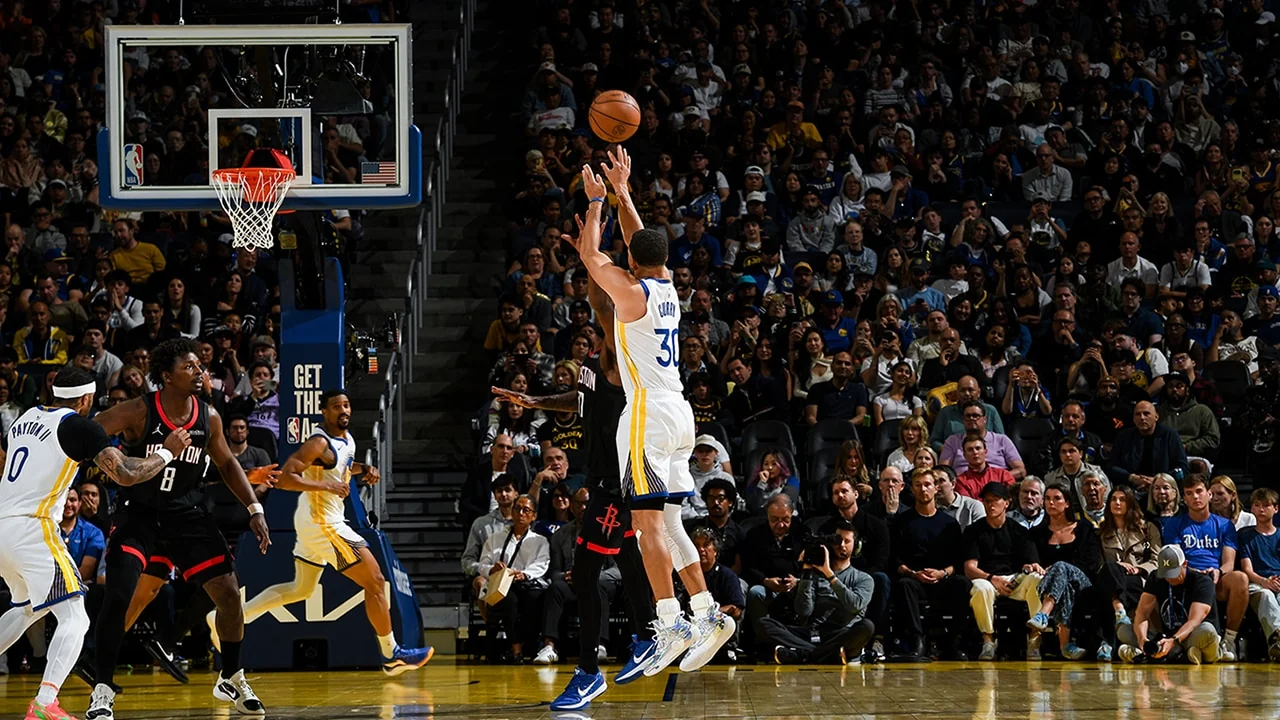
Jimmy Butler tore his right ACL in January, and Moses Moody later required surgery for a torn patellar tendon. Both remain on the roster, but neither injury should be converted into an unsourced return date. Their absences remove a primary downhill creator in Butler and a two-way wing in Moody. Curry himself missed 27 straight games with a right knee issue before returning in April.
Brandin Podziemski, De'Anthony Melton and Brandon Williams can share handling and secondary creation. The harder question is whether those groups can bend a set defense without Curry while also guarding NBA wings. A durable two-way perimeter creator is therefore the clearest analytical archetype for a future deal. That phrase describes a skill set, not a report that a particular player is available.
Early games will supply evidence. Track who closes possessions, how opponents defend non-Curry units, whether Porziņģis stays involved as a screener or post mismatch, and which available wing takes the toughest assignment. If the Warriors are competitive while Butler and Moody recover, the price of a panic deal rises. If the same creation problem decides games, the front office gains a clearer brief for a midseason trade.
Trade assets and deal constraints
A trade idea needs a legal transaction path as well as a basketball argument. Golden State operates far above the $164.961 million salary cap, and the 2026-27 first and second apron lines are $209.015 million and $221.686 million. The team's exact position after guarantees and bonuses determines which matching and aggregation tools remain available.
Salary matching and draft picks need an exact path
The NBA's own explanation of the second apron gives the most relevant warning: a team above that threshold cannot simply combine several lower-paid players to acquire one higher-paid player in a transaction that increases spending. A proposal built around three small contracts may fail even when their arithmetic looks close. The post-trade roster, minimum-player needs and applicable hard cap also matter.
Golden State's largest contracts can make a star-level salary match look possible, but matching a number does not make the player available or the exchange desirable. Jimmy Butler is recovering from ACL surgery; treating his contract as automatic filler ignores both his basketball value and the other team's willingness to take it. The same principle applies to Moody during rehabilitation and to veterans whose skills support Curry.
Draft inventory needs full labels. Year, round, protection, swap rights and prior obligations all affect whether a pick can move. For example, the NBA's February ledger shows a 2030 Golden State first-round pick routed to Dallas in the Anthony Davis transaction. A mock package that includes an unrestricted Warriors 2030 first without addressing that obligation starts from a false asset list.
A recognizable name is not a workable trade
Five checks before treating a proposal seriously
- Availability: is there direct reporting that the other team will discuss the player?
- Salary: which exact contracts move, and does the current apron rule allow the construction?
- Assets: are every pick year, protection and swap accurately identified?
- Roster: does Golden State retain enough playable size, creation and defense after the outgoing package?
- Timeline: is the player's contract and health outlook aligned with Curry and the 2026-27 season?
A cap-machine approval answers only part of the salary question, often with assumptions that can become stale after one signing. It does not confirm medical review, ownership willingness, trade-kicker handling, draft-pick legality or negotiations. That is why this tracker places proposals in analysis even when the construction is plausible.
When credible talks emerge, the update will list the reported outgoing package and clearly mark any missing terms. When a deal becomes official, the complete exchange will replace the provisional entry. Until then, “the Warriors can offer picks” is context, not a trade package.
When the Warriors trade tracker will change
The tracker can change on any transaction day, but the NBA calendar supplies four useful checkpoints. Each one produces a different kind of evidence. None guarantees a trade.
Watch official transactions before the rumor cycle
| Checkpoint | What can change | Best evidence |
|---|---|---|
| Sept. 29 training camp | Roles, availability and lineup experiments become visible | Team practice updates and direct reporting |
| Oct. 19 final rosters | Standard roster spots and camp decisions settle | NBA transaction feed and Warriors release |
| Opening weeks | Non-Curry offense, wing defense and frontcourt pairings face real opponents | Games, injury updates and named beat reporting |
| Feb. 11 trade deadline | Final in-season window for an NBA trade | Team/NBA approval and the complete asset return |
The first game window sends Golden State to the Lakers, a fast test of how the available perimeter group handles size and creation. One game will not settle a trade need, and a hot or cold October should not erase the injury context. A larger sample can reveal whether the same weakness persists across opponents and non-Curry minutes.
Updates should follow a fixed order. First, check the Warriors and NBA transaction feeds. Second, open the original report and preserve its exact date and language. Third, separate the reporter's facts from any proposed package. Finally, move a deal into the official table only when the teams or league provide the complete exchange.
As of this edition, the answer remains clear: Golden State has completed no trade in the 2026 offseason. Its last two trades were on February 5, and no active star negotiation is publicly verified. The next update will change only the line supported by new evidence, leaving the historical ledger intact.
Follow the 2026-27 NBA schedule and NBA calendar for the game and league checkpoints around future tracker updates.
Sign in with Google to join the discussion.