2026-27 NBA roster guide
A conference-by-conference snapshot of every team's biggest additions and most plausible opening five, updated August 29, 2026.
The 2026-27 NBA rosters look dramatically different after an offseason packed with star movement, aggressive retooling and young players stepping into larger jobs. This guide organizes all 30 teams in one place, then explains which changes could matter most when games begin. It is built for quick scanning, but the projected lineups are also accompanied by context so a familiar name in a new uniform does not hide the tactical tradeoff behind the move.
Because an NBA roster is a moving target until opening night, the distinction between an official transaction and an editorial lineup projection is essential. The team-by-team fives below are informed projections as of August 29, not declarations from coaches. Injuries, camp competition, later trades and load-management decisions can all produce a different first-night combination.
How to read this 2026-27 roster snapshot
Treat this page as a dated depth-chart snapshot with two different evidence levels. A player listed as a key addition has joined that team's 2026 offseason roster picture through an announced or reported transaction collected by the NBA's official offseason tracker. A player listed in a projected starting five is an editorial choice based on health, role, lineup balance and the information available on August 29. Teams rarely announce permanent starters in August, and coaches can change an opening group by matchup even after camp establishes a hierarchy.
Official layer
Use the NBA's live player directory and team pages to confirm a player's current affiliation.
Projection layer
The five names in each row describe a likely functional lineup, not a coach-certified depth chart.
Freshness layer
Recheck after camp cuts, injury updates and any transaction completed after August 29.
Roster size also explains why a long preseason list is not the final regular-season list. NBA teams can have as many as 15 players on standard contracts and may carry up to three additional two-way players. Camp invites can compete for a final standard slot or a two-way place, while Exhibit 10 and other non-guaranteed arrangements create evaluation opportunities without guaranteeing opening-night employment. That is why this guide concentrates on the likely rotation core rather than pretending every camp name has the same status.
The 2026-27 calendar creates a clear checkpoint. Training camps are scheduled to open September 29, while opening-night rosters are due October 19. Between those dates, coaches will test combinations, teams will make cuts and medical information can reorder a depth chart. A projected August starter could become a sixth man, an injured player could begin the season inactive, and a rookie could win a job earlier than expected.
For the newest transaction sequence, consult our 2026 NBA offseason trade tracker. For official current affiliations, use the NBA player directory. Keeping those references separate from the lineup analysis makes this page useful without implying certainty the league and its teams have not provided.
Eastern Conference projected starters and key additions
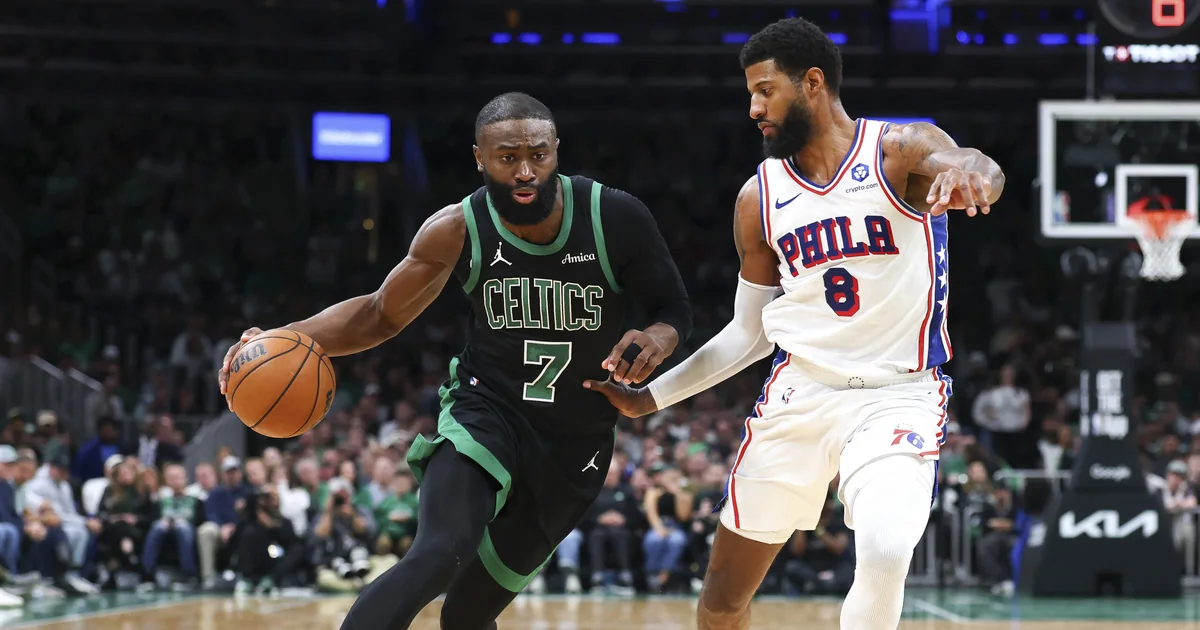
The East's defining theme is concentrated star power. Philadelphia added Jaylen Brown and LeBron James around Tyrese Maxey and Joel Embiid; Miami added Giannis Antetokounmpo next to Bam Adebayo; Boston exchanged Brown for Paul George and added Mitchell Robinson. Those moves make the projected fives unusually recognizable, but they also raise questions about availability, spacing and how much ball-handling each veteran should retain. The table is alphabetical, and every five is a projection rather than an official lineup.
| Team | Key 2026 additions | Projected five |
|---|---|---|
| Atlanta Hawks | Lu Dort, Aaron Wiggins, Devin Carter | CJ McCollum · Nickeil Alexander-Walker · Dyson Daniels · Jalen Johnson · Onyeka Okongwu |
| Boston Celtics | Paul George, Mitchell Robinson, Mike Conley | Payton Pritchard · Derrick White · Paul George · Jayson Tatum · Mitchell Robinson |
| Brooklyn Nets | Julius Randle, Keon Ellis, Moritz Wagner | Mikel Brown Jr. · Egor Dёmin · Michael Porter Jr. · Julius Randle · Day'Ron Sharpe |
| Charlotte Hornets | Coby White, Naz Reid, Grayson Allen | Coby White · Kon Knueppel · Brandon Miller · Naz Reid · Moussa Diabaté |
| Chicago Bulls | Norman Powell, Nic Claxton | Josh Giddey · Norman Powell · Matas Buzelis · Caleb Wilson · Nic Claxton |
| Cleveland Cavaliers | Peyton Watson, Cam Whitmore | James Harden · Donovan Mitchell · Peyton Watson · Evan Mobley · Jarrett Allen |
| Detroit Pistons | John Collins, Isaiah Joe, Taurean Prince | Cade Cunningham · Ausar Thompson · Duncan Robinson · John Collins · Jalen Duren |
| Indiana Pacers | Kelly Oubre Jr., Larry Nance Jr. | Tyrese Haliburton · Andrew Nembhard · Aaron Nesmith · Pascal Siakam · Ivica Zubac |
| Miami Heat | Giannis Antetokounmpo, Klay Thompson, Tim Hardaway Jr. | Davion Mitchell · Tim Hardaway Jr. · Andrew Wiggins · Giannis Antetokounmpo · Bam Adebayo |
| Milwaukee Bucks | Tyler Herro, Jaime Jaquez Jr., Kel'el Ware | Ryan Rollins · Tyler Herro · Jaime Jaquez Jr. · Kyle Kuzma · Myles Turner |
| New York Knicks | Andre Drummond | Jalen Brunson · Josh Hart · Mikal Bridges · OG Anunoby · Karl-Anthony Towns |
| Orlando Magic | Nikola Vučević | Jalen Suggs · Desmond Bane · Franz Wagner · Paolo Banchero · Wendell Carter Jr. |
| Philadelphia 76ers | Jaylen Brown, LeBron James, Kentavious Caldwell-Pope | Tyrese Maxey · VJ Edgecombe · Jaylen Brown · LeBron James · Joel Embiid |
| Toronto Raptors | Kyle Anderson; held trade excluded | Immanuel Quickley · RJ Barrett · Brandon Ingram · Scottie Barnes · Jakob Poeltl |
| Washington Wizards | Deandre Ayton, Tre Mann, Khris Middleton | Trae Young · Kyshawn George · AJ Dybantsa · Anthony Davis · Alex Sarr |
Atlanta's five is less about a traditional point guard than collective creation: McCollum supplies half-court scoring, while Daniels and Alexander-Walker can pressure the ball and Jalen Johnson can initiate after rebounds. Chicago's construction has a similar logic from another direction. Giddey's passing becomes easier to use when Powell supplies movement shooting and Claxton supplies vertical spacing and rim protection. Detroit, meanwhile, can surround Cunningham with size, but the Thompson-Collins-Duren combination will need enough shooting around it to keep driving lanes open.
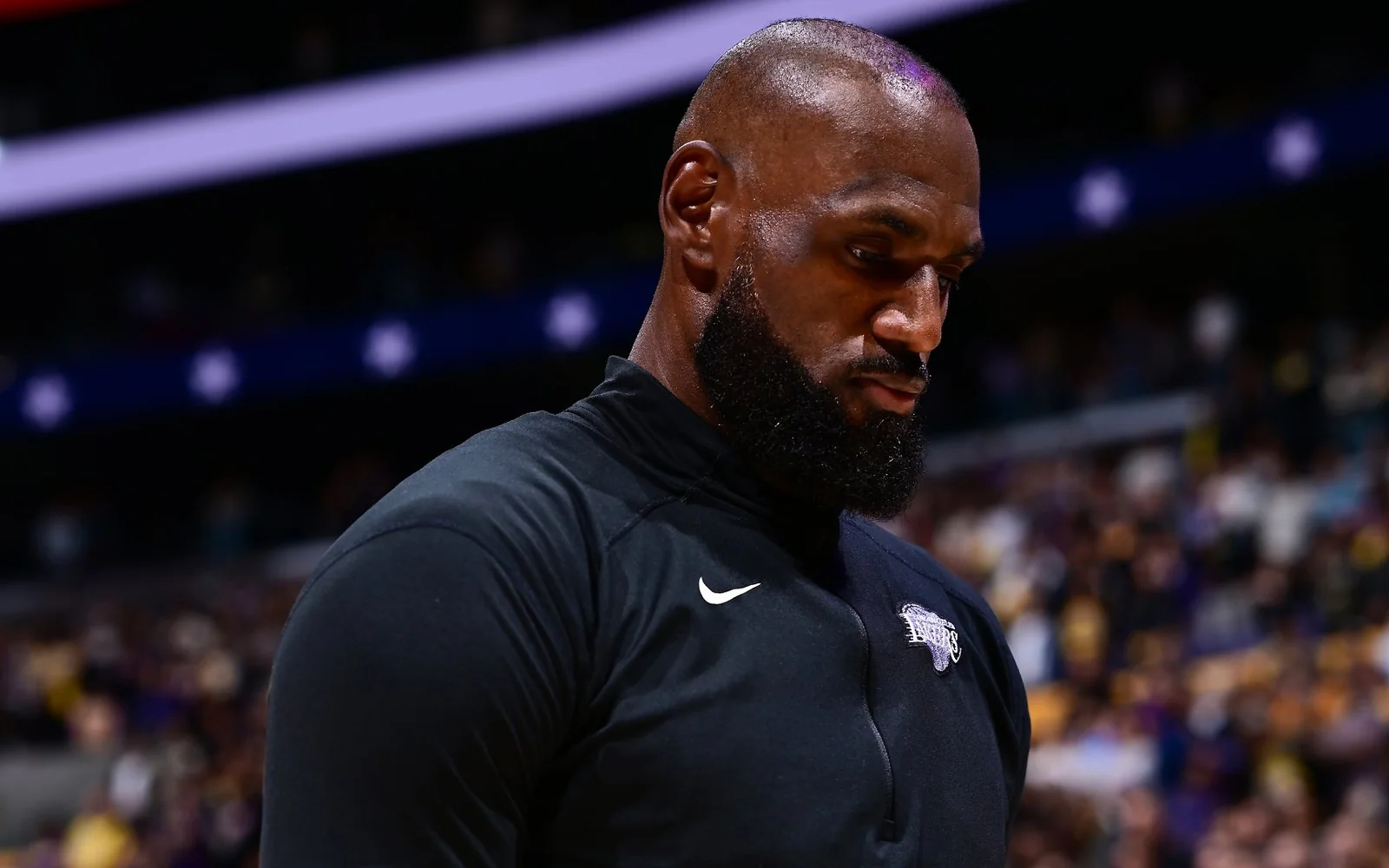
The highest-ceiling groups also have the clearest health variables. Philadelphia can deploy extraordinary passing and power if Embiid and James are available, but Edgecombe's pace and Brown's off-ball activity may matter as much as the headline names. Boston can play George and Tatum as interchangeable scoring forwards while Robinson protects the rim, yet it must replace Brown's downhill pressure. Miami can switch enormous portions of the floor with Giannis and Adebayo, though its guard and wing choices must punish opponents who load the paint.
Toronto-Clippers transaction watch
NBA.com's tracker still labels the reported Kawhi Leonard-for-Brandon Ingram/Gradey Dick framework as on hold. This table therefore keeps Ingram in Toronto's projection and does not count Leonard as an official Raptors addition. If that transaction is cleared and completed, both Toronto and the Clippers require an immediate lineup update.
Western Conference projected starters and key additions
The West combines established contender continuity with major changes at point guard and center. Oklahoma City can preserve a championship-level core, while Denver still builds around Nikola Jokić and Jamal Murray. Around them, Minnesota added LaMelo Ball, Portland acquired Ja Morant, the Lakers added Walker Kessler and Golden State reshaped the frontcourt. That mixture makes lineup fit—not simply total talent—the conference's central preseason question.
| Team | Key 2026 additions | Projected five |
|---|---|---|
| Dallas Mavericks | Zaccharie Risacher, Santi Aldama, Marcus Sasser | Kyrie Irving · Max Christie · Cooper Flagg · PJ Washington · Dereck Lively II |
| Denver Nuggets | DeMar DeRozan, Marvin Bagley III | Jamal Murray · Christian Braun · Cameron Johnson · Aaron Gordon · Nikola Jokić |
| Golden State Warriors | Georges Niang, Brandon Williams | Stephen Curry · Brandin Podziemski · Yaxel Lendeborg · Draymond Green · Kristaps Porziņģis |
| Houston Rockets | Bogdan Bogdanović, Marcus Smart | Fred VanVleet · Amen Thompson · Kevin Durant · Jabari Smith Jr. · Alperen Şengün |
| LA Clippers | Rui Hachimura, Max Strus, Johni Broome | Darius Garland · Bradley Beal · Kawhi Leonard · Rui Hachimura · Brook Lopez |
| Los Angeles Lakers | Walker Kessler, Quentin Grimes, Collin Sexton | Luka Dončić · Austin Reaves · Quentin Grimes · Sandro Mamukelashvili · Walker Kessler |
| Memphis Grizzlies | Jerami Grant, Isaiah Stewart, D'Angelo Russell | Ty Jerome · Jaylen Wells · Cedric Coward · Cameron Boozer · Zach Edey |
| Minnesota Timberwolves | LaMelo Ball, Ayo Dosunmu, Josh Green | LaMelo Ball · Anthony Edwards · Ayo Dosunmu · Jaden McDaniels · Rudy Gobert |
| New Orleans Pelicans | Trendon Watford; Bennedict Mathurin reported | Dejounte Murray · Trey Murphy III · Herb Jones · Zion Williamson · Derik Queen |
| Oklahoma City Thunder | Continuity; developmental depth | Shai Gilgeous-Alexander · Cason Wallace · Jalen Williams · Chet Holmgren · Isaiah Hartenstein |
| Phoenix Suns | Miles Bridges, Luke Kennard | Devin Booker · Jalen Green · Dillon Brooks · Miles Bridges · Mark Williams |
| Portland Trail Blazers | Ja Morant, Jeremy Sochan | Ja Morant · Damian Lillard · Toumani Camara · Deni Avdija · Donovan Clingan |
| Sacramento Kings | Darius Acuff Jr., De'Andre Hunter | Darius Acuff Jr. · Zach LaVine · De'Andre Hunter · Keegan Murray · Domantas Sabonis |
| San Antonio Spurs | Tobias Harris | De'Aaron Fox · Stephon Castle · Devin Vassell · Julian Champagnie · Victor Wembanyama |
| Utah Jazz | Jaxson Hayes, Josh Okogie | Keyonte George · Darryn Peterson · Lauri Markkanen · Jaren Jackson Jr. · Jusuf Nurkić |
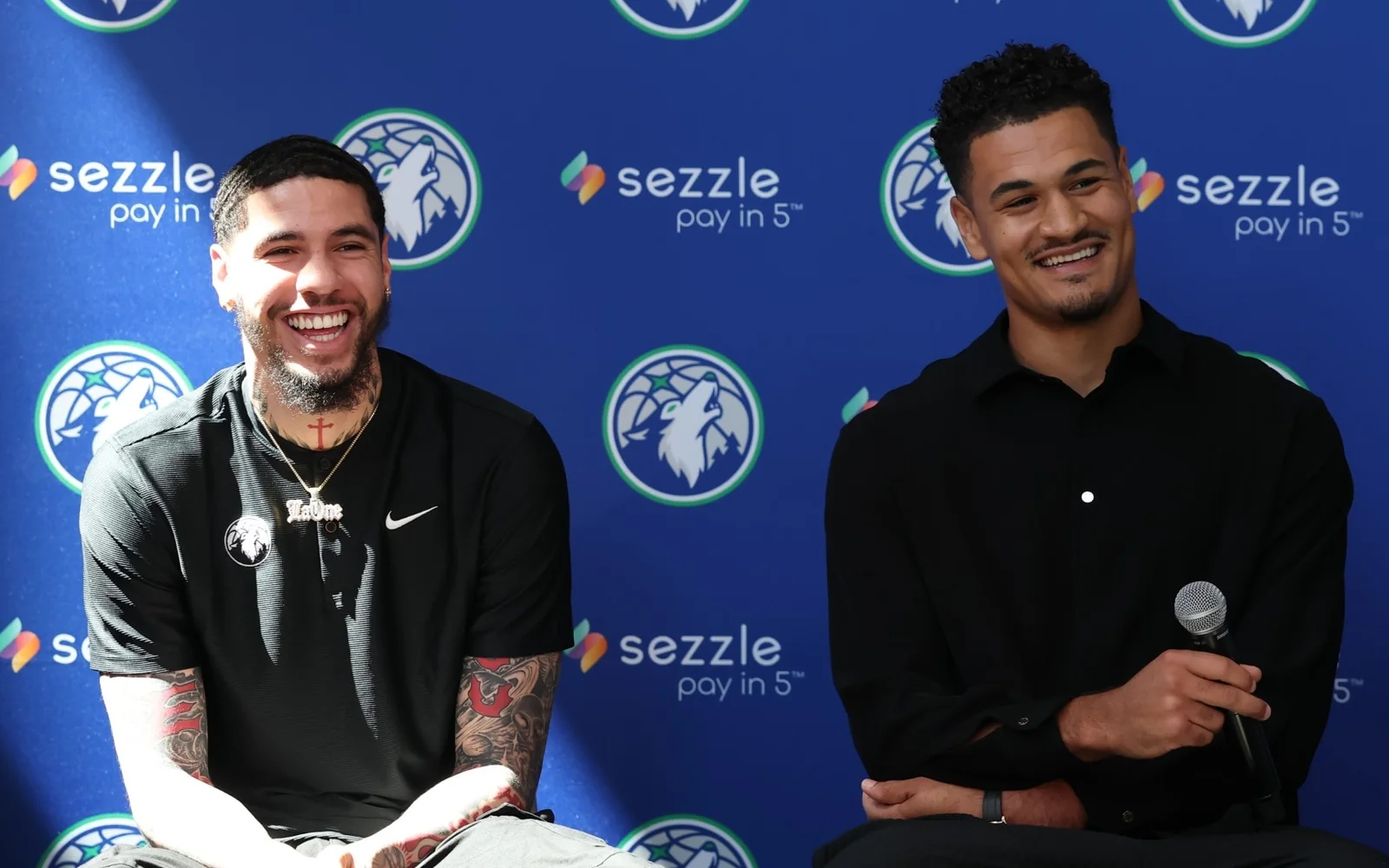
Minnesota's most obvious advantage is a second elite creator next to Edwards. Ball can advance the ball early, find Gobert above the rim and reduce the number of possessions Edwards must start from a standstill. The defensive issue is more subtle: Dosunmu and McDaniels may need to absorb the hardest perimeter assignments so the two star guards retain energy. The Lakers face the inverse challenge. Dončić and Reaves already generate quality offense, and Kessler gives them a true vertical target and back-line defender; the swing skill is whether the forwards provide enough shooting to stop opponents from shrinking the floor.
Portland may own the league's most fascinating guard experiment. Morant creates paint touches at will, while Lillard's range can stretch a defense far beyond the arc. On offense, staggering their minutes ensures an elite initiator is usually on the floor. On defense, Camara and Avdija will have to cover difficult wing assignments and Clingan must erase mistakes at the rim. Sacramento also hands a young guard a demanding job, with Acuff projected to organize possessions around LaVine and Sabonis while Hunter and Murray cover size across the forward spots.
Continuity remains a competitive asset. Oklahoma City's projected group already understands how Gilgeous-Alexander's drives, Williams' secondary creation and the Holmgren-Hartenstein size combination fit together. Denver's Jokić-Murray partnership gives every new supporting player a stable offensive framework. San Antonio's Fox-Wembanyama pairing has a similar chance to become automatic: Fox bends the first line of defense, and Wembanyama changes the geometry at both ends. These teams may enter camp with fewer basic questions than the clubs that made louder additions.
The roster changes that alter how teams play
A transaction matters most when it changes the geometry or decision-making of a lineup. The biggest 2026 moves do more than replace one scorer with another: they redistribute who starts possessions, who defends the rim and which player an opponent can safely leave. These six changes should be visible even before team records stabilize.
Miami: size demands shooting
Giannis Antetokounmpo and Bam Adebayo can defend across positions, screen, pass on the move and overwhelm smaller frontcourts. Their shared minutes also invite defenders toward the paint. Hardaway, Klay Thompson and Andrew Wiggins therefore are not decorative shooters; their willingness and accuracy determine whether Giannis sees a runway or a crowd. Miami can stagger its two star bigs so one elite interior hub anchors nearly every meaningful minute.
Philadelphia: creation must become organization
Maxey, Brown and James can each initiate, and Embiid commands help from the post and elbow. That abundance becomes valuable only if possessions keep moving. James can organize bench-heavy groups, Brown can attack tilted defenses and Maxey can punish early gaps rather than waiting for a late-clock isolation. The cleanest version limits the workload on older stars without turning younger creators into stationary spectators.
Minnesota: a second engine beside Edwards
Ball changes where possessions begin. His hit-ahead passing can create chances before a defense builds a wall against Edwards, and his pick-and-roll vision should reward Gobert's screens. The tradeoff is defensive assignment pressure. Dosunmu and McDaniels may handle the most demanding guards and wings, allowing Ball and Edwards to conserve enough energy to drive the offense.
Lakers: a real back-line anchor
Kessler gives Los Angeles a conventional rim protector and lob target. That can simplify coverages behind Dončić and Reaves and improve defensive rebounding. It can also compress space if a non-shooting forward shares the floor. The Lakers' best combinations may alternate between a traditional Kessler group and a smaller, faster configuration rather than force one identity across every matchup.
Portland: two stars, one ball, many matchups
Morant's downhill force and Lillard's shooting range can stress a defense in opposite directions. Staggering them keeps a primary creator on court and gives each stretches of familiar control. Their shared minutes require the surrounding trio to defend, rebound and make quick low-usage decisions. Camara, Avdija and Clingan form a plausible answer, but foul trouble or injury could expose the construction.
Boston and Detroit: complementary bets
George gives Boston another tall shot creator beside Tatum, while Robinson supplies vertical defense and offensive rebounding. Detroit's Collins addition offers Cunningham an efficient finisher who can space beyond the arc. Both teams still need lineup balance: Boston must preserve point-of-attack defense after Brown's departure, and Detroit must find enough perimeter shooting around its best defenders and interior players.
Starting jobs, injuries and updates to watch before opening night
The projected lineups above should be tested against three kinds of news: medical clearance, actual camp roles and completed transactions. The NBA's official calendar gives readers a useful rhythm. Camps open September 29, preseason begins October 3, opening-day rosters are set October 19 at 5 p.m. ET, and the regular season starts October 20. The best time for a full update is therefore after the final preseason weekend, not after one eye-catching exhibition box score.
Availability and starting status are different questions. The NBA's comeback watch identifies Irving, Lillard and Haliburton among players scheduled to return after missing the prior season, but “scheduled to return” does not guarantee opening-night clearance or unrestricted minutes. Irving's readiness determines whether Dallas begins with its veteran lead guard or asks Cooper Flagg and secondary creators to carry more initiation. Lillard's availability changes whether Portland can test the Morant-Lillard pairing immediately. Haliburton's workload affects the entire Indiana offense because his pace and passing define how the Pacers generate early advantages.
Camp also determines whether young players can survive on defense. Philadelphia does not need Edgecombe to dominate the ball, but it needs him to defend, run and make quick reads beside four established stars. Sacramento's Acuff has a more traditional organizing challenge, while Washington's Dybantsa and Utah's Peterson must translate elite talent into reliable team concepts. A productive preseason quarter is evidence of possibility, not proof of an 82-game role; opponent quality and veteran minutes vary too much.
Finally, monitor the transaction wire rather than social-media lineup graphics. The Toronto-Clippers trade remains the clearest example of why: a reported framework can be specific enough to inspire depth charts while still not being complete. The same caution applies to camp invitations, non-guaranteed players and last-minute waivers. Once October 19 passes, the official roster picture becomes much firmer, although injuries and matchup decisions can still change who starts on October 20.
This guide will be most accurate when used as a checklist: confirm the player's official team, verify current medical availability, then evaluate the five-man fit. That sequence avoids confusing transaction news with coaching decisions and makes later roster updates easy to audit team by team.
Sign in with Google to join the discussion.