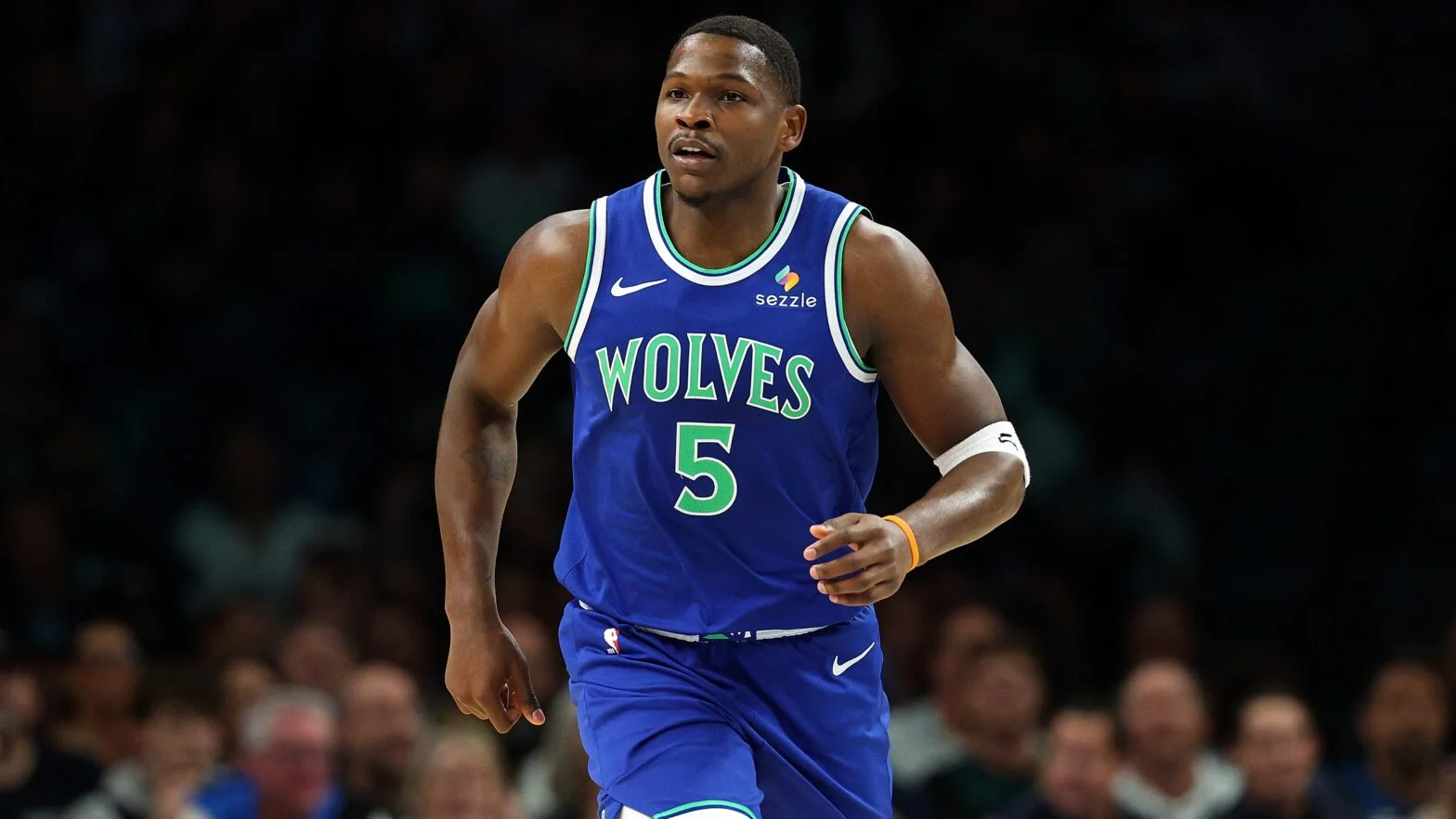
What Minnesota has confirmed about Edwards' right knee
Anthony Edwards' right-knee procedure changes Minnesota's season before anyone can sensibly put a return game on the calendar. The immediate basketball problem is clear: the Timberwolves must build possessions without their most threatening individual scorer. The medical calendar is less certain, and those two questions deserve different answers.
At his October 28 media availability, covered by FOX 9's Nick Longworth, basketball operations president Tim Connelly described an arthroscopic cleanup planned within the following 24 hours. He said the latest imaging had changed and declined to set a return timetable. This article's October 29 assessment therefore treats surgery as the announced plan; it does not assume a postoperative clearance or supply a more specific diagnosis.
Why a reported absence is not a return date
The reporting about several weeks or a possible two-month absence is useful for understanding the scale of the disruption. It is insufficient for promising that Edwards will play on a particular night. A projected recovery window, an update after a procedure and permission to return to competition are separate pieces of information. A date produced by adding eight weeks to a headline can look precise while containing no new team information at all.
That distinction also matters when reading the NBA injury-report labels. A game status answers an availability question for a particular contest. It does not tell fans how many full practices a player has completed, how a rehabilitation program is progressing or when a coach can restore a normal workload. A future report can change the practical outlook without making the earlier update dishonest.
For Minnesota, the sensible response is to prepare a rotation that can function across multiple weeks while keeping its eventual structure flexible. For supporters, the next meaningful medical development is a dated team update. Connelly's long-term optimism is encouraging, but the offense still needs a workable plan for the next possession, long before a return date becomes firm.
The Wolves lose a scoring solution, not just a points average
Edwards scored 47 in Minnesota's October 26 overtime loss at Cleveland, according to the official game recap. The replacement problem is larger than finding 47 points somewhere else. A scorer capable of turning a broken possession into a credible attempt changes how the other four players can work. Removing him changes the route to shots as well as the person taking them.
Consider a routine possession that reaches the final eight seconds with no defensive rotation forced. With Edwards available, a teammate can return the ball and still expect a difficult drive or pull-up to threaten the defense. Without him, Minnesota should want fewer possessions reaching that stage without a plan. An early action must connect to a second action: a ball screen into a reversal, a cut behind the helper or a quick rescreen that makes the big defender move again. These are tactical priorities, not a claim that a particular set has already become Chris Finch's permanent answer.
The same logic applies away from the ball. A defender who is worried about an explosive first step may lean toward the nail or show a second body before a drive begins. That can create a clean catch elsewhere without Edwards receiving an assist. If a replacement attracts less attention, the next shooter can face a closer defender even when the pass itself arrives on time. Counting redistributed attempts will miss that difference.
It would therefore be misleading to judge the adjustment solely by whether one teammate becomes a 25-point scorer. Better signs include more possessions beginning promptly, fewer bailout attempts after a stalled isolation and clean chances for players who can finish an advantage. The available scorers can divide the work without dividing Edwards' responsibilities evenly. On the daily NBA slate, watch how Minnesota reaches its first good shot; the point total only tells you what happened after that opportunity was created.
LaMelo Ball can organize the offense without copying Edwards
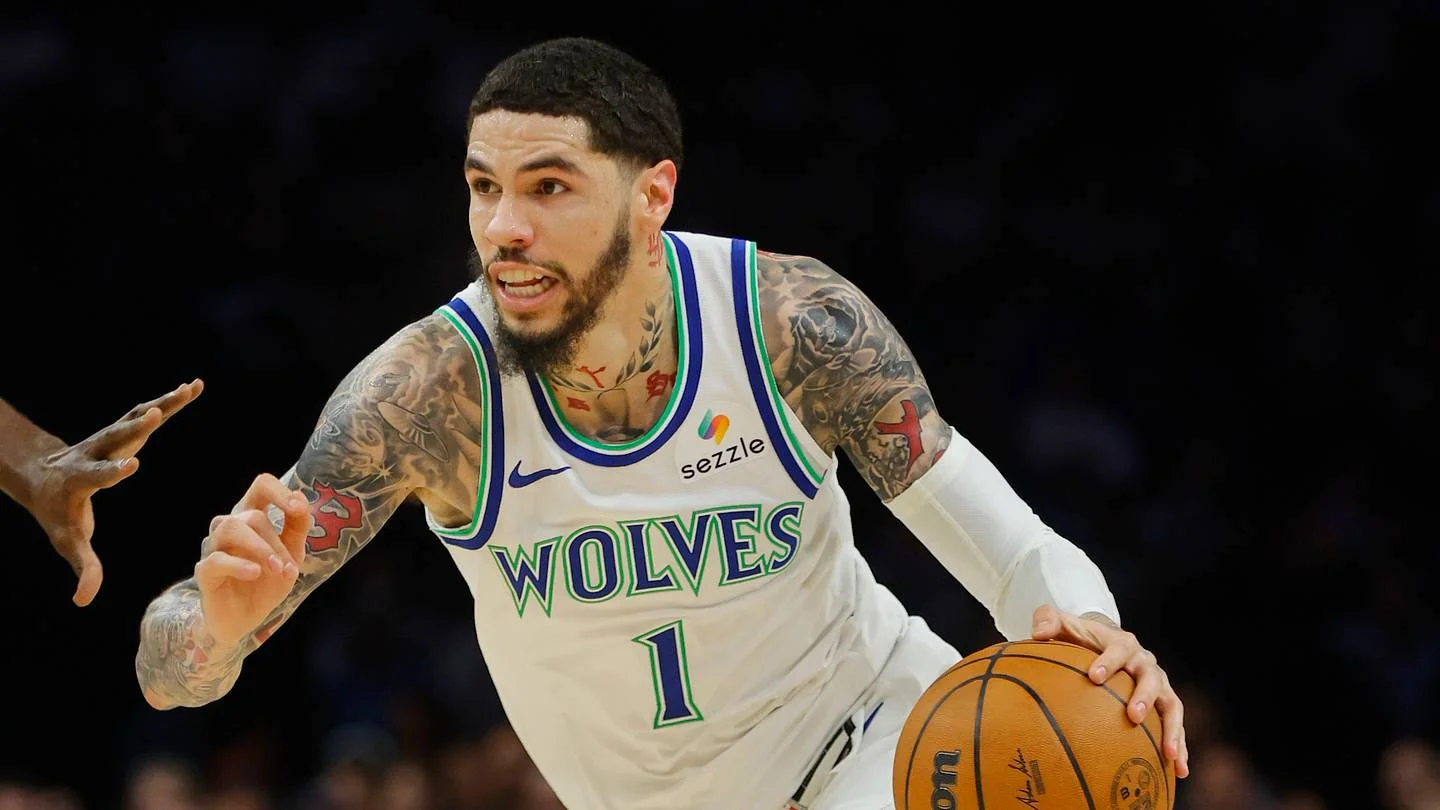
Ball's arrival gave Minnesota a genuine lead-guard alternative before this injury occurred. His July introduction is useful context: the Wolves were already building a different backcourt, rather than suddenly asking an untouched roster to reinvent itself. The opportunity now is to use that playmaking structure more consistently, while accepting that organization and Edwards' individual scoring are different skills.
Create an advantage before asking for a difficult finish
Ball does not need to reproduce Edwards' shot diet to make the offense viable. A useful possession might begin with a high screen that brings Rudy Gobert's defender away from the rim. The next question is whether the roller, the weak-side corner and the player lifting toward the wing maintain useful passing angles. If the help defender commits early, the pass should reach the next action before the defense recovers. This is the kind of sequence Minnesota should seek, not a promise that every pick-and-roll will produce a lob.
Ball also needs teammates to run with a purpose. An early advance pass can be valuable even if it leads to a reset, provided Minnesota enters the next action against a defense still finding assignments. Racing into a crowded lane and throwing a speculative pass is different. Judge whether pace creates an advantage, rather than assuming more possessions automatically mean better offense.
Keep the second unit from starting every possession cold
The substitution pattern is almost as consequential as the starting lineup. If Ball sits while the remaining group lacks a dependable initiator, the offense can lose several minutes rebuilding basic organization. Staggering him with another ball handler is one possible response. Another is preserving a familiar reserve partnership and letting it operate with a larger role. Neither requires treating every available guard as interchangeable.
The tradeoff is workload. Asking Ball to initiate more possessions is a reasonable adjustment; assuming he should play every difficult minute is a much bigger demand. Minnesota needs enough structure around him that a simple pass, a screen and a second decision can share the burden. A sustainable short-handed offense should make its lead guard's reads clearer, rather than turn the injury into an invitation for endless individual improvisation.
The replacement guard decision changes both ends
There is a concrete starting point: NBC Sports reported on October 28 that Ayo Dosunmu would start for Edwards. That answers the initial lineup question, but it does not settle the distribution of minutes or determine who finishes close games. A starter can be the right fit beside Ball while a different guard supplies the missing element in another unit.
Dosunmu, Shannon and Hyland offer different paths
The practical comparison should begin with responsibilities. If Minnesota needs another player to bring the ball over pressure, the relevant question is whether a guard can initiate the next action cleanly. If it needs a wing to attack an already tilted defense, the question is how quickly that player recognizes a closeout. If a unit has stopped threatening the defense outside, a coach may prioritize shot creation even while accepting a defensive tradeoff. Those jobs can occur in the same game, without any one player becoming a substitute version of Edwards.
Dosunmu's promotion also moves a familiar piece out of the reserve arrangement. Terrence Shannon Jr. and Bones Hyland become part of the solution to that second change, rather than merely competing for leftover Edwards minutes. Minnesota cannot assess a five-man starting group while ignoring what its creation leaves behind on the bench. The best substitution may be the one that protects two workable units.
Donte DiVincenzo's ongoing Achilles recovery, noted in the team's October 28 media coverage, adds another constraint. This is not a situation in which the Wolves can casually restore a healthy veteran to his old slot. Available personnel and current reports must govern the plan. For fantasy managers, a larger opportunity is worth tracking, but a promotion is not a guarantee of a stable shot total. Watch the first substitution, the guard paired with Ball and the closing group before deciding a single lineup announcement explains the whole rotation.
Spacing and shot quality matter more than a new leading scorer
Jonathan Kuminga and Jaden McDaniels are relevant to the scoring redistribution, but their best opportunity may come after someone else has moved the defense. The question is not simply which forward inherits extra attempts. It is whether those attempts arrive as open catches, quick drives or contested shots against a defense that has never had to rotate.
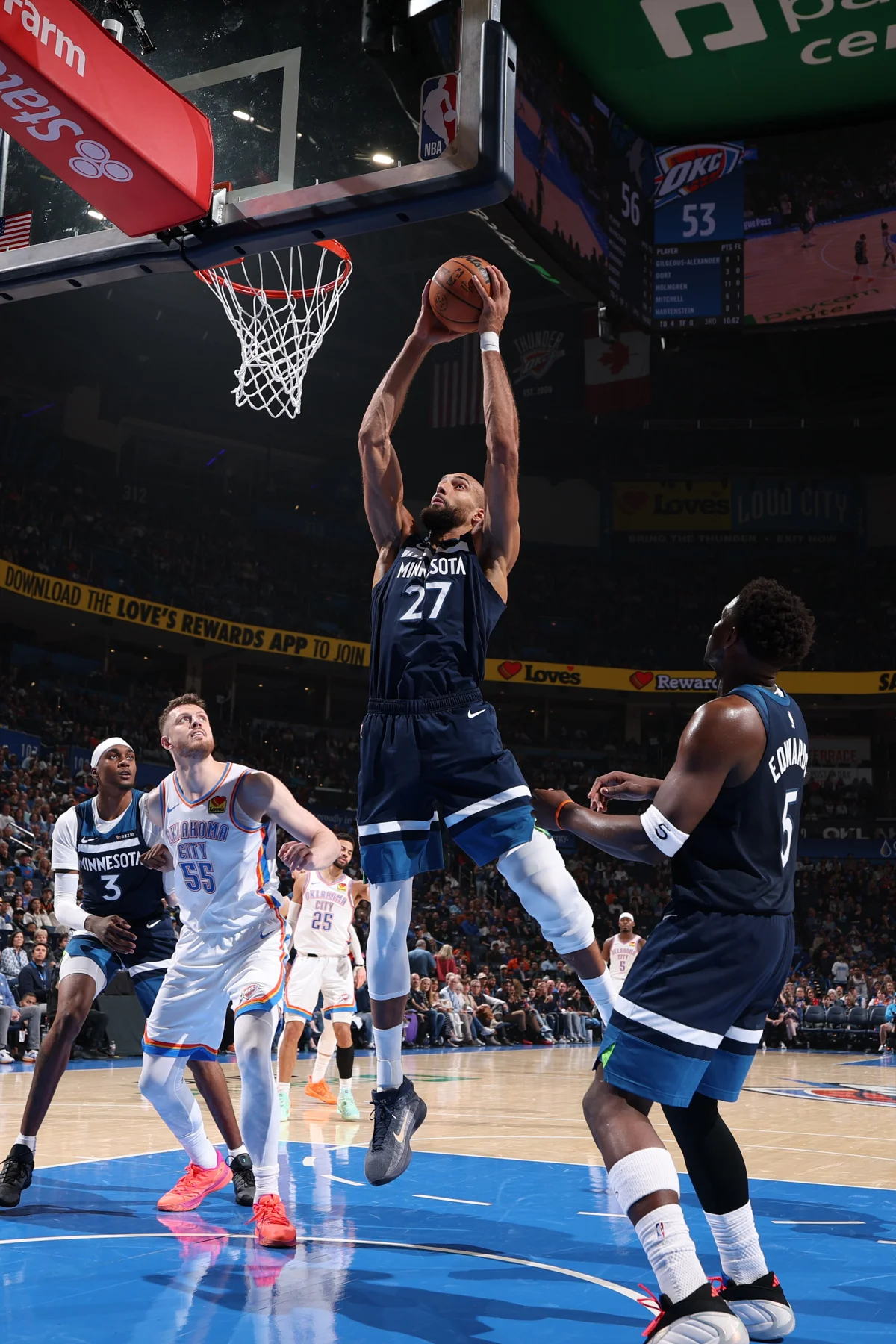
With Gobert near the rim, the other players need to make their movement complementary. A cut can punish a defender who has abandoned his man, but two players cutting into the same occupied lane can help the defense. A forward screening for a guard can force a useful switch, while standing in the same spot can allow the opponent to keep its preferred matchup. These are the details that make the phrase floor spacing more useful than a count of nominal perimeter players.
One promising route is to let a forward receive the ball while already moving toward a gap. That asks for a fast finishing or passing decision, rather than a long isolation beginning against a set defender. Another is to screen a helper before the ball screen, making the pass to Gobert harder to cover. Both carry tradeoffs: moving one player toward the basket may remove a safety outlet or make transition defense harder if a pass goes wrong. Minnesota needs to judge the entire arrangement.
Fans can watch three simple indicators: where the first paint touch occurs, whether the next pass reaches an open teammate and how much time remains when the eventual shooter catches it. None requires pretending to know a player's exact usage percentage from a television broadcast. Over several games, those observations can help distinguish a productive offensive adjustment from a night when difficult jumpers happened to fall. More shots are inevitable for someone; the useful achievement is creating more shots the available players are equipped to take.
Defense becomes the stabilizer while the rotation changes
Minnesota can seek a more repeatable short-term advantage at the other end. Gobert and McDaniels remain important reference points, even though changing the backcourt changes the work around them. A short-handed offense has much less room for unnecessary defensive mistakes: an avoidable second chance or a missed transition assignment can erase the value of a carefully manufactured basket.
Protect the point of attack without surrendering the glass
The first defender's job matters because it determines how soon the rest of the defense must help. If a guard stays attached over a screen, Gobert can manage the space between the ball and the roller. If the guard is beaten immediately, the next defender may have to leave a shooter, and a second rotation can expose the rebound. The visible layup is sometimes the last failure in a chain that began well outside the paint.
Using McDaniels on a dangerous creator may improve that first contest, but it also moves him away from other work. Another player must find the cutting forward or secure the weak-side rebound. The sound evaluation is not whether Minnesota assigned its best available defender to the biggest name. It is whether the other four assignments remain coherent once that choice is made.
Judge the whole possession, including transition
The offensive plan and defensive floor balance cannot be separated. Sending an extra player toward an offensive rebound might rescue a missed shot. Sending the wrong player at the wrong time can leave an opponent sprinting into a numerical advantage. Likewise, a live-ball turnover near the top of the floor is generally more damaging to the transition setup than a dead-ball mistake that allows substitutions and matching up.
This is why the early games should be watched as connected possessions rather than isolated highlights. Does an aggressive drive leave someone responsible for getting back? Are guards checking the nearest outlet after a miss? Can Minnesota finish a good defensive stand with the ball secured? If those details hold, an uneven shooting night can remain competitive. If they disappear, an impressive replacement scorer may produce an attractive box score while the team loses the more consequential exchange of possessions.
What to watch before trusting the first games without Edwards
The first test has already happened. Minnesota lost 119-114 to Golden State on October 28, its first game without Edwards, as Field Level Media reported. That result belongs in the assessment, but one five-point game cannot settle whether the replacement structure will survive a longer absence. An opponent's shotmaking, foul trouble and the timing of substitutions can overwhelm a small sample.
Start with the decisions that are likely to recur. Who initiates when Ball sits? Does Dosunmu's starting role change the reserve offense? Are Kuminga and McDaniels catching the ball with an advantage or manufacturing everything themselves? Does Minnesota still have a coherent plan when the first action fails? Those questions reveal more about repeatability than identifying the night's leading scorer.
Then separate the result from the process. A well-created open jumper remains a useful opportunity when it misses. A contested make can rescue a possession without offering a reliable plan for the next game. The same restraint applies to plus-minus: a reserve's strong stint can reflect his own contribution, the opponents on the floor and teammates making shots. Several games against different defensive approaches will provide a better view of which combinations actually travel.
Keep the medical and basketball checks on parallel tracks. Follow the official injury-report hub and dated team updates for availability, then use the 2026-27 schedule to place each test in its travel and rest context. Do not treat a lighter stretch as evidence of medical readiness, or a difficult loss as a reason a player must return sooner.
The useful standard for Minnesota is whether it can establish dependable possessions while preserving enough flexibility to welcome Edwards back. Ball can organize, the other guards can share creation and the frontcourt can help manufacture efficient chances. None eliminates the loss. Together, those choices can give the Wolves a credible way to compete while the only return date that matters remains the one supported by an actual team update.
Sign in with Google to join the discussion.