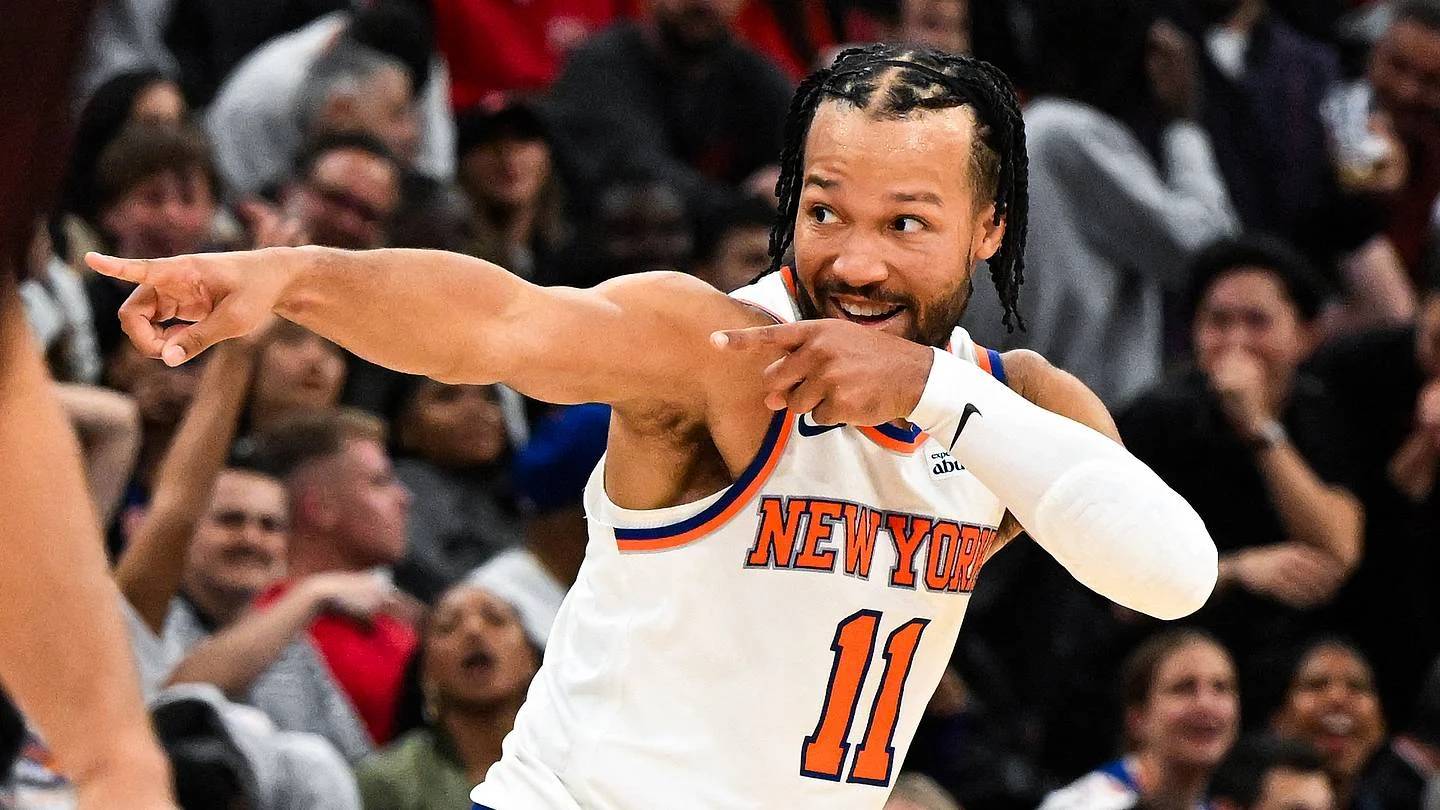
Two wins changed the record without answering every question
The Knicks are no longer stuck at 0-3. New York beat Detroit 111-97 on October 27, then won 133-127 at Chicago on October 28. The defending champions entered October 29 at 2-3, with two consecutive victories replacing the immediate winless-start question. The more useful discussion is what those very different games actually changed.
The Detroit recap and Chicago recap mark the response to opening defeats against Philadelphia, Boston and Orlando. The first three games still belong in the evaluation, but they no longer define the entire opening week. Two wins supply a chance to examine which parts of the response can travel into the next matchup.
Those concerns did not all disappear together. Detroit finished with 97 points; Chicago reached 127. New York found a way to win both, but the same final outcome does not imply the same defensive performance or offensive route. The first victory could not be reduced to Jalen Brunson making every shot. The second featured a much more accurate scoring night from him and important help from reserves.
A title defense also creates a temptation to compare every ordinary October stretch with the most memorable version of last spring. The 2026 playoff record is useful history, but it does not explain a particular missed rotation or lineup decision now. The current task is narrower: identify what New York did against these two opponents, keep the unresolved problems visible and decide which evidence deserves attention in the next games.
The first two wins are meaningful because they changed the standings and supplied positive examples. They are not a requirement to declare every concern solved. Examining them separately produces a better explanation than either extending the panic past its expiration date or treating a two-game streak as proof of another championship run.
Detroit’s reversal had a specific shape
Detroit scored 38 in the first quarter and 25 across the next two. The official linescore makes that contrast visible. A 97-point final can invite the impression of comfortable control from the opening possession. This game instead gives New York an example of recovering from a poor defensive start and changing the scoring balance through the middle of the contest.
The middle quarters did the separating
The encouraging part is the response after the first quarter. A team beginning 0-3 could have allowed another difficult opening to define the evening. Instead, New York created enough separation to win. The repeatable question is what supported that response: better initial containment, more reliable help, fewer avoidable chances or simply a stretch when Detroit converted less accurately. The quarter totals establish that the result changed; they cannot identify the entire defensive explanation.
This is where watching possessions matters. A contested miss after a sound rotation and an open miss after a breakdown look identical in the scoring column. The former offers stronger evidence for the next opponent. The latter is still a stop on that night, but it carries less predictive comfort. New York should want the result and the process to align more consistently, rather than require another recovery after allowing a productive opening period.
Towns gave New York another way to control the game
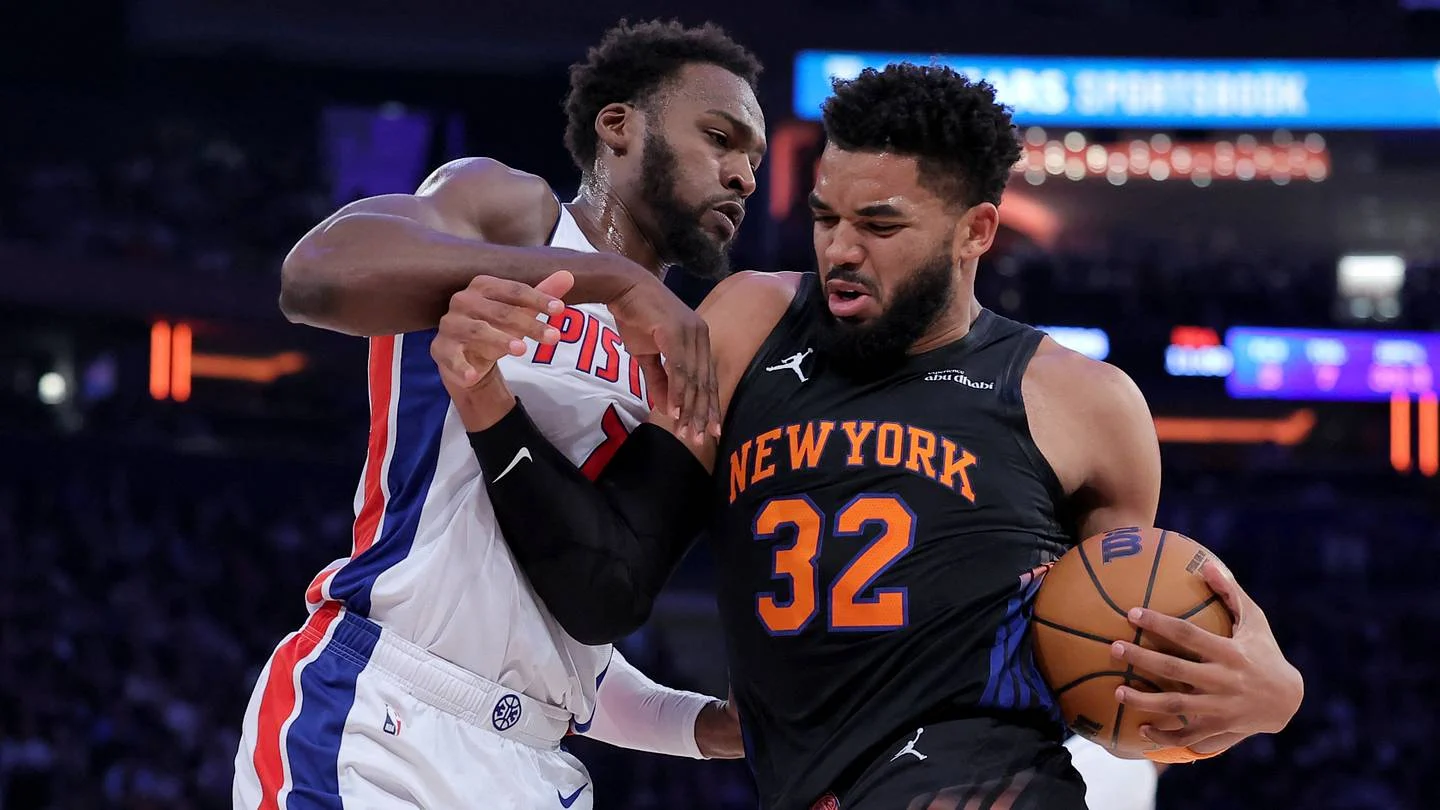
Karl-Anthony Towns finished with 27 points and 20 rebounds. His work matters because winning did not require Brunson to shoot efficiently throughout the game. An interior scorer and rebounder can give the offense an alternative while the lead guard searches for rhythm. A rebound can also complete the defensive work that made the initial miss possible.
Keep the matchup in view: Detroit was without Jalen Duren. That context belongs alongside Towns's production, rather than being omitted or turned into a claim that the win should not count. It changes the personnel question a future meeting may present. It does not tell us what a hypothetical healthy Detroit would have done.
Towns's total is a strong individual contribution, not a complete description of every lineup. The useful next test is whether New York can continue finding multiple offensive routes and finishing stops when the opposing frontcourt changes. Detroit provided a positive example under specific conditions.
Chicago required a different kind of response
Chicago was not a repeat of holding Detroit below 100. New York had to score 133 to win a game in which the Bulls reached 127. That is why the second victory should be evaluated as its own event. The Knicks found sufficient offense and a successful finish, but the final result does not certify that the defensive improvement from the previous night continued across the entire game.
Brunson’s shooting changed sharply from the night before
Brunson's official game log shows the contrast plainly. Against Detroit, he scored 23 on 5-for-18 shooting, missed all five three-point attempts and made 13 of 16 free throws. At Chicago, he scored 38 on 13-for-25 shooting, including six makes in 10 attempts from three. He also recorded seven assists in each victory.
Those are two different ways for a lead guard to contribute to a win. The first relied much more heavily on free throws to sustain scoring through poor field-goal accuracy. The second included a substantial perimeter shooting contribution. The useful change is that New York received a much more productive shooting night from its primary creator. The unsupported leap would be to declare a permanent mechanical adjustment or a complete change in confidence without evidence from the player or coach.
Shotmaking also affects what the rest of an offense can do. A defender concerned about the pull-up has less freedom to retreat; additional attention can make the next pass more valuable. That is the tactical relationship to examine, not a claim that a box score measures every defender's reaction. Seven assists can accompany very different passing opportunities and teammate shooting outcomes.
For the next game, the question is whether New York can continue reaching useful shots when Brunson does not make six threes. It already has a recent example of winning through a less accurate night. Chicago adds evidence of his scoring ceiling within the current offense, while leaving the broader task unchanged: use that threat to create options rather than make every possession depend on another exceptional finish.
The bench supplied more than a scoring supplement
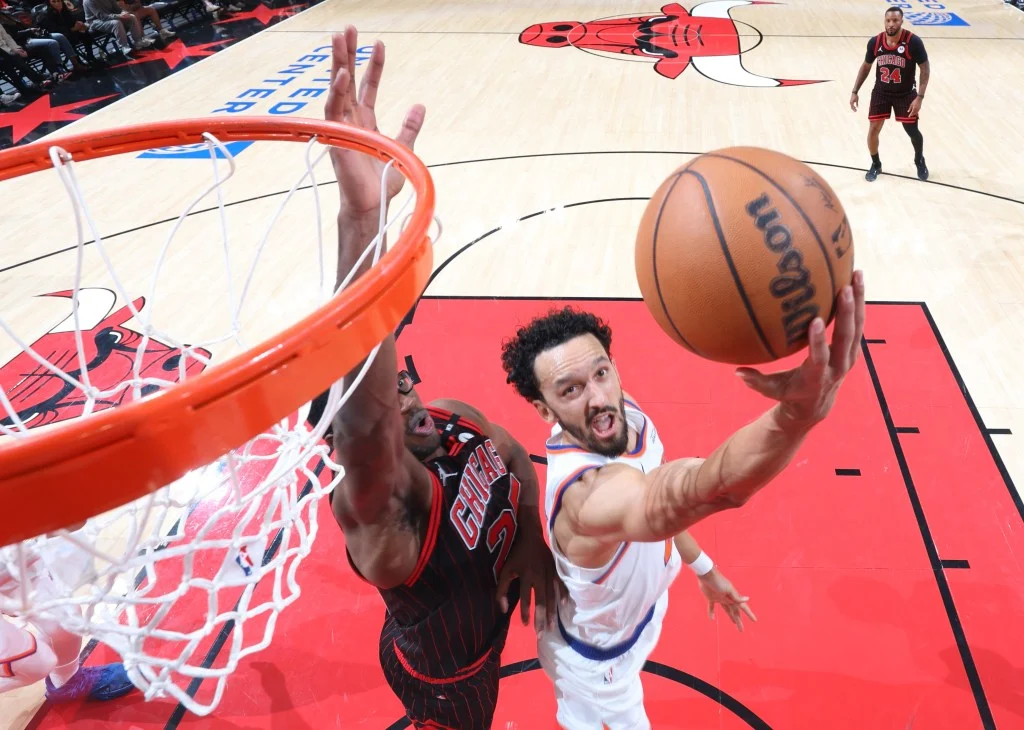
The Chicago win also broadens the explanation beyond Brunson. Jordan Clarkson scored 18 and Landry Shamet added 14. More interesting than adding their points together is the combination New York could use around its leading scorer. Shooting, another ball handler and a player able to attack a possession that needs rescuing are different offensive functions. A useful reserve group can supply more than extra minutes of the same attack.
In Stefan Bondy's reporting from Chicago, Mike Brown explained that the effective pairing of Kolek and Brunson helped shape his decisions, alongside productive play from Clarkson and Shamet. That is a specific coaching explanation for the group that received extended opportunities. It does not establish a permanent depth chart, but it gives the rotation discussion a firmer basis than assuming every substitution followed a fixed preseason plan.
Kolek’s passing belongs in the rotation discussion
The official Chicago box score credits Kolek with nine points, nine assists and no turnovers. The passing contribution deserves attention even on a night when Brunson scored 38. Another initiator can let a leading scorer begin a possession away from the ball, receive it later against a shifted defense, or finish a play without having to organize its first action.
Those are reasons to explore the pairing, rather than promises about its performance against every opponent. Assists require teammates to convert shots, and an assist total does not reveal all the promising passes that failed to become baskets. Equally, a clean turnover line in one appearance cannot establish that future ball pressure will create no problems. Opponents can test the ball handler, the passing lanes and the defensive matchups at the other end.
The practical question is whether the Knicks can keep generating worthwhile possessions through that additional decision-maker when the shooting cools. If they can, the bench's value will extend beyond one scoring burst. If the group needs another exceptional conversion rate to survive, the rotation still needs work. Chicago earned this combination another serious look; the next games determine how much of the opportunity it can retain.
Bridges’ two nights resist a simple comeback story
Bridges makes it particularly difficult to package both wins as a smooth return to normal. Against Detroit, he scored 12 and made four of eight three-point attempts after opening the season 0-for-10 from that distance, according to RotoWire's game report. That was a concrete improvement in shooting results. It was also one game, rather than sufficient evidence that every concern about his offensive contribution had disappeared.
The next night brought three points in 13 minutes. Bondy's Chicago report describes Brown keeping Bridges on the bench for almost the entire second half as other combinations worked. The coach's explanation centered on the players he was using successfully. The defensible reading is a rotation decision in that game, rather than an invented medical explanation or a prediction that Bridges has permanently lost his place.
This distinction matters because scoring efficiency and playing opportunity can move separately. A player can make a higher share of a very small number of shots while contributing fewer total points. A productive night before does not compel a coach to close the following game with the same personnel. Equally, a short appearance does not by itself prove that a player can no longer help a team across a full season.
For Bridges, the next useful evidence is therefore broader than whether the first three-pointer falls. Look at the possessions he receives, whether he helps the offense continue after an initial action is stopped, and which groups Brown trusts when the score is tight. Those are questions for subsequent games, not conclusions that a single substitution pattern can settle. New York's two victories show that it could win with a better Bridges shooting night and then win with a substantially reduced Bridges role. That flexibility helped the immediate results, while leaving his longer-term place in the most effective combinations open.
Compare the games before declaring an efficiency trend
The strongest common feature of the two nights is adaptability. New York won with a low-scoring opponent in Detroit's case and much more scoring in Chicago's. That is useful evidence that the team had more than one route to a result. It is weaker evidence for a claim that one specific tactical adjustment has already produced a lasting efficiency improvement on both ends.
The Chicago shooting line illustrates the difference. New York made 22 of 48 threes, or 45.8 percent, as recorded in the official game statistics. Making that many perimeter shots gives an offense considerable room to overcome other imperfect possessions. It also creates a useful question for the next viewing: are the Knicks creating chances they would willingly take again, or relying on difficult makes that will be harder to repeat? The percentage alone cannot answer that.
Points allowed and defensive quality are different measures
Detroit scored 97 and Chicago scored 127. Their simple average is 112 points allowed per game across the two wins. That number describes the final scores; it is not a defensive rating. The NBA's statistical glossary defines team defensive rating through points conceded per 100 possessions.
The distinction changes the comparison. More possessions provide more opportunities for both teams to score, so two identical final totals can represent different defensive efficiency. Even a properly calculated possession-based number still needs context about the opponents, available players and kinds of shots conceded. A difficult made jumper and an uncontested finish count in the score without telling the same story about the preceding defense.
Fans can therefore separate three observations when judging the turnaround: the Knicks collected wins, their offensive contributions came from several players, and the defensive results varied substantially between the nights. None cancels another. Watching whether they finish defensive possessions, protect useful areas and avoid preventable fouls will add more to the next evaluation than renaming a two-game scoring average as an advanced metric.
What the next stretch needs to show
The next scheduled game is at Philadelphia on October 30, at 7:30 p.m. Eastern. The official Knicks schedule then lists home games against Brooklyn on November 2 and Chicago on November 4. That gives fans a concrete sequence in which to test the early turnaround, including a quick return meeting with the Bulls.
Start with the opening possessions. Detroit's first quarter showed why winning the whole game does not make the beginning irrelevant. Better initial resistance would reduce the amount of recovery New York needs later. Watch whether the Knicks can finish stops with rebounds and begin their offense without spending every possession repairing an earlier mistake.
Next, follow the creation outside Brunson's individual scoring. Kolek's opportunity is interesting because passing can contribute even when a player is not producing a large points total. Clarkson and Shamet give Brown additional options, but the best combinations still have to defend the matchups they face. Productive reserve minutes should be evaluated at both ends, rather than rewarded solely for the last made shot.
Finally, keep Bridges' role and Towns' involvement in view without expecting the identical box score each night. A repeat meeting with Chicago can reveal how both teams adjust, although different shooting outcomes and availability will prevent it from being a controlled experiment. Check the latest game information before tipoff, then judge the possessions in front of you. At 2-3, New York has earned relief from its opening losing streak and identified several useful ways to win. Turning those options into a reliable level of play is the work that follows.
Sign in with Google to join the discussion.