What the October 27 Lakers–Blazers review actually changed
A successful NBA challenge does not always end with “no foul.” It can remove the original foul and assign a different one, including a foul on the opposing team. The apparent contradiction disappears once the review's trigger is separated from the matters officials are allowed to examine after that trigger.
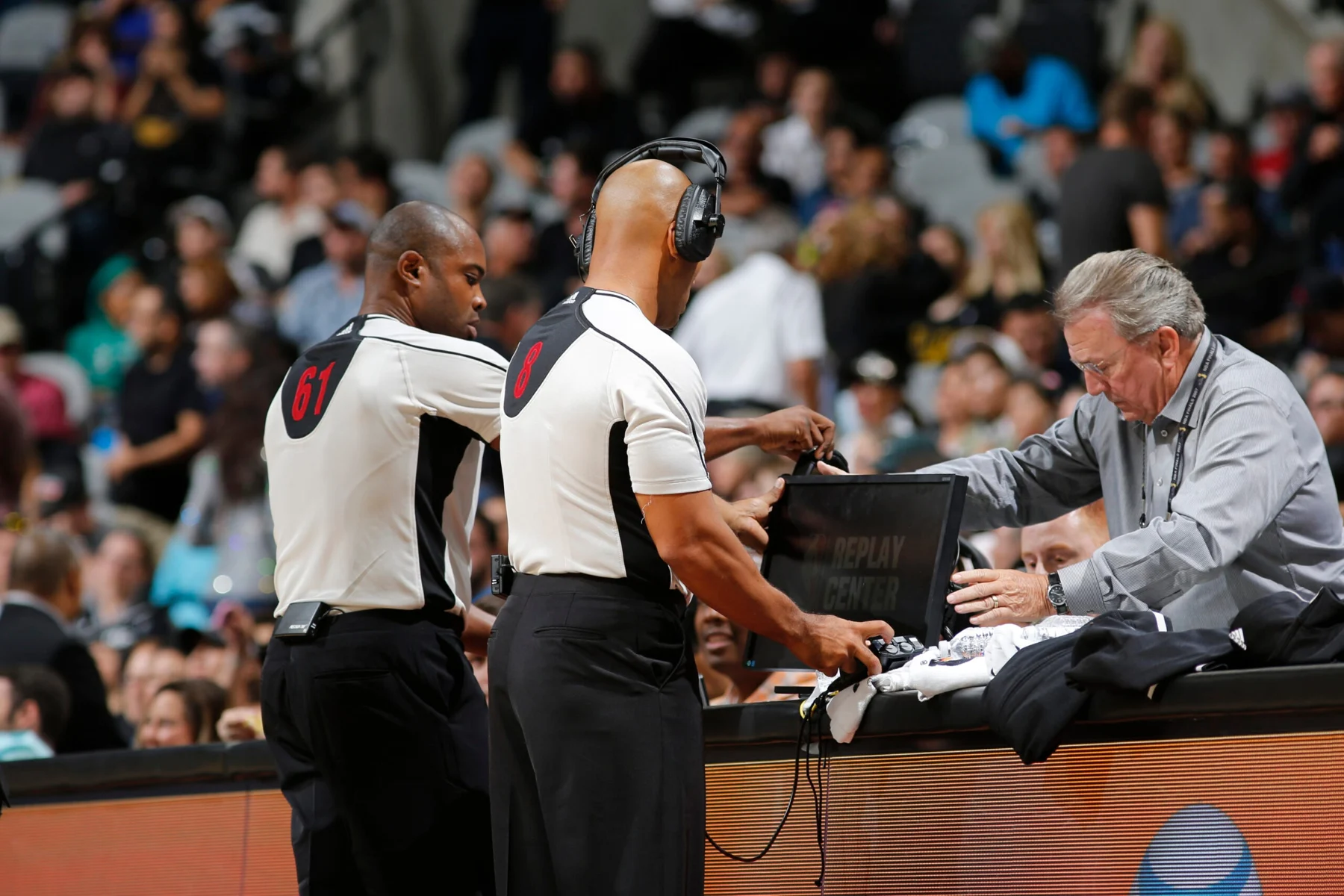
The NBA's official October 27, 2026 replay entry gives a direct example. At 1:35 remaining in the fourth quarter of Portland at the Lakers, the Trail Blazers challenged a called foul. After communication with the Replay Center, the decision was overturned to a defensive foul on Los Angeles. Portland's successful challenge therefore produced a different foul rather than a foul-free possession.
Those details establish the relevant result. They do not, by themselves, identify every player involved, explain each contact in the sequence or tell us the exact penalty that followed. The narrow conclusion is already useful: officials were not limited to deciding whether the originally charged player should keep his foul. A corrected assessment could put responsibility on the other team.
It is also worth distinguishing another replay entry from the same matchup. The second-quarter out-of-bounds review occurred with 2:02 left and resulted in Lakers possession. That is a different call and a different review category. A recap mentioning that Los Angeles won a challenge does not describe the fourth-quarter foul reversal unless the event itself is matched.
For the viewer, the right starting question is therefore “Which call was challenged?” Once that is known, the next questions are what evidence changed the decision and what the corrected ruling requires. Treating every review as a simple yes-or-no vote on whether any contact occurred makes these outcomes harder to understand than the rule actually is.
Why removing one foul can reveal a different foul
There are two separate judgments in a foul review: whether the original charge was correct and what the properly reviewed action actually requires. A camera angle can change the first without making the entire sequence legal. Removing responsibility from one player does not establish that nobody committed an infraction.
The challenged call opens a defined review of the action
Rule 14's reviewable-matters section allows officials to examine whether the correct player was charged, including a player on the opposing team, and whether a different nearby foul should have been called. The entry point is a valid challenge of a called foul on the coach's own team. The resulting review has a defined scope beyond simply confirming or deleting that player's charge.
Consider an illustrative three-player sequence. Defender A is initially charged after colliding with attacker B. Another angle shows that attacker C pushed A into B. If the evidence and review scope support the correction, the responsibility can shift. The visible collision between A and B still happened; the important new information concerns what caused it and which player committed the illegal action. This is a hypothetical explanation, not an account of the October 27 play.
The foul rules address responsibility for illegal contact, including contact caused through another player. That helps explain why the replay question is not merely whether a particular hand touched a particular arm. Position, movement and causation can change the assessment even when nobody disputes the fact that bodies collided.
A coach's description of what he wants reviewed does not turn the process into a private selection of favorable frames. Once a valid review begins, the permitted connected matters can be considered. For a fan, that is the essential difference between a challenge and an argument: the team asks for an official review under the rules, then accepts the legal result of that review. Sometimes that result is a cleared player; sometimes it is a different foul; sometimes the original call remains.
How far can officials look beyond the original whistle?
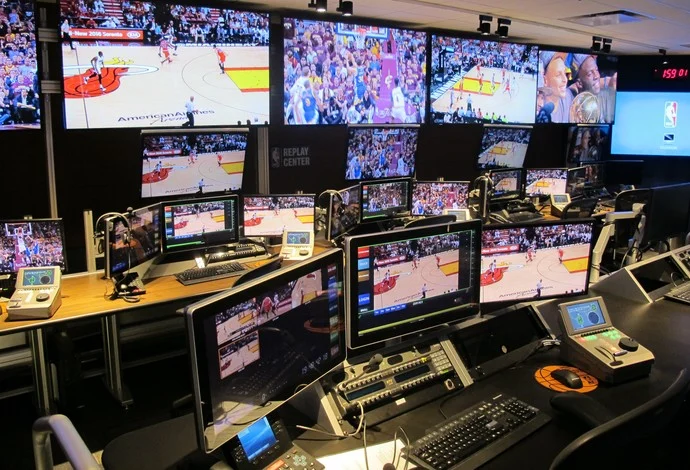
The important limit is connection. A valid challenge creates a defined review, not permission to audit every possession that preceded it. A fan can identify a genuine missed call elsewhere in the game without establishing that it belongs inside the current replay. Visibility on a camera feed is not the same thing as reviewability under a rule.
Proximity means more than being visible in the same replay
For an earlier uncalled foul, the relevant considerations include the players involved, the distance between the actions and the time separating them. Those factors evaluate whether the contact is sufficiently connected to the challenged event. The rule does not supply a universal “anything within three seconds” permission, and being on the same side of the court does not settle the question.
Compare an immediate push that sends a player into the collision under review with an unrelated hold several passes earlier. Both may appear in a long replay package. The first has an obvious connection worth examining; the second needs a different explanation for why it would belong in the authorized review. The standard asks about the relationship between actions, not whether a broadcast editor can fit them into one clip.
An out-of-bounds challenge has its own nearby-foul provision
The NBA expanded out-of-bounds challenge reviews for 2024-25. A nearby foul can now be considered within that authorized process. This is why an old clip can be misleading evidence about what officials are allowed to do in 2026: the applicable scope may have changed.
The league used a Dallas–Minnesota example involving Kyrie Irving's contact with Jaden McDaniels. Under the earlier treatment, the review correctly identified McDaniels as the last to touch the ball and awarded Dallas possession. The league explained that the expanded rule would instead allow the foul on Irving, leaving Minnesota with possession or free throws if Dallas was in the penalty. That example is separate from the Lakers–Blazers foul challenge.
None of this creates an independent right to challenge any no-call. The review still needs an eligible trigger. “They can assess a nearby foul during this review” and “A coach can stop play to challenge any missed foul” are different propositions. Keeping that distinction intact explains both the corrective power of replay and the limits that still frustrate viewers.
What the corrected foul changes about the next possession
The announcement that a challenge succeeded answers a replay question. It does not, on its own, tell the scorer to award two points, order a jump ball or send someone to the line. Those consequences depend on the final ruling and the state of the play. The original whistle cannot be treated as though every later movement unfolded in a normal live possession.
The penalty follows the final ruling, not the word successful
For an ordinary non-shooting defensive personal foul, the penalty can be a throw-in if the penalty situation is not in effect. If the defense is in the penalty, free throws can follow. Shooting fouls have their own consequences. These distinctions come from Rule 12, not from whether the challenging coach celebrated the outcome.
Imagine two otherwise similar corrected defensive fouls against a ballhandler before a shot. In the first hypothetical game, the defense is not in the penalty; in the second, it is. The same kind of correction can therefore produce different immediate opportunities. A viewer who hears only “foul overturned” has not yet been told enough to predict the restart.
Rule 14 also ties resumption to the point of interruption, with specified exceptions, while Rule 4 defines that point by the ball's location when the whistle sounds. That framework prevents the review from becoming an imagined reconstruction of several seconds of play that the whistle had already stopped. Officials apply the final ruling and the applicable restart provisions.
The personal charge matters beyond this possession. Removing a foul from one player may preserve his availability later; assigning it to another can alter the coach's substitution choices. Team-foul accounting can also influence subsequent possessions. Those effects are why correctly identifying the offender is substantive, even if the scoreboard barely changes immediately.
For the October 27 case, the official short entry establishes a Lakers defensive foul, but it does not supply every detail needed to rebuild the penalty. The safe basketball conclusion is that Portland obtained a changed ruling against Los Angeles. Any more specific claim about free throws or a particular player's foul trouble needs the corresponding game record, rather than an assumption based on the word successful.
A successful correction and a saved timeout are different outcomes
For a foul challenge, formal success concerns removing the original player's foul: either nobody receives it or it is assigned to somebody else. That somebody else can even be a teammate of the originally charged player. The outcome can therefore be successful in the replay record while offering less basketball benefit than the coach initially hoped.
Imagine defender A wrongly receiving his sixth foul when defender B actually committed the infraction. Reassigning it can keep A in the game, even if the opponent still receives the same free throws. That is a meaningful correction. It is not a guarantee that the challenging team will gain possession, prevent points or receive every advantage associated with the word win.
The reverse distinction also matters. If a foul stays on the original player but changes from shooting to non-shooting, the challenge is unsuccessful under the foul-challenge test, even when the altered penalty helps the challenging team. A coach can obtain a useful correction without receiving the formal resource reward. Looking only at whether free throws disappeared is therefore an unreliable way to classify the challenge.
The 2023 expansion added a second challenge after a successful first one. Ordinarily, a successful first challenge preserves the timeout used to initiate it, but a mandatory timeout can still be charged. A second challenge uses its timeout even if it succeeds. Winning the second does not create a third. The challenge count and timeout count are related resources, not the same counter.
Those distinctions affect coaching strategy. Protecting a key defender from an incorrect personal foul may justify a review earlier in the game. Saving the chance to correct a late possession may point the other way. The decision depends on the likely correction and the remaining resources, not just the emotional importance of the latest whistle. We should not infer a coach's complete reasoning from the players' gestures immediately afterward.
For the Lakers–Blazers reversal, the short official entry establishes the changed foul. It does not establish every detail of Portland's resource situation. To assess the coaching choice fully, match the announcement with the actual challenge and timeout record rather than assuming that every successful late challenge returns a timeout.
How to evaluate the next reversal without losing the plot
The most useful replay argument identifies a particular error and the rule that should correct it. A foul-total comparison cannot answer whether the original offender was misidentified, whether nearby illegal contact caused the collision or whether the restart matched the final decision. Those are play-specific questions, and they need play-specific evidence.
Compare the complete action before comparing foul totals
Watch enough of the sequence to see how the players reached the disputed contact. A cropped view beginning at the collision can conceal an earlier push, a defender's path or the moment a shooter began his motion. Another angle can improve that understanding without making every touch illegal. The NBA's comments on the rules distinguish incidental contact from contact requiring a foul.
The replay standard also matters: changing the adjudication requires clear and conclusive visual evidence. “I prefer this interpretation” is not automatically the same as showing the necessary evidence. Conversely, a call standing does not mean the initial live angle was perfect; the available footage may simply fail to justify an overturn. That is a reason to discuss the evidence's limits, not to pretend uncertainty has vanished.
Ask for the trigger, the correction and the restart
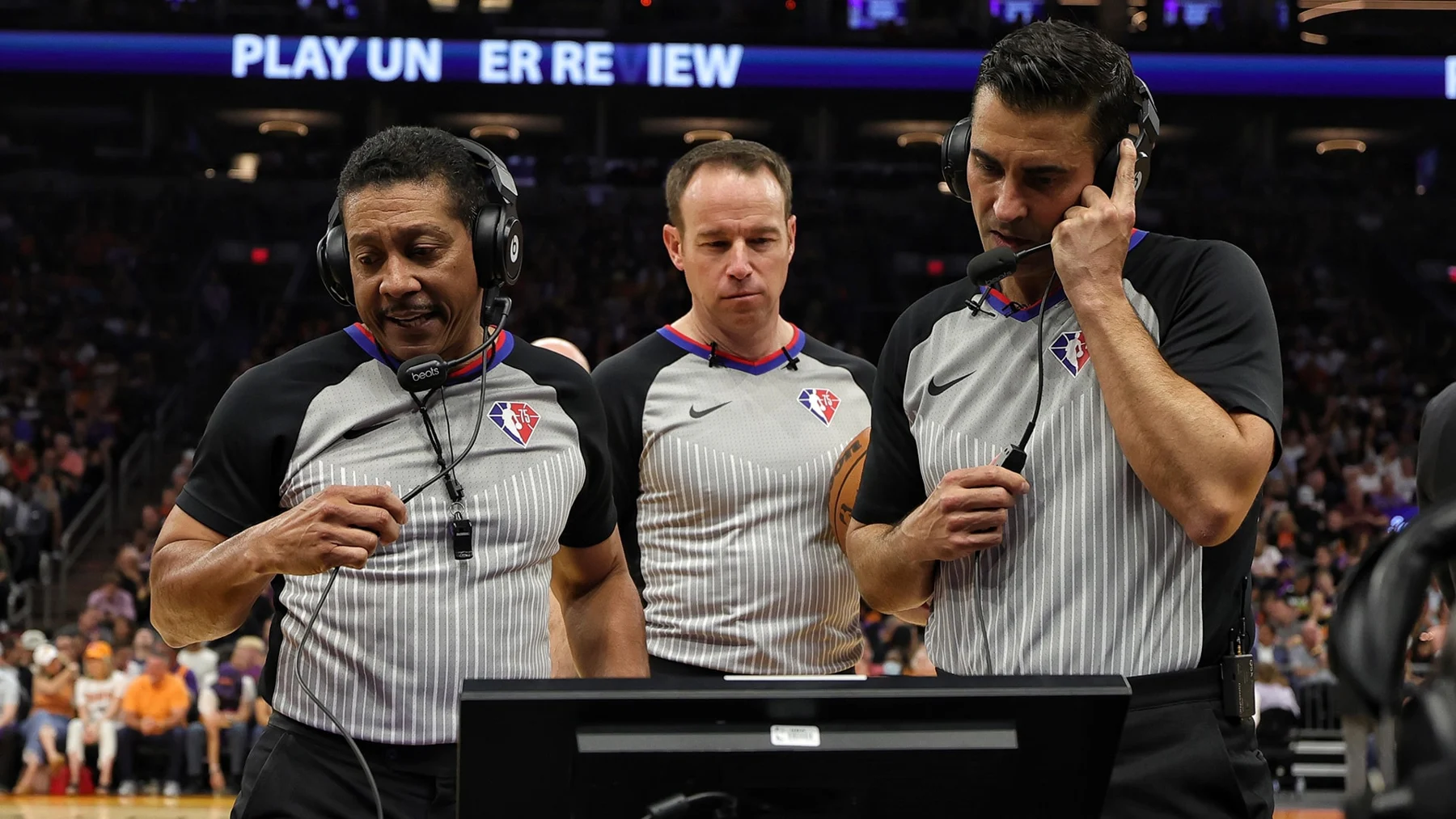
A helpful announcement should make three things understandable: which eligible event triggered the review, what changed in the ruling, and how play will resume. For the October 27 reversal, the central correction was the shift to a Lakers defensive foul. Without that middle step, a viewer can hear “successful” and assume no foul survived. Without the restart explanation, the same viewer can then mistake a lawful penalty for another contradiction.
There is still room to criticize the experience. A long interruption or an unclear explanation can make a correct decision frustrating to watch. Those complaints concern communication and game flow; they do not, by themselves, establish that assigning a foul to the other team was prohibited. The broader officiating complaints guide separates those issues in more detail.
When the next close finish reaches a review, identify the exact play before sharing a conclusion. Ask whether the challenged call was eligible, whether the correction remained within scope and whether the resulting penalty followed the final ruling. That approach preserves room for justified criticism while avoiding the mistaken premise that a successful challenge must always erase every foul.
Sign in with Google to join the discussion.