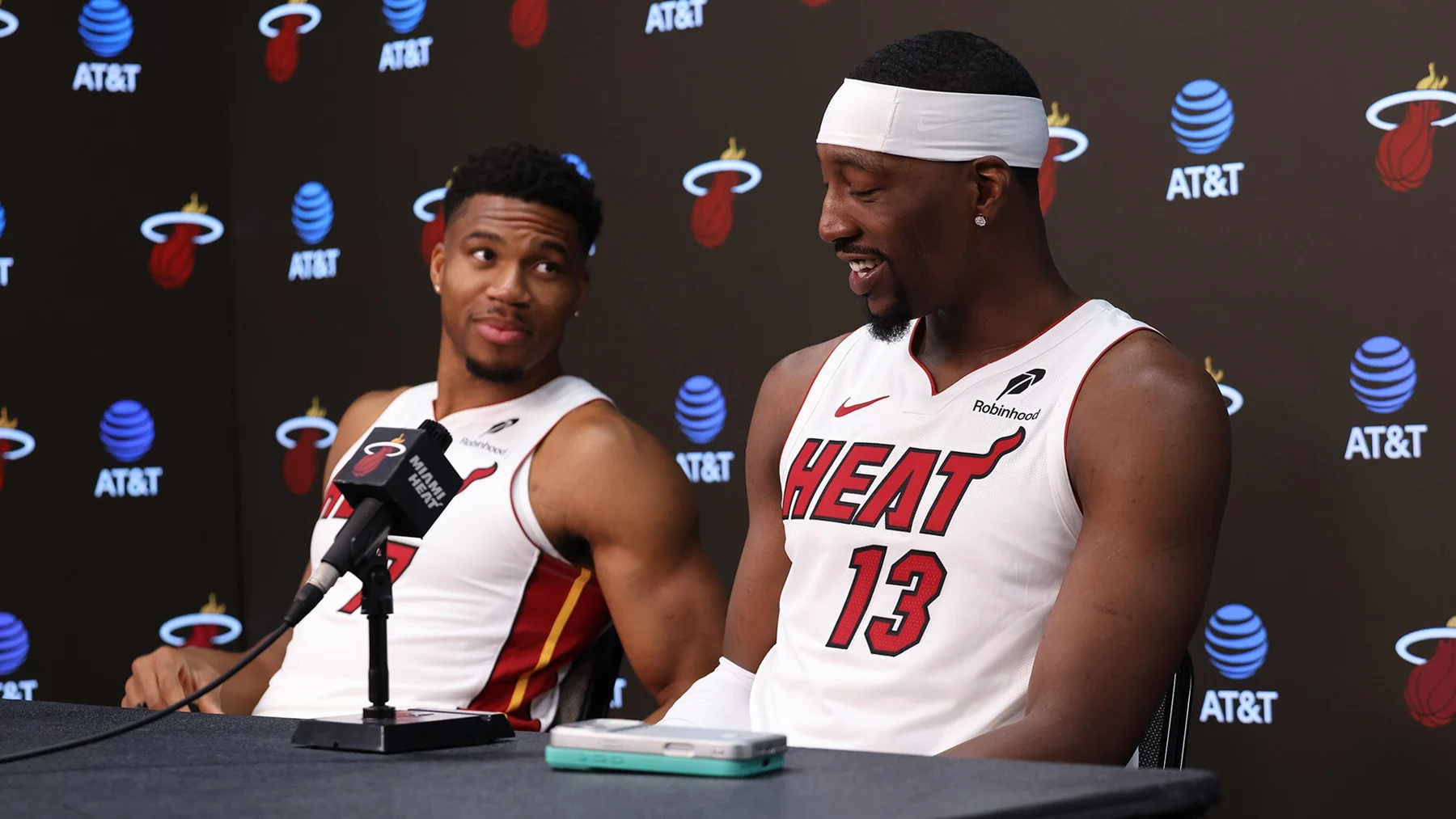
Miami has its first win, not a finished answer
Miami's new frontcourt finally has a regular-season victory to examine. The Heat beat Atlanta 129-117 on October 28, improving to 1-4. That makes any continuing description of this team as winless outdated. It also creates a better basketball question than whether the first four defeats invalidated the offseason: what can Giannis Antetokounmpo and Bam Adebayo repeat from the first game they actually won?
The official game summary records 24 points apiece for the two big men. Shared scoring leadership is encouraging because Miami needs contributions from both. It is not, by itself, proof that every possession with both on the floor worked. A full-game points total combines different teammates, different defensive matchups and minutes when the other star may be resting. The fit question lives inside those possessions rather than in the symmetry of the final scoring line.
There are two standards to keep separate. Miami needed a result after a poor start, and it got one. To establish a reliable offense, it needs actions that still create good decisions when the opponent changes its coverage. The first is a standings fact. The second requires watching what happens before the shot: where the second big stands, which defender helps, how quickly the ball moves and whether an advantage survives the first rotation.
This analysis uses the Atlanta win as a starting point, with the record dated to October 29. It does not treat one night as a season-long efficiency ranking or an announced permanent rotation. The offseason tracker covers how the roster changed; the useful task now is understanding the choices that roster presents. Miami can celebrate the first win while still demanding evidence about spacing, shared minutes and defense. Those are specific basketball questions, not a referendum that must swing from disaster to contender after every final buzzer.
Bam’s scoring matters beyond sharing the points lead
Adebayo's contribution deserves attention because Miami cannot build its preferred version of this partnership around one star consistently disappearing from the offense. His official game log shows eight points on 3-for-10 shooting against Dallas on October 26. Against Atlanta, he reached 24 on 8-for-16 shooting. The improvement gives the fit discussion an actual positive example, though it does not explain every possession that produced it.
The objective should not be equal shot totals for their own sake. An offense can feed the better matchup and still involve the other big in a productive way. Setting a screen, creating a passing angle or occupying a help defender can contribute without becoming the final shot. Conversely, a nominally balanced box score can conceal possessions in which one player waits while the other tries to beat a crowded defense.
Different starting spots can reduce congestion
For this pairing, think about space as a sequence rather than a photograph. If one big receives near the foul line and makes a quick decision while the other moves along the baseline, the defense must respond to different threats. If both wait in the same driving corridor, a single help defender can affect two players. Those are tactical possibilities to look for, not a claim that Miami used one exact alignment on every Atlanta possession.
Adebayo does not have to become a different player for the arrangement to improve. Miami needs his catches to lead somewhere: a shot he can take in rhythm, a handoff that frees a guard, or a pass that moves the defense before it resets. Giannis benefits when the ball returns to him against a shifting floor rather than a prepared wall. Bam benefits when involvement arrives before the clock forces a difficult bailout attempt.
The next evaluation should therefore ask how the opportunities were created, not demand that Bam match 24 every night. A lower scoring total with fast decisions and useful screening can be productive. A larger total generated by difficult, contested attempts may be harder to sustain. Atlanta gives Miami a reason to keep developing the connection; it does not justify reading confidence, effort or private disagreement from a scoring line.
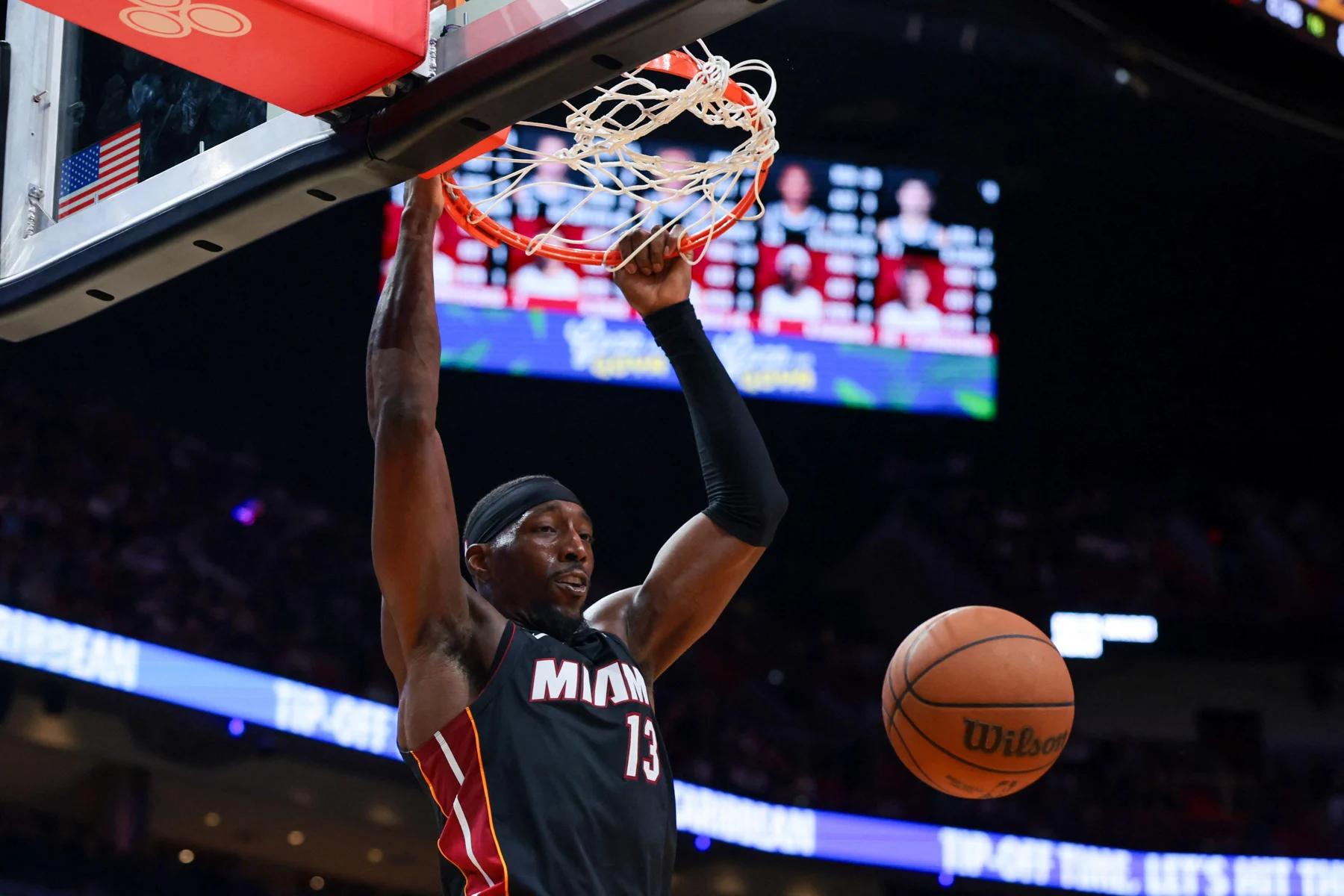
Screens gave the pairing a clearer job against Atlanta
The Heat's game analysis counted 57 pick-and-rolls, with Giannis and Bam screening for Davion Mitchell and Pelle Larsson. That is the clearest specific development to carry forward. It supplies a task for the big before he receives the ball and a route for the guard to involve him while the defense is moving.
The guard’s advantage matters as much as the roll
Mitchell finished with 10 points and 10 assists. His assists are not a count of successful Giannis-Bam combinations, but they matter to the structure. A guard who threatens to turn the corner can make the screener's defender choose between containing the ball and staying attached to the big. Without that threat, the defense can wait for the pass and load up on the receiver.
The important catch is often the one before the dunk. When a screener receives with room to turn, he can finish, find the other big or move the ball outward as help arrives. A useful sequence can end with a wing's shot rather than either star scoring. That is why the pairing should be evaluated through the decisions it creates for all five defenders. The guards are part of the fit, not bystanders to a two-man experiment.
The next coverage may ask a different question
A defense that keeps its center deeper asks the guard to punish the available space. A switch can remove the immediate passing window but offer a different matchup. Bringing two defenders toward the ball can create a short-roll opportunity, provided the pass arrives before help closes it. These are possible next tests, not a claim that Miami has already beaten each solution. The NBA's coaching material makes the underlying principle clear: the ballhandler reads the defender rather than running the same finish regardless of coverage.
Do not turn the 57-action count into 57 shots or a permanent offensive prescription. Re-screening and continuing a possession are different from ending it. The encouraging point is that Miami found a repeatable way to give both stars work. The next step is maintaining that purpose when the easiest pocket pass disappears and the second decision becomes more difficult.
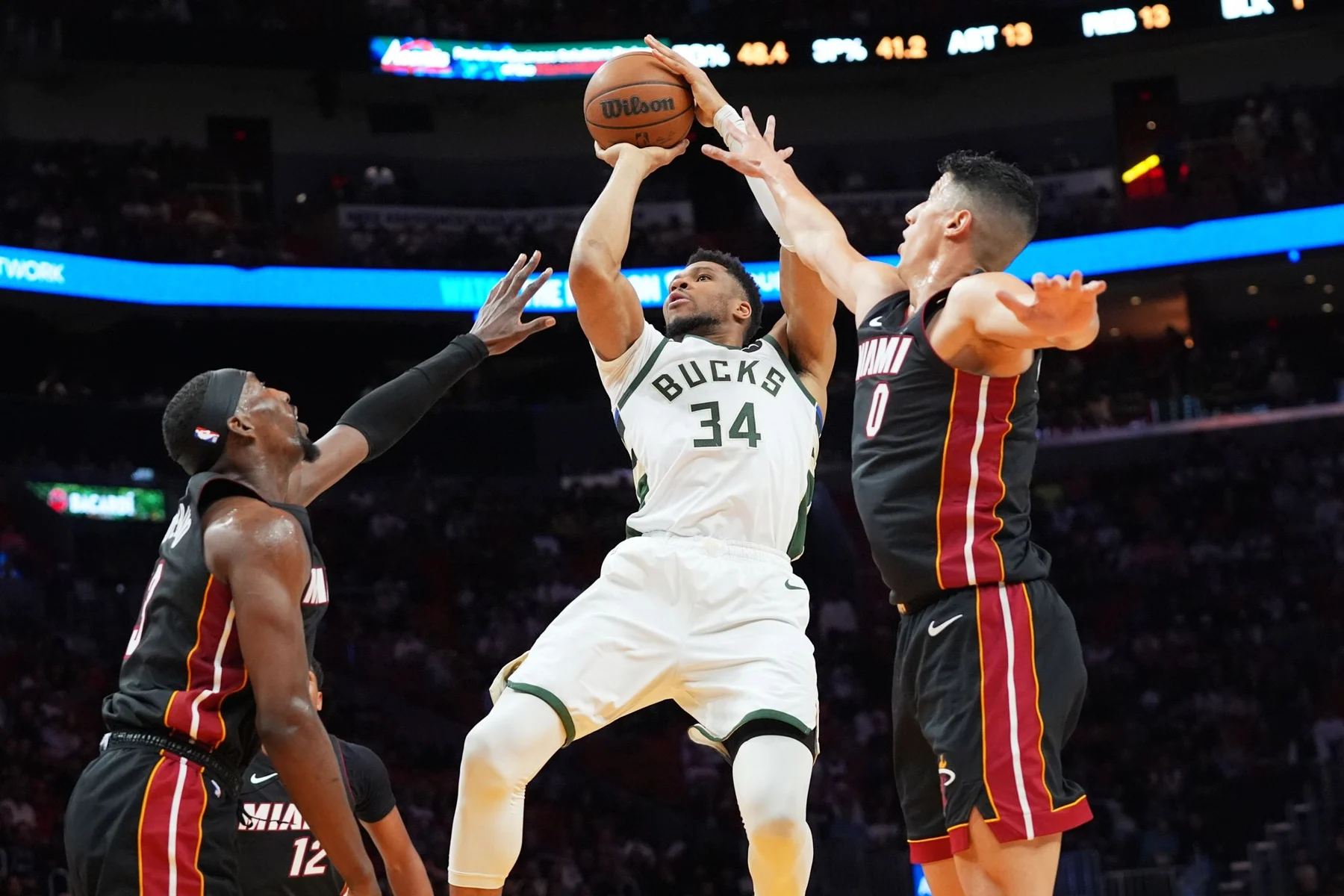
Shooting and rebounding shape the space around both stars
The frontcourt cannot be assessed in isolation from the perimeter players sharing the floor. Andrew Wiggins scored 18 points and Larsson 17 in Atlanta. That support matters because a defense can make life harder for two interior threats when it does not respect the players receiving their kick-out passes. The issue is not simply how many names on the roster have a shooting reputation. It is whether the five players in a particular possession make help costly.
For Miami, useful spacing can come from a shooter holding a defender outside, a guard cutting behind a turned head or a quick extra pass after the first kick-out. Those actions ask different things of the defense. A made three is evidence of a successful outcome; a defender reluctant to leave the corner is evidence of an influence that may not appear in either star's box score. Watch both rather than explaining every productive interior possession with the final shooter alone.
There is another way for size to matter when the first attempt misses. Giannis collected 18 rebounds, five on offense, against Atlanta. Offensive boards can turn a difficult first possession into another scoring chance, but his total does not tell us Miami's team offensive rebounding percentage or how often both stars were together. Those require the corresponding opportunities and lineup context.
The tradeoff is worth watching. Sending a big toward the offensive glass can punish smaller defenders; sending too many players can leave the other end exposed after a long rebound. Keeping everybody back may protect transition defense but waste an advantage in size. Miami needs an arrangement that assigns those responsibilities clearly. The fit is stronger if a player can pursue a rebound because teammates know who is covering, rather than because the team simply hopes an athletic recovery will erase the risk.
Atlanta provided points from outside the star pair and second-chance opportunities for Giannis. The continuing question is whether Miami can create that combination without needing unusually friendly shooting or an opponent unable to finish defensive possessions. That is a test of the supporting lineup as much as the two headline names.
Staggered minutes are a question the final score cannot settle
Staggering Giannis and Bam is an option to evaluate, not a conclusion that follows from winning or losing one game. Keeping one on the floor can give reserve groups a central offensive player and a defensive presence. Playing them together can concentrate size and talent in the minutes that matter most. A successful rotation may need both arrangements, with teammates chosen for the different jobs each version requires.
That is a different question from whether they should start together. Starting establishes who opens the game; it does not dictate every substitution or the closing group. Miami can explore different overlaps without abandoning the partnership. Conversely, labeling a group the starting five does not demonstrate that its shared possessions are already productive. Our lineup and depth-chart guide explains why those labels do not substitute for actual rotation evidence.
Individual plus-minus is not a two-player lineup rating
Giannis's official Atlanta line includes a minus-six plus-minus despite Miami's victory. That number does not mean the Heat lost the game with him as their star, and it does not isolate his minutes alongside Bam. It sums the scoring margin across his own stints with different teammates and opponents. The NBA glossary defines net rating on a different basis: scoring margin per 100 possessions.
To judge the pairing, separate possessions with both stars, with only Giannis, with only Bam and with neither. Then include opponents, supporting players, score situation and sample size. A few missed open threes can swing a short stint dramatically. A reserve group facing weaker opposition may produce a better margin without being the right answer against the other team's best five.
Atlanta's final score cannot settle those comparisons, and no joint lineup rating is asserted here. The useful next question is whether Miami can make the overlap minutes purposeful while avoiding long stretches without a dependable organizer. Staggering should solve a specific problem in those minutes, rather than become a slogan explaining every uneven game.
The defense still needs its own examination
Scoring enough to win does not establish that the defensive partnership is settled. Atlanta rookie Kingston Flemings scored 23 points on 9-for-12 shooting, including three makes from five attempts beyond the arc. That is a concrete reminder that a frontcourt with two prominent defenders still depends on the pressure and decisions around it. It is not evidence that either star personally conceded every one of those baskets.
Miami's team profile lists 120.8 opponent points per game through the five-game start. That is raw scoring allowed, not a possession-adjusted defensive rating. Pace and game circumstances influence it, and five games are a limited sample. Still, the opening results give the defense a legitimate problem to work on. The first win should not make that side of the evaluation vanish.
Watch the order of responsibility in a ball-screen possession. Can the first defender stay connected long enough for the big to contain the ball without surrendering an easy roll? When help comes from the side, does the next player cover the vacated shooter? After a contest, does somebody finish the possession with the rebound? A block at the rim can be valuable, but repeatedly requiring a spectacular rescue is a different defensive condition from preventing the breakdown.
The two bigs also need responsibilities that complement rather than duplicate each other. If both react to the same driver, another offensive player can become available. If each expects the other to help, the ball can reach the basket before either commits. Those are failures to watch for, not asserted explanations for every Atlanta score. The evidence required is the actual action and its coverage, not the fame of the defender nearest the highlight.
The encouraging version of this roster makes opponents work through several decisions before finding a shot, then closes the possession. Miami needs to show that version across different opponents and combinations. An improved offense can buy time for that work; it cannot complete it.
What would make the next stretch convincing?
The published schedule gives Miami an immediate sequence of different tests: Indiana on October 30, then visits to the Lakers on November 2, the Clippers on November 4 and Golden State on November 5. Those dates are opportunities to evaluate the developing partnership, not predictions about results or player availability. Use the live season schedule and the latest injury information before attaching a specific matchup to an expected lineup.
Track the process before changing the season forecast
Look first for purposeful involvement. When one star starts an action, is the other creating an option or waiting in the driving lane? When a guard gets a ball screen, can he make the defense commit before feeding the big? When the first pass is denied, does Miami reach a useful second action with time remaining? These questions remain relevant even if an open shot happens to miss.
Then compare the shared and separate minutes without forcing a verdict from a handful of possessions. Include the other three Heat players and the opponent's group. Notice whether an offensive adjustment costs too much at the other end. A stronger stretch would show Miami creating advantages in more than one way while keeping defensive responsibilities clear, rather than winning only when difficult shots fall.
Results still matter. A team beginning 1-4 needs wins, not endless assurances about potential. But the right explanation for a win should survive the next loss: screens that create decisions, catches that lead to quick action, support that makes help expensive and possessions finished with sound defensive work. Atlanta supplied a useful first example and a specific offensive direction. Miami's next task is to make that direction adaptable enough to last.
Sign in with Google to join the discussion.