The 2026-27 G League calendar has two starting points
The 2026-27 NBA G League season opens on November 6, 2026, but its 36-game regular season begins on December 19. Those dates describe different competitions. November games count toward the Tip-Off Tournament; the later reset starts the race for the spring playoffs. If you follow an NBA affiliate only through a scoreboard, that distinction explains why a team's displayed record can suddenly look unfamiliar in December.
Use the season calendar to choose a stretch of basketball, then use the official team fixture to choose a particular night. An opening-date announcement answers when the league returns. It does not establish every tip time, guarantee that your preferred prospect will dress, or confirm where a particular broadcast will appear. This guide reflects the official calendar checked on October 19, 2026.
Dates to put on your calendar
| Milestone | 2026-27 date | What it means for fans |
|---|---|---|
| G League Draft | October 24 | Another roster-building step before camp. |
| Training camps | October 26–November 5 | Opening rotations are still taking shape. |
| Tip-Off Tournament opens | November 6 | The first competitive phase begins. |
| Winter Showcase | December 19–22 | The tournament finish overlaps the regular-season transition. |
| Regular season ends | March 27 | The conference qualification race reaches its cutoff. |
| Playoffs begin | March 30 | Regular-season position turns into a postseason path. |
| Finals begin | Week of April 5 | Check the eventual matchup for precise dates. |
A release date is different from a confirmed game plan
The league's schedule announcement arrived in late August. A team may also advertise priority dates before publishing all opponents and details. Treat a priority date as a planning lead until the complete fixture identifies the opponent, building and time. That matters when arranging childcare, rail tickets or a trip that also includes the parent NBA club.
Keep separate calendar entries for the two teams. The 2026-27 NBA schedule helps you compare nights, but an NBA off-day is not automatically an affiliate home game. When a schedule changes, update the event you actually intend to attend rather than relying on the date copied from the first announcement. A saved calendar is useful only if its event details stay connected to the current fixture.
Understand which competition a game belongs to
The season is built around a 14-game Tip-Off Tournament and a 36-game regular season. That structure gives the first weeks their own competitive destination while leaving a separate league race after the reset. Before comparing two teams, select the same competition on the standings page. A combined count of everything played can describe workload, but it cannot replace the record used for qualification.
The Tip-Off Tournament builds toward the Winter Showcase
The opening phase uses four regions. Each regional leader and the next four teams by winning percentage, regardless of region, advance to the championship competition at the Winter Showcase. All clubs play at least twice at the Showcase. A team that misses the championship field therefore still has games to prepare for; absence from the title bracket is not an empty week on the schedule.
Regional play also gives an early-season rematch a useful scouting dimension. Watch how a ball handler responds when the same opponent changes its pick-and-roll coverage, or whether a center adjusts after conceding offensive rebounds in the first meeting. The score tells you who won that night. The second game can reveal whether the staff and players turned the first game's problems into actionable changes.
The regular-season reset changes the standings race
Team records reset for the 36-game phase. The top eight clubs in each conference qualify for the playoffs. A poor November does not disappear from a player's development record or a coach's film library, but it does not become a permanent hole in the new regular-season standings. Equally, winning the tournament does not reserve a postseason place.
For a hypothetical team that starts slowly while rebuilding its rotation, December creates a fresh table rather than retroactively turning those losses into wins. Judge the next stretch on its own games, opponents and available players. A suddenly strong record may reflect a real improvement, an easier run of fixtures, a different roster, or several of those factors together. The reset alone does not establish the explanation.
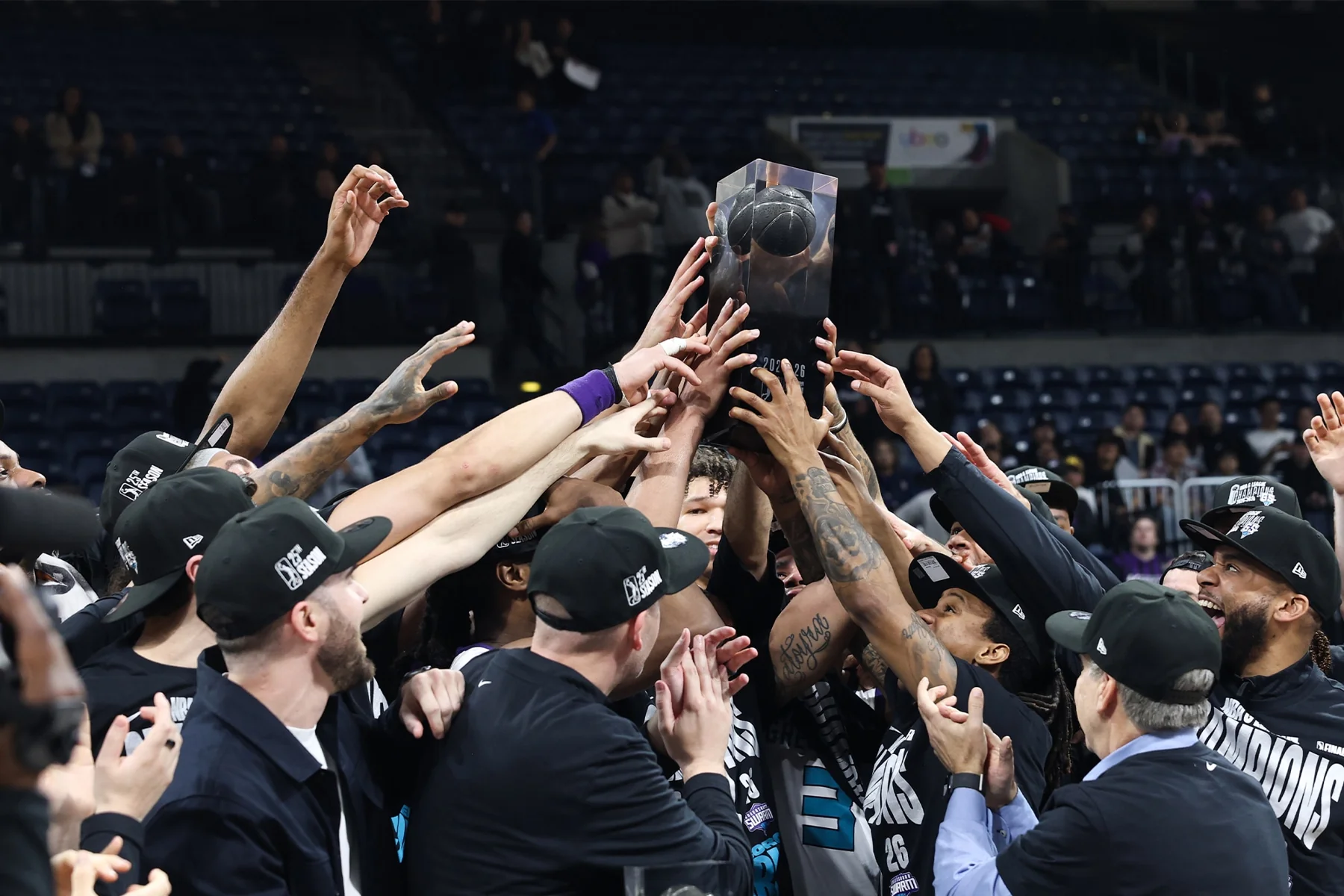
The official postseason hub also contains past champions and earlier brackets. Check the year before borrowing a seed, opponent or series result. The 2026 Greensboro championship belongs to the previous season; it adds historical context to the Swarm's title defense, but it does not predict the 2027 bracket. For the parent league's separate postseason framework, use our NBA playoff bracket and results guide with its season label in view.
Follow player development without expecting a fixed roster
A G League fixture guarantees a scheduled team matchup, not a particular prospect's appearance. Two-way movement, NBA assignments, call-ups, injuries and ordinary coaching decisions can change the available group. Check the affiliate's roster and transaction news close to the game, then look for the actual active players. A missing box-score entry is a reason to investigate, not proof of an injury or a disciplinary issue.
The contract pathway matters. A player already on a standard NBA deal can be assigned to an affiliate. A two-way player operates within a contract designed to bridge the leagues. A G League player can also earn an NBA opportunity through a call-up. Those situations may look similar from a seat behind the basket, but they create different expectations about movement and availability. Do not use “called up” as a blanket explanation for every departure.
For development watching, choose a repeatable question before tipoff. With a young guard, track whether he reaches the paint against a set defense and still makes the next pass when the first driving lane closes. With a big, watch the timing of screens, recovery after helping on the ball and positioning before a rebound becomes available. A high scoring total can coexist with poor decisions; a quiet scoring night can include valuable defensive possessions.
Compare roles as well as numbers. The same player may handle the ball frequently for an affiliate and spend an NBA stint spacing the floor beside an established creator. More G League assists do not automatically mean the NBA coaching staff will give him the same assignment. The useful question is which skills travel into a smaller role: quick decisions, reliable spacing, defensive communication and execution without repeated touches.
Keep a short log across several games rather than making a promotion verdict after one hot shooting night. Record the opponent, minutes, role and one successful or failed adjustment. If the available roster changes, mark that change before comparing team results. Our all-team NBA roster guide supplies parent-club context; the affiliate's current game information remains the better place to confirm who is actually involved that evening.
This approach also makes an unexpected absence less likely to spoil a planned trip. You still have a specific basketball question to follow, whether the best-known prospect plays or another player takes on a larger role. The development story often lies in that new responsibility rather than the name that originally drew you to the game.
Find the correct broadcast for the actual game
Start with the specific G League game rather than the subscription you already own. The league's season-release announcement said the broadcast schedule would follow separately. That release alone cannot tell you which service will carry a November matchup. An NBA television partnership, an old G League streaming article and a social-media highlight upload are all insufficient evidence of access to that particular live game.
The practical distinction is between a discovery page and a viewing entitlement. A schedule can help you locate the matchup; the named broadcaster or streaming platform must confirm that you can actually watch it from your location and device. A game appearing in a search result does not mean a full live feed is available there. Nor does a free video clip establish that the full broadcast is free.
Check the league listing and the home team's announcement
Open the official G League schedule, select the team and month, and find the correct opponent and date. Follow any game-specific viewing link. Then check the team's latest announcement for a local telecast, updated streaming instructions or a late change. When a listing has not yet named a broadcaster, save the fixture and check again closer to tipoff rather than buying a package on an assumption.
Verify the date after converting the time zone. A Friday evening game in the United States may be a Saturday morning viewing appointment elsewhere. Write the local date next to the tip time in your watch list. For a traveler, an account that worked at home may face different territorial rules; confirm the platform's own location and sign-in requirements before relying on it in a hotel.
Test the actual playback route early enough to solve a login or device problem. Opening the app is not the same as opening the correct game. If a service offers both highlights and live content, navigate to the event page and check the label. If you intend to watch later, separately confirm whether that game has a replay and when it becomes available. Avoid a results-heavy page if keeping the score unspoiled matters to you.
Keep the parent league's viewing plan alongside this one, but maintain separate access notes. Our NBA TV schedule is useful when choosing between an NBA night and an affiliate game. It does not turn an NBA channel assignment into a G League broadcast confirmation. For a household following both, a simple note with game, local time, confirmed platform and account requirement is more dependable than remembering which basketball app was used last week.
Turn a team schedule into an arena plan
Choose the event first and the ticket second. A team name in a search result may refer to an earlier city, an old season or a promotional page that was published before opponents were assigned. Open the current official fixture, match the date and opponent to the ticket event, and confirm the actual building before arranging transport. That extra minute is especially valuable in a season with relocated affiliates.
Match the affiliate to its current city and venue
The Lakers' affiliate is now the Coachella Valley Lakers, while New Orleans' affiliate is the Laketown Squadron. An old South Bay or Birmingham page may still appear in a saved bookmark. The Squadron's first scheduled home game in its new location is November 14 against Mexico City at the Pontchartrain Center in Kenner, Louisiana. A Pelicans affiliation does not mean that game is at the NBA team's arena.
Use the current team site to reach the authorized ticket route. Compare the event title, building address and seat information before paying. A team page can contain an old footer link even when its main navigation has been updated; the current event details are more useful than assuming every historic link has changed. Keep the purchase confirmation where you can retrieve it without searching through an inbox at the entrance.
Read consecutive games as separate events
If the same opponent appears twice during a short homestand, treat each listing as its own game. The tip time, promotion, available players and admission terms may differ. Do not infer that one ticket includes both contests or that a weekend package has the same conditions as a single-game purchase. Read the selected offer itself, including any restrictions on food, seating or promotional items.
Cleveland's early priority-date announcement is a useful example of why stages matter: it advertised selected home dates before the complete summer schedule supplied opponents and game times. Such an announcement can help a local family reserve a possible evening. Once fixtures are final, the full game listing should replace that placeholder in the family's calendar.
Before leaving, check the venue's current bag, parking and mobile-ticket instructions, then allow time for the entry process. If a particular player is the reason for the trip, verify his latest team status separately and decide whether the game remains worthwhile if he does not play. A seat purchase is an event purchase, and development rosters can move quickly. Planning around the team and the matchup makes the evening less dependent on an assumption about one individual's minutes.

Build a weekly G League watch list that stays useful
A useful weekly list needs five fields: matchup, competition, local tip time, confirmed viewing route and the basketball question you want answered. Add a sixth field for an arena visit: the verified venue. That small amount of structure prevents a tournament result from being mixed into the regular-season race, or an NBA game time from being copied onto an affiliate fixture.
At the start of the week, choose one team and two or three games rather than attempting to follow the whole league. Mark rematches, road stretches and nights that fit around the parent NBA club. A consecutive pair against the same opponent is useful for evaluating an adjustment. A game after a roster change is useful for seeing which responsibilities move. Neither situation requires predicting the final score to make the viewing worthwhile.
On game day, check the official fixture for changes, then look at roster news and the confirmed access route. Write down what is still uncertain. “Player availability unconfirmed” is more informative than silently treating an old roster page as a promise. If your chosen prospect is with the NBA team, switch the viewing question to the teammate who now handles the ball or anchors the defense.
After the game, confirm the result is final before recording it. Open the box score and connect the numbers to what you watched: minutes, shot attempts and turnovers can help frame a role, but they do not reproduce every screening, spacing or defensive decision. Keep one observation that could be checked in the next meeting. This creates continuity without turning a small sample into a confident scouting grade.
When qualification becomes the main story, use the official standings for the correct competition. The league's daily statistical standings warn that they may not reflect current tiebreakers. An archived table can also outlive the season it describes. Check the season selector and competition label before concluding a team has clinched, been eliminated or earned a particular seed.
Finally, refresh your list when the calendar crosses into the December reset and again before the postseason. The framework stays the same; the competitive question changes. Early in the season you may be comparing development roles. In March you may care most about a conference position and the availability of the group that earned it. Keeping both contexts visible makes the G League schedule useful as a basketball guide, rather than merely another collection of dates.
Sign in with Google to join the discussion.