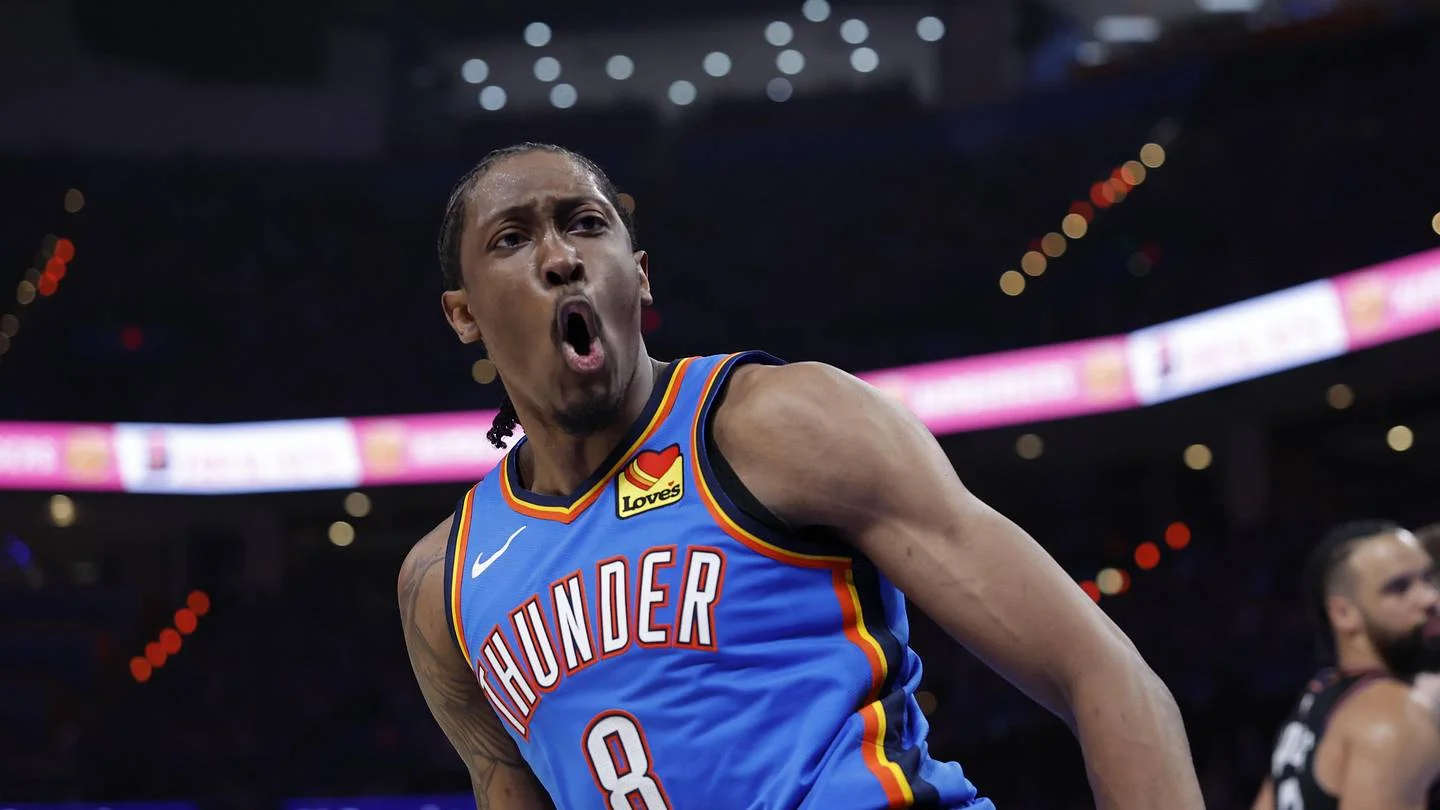
The latest updates describe different injuries and an open recovery path
Oklahoma City's adjustment is difficult because Jalen Williams and Cason Wallace remove different kinds of value at the same time. Williams helps connect primary creation to the next advantage. Wallace helps keep opposing guards from dictating the first action. Replacing a pair of names in the starting lineup is straightforward compared with restoring both functions across a full game.
The latest Williams update is more specific than the initial surgery announcement. On October 28, the Thunder announced a successful procedure addressing his fractured left fibula and reconstructing ankle ligaments following the fracture and dislocation. The Oklahoman's Justin Martinez reported the announcement, including a planned re-evaluation before the end of the regular season. That wording matters: it provides a future assessment point, rather than a date on which Williams is promised to play.
Wallace has a separate injury, a torn labrum in his left shoulder requiring surgery. His diagnosis should not be folded into Williams' timetable simply because both were injured against the Clippers on October 25. The information available for this October 29 assessment does not establish a return date for either player. It also does not justify converting concern about a long absence into an official declaration that both seasons are over.
A re-evaluation is not a promise to play
A re-evaluation tells fans when the team expects another medical assessment. Clearance for practice, availability for a game and readiness for a normal workload are further questions. A headline that compresses those steps into a playoff return can create an expectation the announcement never offered. Equally, describing the update as proof that Williams cannot return at all would go beyond its wording.
The basketball response can be more decisive than the forecast. Mark Daigneault needs combinations capable of playing substantial stretches without either player, regardless of what the next assessment eventually says. That means testing who initiates, who handles the most demanding guard assignment and who keeps the offense connected after Shai Gilgeous-Alexander draws extra attention. The correct planning horizon is long enough to build reliable habits, while remaining honest about what has and has not been medically confirmed.
Williams' absence changes how OKC creates the second advantage
Gilgeous-Alexander remains the central problem for opposing defenses. The more difficult question is what happens after an opponent sends help and the ball leaves his hands. Williams' value in that sequence is not captured by moving his average into another player's projected scoring column. A second creator can attack a recovering defense, find the next pass or punish a matchup without forcing the original ball handler to restart everything.
Shai should not have to finish every stalled possession
If the first drive produces a pass but no shot, Oklahoma City needs the next player to make a useful decision quickly. That can mean driving a closeout, using a screen against a defender who has not recovered or moving the ball again before the weak side becomes organized. Holding it until Gilgeous-Alexander circles back gives the opponent time to reset the same pressure it used successfully on the first action.
There is a practical difference between asking Shai to lead and requiring him to rescue every late clock. The former remains an obvious foundation. The latter makes the offense more predictable and gives the supporting players fewer meaningful repetitions. An adjusted rotation should offer another starting point for a possession, even when it eventually returns the ball to the team's best creator in a more favorable situation.
The replacement creator needs an off-ball partner
Ajay Mitchell's 30 points in the October 26 win over Phoenix provide an encouraging example of someone else carrying substantial scoring work. Jared McCain added 18, according to the official final scorer's report. Those performances make the opportunity tangible. They do not prove that the combined Williams role has already been replaced, especially when another opponent can defend the same players differently.
A useful pairing also depends on the player who is not dribbling. If Mitchell is probing a gap, a teammate must offer a reliable catch, a timely cut or a screen that complicates the helper's path. If McCain is moving around a screen, someone must deliver the ball while that window remains open. The adjustment should be evaluated as cooperation between roles, rather than a contest to discover which young guard can imitate Williams most closely. Oklahoma City can create the second advantage through several players, provided the handoff between those responsibilities stays fast enough to matter.
Wallace's missing minutes create a separate defensive problem
Wallace earned a place on the 2025-26 All-Defensive Second Team. That is the relevant background to an absence that can be understated if the discussion begins and ends with scoring averages. Replacing his offensive attempts does not automatically replace the pressure, positioning and repeated effort required to contain an opposing guard.
The first test is screen navigation. A defender who stays close enough to contest from behind can allow the big man to remain nearer his intended coverage. A defender who gets caught may force an earlier commitment toward the ball, exposing the roller or asking a weak-side teammate to rotate. Even a correct rotation can create a difficult rebound assignment. An opponent's eventual open shot may originate with that first gap, rather than with the final defender shown arriving late.
Oklahoma City therefore needs to evaluate replacement combinations by more than their scoring balance. Can the guard group handle two dangerous ball handlers without sending help from the same corner repeatedly? Can a switch survive the resulting size mismatch? If the team chooses to show more bodies at the ball, can it rotate back quickly enough to contest the next catch? These are coverage questions. A promising individual defensive highlight cannot answer all of them.
The combined loss is what makes the problem sharper. Giving Gilgeous-Alexander extra offensive responsibility while also asking him to absorb the most demanding defensive matchup can make each task harder. Conversely, using another guard on that assignment changes how much creative responsibility he can comfortably carry elsewhere. This is a distribution problem across both ends, rather than two unrelated vacancies.
None of that means the remaining players cannot defend. It means their most workable arrangement must be demonstrated against actual opponents. Track whether the defense forces the ball away from a preferred first action, whether help arrives under control and whether a good initial stop ends with a secured rebound. Those repeatable details are a more useful measure of the Wallace adjustment than assigning blame to whoever happens to be closest when a basket is scored.
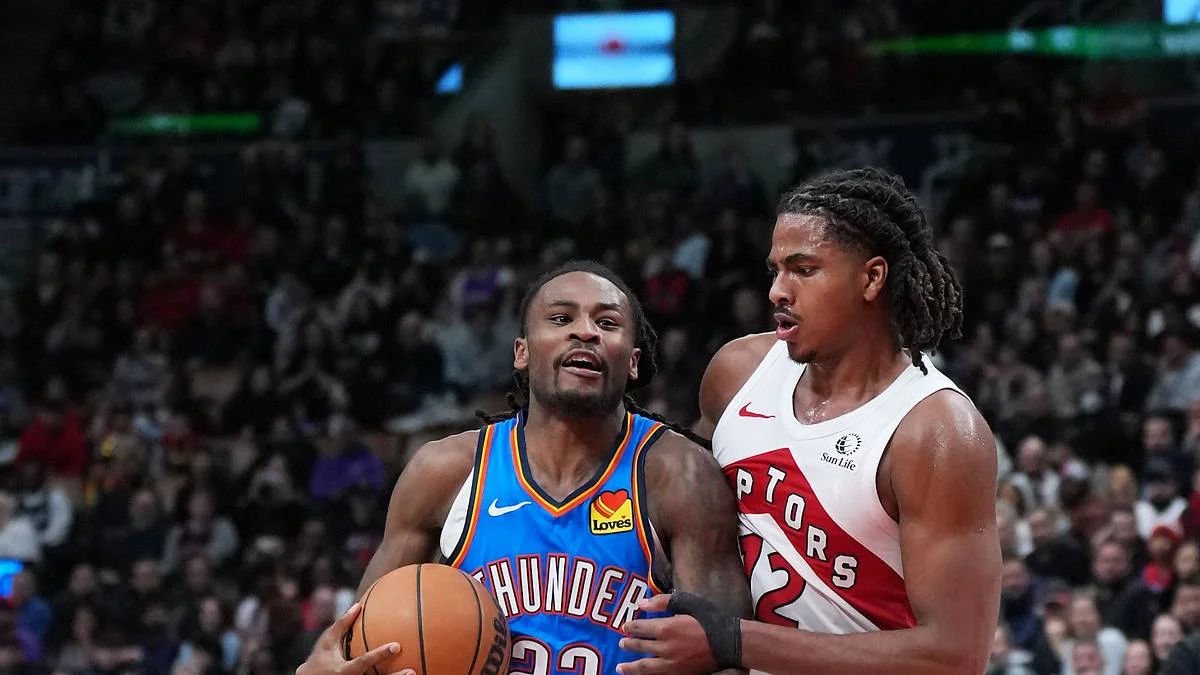
Mitchell and McCain have opportunity, while Caruso's status still matters
The first replacement options are already visible. Mitchell and McCain started against Phoenix, and their production helped Oklahoma City win. The next game showed why that encouraging response should remain an opening example rather than a verdict: the Thunder lost 120-96 at Dallas on October 28. The Oklahoman's game report also documented a longer absence list than Williams and Wallace alone.
Caruso was unavailable with a right ankle sprain. Holmgren was also out with a right knee issue. That prevents a tidy analysis in which a healthy defensive veteran automatically absorbs Wallace's assignments while an untouched frontcourt covers every mistake. The actual rotation must be built from the players available for that night, not the best version of the roster listed in a preseason depth chart.
Starting roles and dependable minutes are different questions
Mitchell and McCain can receive larger responsibilities without receiving identical assignments. One possession may need someone to turn a corner and force help; the next may need a quick catch and a pass that keeps the defense moving. Their opportunity is to make those jobs fit together around Gilgeous-Alexander. Neither has to win every possession individually to be valuable.
The test for a dependable role extends beyond the opening six minutes. Can a guard remain useful when his jumper is not falling? Does he hold his defensive assignment without creating a series of emergency switches? Can he get the team into its next action after a timeout or a made basket, when easy transition opportunities disappear? Those questions matter to the closing lineup, even when the starting announcement stays the same.
Fans should also resist treating one availability upgrade as proof of an unrestricted workload. Mitchell entered the Dallas buildup with an ankle concern, and current reports remain relevant for every player under discussion. For the next matchup, check the injury-status guide alongside the dated report, then watch how Daigneault actually distributes the work. Opportunity is real; a stable rotation emerges from health, fit and repeated execution, rather than from a single hot night or a convenient five-name graphic.
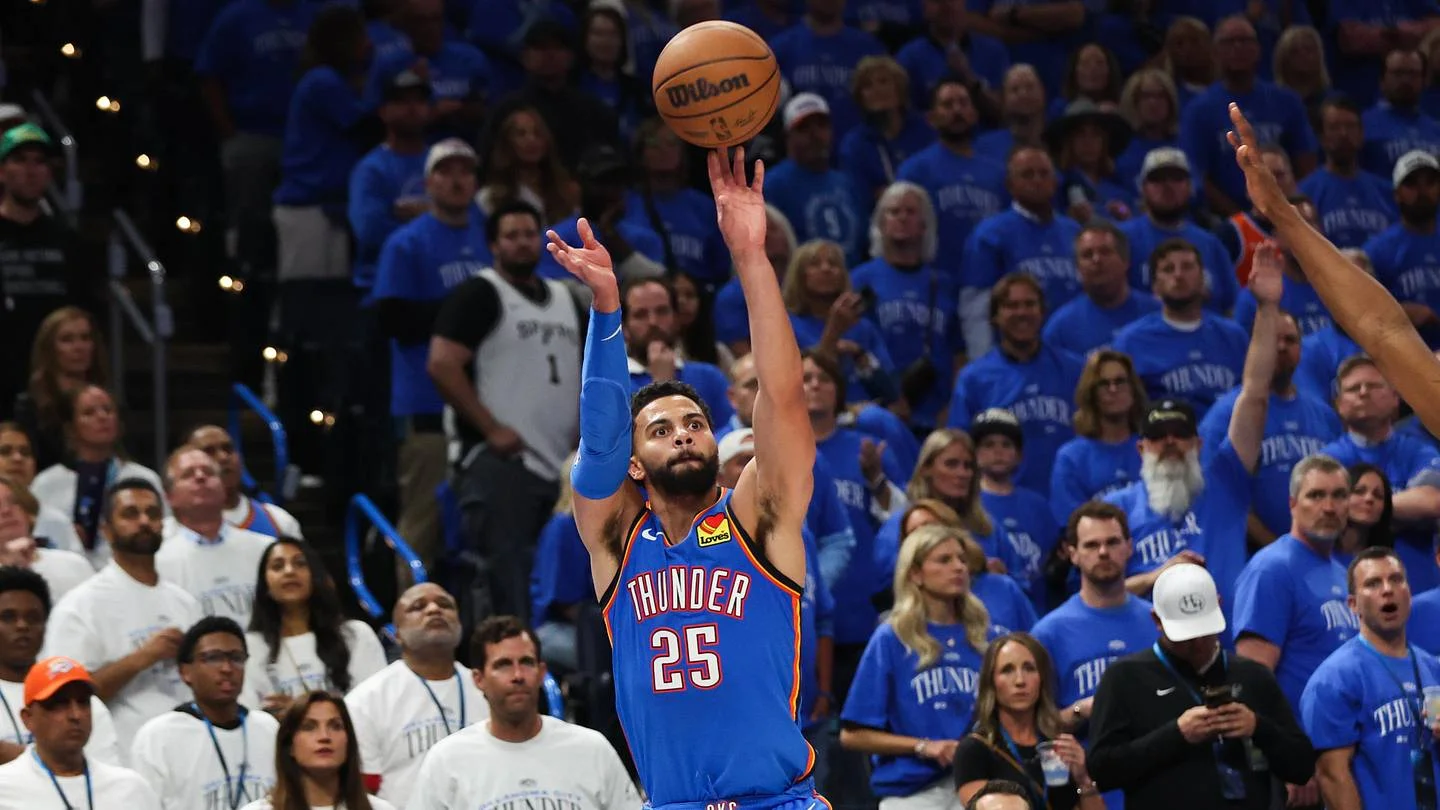
The frontcourt can support the adjustment without solving every mismatch
Isaiah Hartenstein, Jaylin Williams and Aday Mara give Oklahoma City ways to support a changed perimeter rotation. They do not make the missing perimeter functions disappear. Holmgren's availability is another variable, so the assessment must distinguish the available frontcourt from the broader collection of options the Thunder could have when healthy.
Screening and short-roll decisions can share the creative work
A productive screen can simplify a young guard's job before he makes a difficult read. It can create separation, force a second defender to engage or turn a flat possession into one with a clear passing angle. If the opponent traps the ball, the receiver near the foul line may have a brief numerical advantage behind the trap. Recognizing the cutter or moving the ball to the opposite side can convert that advantage without requiring the guard to beat two defenders himself.
Those are ways to share creation rather than hand every missing responsibility to the backcourt. Hartenstein and Mara both contributed double-doubles against Phoenix, recorded in the official final box score. That gives the discussion actual participating players and a current example of frontcourt contribution. It does not establish that either will consistently replace Williams' decision-making, or that a single productive game answers how opponents will defend the arrangement.
Size must come with a plan for smaller opponents
At the other end, a larger lineup can protect the rim and compete for rebounds, but it still needs a coverage that fits the opposing guards. If a smaller opponent pulls a big defender away from the basket, someone else must protect the space behind him. If Oklahoma City stays closer to the paint, the first defender needs to contest the ball handler's shot or recover well enough to disrupt the next action.
Playing bigger also changes offensive spacing and transition responsibilities. A second big can help finish a possession on the glass while making it harder to clear a driving lane. A smaller lineup can open that lane while surrendering a more demanding rebound matchup. There is no universal winner in that exchange. The useful question is which group produces the best set of compromises against the opponent in front of it. Frontcourt depth gives Daigneault more combinations to try; success still depends on whether each combination has a coherent job for all five players.
How to judge the response before demanding a trade
A trade can address a specific weakness, but the question needs to be more precise than whether Oklahoma City has enough familiar names left. Does the team need another large perimeter defender, someone to create after Shai draws help, or an additional player who can reliably cover ordinary regular-season minutes? A player who solves one of those problems can leave another untouched.
Begin by distinguishing what the existing roster can reasonably supply. Mitchell and McCain should get opportunities to show how their offensive responsibilities fit together. Caruso's availability affects the defensive distribution. The frontcourt's health affects both protection behind the ball and the screen-and-pass options in front of it. An evaluation that mixes every short-term absence with the Williams and Wallace losses may prescribe a transaction for a lineup the team will not need to use for long.
The next test is the cost of the proposed answer. Moving a useful defender to obtain a scorer can improve one possession while making the next harder. Adding another ball handler can be redundant if the offense chiefly needs someone who threatens the defense without dribbling. Future flexibility matters too, particularly when a transaction involves more than the remaining months of this season. The salary-cap and apron guide explains why a basketball wish list does not itself establish an available legal transaction.
There is also a timing question. Waiting indefinitely can waste chances to improve; reacting to every difficult game can waste the evidence needed to choose well. A useful checkpoint is whether the same failure repeats across different opponents: the second action dies, a particular matchup consistently demands too much help, or a rotation segment cannot generate a credible shot. Those recurring patterns identify a role more clearly than a single margin of defeat.
For now, separate three developing stories. Dated medical updates describe the injured players' next steps. Rotation choices show how the available team distributes their work. A confirmed transaction, if one comes, would establish an actual roster change. None should be substituted for another. Oklahoma City can remain ambitious while acknowledging the scale of the loss, and fans can demand a coherent response without pretending that either an instant trade or a confident slogan replaces two very different players.
Sign in with Google to join the discussion.