Which NBA awards actually use the 65-game requirement?
The NBA's 65-game rule is an eligibility screen for a defined group of regular-season honors. It is not a ranking of the league's best players, and it does not apply identically to every trophy. A player can have an outstanding season yet fail the ordinary eligibility test for one ballot while remaining a candidate for a different award.
Article XXIX, Section 6 of the current collective bargaining agreement covers MVP, Defensive Player of the Year, Most Improved Player, All-NBA and All-Defensive team selections. The ordinary route requires 65 qualifying regular-season games. Exceptions exist, but they are defined procedures rather than a general invitation for voters to overlook the threshold.
Rookie of the Year, Sixth Man of the Year, All-Rookie, All-Star selection and Finals MVP are outside that particular list. Their own selection rules still matter. For example, describing somebody as ineligible for All-NBA does not by itself settle whether he can win another award. The precise ballot should be named whenever an eligibility headline is shared.
Passing the screen also does not guarantee a vote. A qualifying player still has to make a basketball case: effectiveness, responsibility, consistency and the award's purpose remain relevant. Conversely, an editorial player ranking can discuss talent or projected impact without being an official award ballot. Those are different exercises, so their lists need not match.
For 2026-27, the most useful starting point is to identify the honor and then count the right games. An ordinary statistics page can answer how often a player appeared, but that number is not automatically his awards count. The minutes rule, the remaining schedule and any applicable exception all have to be considered before declaring that his season is finished as an awards campaign.
A box-score appearance is not always a qualifying game
The ordinary games-played column and the awards counter measure different things. Entering the game creates an appearance for conventional statistics, but the awards rule adds a minutes condition. That is why a player can reach 65 appearances on a stats page without necessarily reaching 65 qualifying games. A total-minutes argument does not automatically repair the difference.
Twenty minutes is the ordinary counting threshold
A game normally qualifies when the player logs at least 20 minutes. Starting, scoring or finishing the game is not the test. A short appearance can still produce meaningful basketball, including an important late possession, without meeting this particular definition. Equally, the rule is not asking whether the player's season average exceeds 20 minutes; it examines the individual games.
Consider a fictional player with 60 appearances of 35 minutes and five appearances of 10 minutes. His workload totals 2,150 minutes, but the ordinary qualifying count is 60. Averaging those minutes across 65 appearances does not convert the five short games. If a player leaves early because of an injury, the absence of qualification is not a judgment that the injury was unimportant or that he chose to rest.
Two appearances between 15 and 20 minutes can count
The limited allowance is for up to two games with at least 15 minutes but fewer than 20. It is a season-wide allowance, not two games per month or two for each separate injury. A third appearance in that range does not supply a third special credit. An appearance below 15 minutes does not qualify through this ordinary allowance.
For another fictional example, a player with 64 games of at least 20 minutes and one 18-minute appearance reaches 65 qualifying games. If his extra appearance lasted only 14 minutes, his ordinary count would remain 64. Keep the actual time precision when checking a close case: a rounded “20” on an abbreviated graphic is less useful than the full official minutes entry. The rule supplies thresholds, not permission to round a near miss upward.
How to calculate the remaining margin without guessing
Start with a verified qualifying count, then add the maximum number of remaining opportunities. If a fictional player has 52 qualified games and 13 opportunities left, his ordinary ceiling is 65. He has no room for another nonqualifying outing. With only 12 opportunities left, the ceiling becomes 64; the ordinary 65-game route is no longer reachable, although a separate qualifying exception may still need consideration.
In a standard 82-opportunity calculation, 82 minus 65 leaves 17. That familiar “17 games missed” shorthand works only when the other appearances satisfy the minutes conditions. A 10-minute injury exit consumes an opportunity without necessarily increasing the awards count, even though the conventional GP column increases. For a close race, track the qualifying entries rather than subtracting only the games marked DNP.
The NBA Cup final supplies another wrinkle. Under the agreement's tournament provisions, it can count for awards eligibility even though it does not count toward the regular-season standings or ordinary season statistics. That difference can explain a gap between a statistics-page GP total and an awards tracker. It does not give every player a free extra game: the player must actually reach the final and satisfy the relevant minutes condition. The NBA Cup guide explains the tournament structure.
Keep “mathematically impossible” separate from “unlikely.” An uncertain rehabilitation estimate should not be converted into a final awards ruling. Dates can move, setbacks can occur and qualified minutes still have to be recorded after a return. A current injury update tells you about availability; the eligibility calculation asks what has already counted and what can still count.
The 2026-27 schedule is useful for counting remaining games, but the schedule alone cannot establish a player's medical readiness. The clean way to update a tracker is to change the verified count after each game and label any projected finish as a projection. That allows a reader to see both the hard arithmetic and the uncertainty.
The 62-game injury route has three conditions
The alternative injury route is narrower than “hurt players only need 62.” It requires at least 62 qualifying games, a season-ending injury under the agreement's definition, and participation in at least 85 percent of the team's regular-season games before that injury. These conditions work together. Satisfying one does not waive the other two.
For this provision, a jointly selected physician assesses whether the injury makes the player substantially more likely than not to be unable to play through May 31 following the injury. That is a formal definition for awards purposes. A team calling an absence lengthy, or announcing a later reevaluation, does not automatically establish it. The date also differs from the June 15 medical horizon used for the separate disabled player exception.
The 85 percent test uses the schedule before the injury
The denominator is the relevant team schedule before the injury, not the previous season's schedule and not automatically all 82 games. To illustrate the percentage alone, 62 divided by 72 is about 86.1 percent, while 62 divided by 74 is about 83.8 percent. The same 62 qualifying games can therefore sit above or below 85 percent depending on the relevant number of team games.
Those are illustrations, not rulings about any named player or a shortcut for choosing an injury date. Establishing the actual numerator, denominator and medical condition requires the real record. A fan cannot move the date to a later diagnosis merely because that would improve a preferred calculation, or use a more favorable generic timetable in place of the specified medical determination.
The consequence for an early-season injury is straightforward: serious medical news and award qualification are separate questions. Missing a substantial stretch may make the ordinary route harder, but it does not create a completed 62-game injury case in October. Track what happens after the return and avoid converting a reported recovery estimate into a guaranteed disqualification. The existing injury-report explainer helps distinguish a game status from a season-long prognosis.
Two different procedures can review a failed threshold
A player who falls short may have a procedural route, but the two routes ask different questions. Winning either restores eligibility for the covered honors; it does not award MVP or an All-NBA place. The player still enters the ordinary selection process. The agreement also does not permit bringing both procedures for the same season.
An eligibility grievance concerns deliberate team conduct
An Award Eligibility Grievance requires clear and convincing evidence that the team deliberately restricted games or minutes with the intention of denying eligibility. It is heard by the System Arbitrator, and access is limited to the specified situations where an honor could affect eligibility for a higher maximum contract or extension. Simply disliking a substitution does not establish that case.
Imagine a player removed early from a blowout. That observable decision alone does not prove an intention to deprive him of an award. Context and evidence would matter. Fans should therefore avoid turning every 19-minute outing into a claim of contractual manipulation. There is a substantial difference between identifying a consequence and demonstrating the required purpose behind a team's conduct.
Extraordinary circumstances require a separate showing
An Extraordinary Circumstances Challenge instead concerns exceptional circumstances that made playing impracticable. The player must show that the affected missed games would have brought him to 65, and that exclusion would be unjust considering the full circumstances. The relevant decision-maker is an independent expert jointly selected by the NBA and NBPA. It is not a vote by broadcasters or an online popularity contest.
The counterfactual count matters. If a fictional player has 61 qualified games and identifies two missed games caused by the claimed extraordinary circumstances, adding those two reaches only 63. A sympathetic explanation for those absences does not itself answer the numerical requirement. Other missed games can also matter when the full circumstances are assessed.
The procedures have distinct, short filing windows: the grievance is tied to mathematical impossibility, while the extraordinary challenge ordinarily belongs at the end of the regular season. A rumor that a player plans to appeal is therefore not the same as a completed decision. Until the actual outcome is announced, describe the request and the unresolved question separately.
What the April 2026 rulings do—and do not—establish
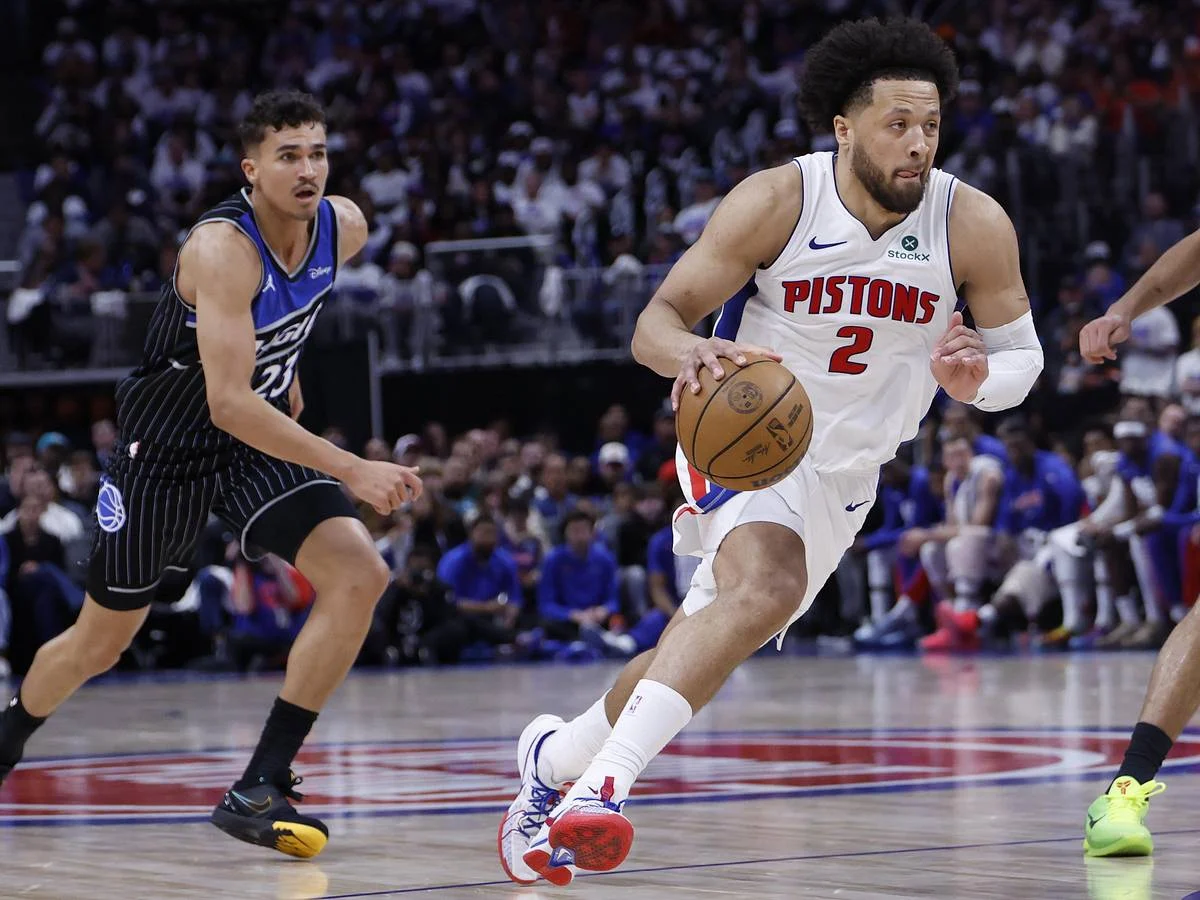
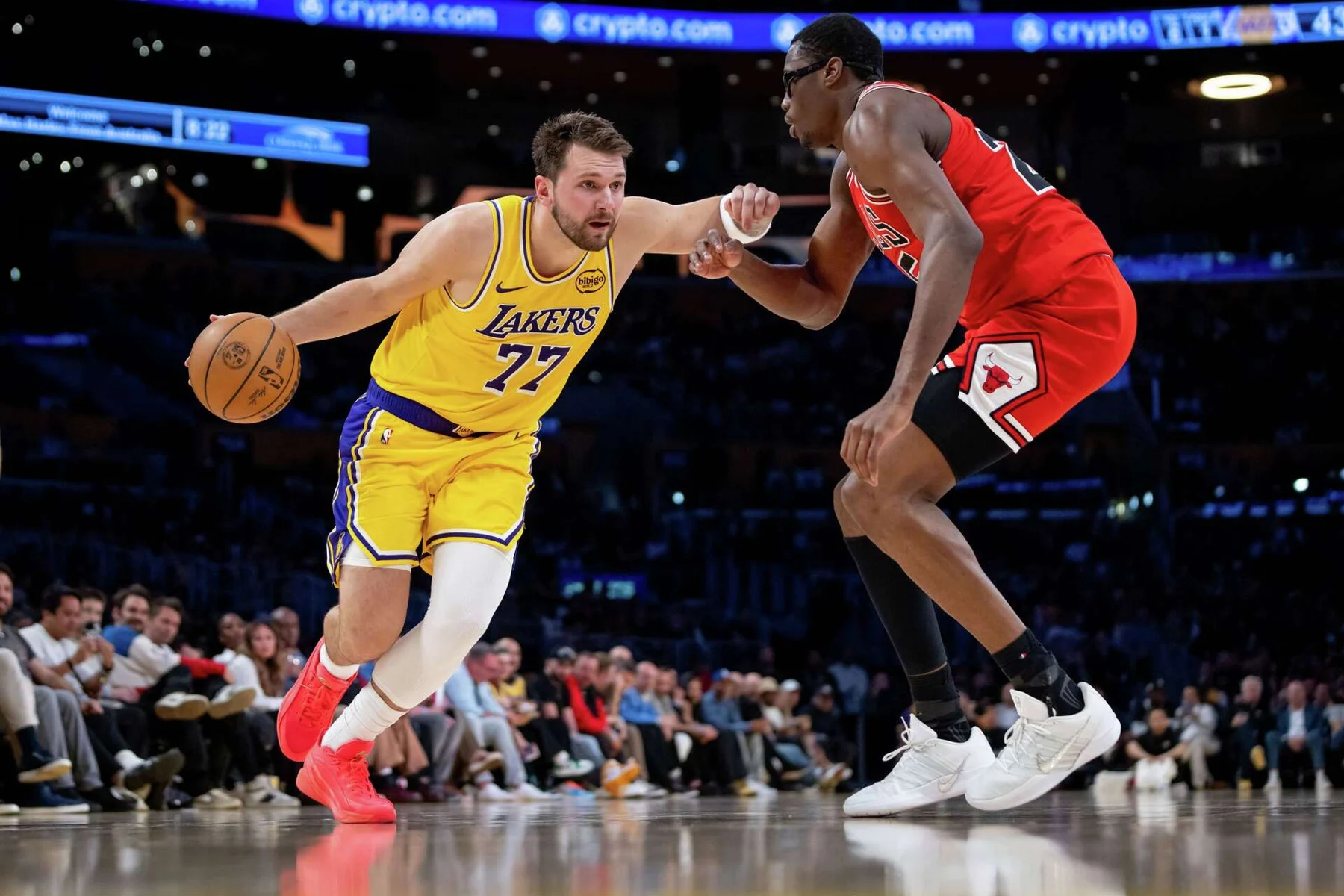
The April 16, 2026 joint announcement provides a useful historical contrast. Cade Cunningham had 63 qualified games and Luka Dončić had 64. The NBA and NBPA agreed that each qualified under the extraordinary-circumstances provision. Cunningham's absences included time after a collapsed lung; Dončić's included two games attending his daughter's birth in Slovenia.
The same announcement said Anthony Edwards had 60 qualified games and that an independent arbitrator denied his extraordinary-circumstances challenge. Those are three specific 2025-26 outcomes. They do not replace the normal threshold with a universal 63-game rule, establish that every family-related absence automatically receives credit, or promise approval for the next serious injury.
Nor should Edwards' decision be expanded to every honor. His Clutch Player candidacy remained possible. That is a concrete example of why the award's identity matters more than a loose phrase such as “banned from awards.” It is possible to discuss the fairness of his exclusion from the covered ballots without incorrectly claiming there was no recognition available anywhere.
For readers entering 2026-27, the date is essential. A ruling about last season does not provide a standing exemption for the same player this season. His new games, minutes, absences and any later request would belong to a new record. The agreement remains the starting point, with actual decisions supplying case-specific outcomes rather than permanent personal privileges.
The public announcement also does not reveal every item considered in each case. Comparing headline totals is useful for identifying the question, but insufficient for reconstructing the complete reasoning. A responsible comparison can say the outcomes differed and explain the available procedures. It should stop short of inventing what an arbitrator thought or treating a favored player's popularity as evidence about the underlying case.
Why the rule still creates difficult basketball decisions
The strongest defense of a participation threshold is easy to understand: regular-season honors should reward a substantial body of regular-season work. Availability helps teammates, fans and the competition. A clear threshold also reduces the chance that each voter quietly applies a different minimum, producing inconsistent treatment of otherwise similar candidates.
The strongest criticism concerns the edge cases. A player can supply more total minutes than a rival yet qualify for fewer games. A blowout, an early injury or a cautious return can affect the count without saying much about his quality. In March 2026, the NBPA called for reform or abolition. That was a stated position in the debate, not an announcement that the requirement had already disappeared.
Coaches also have to manage a real game. Keeping a returning player on the floor until a threshold is reached may be an awards consideration; removing him may be the better basketball or workload choice in that moment. The existence of that incentive does not establish that a particular medical decision was unsafe, dishonest or dictated by the league. Those conclusions would need evidence beyond an awards counter.
The separate Player Participation Policy governs team obligations involving healthy-player rest. An awards threshold determines access to specified honors. Passing one test does not automatically prove compliance with the other. A player can legitimately miss a game because he is injured and still lose an opportunity to increase his qualifying count.
For fans, the practical approach is to keep those questions distinct. Read the current availability report for whether he may play, the full game log for what counted, and an actual eligibility announcement for any exception. Discuss whether the threshold is fair with those facts in hand. A reported injury deserves accurate coverage, and an awards argument deserves precise arithmetic; neither benefits from pretending the other question has already been answered.

Sign in with Google to join the discussion.